The Newest, Cutest Baby Animals from the World's Zoos & Aquariums

Category: Cheyenne Mountain Zoo

  • ,

    1_Canada lynx in exhibit1

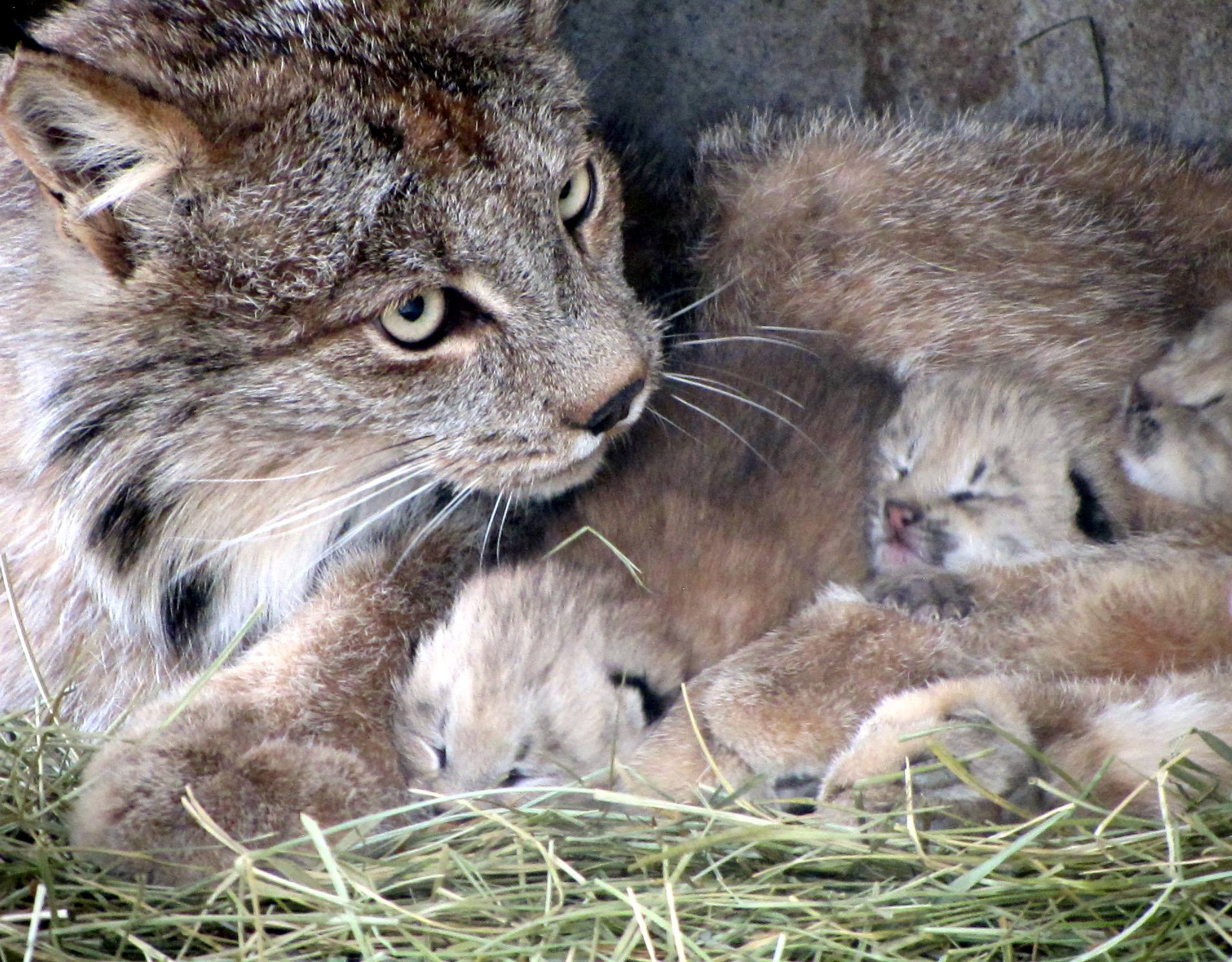
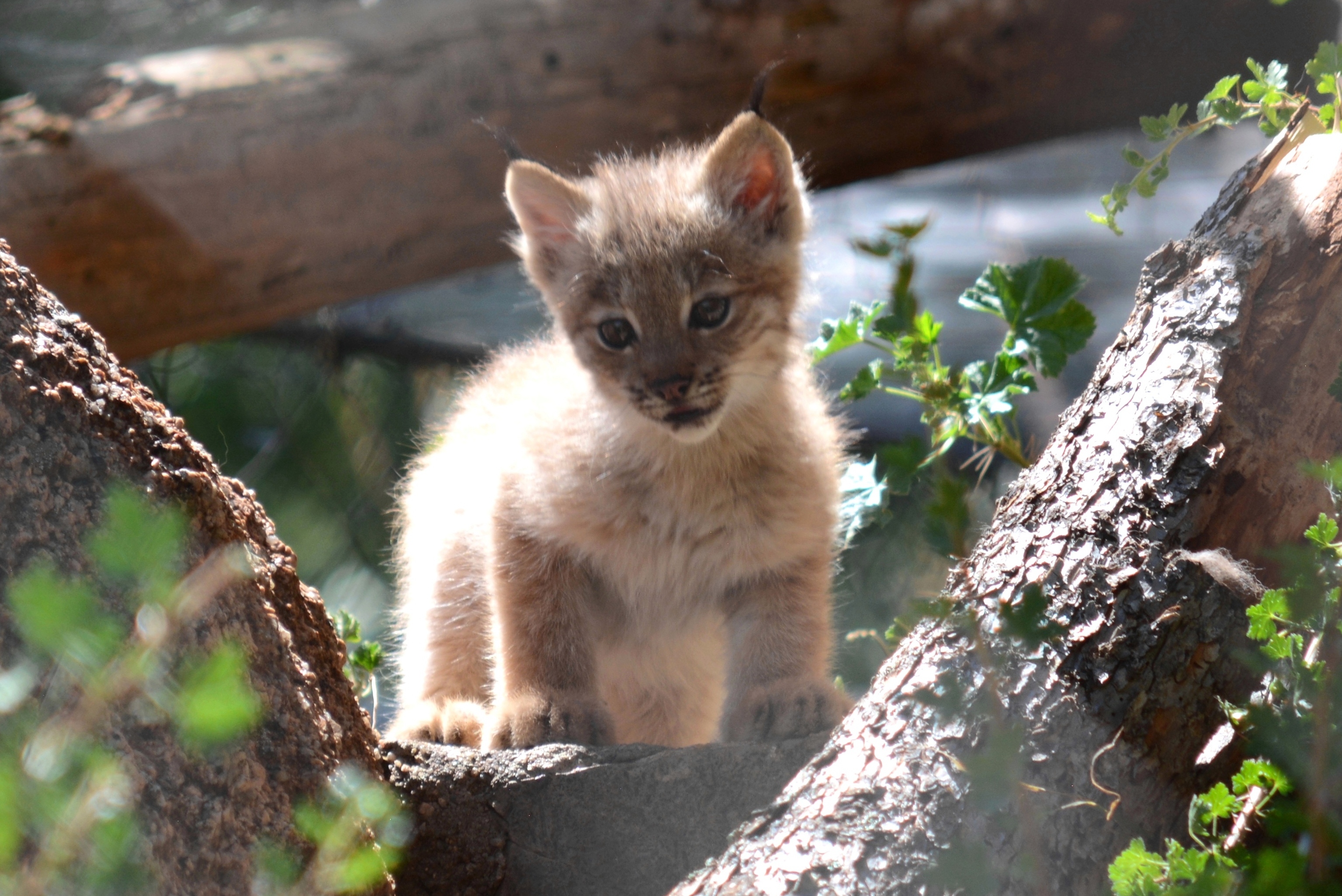
    The four female Canada Lynx kittens, at Cheyenne Mountain Zoo, have been named and officially moved into their Rocky Mountain Wild exhibit on July 19.

    The fuzzy headed litter was a ZooBorns feature back in mid-June: “Meet Cheyenne Mountain Zoo’s Canada Lynx Kittens”. They have been with their mother in an off-exhibit area since their birth on May 6, and now the kittens and ten-year-old mom, Migina, will join dad, Kajika (also ten-years-old) in the main exhibit.

    Keepers reported that the litter “howdied” with dad Kajika multiple times prior to being moved on-exhibit. The Zoo defines “howdied” as: a process where they can see and smell each other with a mesh barrier in between them. The kittens and Kajika were said to be curious about each other and vocalized back and forth. They have also sniffed each other’s paws and rubbed up against the mesh. Zookeepers said these were all good signs that the Lynx family was ready to be together in their public exhibit.

    Because Lynx are often called “ghost cats”, due to their nearly-noiseless nature (thanks to heavily-padded paws and light frames), Cheyenne Mountain Zoo employees recently voted to name the kittens based on famous Colorado ghost towns. The kittens have been named: Adelaide (Lake County), Norrie (Pitkin County), Frisco (Summit County), and Aspen (as in the famous tree).

    2_Canada lynx in exhibit2

    3_Canada lynx in exhibit4

    4_Canada lynx in exhibit5Photo Credits: Cheyenne Mountain Zoo 

    The Canada Lynx (Lynx canadensis) is a North American mammal of the cat family, Felidae. It ranges across Canada and into Alaska as well as some parts of the northern United States and extending down the Rocky Mountains to Colorado, where they were reintroduced in the 1990s.

    (more…)

  • ,

    1_Lynx kittens outside -  (2)

    Cheyenne Mountain Zoo recently introduced their newest litter of Canada Lynx kittens! The litter of four was born May 6 to mom, Migina, and dad, Kajika.

    Both mom and dad are ten-years-old. This is Migina’s third litter, and keepers say she is a protective and caring mom.

    Zookeepers say the new litter is venturing out more and more. They can be seen in the Lynx’s Off-exhibit Area, which is viewable from the Grizzly Boardwalk.

    Mom, Migina, always keeps a close eye on her four kits as they explore their area, but it will still be a while before they are all in the main Lynx Exhibit. Until they make their way to the main exhibit, fans of the kittens can check with the zoo’s social media channels for updates.

    2_Lynx kittens

    3_Lynx kittens outside -  (4)

    4_IMG_2528Photo Credits: Cheyenne Mountain Zoo

    The Canada Lynx (Lynx canadensis) is a North American mammal of the cat family, Felidae. It ranges across Canada and into Alaska as well as some parts of the northern United States and extending down the Rocky Mountains to Colorado, where they were reintroduced in the 1990s.

    Gestation lasts around 64 days. Young are usually born in May or early June. Before birth, the female prepares a maternal den, usually in very thick brush, and typically inside thickets of shrubs or trees or woody debris.

    Litters contain one to four kittens, and tend to be much larger when the food supply is abundant.

    (more…)

  • , ,

    IMG_4747
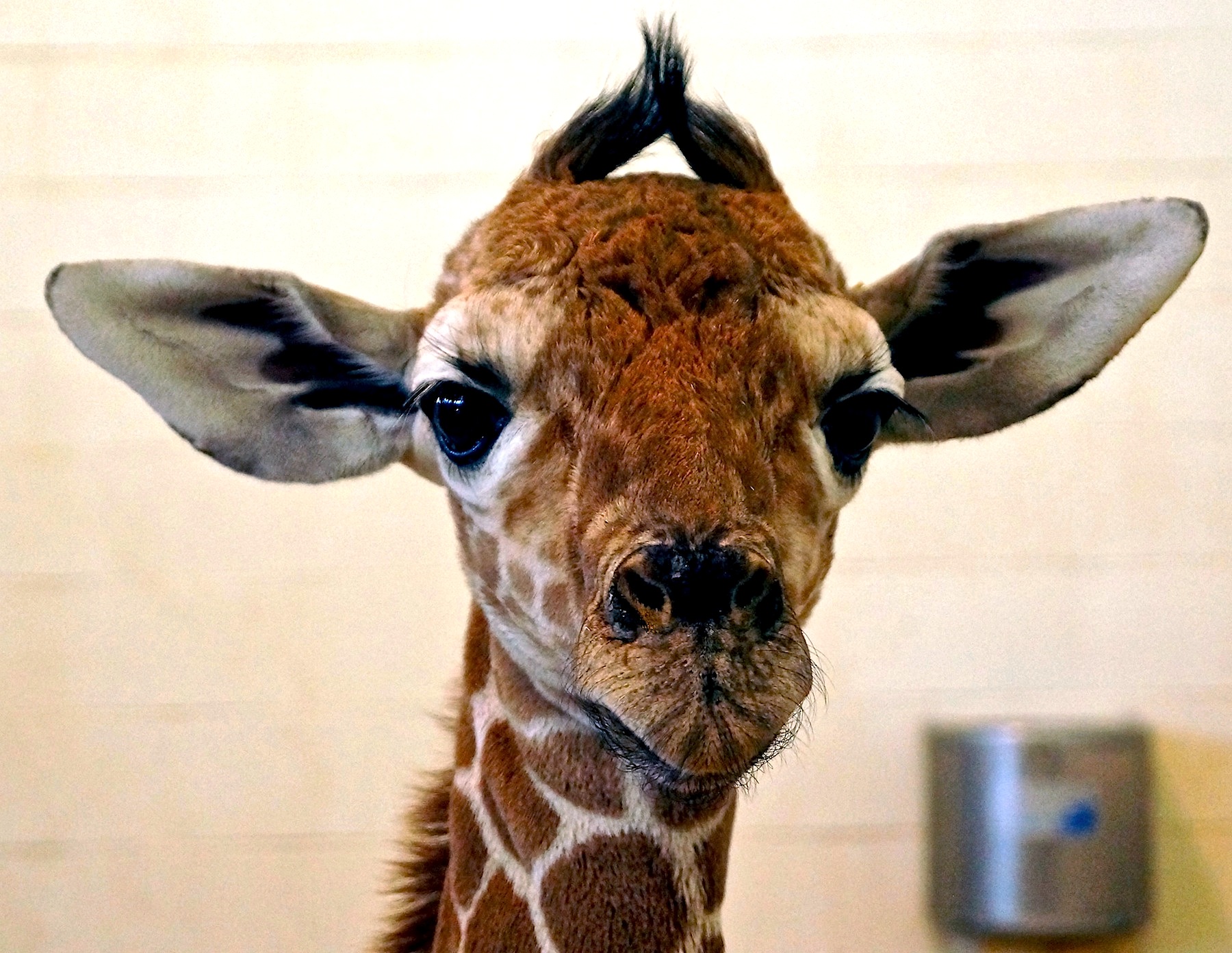
    A baby Reticulated Giraffe born February 28 at the Denver Zoo received a plasma transfusion as a precaution after he experienced difficulties in his first few days of life. 

    Staff at the Denver Zoo did not know until recently that the calf’s mother, Kipele, was pregnant. When she delivered her calf, which keepers named Dobby, staff was on hand to monitor the birth and the baby’s progress.  Baby Giraffes normally begin nursing within a few hours of birth and receive important antibodies from colostrum, which is the nutrient-rich milk produced at the end of pregnancy. When the staff noticed that Dobby was not nursing and had trouble standing, they stepped in to feed the calf and provide critical care.

    Baby_giraffe-Dobby_02
    Baby_giraffe-Dobby_01Photo Credit:  Denver Zoo

    Dobby began nursing and seemed to gain strength with his supplemental feedings, but blood tests showed that Dobby did not receive enough infection-fighting proteins from his mother due to his difficulties with nursing. So veterinarians provided colostrum-replacer and a transfusion of plasma to boost Dobby’s immune system.

    Giraffe plasma is not easy to obtain, but fortunately the nearby Cheyenne Mountain Zoo, where Kipele was born, was able to help.  Keepers there had done voluntary training with their Giraffes, which hold still for injections and small blood samples. Recently, they were able to collect larger volumes of blood in order to bank plasma for emergency situations just like this one.

    The cooperation between the Denver Zoo and Cheyenne Mountain Zoo staff is just one example of the tremendous cooperation among zoos accredited by the Association of Zoos and Aquariums.  Zoos work together to save animals – from entire species on the brink of extinction to individual animals like Dobby.

    See more photos below!

    (more…)

  • ,

    1_DSC03754

    Cheyenne Mountain Zoo recently celebrated the hatching of a healthy African Penguin chick on December 13.

    When the new chick hatched, it weighed approximately 51 grams, or just shy of 2 ounces (about the same as two slices of bread). Thanks to successful care by its first-time parents, it has already grown to about 2.5 pounds, or 40 ounces, in just over a month. That means the chick has grown by 20 times its initial hatch weight in approximately 35 days.

    “Even at just over 30 days old, it’s already pretty feisty,” said Patty Wallace, lead Aquatics animal keeper. “That’s a good sign, since it’s a natural defense mechanism for chicks in the wild.”

    The chick is being cared for by its parents, Murphy and Joe, in an off-exhibit area for now and is not currently viewable to the public. Once the chick molts for the first time and grows its adult feathers, it will be safe for it to be socialized with the rest of the flock in the main exhibit. Until the adult feathers come in, the chick doesn’t have waterproof protection, so it needs to be kept away from the exhibit’s pool for safety.

    Keepers named the chick “Penny”. Although they will not know the gender of the chick until DNA testing is conducted, this unisex name serves as a nod to Cheyenne Mountain Zoo’s founder, Spencer Penrose, and the fact that the Zoo considers the chick their “lucky Penny.”

    2_DSC03839

    3_IMG_20161231_133141154Photo Credits: Cheyenne Mountain Zoo

    Although the Zoo has had previous Penguin hatchlings, past chicks were, unfortunately, not viable past 10 days. However, the Zoo felt that it was still important to allow the birds to do what came naturally by laying eggs, and keepers saw the egg incubating experience as helpful to the adults in the flock.

    Veterinarians and Penguin experts are not sure why the offspring have been unsuccessful until now. However, several theories trace back to the Zoo’s aging Hippo and Penguin exhibit that was built in 1959. The Zoo is currently working to address those concerns with a $10.4 million capital campaign called Making Waves, which will fund new state-of-the-art buildings for both Hippos and Penguins.

    (more…)

  • ,

    1_11050088_10153647446316019_8347060824355506153_n

    Three African Lion cubs are the “pride” of Cheyenne Mountain Zoo, in Colorado Springs, Colorado! The two boys and their sister were born June 25 to mom, Lomela, and dad, Abuto. 

    The Zoo recently held a naming contest, for the furry trio, and asked for help from their fans and supporters. Names were submitted via facebook and the Zoo’s website. The Zoo will soon make a formal announcement on the decided-upon names. 

    Keepers say "Boy #1" (Image 1) takes after his grandfather, Elson. He’s the darkest in color, and he’s the biggest of the cubs. "Boy #2" (Image 2) is described as being 'really laid back'. Keepers say the Girl is the bravest (Image 3) and takes after her daddy, Abuto. She’s said to be the first to explore new toys and spaces.

    2_11834751_10153647446346019_2947428164279642522_o

    3_11224555_10153647446386019_5729344708408349311_oPhoto Credits: Cheyenne Mountain Zoo

    ZooBorns helped spread the Zoo’s excitement over the cub’s births and featured the trio in early July: http://www.zooborns.com/zooborns/2015/07/lion-cheyenne-zoo.html

    There was much anticipation at Cheyenne Mountain Zoo, prior to the arrival of the healthy trio of cubs. Lions are pregnant for an average of 110 days. Zoo staff set up a camera system weeks prior to the birth, so they could monitor Lomela in two different nesting locations. Animal Keepers were able to observe the birth and keep close tabs on mom and cubs without disturbing them. The Zoo set up a second video camera monitor above the Lion Relaxation Room window, so guests could see the new additions to the Lion pride.

    Abuto was specifically chosen to breed with Lomela because of their genetic compatibility. The breeding program is known within the Association of Zoos and Aquariums (AZA) as a Species Survival Plan, or SSP. The breeding of the Zoo’s Lions is important to the SSP and to the zoo. The Cheyenne Mountain Zoo’s hope is that guests will fall in love with their pride and fight to help save their wild counterparts.

    “These cubs are truly miracle babies,” Amy Schilz, Lead Giraffe/Lion Keeper, said. “We weren’t sure whether Lomela would be able to conceive.”

    African Lions are currently classified as “Vulnerable” on the IUCN Red List of Threatened Species. There has been an estimated population decline of 42%, in the last 21 years. Noted causes for the decline include disease and human interference. Habitat loss and conflicts with humans are considered the most significant threats to the species. The remaining populations are often geographically isolated from one another, which can lead to inbreeding, and consequently, reduced genetic diversity.


    The cub's mother, Lomela:

    4_11698890_10153598000501019_8108051792728964891_o

    The father of the trio, Abuto:

    5_11741310_10153638979981019_4509460686246109000_o

  • ,

    1 lion

    Cheyenne Mountain Zoo in Colorado is thrilled to welcome three roly-poly African Lion cubs! The cubs were born on June 25 to first-time parents Lomela, a seven-year-old female, and Abuto, a three-year-old male. Mom and the cubs—two males and one female—appear to be healthy and doing well.

    3 lion

    2 lion

    4 lion

    5 lion

    6 lionPhoto credits: Cheyenne Mountain Zoo


    “Lomela and her babies are currently off-exhibit in the Lion building to give them time to bond and the cubs time to grow,” Dina Bredahl, animal care manager, said. “The cubs are nursing and are quite active for being less than a week old.”

    Lions are pregnant for an average of 110 days. Zoo staff set up a camera system weeks prior to the birth, so they could monitor Lomela in two different nesting locations. Animal keepers were able to observe the birth, and can now keep close tabs on mom and cubs without disturbing them. The zoo set up a second video camera monitor above the Lion relaxation room window, so zoo guests can see the new additions to the lion pride.

    Bredahl says, “If they remain healthy, as they appear to be now, we will take a hands-off approach and let Lomela take care of her babies without intervention.” In keeping with zoo tradition, the Lion cubs will not be named until they are at least 30 days old.

    (more…)

  • , ,

    977806_10151703742366019_143213971_o

    Cheyenne Mountain Zoo’s three curious, climbing Lynx kittens have been spotted exploring their public exhibit. Born on May 8, 2013, the two males and one female have been in an off-exhibit outdoor habitat until they were big enough to maneuver the larger public exhibit space. The zoo invites guests to view the growing kittens and their parents – mother, Magina (mah-jee’-nah), and father, Kajika (kah-jee’-kah).

    The three Lynx kittens are the first Canada Lynx born at Cheyenne Mountain Zoo. Often mistaken for Bobcats, Lynx are classified by Colorado Parks and Wildlife as federally threatened and a Colorado state special concern. The zoo’s Lynx were paired together following a breeding recommendation from the Association of Zoos and Aquariums (AZA) Species Survival Plan. The birth of the three Lynx is truly exciting. Yet, the story of the parents living together is extremely rare and unique.

    977150_10151721059146019_582896828_o

    1240150_10151901919116019_451997210_n

    1175233_10151901919056019_928518578_n

    1148979_10151901918761019_345471379_n

    In the wild, Canada Lynx live as solitary cats. They don’t live in pairs, don’t hunt together, nor do they raise their young in family groups. In fact, other than breeding, males and females typically want nothing to do with each other and males want even less to do with their kittens. Cheyenne Mountain Zoo strives to mimic wild-living arrangements in a captive setting, but in the case of Cheyenne's Canada Lynx, they didn’t appear to want to live like their wild counterparts.

    (more…)

  • ,

     1 giraffe

    Cheyenne Mountain Zoo in Colorado welcomed the latest addition to their Reticulated Giraffe herd, a female calf born Thursday morning, August 1. The calf is four-year-old Msitu’s (pronounced mi-see-TOO) first offspring and is the second calf to be sired by the Zoo’s five-year-old bull giraffe, Khalid (pronounced cull-EED). Mother and newborn are doing well. Following Cheyenne Mountain Zoo tradition, the calf will be named after she is 30 days old.

    “Watching a giraffe birth is amazing and startling all at the same time,” says Amy Schilz, lead animal keeper for giraffes and lions. “Giraffes give birth standing up, so their baby enters the world with a six foot fall to the ground. They need that fall to stimulate them to start breathing, but it still makes you hold your breath when they drop.”

    2 giraffe

    3 giraffe

    4 giraffe
    Photo credits: Cheyenne Mountain Zoo

    See and read more after the fold!

    (more…)

  • ,

    IMG_1686

    Nale and Elan, Cheyenne
    Mountain Zoo
    ’s Porcupines, are first-time parents! Nale (nah'-lay) gave birth
    to a porcupette, or baby Porcupine, on May 8. The baby
    was born weighing a little over a pound and appears healthy. Zoo
    veterinarians will not be able to determine if it's a boy or a girl for
    approximately 30 days, at which time Zoo staff will name the newest Porcupine
    addition.

    IMG_0606.5

    601651_10151687373721019_1064063064_n

    IMG_1585

    IMG_1692
    Photo Credit:  Cheyenne Mountain Zoo

    "Porcupettes are
    born with their quills – they are soft when they are first born but harden
    quickly," Roxanna Breitigan, Animal Care Manager, said. "They are
    also precocious from the start. Nale's porcupette is active and crawling around
    the exhibit." 

    Nale joined the Cheyenne
    Mountain Zoo family at the end of June 2012, and Elan was smitten with her
    right away.

    "He started
    courting her almost immediately," Breitigan said. 

    Porcupines typically
    breed in the fall and their gestation is seven months long. Zoo staff started
    looking for signs of delivery starting on May 4 – Nale's first possible
    due date. 

    One of the keepers knew something was up when Nale’s behavior changed one morning. "She noticed right away that Nale didn't
    eat on Wednesday morning, wasn't climbing any trees (Nale is an
    expert climber, so that was very unusual for her) and was stretching a lot. [She] kept a watchful eye and was there when the baby was born," Breitigan
    said. 

    In the wild, males don't
    usually have a role in raising their young, but Elan is being a good dad. He is
    curious, interested, remains calm and keeps a watchful eye on his family from
    his favorite branch.

  • ,

    8409526592_d015f780b3_h

    Just twenty minutes after his birth, this five-foot,
    four-inch calf was already walking about on four spindly legs.

    Cheyenne Mountain Zoo welcomed its twenty-first Reticulated Giraffe to the herd on January 23rd. Msichana, the calf’s eleven-year-old mother, began birthing
    at noon as zoo visitors looked on. Caretakers quickly moved her to an indoor
    stall for privacy, and the one-hundred-and-four-pound baby was born within the
    hour.

    DSC05601.5 em

    8408432411_73ff0da46a_h

    8409527090_0e0a1ad35d_h
    Photo credits: Cheyenne Mountain Zoo

    Daily monitoring finds that the calf and his mother are doing
    well. The two are already back on display for the public. After he reaches thirty
    days old, the zoo will give the calf a name.

    Peek over the fold. 

    (more…)