The Newest, Cutest Baby Animals from the World's Zoos & Aquariums

Category: Cincinnati Zoo

  • ,

    CIncinnati-Hedgehogs

    Four 4-week-old, Hedgehogs are currently hogging all of the attention at the Cincinnati Zoo.  The four incredibly cute Hedgehogs were born to mother, “Mali” and father, “Kenya,” and are currently off exhibit, behind the scenes in the Zoo’s Children’s Zoo Nursery.

    Two male and two female, the siblings were born on February 4 and are being hand-raised by the Nursery keepers until they are old enough to be included in the Zoo’s Animal Outreach Program.  The babies are spending time getting acquainted with Zoo staff because their days will soon include interacting with school children, greeting visitors at the Zoo,  and traveling to schools throughout the Tri-state, as an official Zoo Outreach Animal.  

    CIncinnati-Hedgehogs2
    Photo credits: Cincinnati Zoo

    Nursery keepers are feeding the babies four times a day by grinding up dry Hedgehog food and mixing it with esbilac. The gruel is easy for the young Hedgehogs to digest.   The Cincinnati Zoo has been home to 13 Hedgehogs. Did you know baby Hedgehogs are born blind and hairless!? They don’t begin to sprout their sharp spines until 36 hours after birth.  The spines form a protective covering over their body.

  • ,

    Baby-Hedgehog

    Shane, the baby African Pygmy Hedgehog, is about one quarter of his adult size in these recent photos. In the wild these hedgehogs are incectivores, dining on worms and grubs, but in Zoos, they typically are fed kibble, closer to what a pet dog or cat may eat. Shane will be part of Cincinnati Zoo's Outreach Program, which introduces school students and zoo visitors to varied kinds of exotic animals.

    Baby-Hedgehog-2

  • ,

    This video shot at Cincinnati Zoo was just too zany for ZooBorns to pass up! Enjoy!


  • , ,

    PcatKits9wka

    Three healthy Pallas’ Cat kittens (two males and one female) were born on June 8th, 2011 at the Cincinnati Zoo & Botanical Garden following a laparoscopic oviductal artificial insemination (AI) procedure conducted by scientists from the Cincinnati Zoo’s Center for Conservation and Research of Endangered Wildlife (CREW).  This pregnancy and birth are the first ever in Pallas’ Cats from artificial insemination.

    PcatKits9wkb

    PcatKits9wkC
    Photo credits: Cincinnati Zoo and Botanical Gardens

    The AI procedure was performed using laparoscopy or minimally invasive surgery combined with a new oviductal insemination technique for cats that was developed at CREW.  The Zoo’s female Pallas’ Cat, Sophia, was treated with two hormones to stimulate ovarian follicle growth and ovulation and then was inseminated in both oviducts with semen collected from the Zoo’s male Pallas’ Cat, Buster.  Three healthy kittens were born following a 69 day gestation.  The kittens, now 9 weeks of age, are being raised by their mother in an off-exhibit enclosure.

    (more…)

  • ,

    0009

    The Cincinnati Zoo & Botanical Garden has successfully hatched 11 Rockhopper Penguins over the last three decades. 

    First time parents, the father, Wallace & mom Kim are taking good care of their new chick, who hatched on June 16, 2011. Just like it happens in the wild, both Rockhopper Penguin parents help take care of their young there at the Zoo. You can see them in the video below.

    0007
    Photo Credit: David Jenike, Cincinnati Zoo & Botanical Garden


    You can see the Rockhopper Penguin family in the Subantarctic Display in the Wings of the World Exhibit.

  • , ,

    CINCINNATI EAGLE OWL 4

    The CIncinnati Zoo welcomed a Eurasian Eagle owl chick four weeks ago. Named Caspian, the young Owl could grow to have a wingspan on six feet from tip to tip! Wild Eurasian Eagle Owls are found across Europe, Asia and even in parts of Northern Africa. Their diet consists largely of small mammals, but full grown Eagle owls can prey on larger animals like foxes, and young deer. The Eurasian Eagle Owl (Bubo bubo) is one of the largest owl species in the world.

    CINCINNATI EAGLE OWL 2

    CINCINNATI EAGLE OWL 5

    CINCINNATI EAGLE OWL 1
    Photo credits: Connie Lemperle

  • ,

    Cincinnati-zoo-giraffe3

    Tessa, the Cincinnati Zoo & Botanical Garden’s four-year-old Maasai Giraffe gave birth to her first calf Saturday morning, April 2 at 9:40 a.m. in her indoor stall. This news is especially exciting considering that the last time the Zoo celebrated a Giraffe birth was nearly 26 years ago!  The Cincinnati Zoo’s history with Giraffe births actually dates back to 1889 when it became the first zoo in the Western Hemisphere to have a Giraffe born in captivity.

    Cincinnati-zoo-giraffe2

    Cincinnati-zoo-giraffe
    Photo credits: Cincinnati Zoo

    NOTE: The video below contains fascinating but graphic footage of the actual birth.

    (more…)

  • , , ,

    Beardsley-Ocelot-Chris-Eastland

    The Connecticut’s Beardsley Zoo and Cincinnati Zoo & Botanical Garden’s Lindner Center for Conservation & Research of Endangered Wildlife (CREW) are excited to announce the birth of the world’s first endangered cat produced by Oviductal Artificial Insemination (AI)!  Connecticut’s Beardsley Zoo’s veterinarian and a handful of other Zoo animal care specialists conducted their first physical examination of the Brazilian Ocelot kitten today, six weeks after its January 22 birth, and determined it’s a girl, weighing in at three pounds. This AI kitten is the second born to the mother, Kuma, who previously gave birth in 2008 to a healthy kitten conceived using the traditional AI method.  Kuma is the first Ocelot to have multiple pregnancies and kittens produced by AI. 

    Alt_shannon_calvert_beardsley-ocelot

    Alt_shannon_calvert_beardsley-ocelot-3

    Alt_shannon_calvert_beardsley-ocelot-6

    Alt_shannon_calvert_beardsley-ocelot-5

    Alt_shannon_calvert_beardsley-ocelot-4
    Photo credits: 1st photo by Chris Eastland / 2nd – 6th photos by Shannon Calvert


    http://www.youtube.com/e/ZCbdf_4TTMI

    (more…)

  • ,

    Cincinnati-Zoo-Armadillos-1

    The Cincinnati Zoo recently welcomed three Screaming Hairy Armadillo babies, which will eventually join the Zoo's outreach program to teach school children about animals and conservation. As their name implies, the Screaming Hairy Armadillo squeals when threatened, perhaps by a hungry jaguar. Native to Arengtina, Bolivia, Chile and Paraguay this species ranges from deserts to grasslands and escapes the heat of the summer day deep within a burrow. 

    Cincinnati-Zoo-Armadillos-2

    Cincinnati-Zoo-Armadillos-3
    Photo and video credits: Cincinnati Zoo


    http://www.youtube.com/e/pvfJDy-dmEM

  • , ,

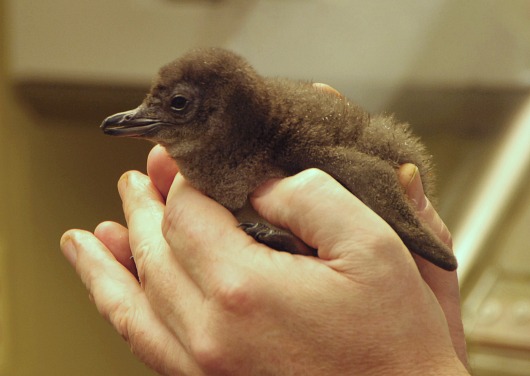
    A bird in hand... baby penguin at the Cinncinnati Zoo

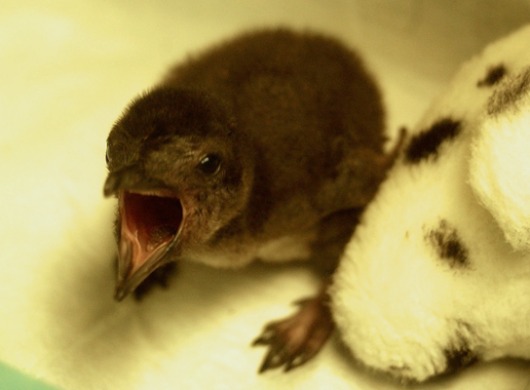
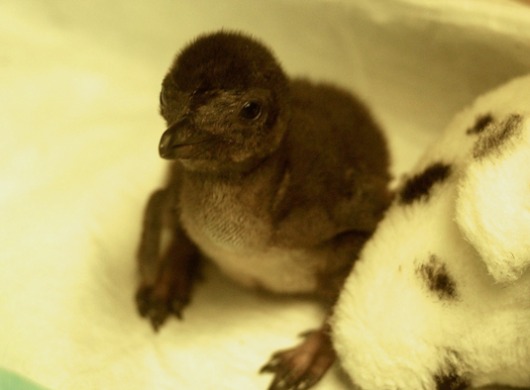
    Apparently it's baby penguin season on ZooBorns with the latest adorable installment coming direct from the Cincinnati Zoo. This Little Penguin chick is just two-weeks old and is currently being cared for behind the scenes, inside the Zoo's Wings of Wonder exhibit.The chick weighs approximately 250 grams (or a quarter-pound), but is expected to weigh just over two pounds as an adult. Mom, “Oreo” (7-years-old) and dad, “Boomer” (8-years-old), were not properly incubating the egg, so staff at the Cincinnati Zoo made the decision to pull the egg and incubate it themselves. Little Penguins are the smallest species of penguin but that doesn't mean this chick doesn't like to eat. Zoo aviculture staff have to feed the demanding little bird six times a day, every three hours. At first it was fed a delicious fish milkshake but has since graduated to slices of fish (sashimi if you will).

    Feed me! -  Baby penguin at the Cinncinnati Zoo

    Baby penguin at the Cinncinnati Zoo

    Don't miss this great video