The Newest, Cutest Baby Animals from the World's Zoos & Aquariums

Category: Columbus Zoo and Aquarium

  • ,

    Polar Bear Cub 9168 - Grahm S. Jones, Columbus Zoo and Aquarium

    The public has spoken! Following a worldwide online poll, the three-month-old Polar Bear cub born at the Columbus Zoo and Aquarium finally has a name…Nora!

    The name was one of four options the Zoo put to a public vote between January 19 and February 3.

    The name ‘Nora’, a combination of the cub’s parents’ names, Nanuq and Aurora, garnered the most votes followed by: ‘Kaya’, meaning “little but wise”; ‘Sakari’, meaning “sweet”; and ‘Desna’, meaning “boss”. The Columbus Zoo’s animal care staff had selected the four names, and participants were able to cast their vote online once every 24 hours.

    Polar Bear Cub 9208 - Grahm S. Jones, Columbus Zoo and Aquarium

    Polar Bear Cub 9246 - Grahm S. Jones, Columbus Zoo and AquariumPhoto Credits: Grahm S. Jones / Columbus Zoo


    The cub has gathered a strong following on the Columbus Zoo’s social media pages, where fans have been able to watch videos of her growth. Voting participants spanned the globe, with 115 countries represented in the voting. The top five participating countries were the United States, France, Brazil, Canada and the United Kingdom for a grand total of 88,061 votes.

    “We are thrilled and inspired that so many people around the world helped name this young Polar Bear,” said Tom Stalf, president and CEO of the Columbus Zoo. “We hope that those who have been watching Nora grow will continue to do so throughout her life, and remember that we all have a role to play in protecting wild Polar Bears for generations to come.”

    (more…)

  • ,

    1_Beaded Lizard emerging at ColumbusZoo

    A Beaded Lizard hatched on January 17, at the Columbus Zoo and Aquarium, and more emerged on January 21 and 22! 

    This is the first successful Beaded Lizard hatching at the Zoo since 2000! The recommendation to breed this vulnerable lizard, which is protected under CITES II, comes from the Association of Zoos and Aquariums’ Species Survival Plan.

    2_Beaded Lizard hatchling Columbus Zoo

    3_Beaded Lizard emerging at ColumbusZoo

    4_Beaded Lizard emerging at ColumbusZooPhoto Credits: Columbus Zoo and Aquarium

    The Beaded Lizard (Heloderma horridum) is found in rocky regions of Central and western Mexico, as well as down to northern Central America, but due to habitat loss and poaching their numbers are diminishing.

    The Beaded Lizard (also known as the Mexican Beaded Lizard) is the most known of the four species of venomous lizards found in Mexico and Guatemala. The species is larger than the Gila Monster, but it has a more dull coloration– black with yellow bands.

    The lizard becomes sexually mature at six to eight years. The female lays a clutch of two to 30 eggs. In the wild, mating typically occurs between September and October. The eggs are usually laid between October and December, and they hatch the following June or July.

    The Beaded Lizard is currently classified as “Least Concern” on the IUCN Red List of Threatened Species.

    Guests to the Columbus Zoo cannot see the little lizards until spring, but the adult Beaded Lizards can be seen at the Zoo’s Reptile Building.

  • ,

    Langur 6727 - Grahm S. Jones, Columbus Zoo and Aquarium
    The Columbus Zoo and Aquarium started off the new year with a pair of bright orange babies:  Two Silvered Leaf Langurs were born December 1 and January 11, with the latest being the zoo’s first birth of the new year.

    Langur 6871 - Grahm S. Jones, Columbus Zoo and Aquarium
    Langur 6845 - Grahm S. Jones, Columbus Zoo and AquariumPhoto Credit:  Grahm S. Jones
     

    These births also mark the Columbus Zoo’s first Langur babies since 2011, and the first time two infants were born in a troop since 2010.

    Langurs, which have black fur with silvered tips as adults, are born with bright orange fur. This marked difference in coat color is believed to encourage other female Langurs to assist in raising the young, a practice called allomothering.

    The births are also important for the breeding recommendations outlined by the Species Survival Plan (SSP), a program coordinated by the Association of Zoos and Aquariums (AZA) to manage threatened or endangered species.  Silvered Leaf Langurs are listed as Near Threatened by the International Union for Conservation of Nature due to population declines caused by habitat loss. These two babies will help to sustain the langur population among AZA-accredited zoos. 

    Patty, age 16, gave birth December 1 to her fifth offspring, who has since been determined to be a girl. Gumby, age 14, gave birth to her sixth offspring, the gender of which has not yet been determined, on January 11. Both mothers mated with Thai, who is 4.5 years old, and are experienced caregivers.

    Neither baby has been named yet.  Young Langurs begin to sit and walk on their own after about two weeks.  The babies’ orange fur will gradually be replaced by silvery fur by the time they are six months old.  The older of the two babies is already showing signs of graying in her face, hands, and tail.

    The range of the Silvered Leaf Langur includes Brunei, Indonesia, and Malaysia. Wild populations are losing their habitats as lands are cleared for oil palm plantations or destroyed by forest fires. Langurs are also hunted for their meat or captured to serve as pets.

    See more photos of the babies below.

    (more…)

  • ,

    1_12314447_10153301035972106_1281583257806947745_o

    The Polar Bear cub, at Columbus Zoo and Aquarium, is now one-month-old!

    Two cubs were born November 6, at the Ohio zoo. (ZooBorns posted a November 23rd article sharing the story.) Animal Care staff first observed new mom, Aurora, caring for the newborns. However, despite her efforts, only one cub survived.

    2_12314593_10153301035977106_1282633792668652619_o

    3_12291806_10153301035962106_200478142969360710_o

    4_12244571_10153301035967106_2713312182985211251_oPhoto Credits: Columbus Zoo & Aquarium

    Initially, Aurora was caring for her surviving cub, and the Columbus Zoo animal team, in conjunction with recommendations from other Polar Bear breeding facilities, made the decision not to intervene. Polar Bear cubs are difficult to hand rear and disrupting Aurora’s maternal care was not advised.

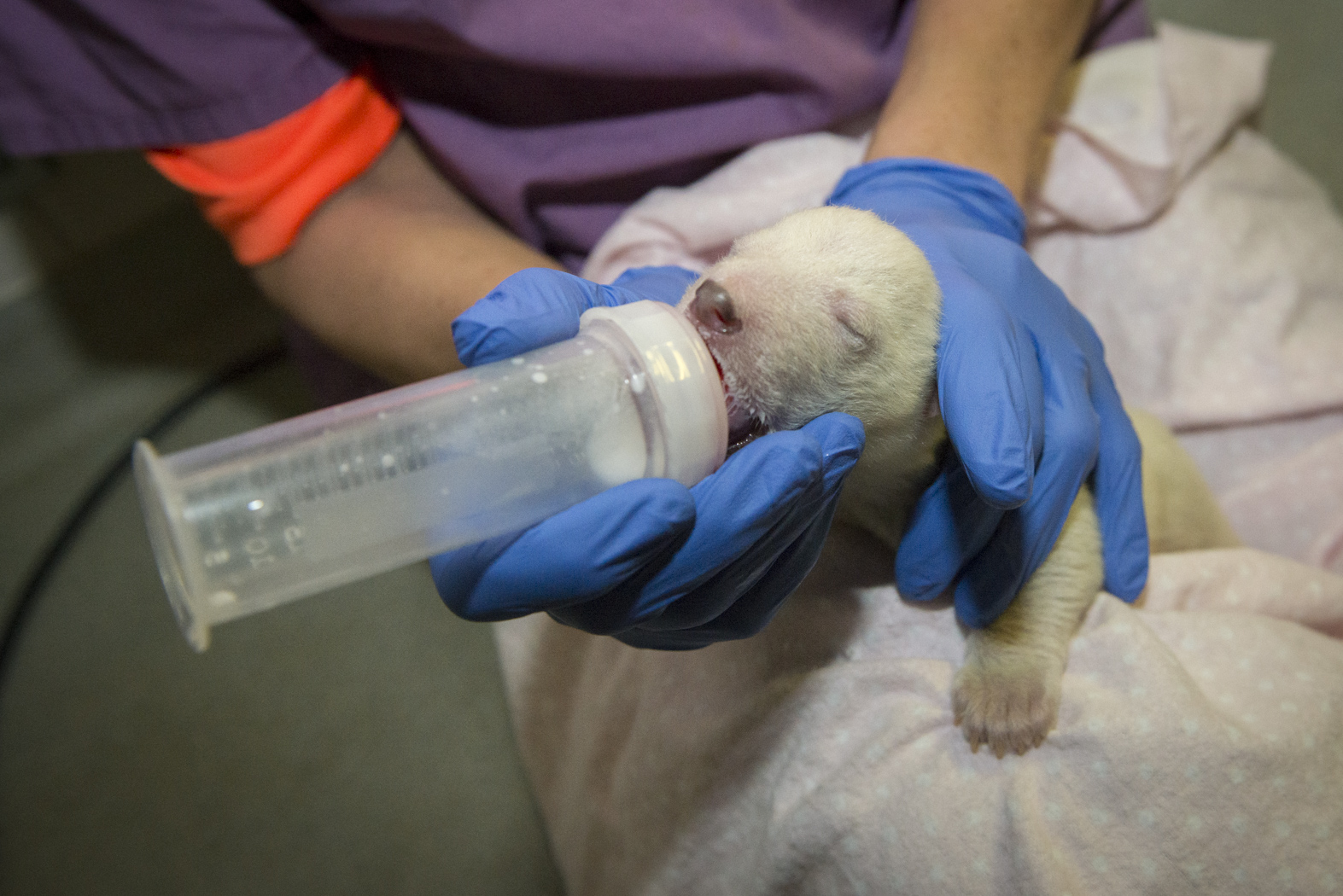
    Unfortunately, the surviving cub was pulled from the den by the Zoo’s Animal Care staff after Aurora stopped caring for it. Aurora began taking breaks from caring for her cub. When these breaks continued throughout the day and became longer, the Zoo’s Animal Care staff made the decision to remove the cub from the den and began to hand-rear the newborn.

    A little over one month later, the cub is doing well. The hand rearing team stays with her 24 hours each day, and she is feeding every 3 hours. The cub is growing at a rapid pace, and as of last week, she was 14.25 inches from the end of her snout to the tip of her tail.

    She continues to gain weight and keepers are anxiously waiting when her eyes will open, which should happen very soon. The Polar Bear cub care staff are taking the approach of ‘one day at a time’ and adjusting to her daily needs.

    Polar Bears are native to the circumpolar north, including the United States (Alaska), Canada, Russia, Norway and Denmark (Greenland). They are at the top of the Arctic food chain and primarily eat seals. Polar Bear populations are declining due to the disappearance of sea ice, and experts estimate that only 20,000-25,000 Polar Bears are left in the wild. Some scientists believe if the warming trend continues two-thirds of the Polar Bear population could disappear by the year 2050. They are currently classified as "Vulnerable" on the IUCN Red List.

  • ,

    1_Polar Bear Cub 7503 - Grahm S. Jones, Columbus Zoo and Aquarium

    Two Polar Bear cubs were born November 6 at the Columbus Zoo and Aquarium. Animal Care staff observed new mom, Aurora, caring for the newborns. However, despite her efforts, only one cub survived. 

    Initially, Aurora was caring for her surviving cub, and the Columbus Zoo animal team, in conjunction with recommendations from other Polar Bear breeding facilities, made the decision not to intervene. Polar Bear cubs are difficult to hand rear and disrupting Aurora’s maternal care was not advised.

    Unfortunately, last week, the surviving cub was pulled from the den by the Zoo’s Animal Care staff after Aurora stopped caring for it. Aurora began taking breaks from caring for her cub late on the morning of November 19. When these breaks continued throughout the day and became longer, the Zoo’s Animal Care staff made the decision to remove the cub from the den and began to hand-rear the newborn.

    2_Polar Bear Cub 7455 - Grahm S. Jones, Columbus Zoo and Aquarium

    3_Polar Bear Cub 7453 - Grahm S. Jones, Columbus Zoo and Aquarium

    4_Polar Bear Cub 7411 - Grahm S. Jones, Columbus Zoo and AquariumPhoto Credits: Grahm S. Jones / Columbus Zoo & Aquarium


    At this time, the cub, a female, is healthy and feeding regularly. She weighed in at 1.5 pounds and gained 10 grams soon after Zoo Staff took over. At 2-weeks-old, she is continuing to gain weight, and grows about a half inch every two days. Her nose is turning black and fur is growing on her ears, as well as on the bottom of her paws. Staff will continue to monitor and care for her around-the-clock. The team assesses her daily and makes changes to her routine as need be. They are cautiously optimistic and are pleased with how well she is doing.

    Polar Bear reproduction is a very complicated process, which leads to the species having one of the lowest reproductive rates of any mammal. Female Polar Bears generally have their first set of cubs between the ages of four and eight years. Due to delayed implantation, the gestation period can range from about 195 to 265 days. Delayed implantation is a point of time during a Polar Bear’s gestation when a fertilized egg will free-float in the uterus for roughly four months to ensure the cub is born the best time of year for survival.

    Pregnant Polar Bears den in the fall and give birth, generally to two cubs, in the winter. The cubs typically weigh about one pound at birth. After birth, the survival rate for a Polar Bear cub during the first few weeks of life is very low due to a number of factors. Some of these factors can be eliminated in a zoo setting though this is still a very delicate time for a newborn.

    Polar Bears, much like Giant Pandas, are highly specialized animals that give birth to very small babies, which makes them fragile during their first year of life. Survival rates in human care are around 50%, which is similar to that of wild bears.

    (more…)

  • , , , , ,

    12027303_10153722450829254_7587102204204898737_o

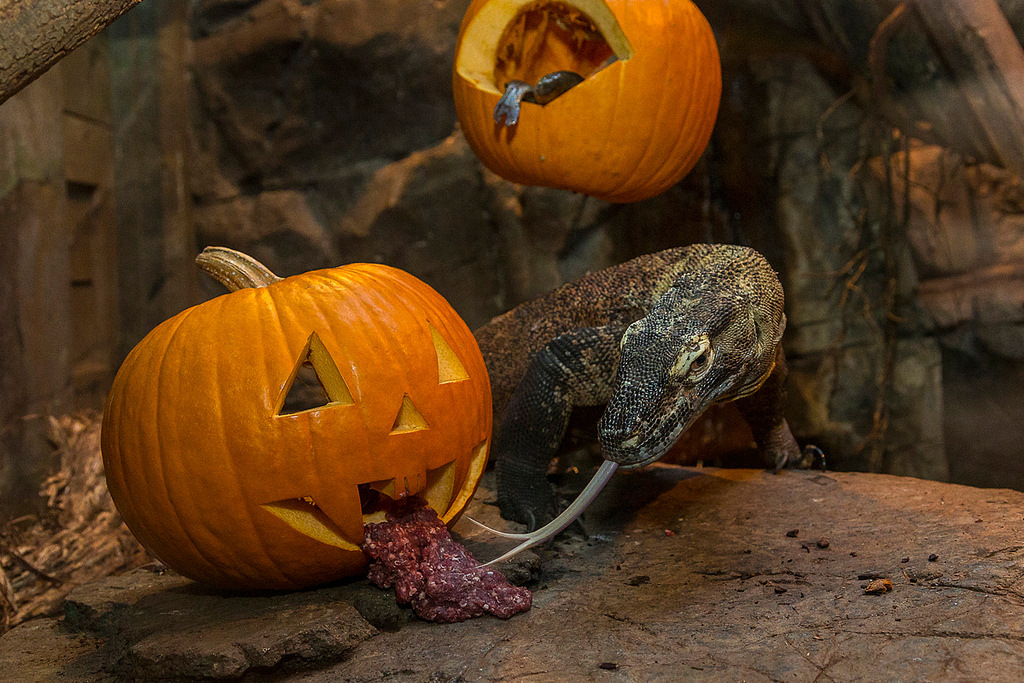
    It's Halloween, and that means zoo animals around the world are enjoying encounters with pumpkins and gourds of all shapes and sizes.  Animals' reactions to pumpkins vary, but critters may sniff, munch on, or completely destroy their pumpkin treats.

    The pumpkins are more than a seasonal celebration – they serve as enrichment for zoo residents. Enrichment provides physical, mental, or sensory stimulation and encourages natural behaviors in animals.  Happy Halloween from ZooBorns!

    22367994008_334ae5ee11_k
    22509311582_c68cbe932a_b
    12022500_10153722450759254_5938967778058632815_o
    12189140_1022059024481856_5382870302403062225_n
    Elephant oregon1
    12113458_10153722450824254_432652503730689610_o
    Lion Cubs 9982 - Grahm S. Jones, Columbus Zoo and Aquarium
    12028749_10153722450804254_2589276873012121375_o
    11219085_1022327344455024_3996086366465239910_n
    Gecko dallas
    Photo Credits (top to bottom)
    Ring-tailed Lemur:  Fort Wayne Children's Zoo
    Galapagos Tortoise:  San Diego Zoo
    Komodo Dragon:  San Diego Zoo
    North American River Otter:  San Diego Zoo
    Gorilla:  Paignton Zoo
    Asian Elephant:  Oregon Zoo/Shervin Hess
    Sumatran Tiger:  Fort Wayne Children's Zoo
    African Lion:  Columbus Zoo & Aquarium/Grahm S. Jones
    Red Panda:  Fort Wayne Children's Zoo
    Spider Monkey:  Paignton Zoo
    Satanic Leaf-tailed Gecko:  Dallas Zoo

  • ,

    11406760_10152971562482106_1259002470910527171_o
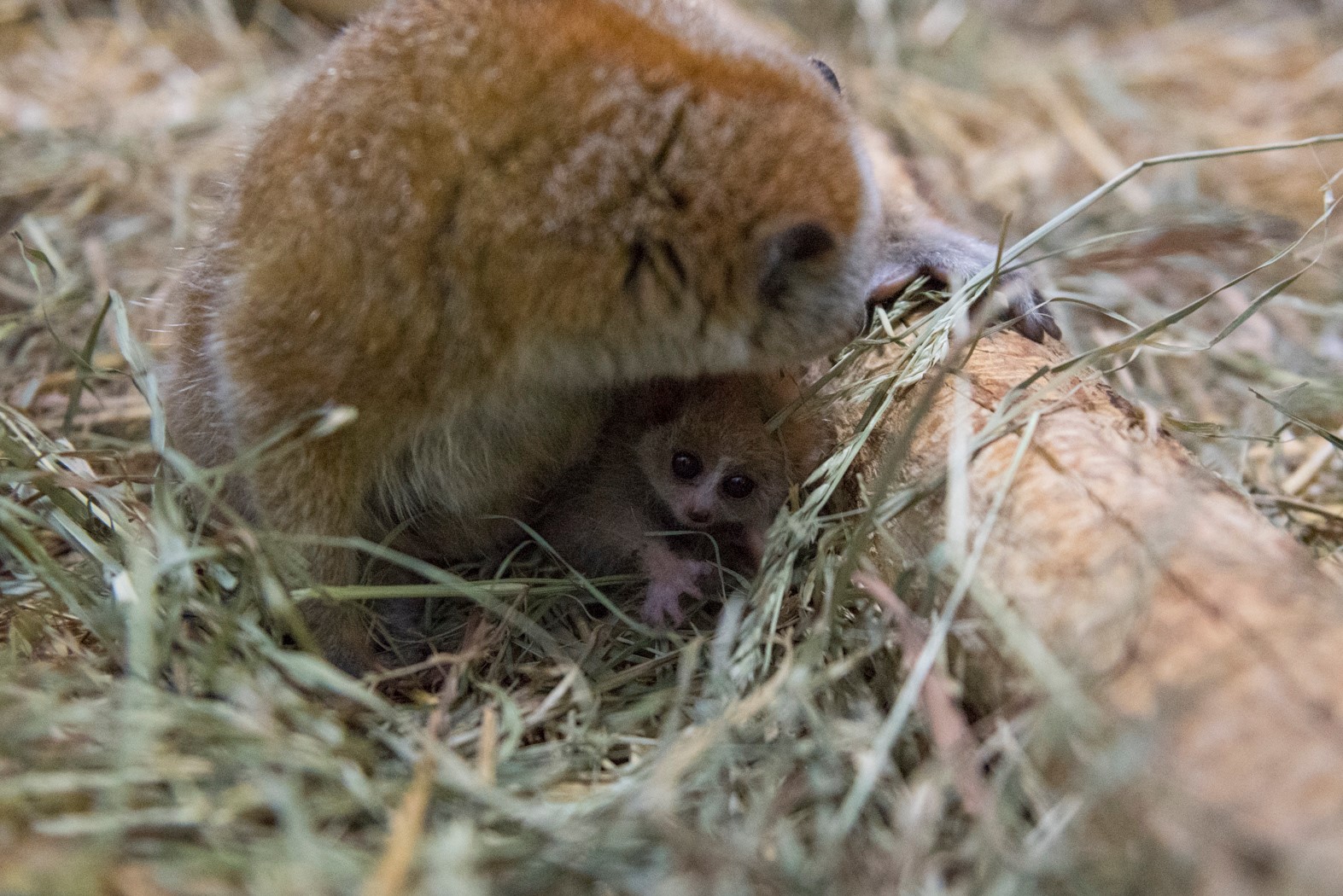
    A very tiny primate at the Columbus Zoo had a very tiny baby on June 9!  Pygmy Slow Lorises weigh only one pound as adults, and their babies weigh only a few ounces but are born fully-developed and with eyes wide open.

    11415553_10152971562422106_7075721146437010973_o
    11218502_10152971562397106_3318238052088409889_o
    11428237_10152971562502106_5357639955651629422_oPhoto Credit:  Columbus Zoo

    First-time parents Gouda and Muenster were paired through the Association of Zoos and Aquariums’ Species Survival Plan.  The baby’s gender is not yet known, but it is already climbing with mom Gouda in the zoo’s nocturnal house. 

    These little Lorises are not monkeys, but belong to a group of primates called prosimians.  Prosimians include Lemurs, Lorises, Aye-ayes, and Tarsiers.  Slow Lorises produce a toxin from scent glands on their elbows.  When alarmed, they lick the scent glands so the toxin becomes mixed with their saliva, rendering bite from these animals dangerous.

    During the day, Pygmy Slow Lorises sleep curled up in the treetops. At night, they emerge to forage for leaves, fruits, and insects.

    Pygmy Slow Lorises are native to southeast Asia, including Vietnam, Laos, and Cambodia. Their habitat was devastated during the Vietnam War, and they are listed as Vulnerable by the International Union for Conservation of Nature.  

  • ,

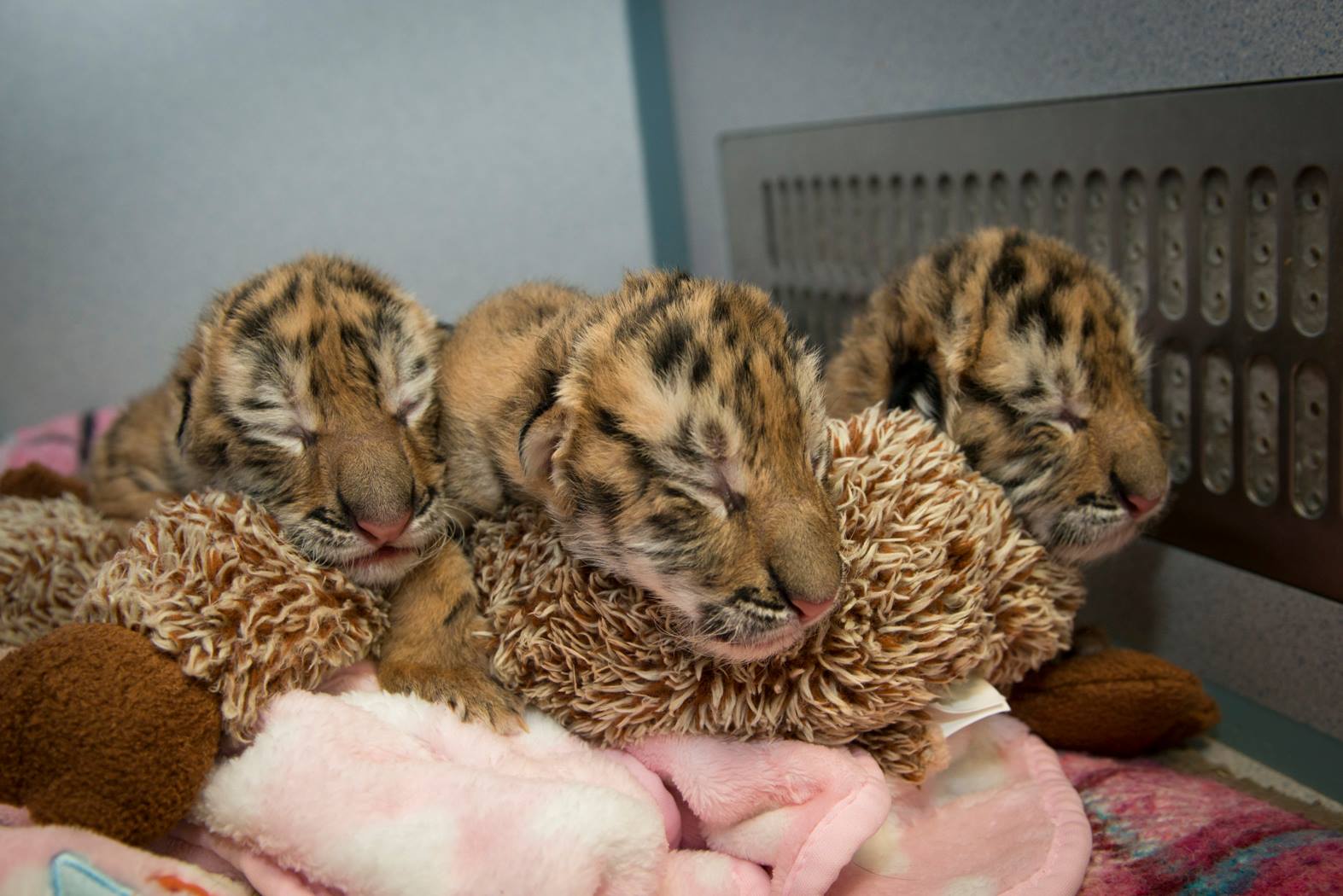
    11174275_10152848601202106_7914475494008818571_oThree Tiger cubs born April 21 at theColumbus Zoo & Aquarium bring hope to the critically endangered Amur Tiger population.

    11130345_10152848601197106_983217132171385617_o
    11130067_10152848601192106_7862935803396438940_o
    10360338_10152848601187106_2853209880137783979_n
    Photo Credit:  Columbus Zoo & Aquarium

    The trio, all males, each weighed about 2.5 pounds at birth.   They are the first litter for female Irisa.  Zoo staff spent the first day closely monitoring Irisa and her newborns via a remote camera system.  When it became clear that Irisa was not nursing her cubs, the zoo staff decided to hand-rear these important youngsters.

    There are only about 400 Amur Tigers (formerly called Siberian Tigers) remaining in Russia’s Far East, making each zoo-born cub extremely important to the genetic diversity of the species.  The wild population once dipped as low as 40 animals in the 1940s, but improved law enforcement and conservation programs have boosted the population in recent decades.  Poaching continues to be the number one threat to these magnificent cats, which are the largest of the six surviving Tiger subspecies.  Three Tiger subspecies have gone extinct in the last 100 years.

    The Columbus Zoo participates in the Species Survival Plan for Amur Tigers, which aims to sustain a genetically healthy population of these rare cats.


  • ,

    3 penguin

    The Columbus Zoo and Aquarium in Ohio has welcomed three Humboldt Penguins to the zoo’s Shores region. The chicks hatched in March and are three of over 20 Humboldt Penguins to hatch at the zoo since 1996.  

    Although animal care staff can tell the chicks apart by personality, they will place a colored wing band on the chicks to easily identify them as they start to explore their habitat. All three chicks are doing well and have passed their wellness check-up with flying colors.

    9 penguin

    1 penguin

    8 penguinPhoto credit: Colombus Zoo

    The first to hatch weighed 85 grams, the second weighed 79 grams and the third chick, which hatched last, week weighed in at 56 grams. The first two chicks are males, but the third chick’s sex has yet to be determined.

    See and read more after the fold.

    (more…)

  • ,

    G smile

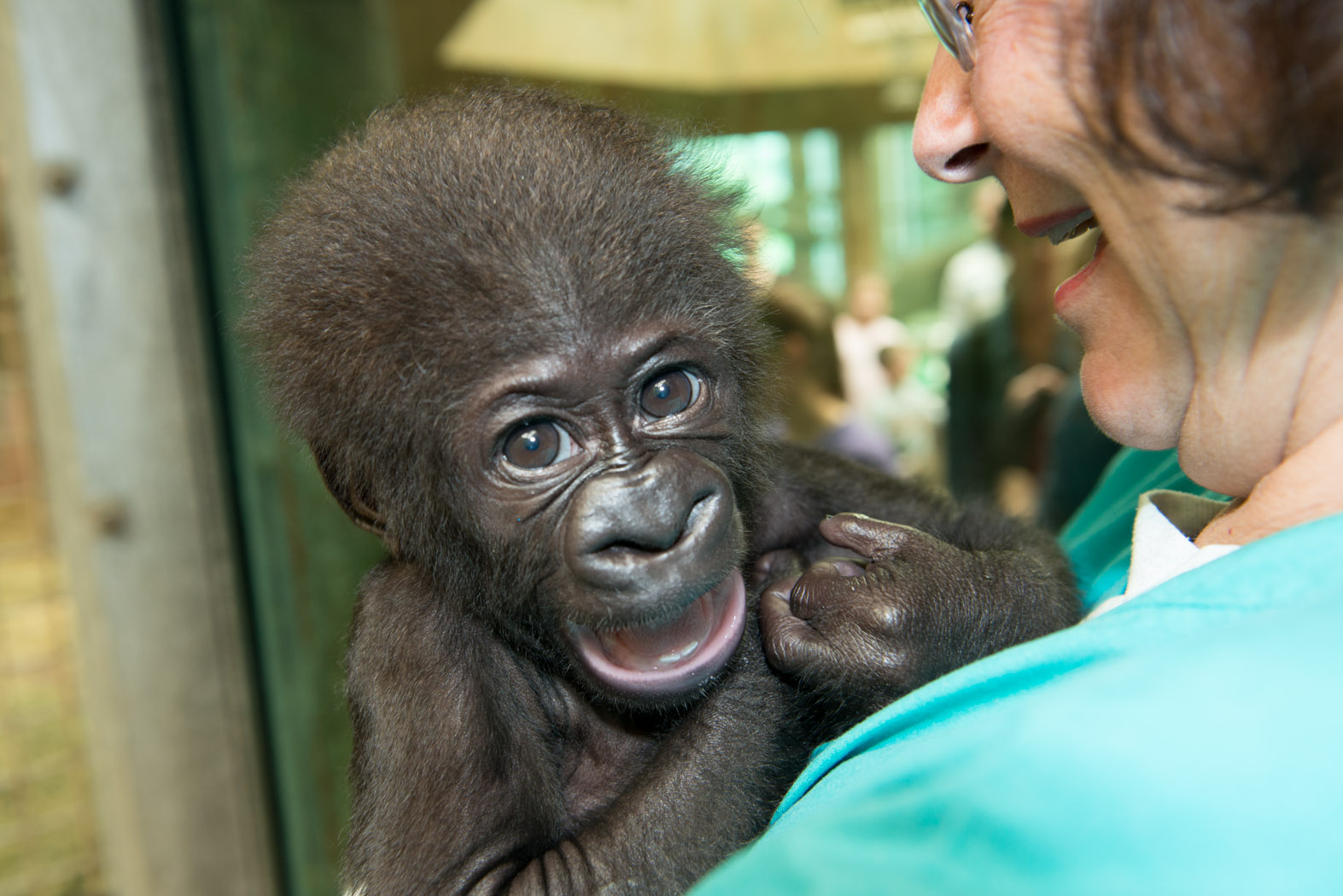
    The baby Gorilla born on May 23 at the Columbus Zoo now has a name! He is called Kamoli (pronounced Kam-aw-lee) and he looks pretty happy about that! Since first-time mom Kambera didn't seem to be a natural at mothering skills, the zoo's animal care experts have been raising him, providing the around-the-clock care and nurturing that he needed to grow and become healthy and strong. His keepers spend quite a bit of time near Kambera with the hope of being able to reunite Kamoli with her in the near future. Stay tuned.

    G3

    G CU
    Photo Credit: Grahm S. Jones, Columbus Zoo and Aquarium

    The baby continues to thrive and now you can see him in action in the video below: 

    ZooBorns first covered the story of his birth HERE on June 10, where you can see his early pictures and learn more. See more pictures of baby Kamoli after the fold:

    (more…)