The Newest, Cutest Baby Animals from the World's Zoos & Aquariums

Category: Deer

  • ,

    Deer side

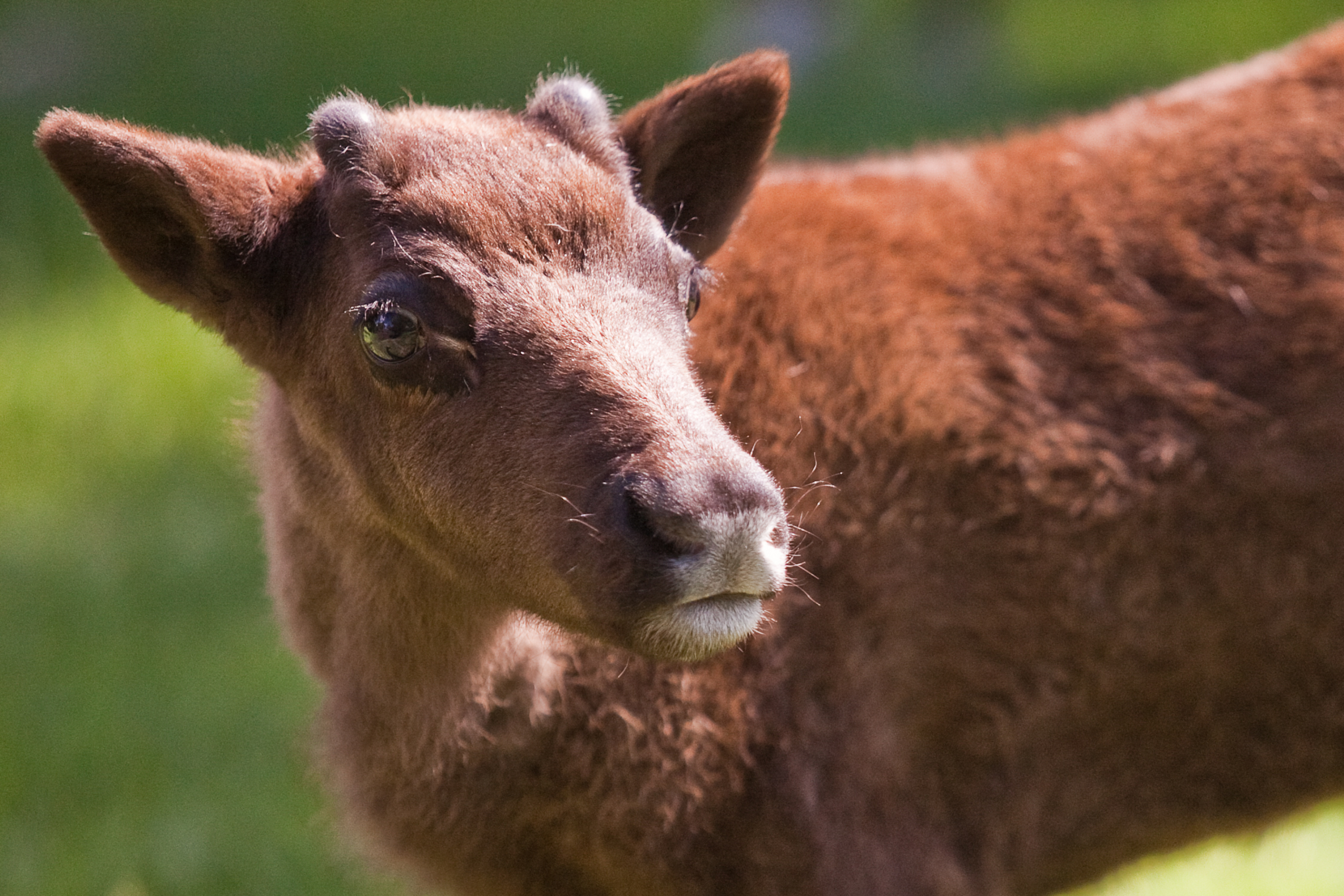
    The Rosamond Gifford Zoo announced the birth of a female Reindeer, the first born to parents Tundra (mother) and Klondike (father). They welcomed the calf in the early morning hours on May 4. The newborn was immediately given the name Derby by her keepers, in honor of her birth on Derby Day (the running of the Kentucky Derby). She weighed approximately 11.5 pounds (5.2 kg) — the largest Reindeer calf to be born at the zoo to date. Derby currently weighs 55 pounds (25 kg) and has recently been enjoying forays out in the sunny yard with the herd.

    Although called by different names in North America, wild Caribou and domestic Reindeer are considered to be the same species throughout the world. They are native to the Arctic and Subarctic regions, living in the tundra and taiga, and boreal forests of North America and northern Eurasia.

    Deer lawn

    Deer herd

    Photo Credit: Amelia Beamish / Rosamond Gifford Zoo

    Reindeer migrate over great distances throughout the year, moving between calving and wintering grounds. Their migratory patterns shift according to the season and help minimize overgrazing and ensure ample food supply for the herd. Unlike others of the Deer family, both male and female Reindeer grow antlers. The antlers have a distinctive “velvet” appearance, comprised of skin, blood vessels, and soft brown fur. Each year, antlers are shed: bulls lose their antlers after the rut and females lose theirs after giving birth in the spring.

    Read more after the fold:

    (more…)

  • , ,

    Pudu baby and mother

    The latest big thing at
    the Detroit Zoo is actually quite small. A
    female Southern Pudu, the smallest species of deer, was born on May 20th.
    The fawn is the fifth Pudu born at the zoo since the species was introduced in
    2008. 

    The fawn is a welcome addition to the captive
    population of Pudus, according to Detroit Zoological Society Curator of Mammals
    Robert Lessnau. “There are less than thirty Pudus in U.S. zoos, so this birth
    is significant, especially since the baby is a female.” 

    The fawn joins her parents, 6-year-old Carol and
    7-year-old T. Roy, and sister Hamill Girl – born in 2012 – in their habitat
    near two other South American mammals, the giant anteaters and bush dogs. 

    Pudu Fawn
    Photo credits: first photo by Lee Fisher, second photo by Patti Truesdell

    Found in the temperate rainforests of southern
    Chile and Argentina, the Southern Pudu can reach a height of 18 inches at the
    shoulder and weigh up to 25 pounds at maturity.  The tiny deer has reddish-brown
    fur and diminutive features, including rounded ears, small black eyes and short legs. Fawns are weaned at two months old, and reach their full adult size at three months old. The Southern Pudu is listed as ‘threatened’
    on the IUCN Red List of Threatened Species. A decrease in available habitat, subsistence hunting and poaching for the exotic pet trade contribute to their decline. Additional factors include predation by domestic
    dogs and competition with non-native species of deer. 

  • , ,

    Norden's Ark Pudu 1
    Photo credit: Tom Svensson / Nordens Ark

    On April 30th, Nordens Ark in Sweden welcomed a pint sized baby, a male Southern Pudu. It is the sixth fawn born at the zoo since it began housing and breeding the species eight years ago in an effort to help conserve this tiny South American deer species. The little boy has been spending his days in an enclosure with his parents for visitors to see. You can get a glimpse of the little guy in the video below!


    Pudu, native to South America, are known for being the smallest species of deer measuring under a foot and a half tall and around 25 pounds. They are separated into two subspecies, the Northern Pudu and the Southern Pudu. The southern variety can be found on the slopes of the Southern Andes at elevations up to 6,600 feet.  They live in temperate rain forests, using their small size to help them take cover in undergrowth to avoid predators. They live on a herbivorous diet that includes a wide range of different types of plant matter. 

    Both subspecies of Pudu are classified as "vulnerable" by the International Union for Conservation of Nature (IUCN) due to overhunting and habitat loss. Zoos around the world are helping to conserve this species through captive breeding programs and re-introduction efforts. 


    Related articles

    Update! Seneca Park Zoo's Baby Lion Twins at Play
    Woodland Park Zoo's Trio of Jaguar Cubs Full of Personality
    Ferocious Wolverine Pups Born in Sweden
    Nordens Ark Welcomes Three Amur Tiger Cubs
  • ,

    20130427_114613_Zoo_Vienna

    Named for the word “snow” in Finnish, Lumi the female Reindeer
    calf was born on April 25 at Austria’s Vienna Zoo.  Only minutes after the 11-pound
    (5 kg) calf was delivered by female Reindeer Helmi, Lumi stood up on her thin and wobbly
    legs.

    20130427_113245_Zoo_Vienna

    20130427_112333_Zoo_Vienna

    20130427_120300_Zoo_Vienna
    Photo Credits: Norbert Potensky


    According to Zoo Director Dagmar Schratter, “Reindeer live in the barren expanses of
    the Arctic tundra and taiga. Females and young animals have to move on a few days
    after birth to seek new pastures with the herd.”

    Vienna Zoo’s Reindeer
    herd includes five adult females and one male named Hank.  With Lumi’s birth, Hank has become a father
    for the fifth time.  Lumi is the second
    calf born to Helmi.

    Unlike other
    members of the deer family, where only the males have antlers, both male and
    female Reindeer have antlers.  Little
    Lumi will begin to grow her antlers when she is about seven months old.

    Reindeer are
    widespread across extreme northern North America and Eurasia, but many herds
    are shrinking in numbers, possibly due to climate change and habitat
    disturbance.

    See more photos of Lumi below the fold.

    (more…)

  • ,

    Red brocket (2)

    A male Red Brocket Deer was born at
    the Gladys Porter Zoo in Brownsville, Texas on March 25.  Barely over two weeks old, the little fawn is
    already actively exploring the exhibit alongside his mother.


    Brocket mom and baby

    IMG_4504

    Red brocket
    Photo Credit:  Gladys Porter Zoo

    All Brocket Deer are small, but at
    about 30 inches tall at the shoulders, Red Brocket Deer are the largest of the
    ten Brocket species found in Central and South America.  Because these diminutive Deer are shy and
    secretive, not much is known about their habits, and there is some confusion
    about the taxonomy of the 10 species.  At
    this time, there is not enough data about the Red Brocket Deer to evaluate its
    conservation status.

    Browsing on leaves and fruit, Red
    Brocket Deer inhabit dense forests and live solitary lives.  Males competing for mates will fight, using
    their short horns to inflict injury on their opponent. 

    See more photos below the fold.

    (more…)

  • ,

    Muntjac 1

    Burgers' Zoo in the Netherlands has been keeping mighty busy lately. In addition to their hundredth year anniversary, which they celebrated just yesterday on March 30th, and the three Warthogs born last month that we reported on HERE just last week, they have just announced the recent birth of a tiny Muntjac.

    Muntjacs are known to be the oldest species of deer. There is evidence of their existence dating back between 15 and 35 million years from fossils that have been discovered in modern France, Germany and Poland. Today, Muntjacs are native to Southeast Asia. Interestingly, in the early part of the twentieth century, a group of Muntjacs escaped from Woburn Safari Park in England and the species was able to survive and thrive in this European environment. Today, a large and sustainable population of Muntjacs descended from these escapees exist in England. It is though that they will soon become the most numerous deer species in the nation. 

    Muntjac 2
    Photo credit: Burgers' Zoo

    Related articles

    New Bloodline of Fennec Foxes Born at Taronga Zoo
    Tiny Muntjac Fawn Born at Red River Zoo
    Three Little Pigs Born in the Netherlands
    Tiny Mouse Deer Born at Berlin Zoo
  • ,

    Deer 3

    Chester Zoo recently welcomed a Brow Antlered Deer fawn named Zeyar, which means "success" in Burmese. Unfortunately the mother rejected her calf, but Zeyar is flourishing under the care of her surrrogate deer-mother Hellen Massey (shown in photos with the fawn at sixteen days old). Born a tiny 3.7 kilograms, Zeyar gets bottle-fed four times a day and is growing in leaps and bounds. Chester Zoo is the only zoo in the UK breeding this endangered species, making Zeyar a great success story for deer conservation.

    Deer 2

    Deer 1
    Photo credits: Chester Zoo

    Zeyar belongs to a subspecies of Brow Antlered Deer native to Burma, where they live in grassy plains, swamps and deciduous forests. Brow Antlered Deer are also known as Eld's Deer or Thamin. The most serious threat to the species is poaching for bushmeat, traditional medicines and trophy antlers.

    Related articles

    Norbert the Nabarlek Becomes Perth Zoo's Pint-sized Ambassador
    Presenting… A One Day Old Mouse Deer!
    Tiny Muntjac Fawn Born at Red River Zoo
    Tiny Mouse Deer Born at Berlin Zoo
  • ,

    Fawn 1

    The Red River Zoo in Fargo, ND announced the birth of a Muntjac fawn (pronounced munt- jack). The little female was born on February 24, to mom Jasmine. This Saturday, March 2, she weighed in at just 1 pound 10 ounces (.49 kg).

    Native to Northern China, Northern Russia, Mongolia and Tibet, Muntjac Deer are among the oldest of the deer family - there's evidence of their existence from as far back as 15 to 35 million years ago! This exotic animal is also among the smallest; the average adult weighs only about 25 pounds (11.33 kgs). The males do have antlers and tusks which they use to fight for territory. 

    The Red River Zoo has successfully bred Muntjac to help create greater genetic diversity for the captive population in North America. Jasmine has given birth to several other healthy fawns, all female. Once old enough, the offspring are sent to other zoos to help those breeding programs. This baby is now on exhibit with her mom in the zoo's Rotary Wings over Asia Aviary.

    Photo Credit: Red River Zoo

  • , ,

    Nose pose

    Prague's Zoo Praha has two new baby reindeer, a boy and a girl. The male was born on Friday the 13th and the female came along about three days later. They went out in the zoo's large paddock for visitors to see for the first time on April 20. The mothers can be seen with their babies following closely behind them.  The father of both is Mirda, who himself was born in Prague Zoo.

    Their large, broad hooves spread apart to form a nearly circular print and help them navigate the soft ground that covers much of the tundra in which they live in the wild. They also aid in digging for food under the snow. 

    Reindeer are a species of deer found in the far northern areas of arctic Europe, Asia, and North America extending onto the tundra above the tree-line. They are called Caribou in America. Domesticated for thousands of years, they were mainly used as beasts of burden and farmed for milk, meat and their hides, reindeer have been the economic basis of the Lapp culture. Today they are raised in many areas of the world outside of their native arctic.

    Bleat

    Face.1

    W:mom

    Jump.1
    Photo Credit: Tomáš Adamec, Zoo Praha

  • ,

    Chital 2

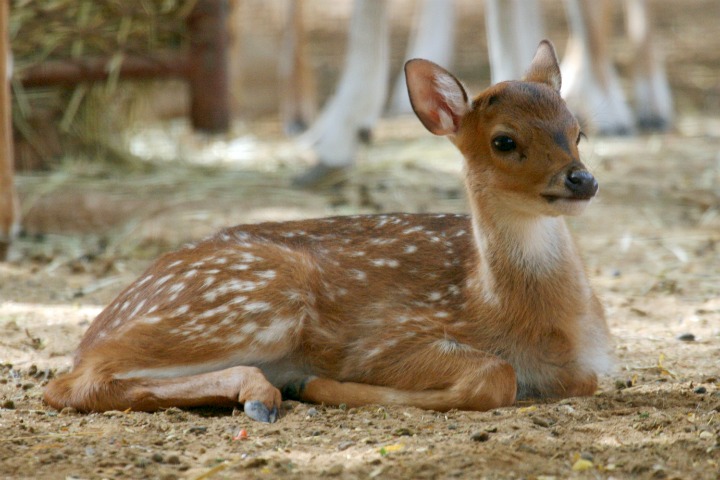
    The UAE's Al Ain Zoo is celebrating the birth of a newborn Chital Axis Deer. Born the week of March 19, the Chital calf is now on exhibit. These deer are renowned for their beautiful reddish-brown coats with white spots and their large, three-pronged antlers.

    While native to the dense semi-evergreen forests and open grasslands of Sri Lanka, Nepal, Bangladesh and India, Chital deer have also been successfully introduced to Texas, Hawaii and Queensland Australia. They are primarily grazers, feeding on short, sprouting grasses.

    In the early 20th century there were substantial declines and local extinctions, driven by hunting for meat, extermination as an agricultural pest, and habitat conversion. Thanks to protected areas and their tendency to be prolific breeders, the Chital is currently listed as Least Concern on the IUCN Red List.

    Kiss

    Chital
    Photo Credit: Al Ain Zoo