The Newest, Cutest Baby Animals from the World's Zoos & Aquariums

Category: Houston Zoo

  • ,

    2

    On Wednesday April 3, at 3:55 pm, the Houston Zoo's four and a half year old Nyala antelope named Ginger went into labor.  By 4:02, the healthy baby boy had already kicked his way out of his mom and onto the ground, making this one of the fastest deliveries seen by staff.  The baby was very quick to get on his feet and to begin nursing and even to start exploring his new world.

    The new baby has yet to be named, but he is now spending afternoons in the newly constructed west hoof run exhibit at the Houston Zoo with the entire Nyala antelope family.  Please stop by the new west hoof run exhibit to see our newest addition to the family.

    A word of caution though, Nyala antelope like to “stash” their babies so that predators in the wild would not find them.  So if you don’t see him running around chasing his bigger brother, then you may have to look deep into some of the foliage we have in the exhibit for a glimpse of him.

    3 nurse

    1

    Photo Credit: Stephanie Bledsoe-Adams/Houston Zoo

    This is the second birth for mom Ginger and for dad Niles.  Their first offspring, a boy named Cashew, was born July 14th 2012

    4

    6

    7

    12


  • ,

    Houston Zoo MBHT Egg X-ray

    Lurking in the murky waters of the Houston
    Zoo’s
    Lemur exhibit moat are seven critically endangered Madagascar Big-headed
    Turtles.  When the Turtles received their
    annual veterinary checkup, radiographs and ultrasounds revealed that two of the females had
    eggs. 

    Houston Zoo MBHT-7572

    Houston Zoo MBHT-7763a

    Houston Zoo MBHT-7648a

    Houston Zoo MBHT-7622a
    Photo Credits:  Houston Zoo

    The females would normally lay their eggs in nests excavated near the water’s
    edge, but the Houston Zoo staff determined that ground temperatures were too
    cold for the eggs to develop successfully. 
    Instead, the zoo veterinarian induced the females to lay their eggs in
    the safety of the clinic.  The two females laid a total of 33 eggs! 

    The eggs were collected and placed in two separate incubators in the reptile
    house, with temperatures set at 28.5° Celsius (83.3°F) and 30.5° Celsius
    (86.9°F).  The Houston Zoo is the first in North America to incubate eggs
    from Madagascar Big-headed Turtles, and little data exists.  The staff expects the first hatchlings to
    emerge sometime in May.

    Madagascar Big-headed Turtles are found only on the island of Madagascar,
    where they inhabit slow-moving streams. 
    Though they are among the world’s most endangered turtle species, they
    are still eaten for food and illegally shipped to Asia, where they are used for
    traditional Asian medicine. 

    Related articles

    Ever Seen a Frog This Tiny? Smithsonian Conservation Biology Institute and Collaborators Successfully Breed Endangered Species
    Houston Zoo's Baby Masai Giraffe Named After Yao Ming
    Houston Zoo Staff Expert at Weighing New Baby Sifaka
    Just Say 'Mo': Oregon Zoo's Baby River Otter Gets A Name
  • ,

    Baby Giraffe 2013-4615

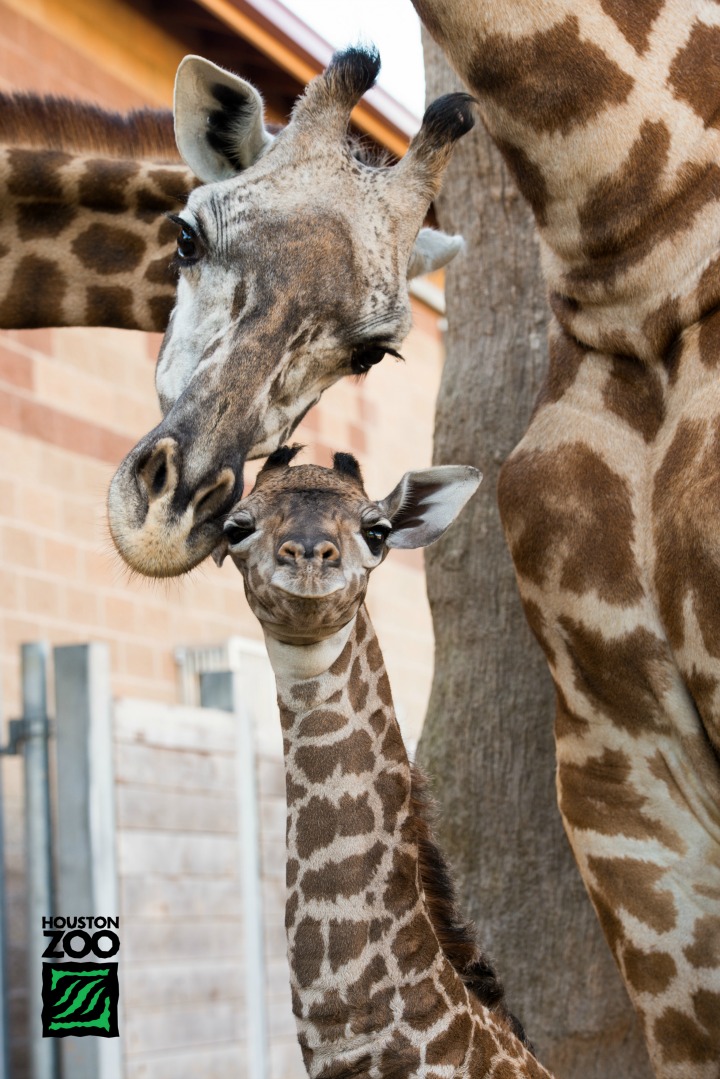
    The newest and tallest addition to the Houston Zoo is a male
    Masai Giraffe, born to 5-year-old mom Neema and 6-year old dad Mtembei early on
    February 25, after a 14-month gestation. The calf weighs 139 pounds (62 kilos),
    and stands 74 inches tall (1.87 m). “The calf was standing on his own a little over an
    hour after he was born and was nursing about 4 hours later,” said Hoofed Stock Supervisor John Register. 

    The calf has been named Yao by the keepers who
    cared for Neema through her pregnancy, in honor of former Houston Rockets player
    Yao Ming. Working with the conservation organization WildAid, Yao Ming has led
    the world’s largest conservation awareness program spotlighting illegal
    elephant and rhino poaching in Africa and the shark fin trade in Asia. Yao toured the Zoo’s Giraffe, Rhino and Elephant exhibits on February 14. You can
    read more about that and his efforts for conservation on the Houston Zoo’s
    website
    .

    Yao Ming with giraffes

    Yao CU

    Photo Credit: Stephanie Bledsoe-Adams/Houston Zoo

    While Masai Giraffes are not threatened or endangered in their native habitat, there are only about 100 of the species living in 24 North American zoos. Giraffes are the tallest living terrestrial animal.  Males average 17 feet in height and can weigh up to 2,500 pounds.  Female Masai giraffes typically reach a height of 14 feet.  At birth, Masai giraffes weigh between 125 and 150 pounds and stand approximately 6 feet tall.

    See more pictures of baby Yao after the fold:


    (more…)

  • ,

    Turt 1

    This
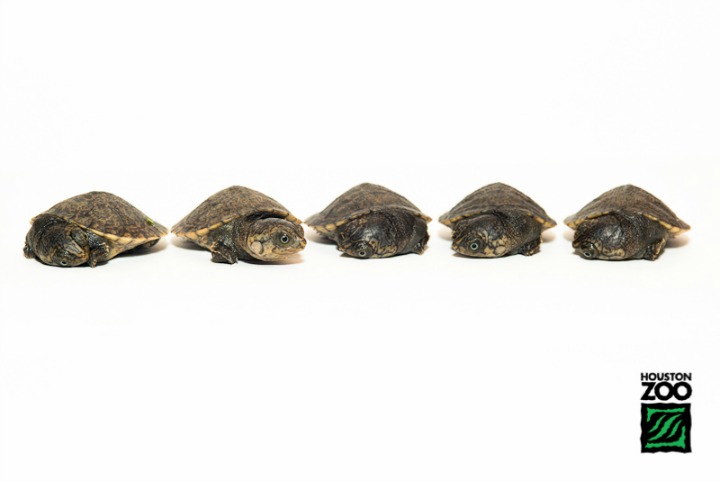
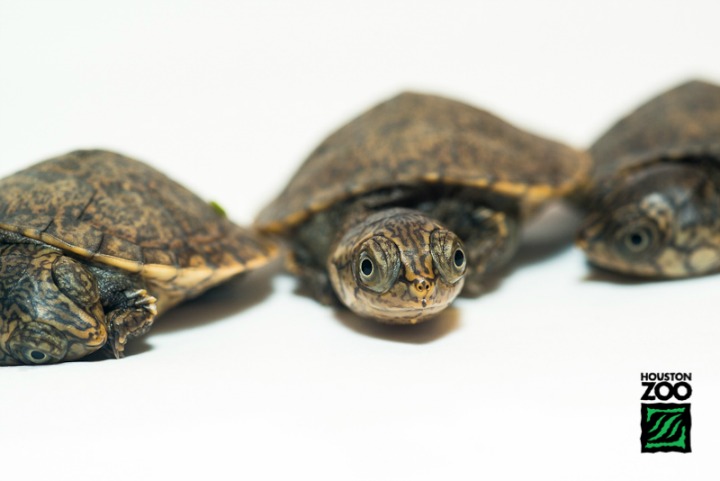
    week the Houston Zoo announced that five baby Madagascar Big-Headed Turtles
    hatched in their Madagascar Lemur exhibit. The hatchlings are small – approximately 6.8 g each, just a little larger than an US Quarter, and averaging only 28.7mm wide
    and 32.3 mm long.

    This
    is the first hatching at a zoo in the United States – and Houston is one of the
    only zoos in the world that is currently breeding them. Ranked at number 16 on the worlds’ most endangered turtle and tortoise list, these turtles are
    facing extinction due to drastic deforestation and illegal hunting.
    This species can only be found in seven protected areas in western
    Madagascar. 

    Turt chris

    Turt hand 2

    Turt cu

    Photo Credit: Stephanie Adams/Houston Zoo

    Read more about these endangered Turtles after the jump:

    (more…)

  • ,

    1

    The Houston Zoo is proud to announce the birth of a ­­male Masai Giraffe. Mom Tyra delivered the healthy baby shortly before 8 p.m. on July 14 following a 14 month pregnancy. This is 14-year-old Tyra’s seventh calf. The proud first time father, Mtembei is 5 years old. 

    “Tyra went into labor at approximately 4:50 p.m. on July 14 and delivered her baby boy at 7:48 p.m.,” said Houston Zoo Hoofed Stock Supervisor John Register. The calf was standing on his own and nursing by 8:27 p.m. John added, “The calf weighs about 160 pounds (73 kilos), and is over 6 feet (1.8 meters) tall. He’s a strong healthy baby."  

    While Masai Giraffes are not threatened or endangered in their native habitat, there are 92 Masai Giraffes living in 24 North American zoos. Giraffes are the tallest living terrestrial animal. The average male is about 17 feet tall and can weigh 3,000 pounds, while an average female is over 14 feet tall.  With this new arrival, the Houston Zoo’s herd of Masai Giraffe has grown to 8, including 5 males and 3 females.

    The Houston Zoo is holding an online naming contest for the newest addition to the giraffe herd.  Visit the Zoo online at http://www.houstonzoo.org/babygiraffe/ to cast your vote for your favorite choice from the list of names chosen by the Zoo’s giraffe keepers.

    Run

    Stand

    Mom and dad

    Neck
    Photo Credits: Stephanie Adams/Houston Zoo

  • ,

    Port-3824

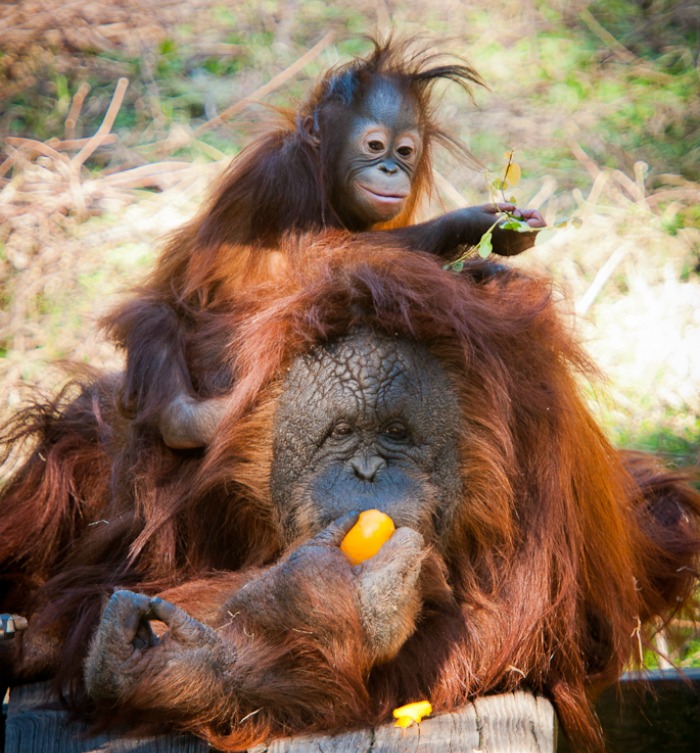
    After months of tender loving care and sleepless nights, a team of 50 trained Houston Zoo care givers who have been hand-raising baby orangutan Aurora, achieved its ultimate goal – Aurora’s ‘adoption’ by the Zoo’s experienced surrogate orangutan mom Cheyenne.

    Aurora was born on March 2 of 2011. After the first 12 hours, birth mom Kelly abandoned the infant and refused repeated attempts by zoo staff to return the baby to her. Concerned for Aurora’s welfare, the primate care team made the decision to hand rear the baby.

    For 9 months, always in view of the Zoo’s other orangutans, a total 50 different volunteers assisted the Houston Zoo’s primate care team in that process. Aurora clung to her care givers 24 hours a day, 7 days a week. You can see a remarkable video about that process in our ZooBorns article published last April. When Aurora was thriving and ready to move on, the care team closely monitored Kelly and Cheyenne to gauge their interest in the baby.

    “As Aurora became more independent of her care givers, we taught her to go through what’s called a ‘creep door’, a very small opening in doors between rooms in the off-exhibit night house,” said Killam.

    On December 28, the creep door between Cheyenne and Aurora was opened for the first time. “Aurora chose not to go completely through it, instead touching and playing with Cheyenne, who reached her arm through,” said Killam. The next day, Cheyenne chose not to play with Aurora through the creep door, but instead sat just outside it. She waited patiently until Aurora came through the on her own and then Cheyenne picked Aurora up and carried her across the room.  

    Cheyenne carried Aurora around for the next 7 hours, even allowing Aurora to ride on her head. The two shared produce and cereal and fruit juice together; the primate care team was able to give Aurora her bottles right next to Cheyenne. Several times Cheyenne would do somersaults around Aurora as the little orangutan watched in amazement. “It was a wonderful day,” said Killam. 

    The two can now be seen in the outdoor habitat together and all is well.

    Eat

    Finger

    Back
    Photo Credits: Stephanie Adams/Houston Zoo

  • , ,

    Face

    There's a new baby Bongo at the Houston Zoo in Texas, and his name is Brody. Born on December 6, Brody weighed just over 40 pounds (18.3 kg). He’s a big healthy boy with a good appetite as evidenced by his current weight 5 weeks later – 92+ pounds (42 kg). He can be seen every day (weather permitting) on exhibit with his 3 year old mom Penelope. His favorite spot for resting and naps is in the front right hand corner of the exhibit.

    To the casual observer, all bongo calves look alike. But the zoo's keepers found a perfect way to tell them apart – they count the white stripes on their side. Bongo can have 10 to 14 white stripes on each side and each side can present a different configuration. For instance, Penelope has 11 stripes on each side. 

    A bongo is a type of antelope native to the lowlands and mountain forests of Kenya and western Africa and are among the largest of the African forest antelope. In the wild, bongos are shy and elusive but very social. In fact, they are the only forest antelope to form herds.

    The Western or lowland bongo is classified as near threatened by the International Union for Conservation of Nature, the IUCN. The Eastern or mountain bongo is classified as endangered. 

    Nose

    Curl

    Mom and baby

    Touch

    Photo Credit: Stephanie Adams/Houston Zoo

  • ,

    Houston-Zoo-Fossa-pups_2649

    On June 25, 2011, three Fossa pups were born to the Houston Zoo's female, Riana. Although Riana was only with her own mom for a few days before keeper’s had to intervene due to maternal aggression, she has proven to be an excellent and laid back mother. Houston Zoo carnivore keepers set up cameras in Riana’s nest box and because they were already raising an orangutan infant, the monitor was set up in the primate area. The overnight caregivers pulled double duty, monitoring Riana and her pups remotely while caring for baby Aurora, their hand-raised orangutan.

    The litter turned out to be three girls, named Ingrid, Heidi and Gretchen in honor of their father, Hansel. True to their agile fossa nature, the girls are extremely active, tumbling around their enclosure while using their long tails for balance. One of their favorite activities is trying to run all together on their giant “hamster wheel”, built by Keeper Josh Young. Usually one of them wants to run the opposite direction from her sisters, which makes for some really great entertainment for our keeper staff!

    Houston-Zoo-Fossa-pups_2677

    Houston-Zoo-Fossa-pups_2661

    Houston-Zoo-Fossa-pups_2656
    Photo Credit: Stephanie Adams/Houston Zoo

    More pics and info below the fold!

    (more…)

  • , ,

    Kudu 1

    This big eared baby kudu was born on Agust 31 in The African Forest at the Houston Zoo. She weighed approximately 15.9 kilos ( 35 pounds) at birth. Her keepers say, "She is bright eyed and quite curious – she's always looking around."

    Gestation for Greater kudu is about 9 mo. Her mother, Clementine, has proven to be very good with her baby. "The birth was easy. It started in the afternoon and was all of two hours. And the baby nursed right away," the keeper continued. "The calf is doing well and being slowly introduced to the rest of her herd – dad Alfonzo and female Charlotte and her offspring Apollo".

    She has yet to be named. The kudu share the habitat with a trio of Southern White rhinos in The African Forest. The newest member of the kudu family will be out in the exhibit after introductions to the rhinos occur.

    Just born

    Mom cleans

    Wobbly

    Under mum

    Noses

    Apple-tree
    Photo Credit: Stephanie Adams/Houston Zoo

    You can view a full photo album on the Houston Zoo's website.

    (more…)

  • ,

    PSP

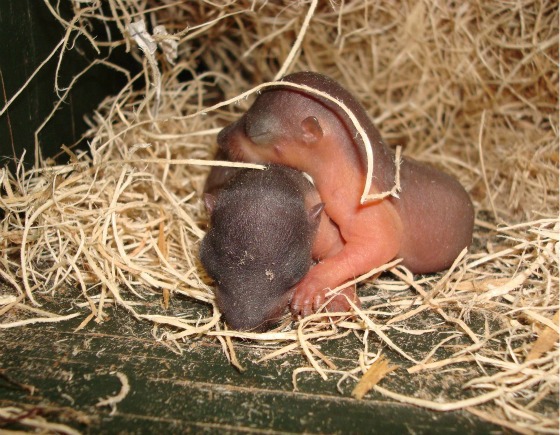
    The Houston Zoo’s new breeding pair of Prevost squirrels, Walnut and Mali, hit the ground running and produced its first litter on June 25th, fifty-one days after being introduced. The two male pups, Ranger and Danger, are thriving under the excellent care of their first-time mother. 

    Native to the forests of Southeast Asia, the colorful Prevost’s squirrel has a gestation period of forty days. Mali choose to give birth in an off-exhibit area in a wooden nest box. Prevost’s squirrel mothers will carefully guard the nestbox, but due to Mali’s excellent training and her relationship with the keepers, staff had no trouble getting her to go into a travel crate for a few minutes, allowing for the pups to be checked. Keepers were able to obtain the weights of the pups and note milestones. The pups started to open their eyes at 16 days and began venturing out of the nestbox at about one month of age.

    Ranger and Danger are not on exhibit yet, but may be exploring the habitat soon. As the youngsters grow up, zoo keepers hope that Walnut and Mali will continue to contribute to the zoo population of this beautiful, lively species.

    Prevost's pinkies

    Gloves

    7-16

    2 prevost

    Photo Credit:Houston Zoo