The Newest, Cutest Baby Animals from the World's Zoos & Aquariums

Category: Lincoln Park Zoo

  • ,


    Titi2

    Even though the newest arrival at
    Lincoln Park Zoo only weighs a few ounces, the diminutive Bolivian Gray Titi
    (pronounced tee-tee) Mmonkey is a big deal. The baby, born August 18, is the
    ninth offspring for its parents, and its mother is the oldest of her species to
    give birth in a North American zoo.

    Animal care staffers do not know yet if the little one,
    which joins a small population of only around 50 other Bolivian Gray Titi
    monkeys in accredited zoos nationwide, is a boy or a girl – but they do know it
    is adorable!

    “The baby is spending most of its time nestled in the thick
    fur on mom’s back, but we do get a glimpse of its little face peeking up now
    and then,” said Curator of Primates Maureen Leahy. “Dad and the siblings are
    playfully curious with the new arrival, and the whole group is responding
    appropriately to the addition.”

    Titi1

    Titi3

    Mom Delasol, 21, and dad Ocala, 15, are well-versed in the
    ways of parenting. Just last October they welcomed their eighth offspring
    together, a male aptly named Ocho, the Spanish word for eight. They are
    recommended to breed by the Titi Monkey Species Survival Plan (SSP) and are one
    of the most successful pairs on record.

    As the oldest mother in the SSP to produce healthy
    offspring, Delasol is a testament to the high quality animal care at Lincoln
    Park Zoo and the special attention paid to aging animals. The birth is
    particularly significant because Bolivian Gray Titi monkeys are declining in
    their native South America due to habitat loss and the illegal pet trade.

    Titi families are known for being tight-knit, and fathers
    and siblings pitch in with childcare duties early on. The Titi Monkeys at
    Lincoln Park Zoo can often be seen sitting closely together on the same branch
    and intertwining their tails as a bonding behavior.

    Photo Credits: Christopher Bijalba /
    Lincoln Park Zoo.

  • ,

    1

    Lincoln Park Zoo's eighteen newly-hatched Ornate Box Turtles have a big future ahead. These quarter-sized turtles are part of a conservation effort between Lincoln Park Zoo and the U.S. Fish and Wildlife Service (USFWS) that aims to restore the dwindling population of the threatened Ornate Box Turtle across the state. “Our job at Lincoln Park Zoo is to give these little guys the best possible head start. In a sense, we are a turtle nursery,” said General Curator Dave Bernier. “We love to work on these types of conservation projects, especially when an Illinois species that literally lives in our backyard is involved.”

    The hatchlings will spend their first year at the zoo’s Kovler Lion House before being released into their natural home — Illinois sand prairie. But it will take a village: Their zoo turtle team consists of Bernier, zoo reptile experts, and, unexpectedly, the exotic carnivore keepers at the Kovler Lion House. They will live in groups of six surrounded by comfy moss that they can use for nesting, and the climate will be kept warm and balmy – just the way turtles like it. Animal care staff will feed them specially formulated, high nutrient turtle chow. 

    Hands
    Photo Credit: Lincoln Park Zoo

    When the turtles are mature enough to be released, the zoo’s partners from USFWS will help them settle into their new home at Lost Mound Sand Prairie, a Unit of Upper Mississippi River National Wildlife and Fish Refuge in Savanna, Ill. Located within the former Savanna Army Depot, the area used to be home to many Ornate Box Turtles before habitat loss caused by years of military activities drastically reduced the species’ population.

    Read more about the conservation efforst after the jump:

    (more…)

  • , ,

    LPZ111118_090

    Chicago's Lincoln Park Zoo has a new baby – a healthy, Western Lowland Gorilla, the first to be born at the Zoo since 2005. The baby has yet to be named. First time mom, Bana, is a 16-year-old. Dad Kwan, a 22-year-old silverback, seems proud of his new offspring and has stayed protectively close to mother and baby. Born on November 19, the baby joins a troop of 7 at the Zoo. The other gorillas are "respectfully curious" according to Curator of Primates, Maureen Leahy.

    “Bana has taken very well to motherhood,” said Leahy. “She is showing all of the signs of a doting new mom and is appropriately tender toward and watchful over her infant. The baby is gripping tightly to Bana and making great eye contact with her during this crucial bonding time.”

    Keepers are watching closely to make sure Bana and her baby continue to do well, as the first few weeks are critical in the survival of newborn Gorillas.

    LPZ111118_070

    LPZ111118_099

    LPZ111118_004
    Photo Credit: Lincoln Park Zoo


    More pics below the fold…

    (more…)

  • ,

    LPZoo-piglets

    On May 6, a dozen piglets were born at Lincoln Park Zoo’s Farm-in-the-Zoo Presented by John Deere, just in time for Mother's Day. They quickly began nursing and scampering around their pen, under the close watch of mom.

    LPZoo-piglets3

    LPZoo-piglets2
    Photo credits: John Kortas / Lincoln Park Zoo

  • , ,

    Gibbon baby at Lincoln Park Zoo by John Kortas

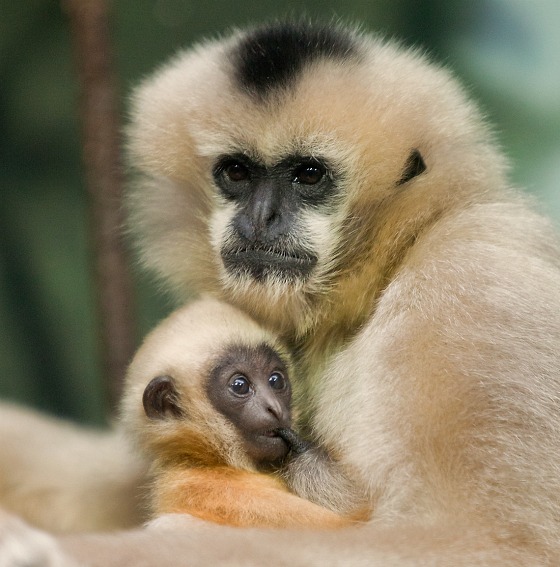
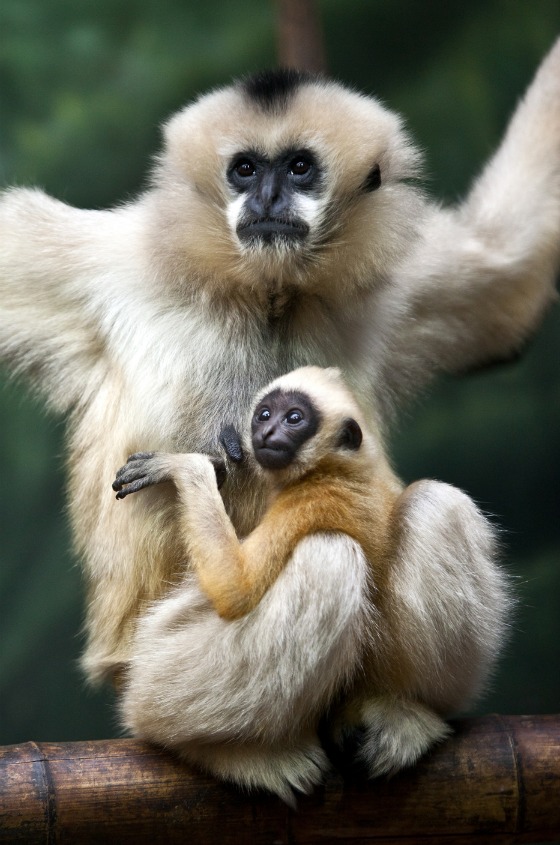
    Chicago's Lincoln Park Zoo has confirmed their newest swinging sensation, a baby white-cheeked gibbon, is a boy – and boy is he cute! The 3-month-old critically endangered ape has also been given a name. “The baby has been named Sai, (pronounced ‘sigh’), which means ‘son’ in Burmese said Lincoln Park Zoo Curator of Primates Maureen Leahy. “He is the third offspring – all sons – for the mother Burma and father Caruso.” Lincoln Park Zoo is significantly involved in ape conservation efforts in the wild to help secure a long term future for endangered apes.

    Gibbon baby at Lincoln Park Zoo by John Kortas 2

    “Sai has been transforming right before my eyes over the last 3 months,” said Leahy. “His hair is beginning to darken in color, his baby teeth have grown in – he’s got an impressive set of choppers – and he’s already starting to venture an arm’s length away from his mother, reaching out to test his long arms on hanging vines,” said Leahy.  Check out the chompers on this little guy below!

    Gibbon baby showing off his chompers by Anita YantzPhoto credits: #1 and #2 John Kortas, #3 Anita Yantz, #4 Lisa Rank (below) 

    (more…)

  • ,

    Baby sloth clings to mom at Lincoln Park Zoo 1

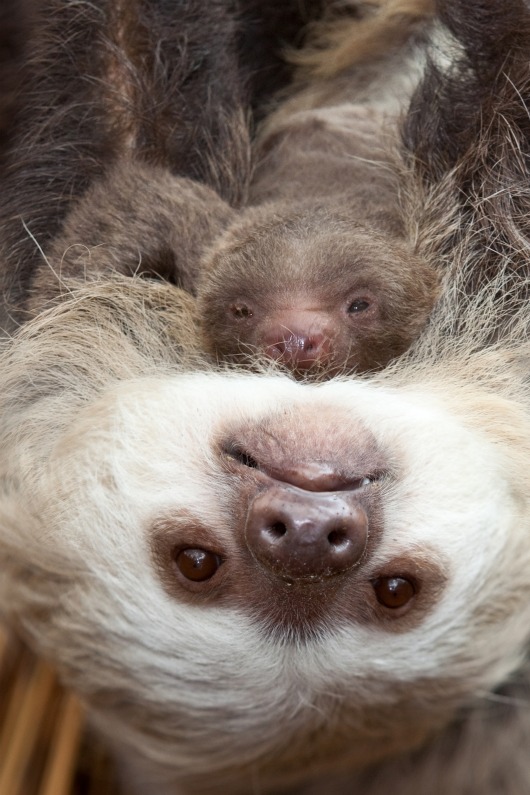
    A one-week-old Hoffman’s two-toed sloth clings to its mother today at Chicago’s Lincoln Park Zoo. The youngster was born on Feb. 15 to the 20-year-old, first-time mom. Despite the mother being new and inexperienced, animal care staff reports that she is being very attentive and caring to the youngster. The baby is nursing, clinging well, and appears healthy. The baby has not yet been named, and its sex is currently unknown. The mother and baby can been seen daily in the zoo’s Regenstein Small Mammal-Reptile House.

    Baby sloth face and mom at Lincoln Park Zoo 2

    Baby sloth sleeps on mom at Lincoln Park Zoo 3Photo 1 and 3 credits: Lincoln Park Zoo / John Kortas. Photo 2 credits: Lincoln Park Zoo / Julie Ann Platt

  • , ,

    Baby White-Cheeked Gibbon by Anita Yantz 1a

    There is a lot of oohing and aahing at Lincoln Park Zoo’s primate house. A critically endangered White-Cheeked Gibbon gave birth to a healthy infant on Jan 6. Curator of Primates Maureen Leahy reported, “The parents are doing great and the infant is a good size with a tight grip and has been seen nursing.” The infant has yet to be sexed or named.

    This is the third offspring for mother Burma and father Caruso. White-cheeked gibbons are believed to pair bond for life, and can have offspring every 2-3 years after a 7-8-month gestation period. 

    Baby White-Cheeked Gibbon by Anita Yantz 2bPhoto credits: Top two photos, Anita Yantz

    More below the fold

    (more…)

  • ,

    This past Friday, the Lincoln Park Zoo debuted its one week old endangered Grevy’s zebra colt to the public. Named Enzi, which is Swahili for “power” or “might”, he is the first offspring for his 3-year-old mother named Adia. He is also the first zebra foal to be born at the zoo since 2001. Mother and mini-baby zebra spent their first week off exhibit so the pair could bond in private and animal care staff could carefully monitor their health.

    Image005

    7

    8
    Photo Credits: Lincoln Park Zoo

    (more…)

  • ,

    Two of six endangered red wolf pups born at Lincoln Park Zoo on April 17 are on their way to North Carolina today where they will be released into the wild through the Red Wolf Recovery Program. The newborn pups will be placed inside the den of a pair of wild adult wolves that are currently nursing their own small litter of comparably aged pups. The wild wolves will become the zoo-born pups’ foster parents.

    LPZ100429_35 

    LPZ100429_20 

    LPZ100429_26 

    LPZ100429_11
    Photo Credits: Lincoln Park Zoo

    (more…)

  • , ,
    Once abundant throughout shorelines on the East Coast and Midwest, hunting and human development reduced the Piping Plover population to an estimated 20-30 individuals along the Great Lakes. However, since conservation began in earnest in the mid 1980s, the population has recovered to at least 70 breeding pairs counted in 2009. 

    Just a few weeks agos, three abandoned Piping Plover eggs were discovered along Lake Michigan and transferred to the Lincoln Park Zoo in Chicago. Hatched and reared by zoo staff, the grown chicks were returned to Sleeping Bear Dunes National Lakeshore in Michigan on Aug. 7th. 

    Piping plover chick 1
    Piping plover chick 2
    Piping plover chick 3

    Piping plover chick 4

    Learn more by reading on or at the US Fish and Wildlife Service site.

    (more…)