The Newest, Cutest Baby Animals from the World's Zoos & Aquariums

Category: Minnesota Zoo

  • ,

    Sloth Baby 3_7_2013_media

    A baby Linne’s Two-toed Sloth, born on February 3 at the
    Minnesota Zoo, is slowly making its public debut.  The infant is only the second Sloth born at
    the zoo and is a significant achievement for the Sloth breeding program. 

    The
    baby’s gender is not yet known, and it spends most of its time clinging to
    mom.  The video below captures mom and
    baby nibbling a nutritious breakfast of carrots, squash, hard-boiled eggs, and romaine
    lettuce, hand-delivered by zoo keepers. 
    In the wild, Sloths eat leaves, small twigs, berries, flowers, fruit,
    and occasionally insects and small prey.

    Sloth Baby 3_7_2013_media (2)


    Photo Credits:  Minnesota Zoo

    Sometimes
    called the slowest animals on earth, Sloths live high in the rain forest canopy
    of Central America and northern South America. 
    Their slow movements allow them to conserve energy and avoid detection
    from predators like Harpy Eagles and Jaguars. 
    Sloths sleep, eat, mate,
    and give birth hanging upside down in trees. They are also excellent swimmers.


    Related articles

    Nashville Zoo Keepers Administer Emergency Mouth To Snout CPR To Save a Baby Tapir
    It's a Tiny Baby Titi Monkey for Belfast Zoo
    Baby Sloth Hangs Out with Mom at Belfast Zoo
    Zoo Berlin Welcomes Baby Giraffe
  • ,

    PChick Announcement

    An endangered African Penguin chick hatched at the Minnesota
    Zoo
    on March 2 – the first in the zoo’s history.  The chick, whose gender is not yet known, is being
    raised behind-the-scenes by Penguin foster parents.  The biological
    parents were not incubating the egg consistently so the egg was placed with this
    experienced pair.  

    The photos below showcase the chick’s rapid growth. From top to
    bottom, the chick is one day, three days, five days, 12 days, and 16 days
    old.  The chick has grown from 2.4 ounces
    to over 1 pound, 6 ounces in that time span. The chick will eventually
    become an ambassador for its species in the Minnesota Zoo’s education programs.

    3_2_2013 068

    3_4_2013 014

    3_7_2013 007

    3_15_2013 001

    3_18_2013 010
    Photo Credits:  MIinnesota Zoo


    African Penguins live and nest on the southwest
    coast of Africa, where they consume nearly 15% of their body weight in fish
    such as anchovies, sardines, and herring each day.  Large-scale commercial fisheries, oil spills,
    and habitat destruction have killed 80% of the African Penguin population in
    the last 50 years. 

    Catastrophic food shortages, thought to be caused by climate change which has shifted
    fish populations further away from the coast, have accelerated the decline in
    the global population by forcing adults to abandon their nests and chicks.

    Related articles

    Ten Ostrich Chicks Hatch at Zoo Basel
    African Black-Footed Penguin Growing Up Quickly at the Adventure Aquarium
    First Condor Chick of Season at San Diego Zoo Safari Park
    Two African Penguins Hatch at Mystic Aquarium
  • ,

    Tiger4

    Everyone needs play time – including this pair of Amur Tiger cubs at the Minnesota Zoo!  Thanks to the donation of a bubble machine from the zoo's "Animal Enrichment Wish List," the cubs enjoyed interacting with these mysterious new "toys!"

    These two female cubs had a rough start in life:  both were removed from their mothers when they were less than a day old because they were not nursing successfully.  The first cub was born at the Minnesota Zoo on June 17. The second cub,
    born at the Saint Louis Zoo on July 1, came to Minnesota on July 19.
    The cubs were brought together to ensure the best
    socialization.  Now, nearly off bottles and growing strong,
    the cubs are on exhibit for part of the day in the Tiger Lair along
    the Zoo’s Northern Trail.  Read about the tigers' early days here.

    Tiger6

    Tiger10

    Tiger8

    Enrichment is a term that applies to novel items introduced to mentally and physically stimulate animals.  Enrichment can include unusual food items, often hidden so animals have to employ time and energy to locate them; toys such as boxes or tree branches; scents like spices and perfumes to stimulate olfactory senses; intensive behavioral training and interaction with zoo keepers; or unexpected items like the bubble machine.
    Amur Tigers are among the rarest of wild cats, with only about 350 individuals remaining in the wilds of eastern Russia.  Cubs born in zos are especially significant to the genetic health of the captive population, hence the intense efforts undertaken by the Minnesota Zoo and the Saint Louis Zoo to hand rear these two cubs.

    Photo Credit:  Minnesota Zoo

  • , ,

    MN-Zoo-Tiger-Cub3

    The Minnesota Zoo is holding a naming contest for its two female Amur Tiger cubs born this past summer. This contest is being conducted on Facebook and started October 3. Click here to submit your name suggestions through this Sunday, October 14.

    Everyone who participates in the naming contest will be eligible for daily prize drawings, including a Family 4-Pack of tickets to the Minnesota Zoo and other great prizes.

    MN-Zoo-Tiger-Cub4

    MN-Zoo-Tiger-Cub

    MN-Zoo-Tiger-Cub2

    Cubs-(2-of-5)_Ashley-Ondricek
    Photo credit: (1-4) MN Zoo, (5) Ashley Ondricek / MN Zoo


    Name suggestions will be accepted through Sunday, October 14, 2012. Zoo staff will then review all submissions and select the top three names for each cub to be posted on the Minnesota Zoo’s Facebook fan page to be voted on by the public, starting Thursday, October 18. The winning names will be announced on Monday, October 29.

  • ,

    4Amur Leopard Cubs2 205

    Two Amur Leopard cubs, born at the Minnesota Zoo on May 29, took
    their first tentative steps into their exhibit last week, charming zoo guests
    and the media.  The cubs, one male and
    one female, spent the last several months nursing, bonding with mom, and
    building up their strength.

    Amur leopards are a part of a Species Survival Plan (SSP)
    through the Association of Zoos and Aquariums (AZA). As part of a breeding recommendation
    from the SSP, the cubs’ mother, “Polina,” came to the Zoo in 2007 from the
    Audubon Nature Institute in Louisiana; the father, “Chobby,” came from Olomouc
    Zoo in the Czech Republic in 2009.

    1Amur Leopard Cubs 083

    3Amur Leopard Cubs2 151

    2Amur Leopard Cubs2 063

    Dr. Tara Harris, Director of Conservation at the Minnesota
    Zoo, said “These births are significant not only because Amur leopards are critically
    endangered, but also because reintroduction from zoo-bred lineages is under consideration
    in Russia. The Minnesota Zoo’s cubs are part of the global population that would be used
    for such a program.”

    Amur leopards are silent, sleek, and strong hunters of deep
    forests. Their thick coats and long legs help them survive in the cold and snowy climate of
    eastern Asia. Strictly carnivores, the Amur leopard’s diet consists of mostly small deer. Once
    a kill has been made, they will carry their prey to a high point for safe storage. These
    stealthy, speedy hunters excel at climbing and jumping. Living alone, rather than in the
    company of other Amur leopards, they can keep and defend territories of up to 40 square
    miles.

    Encroaching civilization and roads, poaching, and
    exploitation of forests have brought this animal to the brink of extinction. Fewer than 40 animals are
    estimated to remain in the wild, resulting in the classification of the Amur leopard as a
    critically-endangered species.

    Photo Credit: 
    Minnesota Zoo

  • ,

    Amur Tiger Cub_Eyes Open 007 cropped

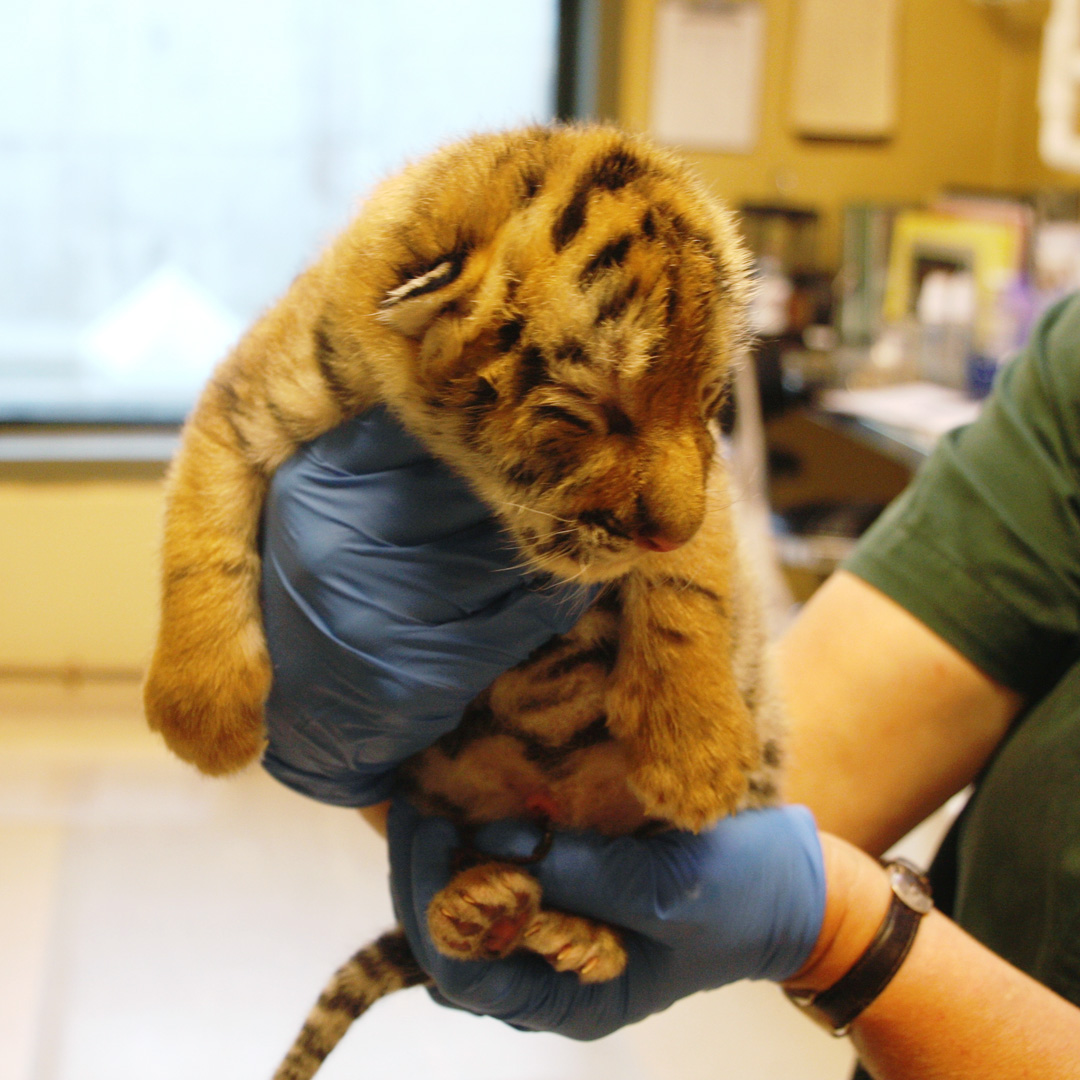
    Minnesota Zoo’s 3-week-old Amur Tiger cub is growing strong and thriving under round-the-clock care from a crew of dedicated zoo keepers.  Born on June 17, the cub was removed from first-time mother Angara because she was not caring for her baby.  The cub is being hand-raised by zoo keepers.

    Zoo staffers report that the female cub is very active and feeds every four hours, day and night.  The cub weighs 5.5 pounds and her eyes are now open.  Mother Tigers normally wash their cubs by licking them with their rough, sandpapery tongue.  To bathe this cub, zoo keepers gave the cub a bath with the help of water, soap, and a thick towel.  The result:  a clean and fluffy cub!

    Amur Tiger Cub_Eyes Open 023 cropped

    Amur Tiger Cub_Eyes Open 061 cropped

    The largest of all cats and one of six remaining tiger subspecies, Amur Tigers are a top predator of far eastern Asia. Thick fur and padded paws protect them against the extreme cold and icy winds of winter, while stripes help render them nearly invisible to prey. Amur Tigers are carnivores, eating mostly large mammals such as deer and wild boar. They will travel over extensive forest territories in search of food. With stealth, speed, and sheer strength, Amur Tigers are well-suited to their role as a hunter. 

    Amur Tigers’ home range, reputation as a threat to livestock and humans, and value to poachers has led to their population decline. Around 1940, wild Amur Tiger populations in Russia were estimated to be as low as 20 or 30 individuals. In 2005, scientists estimated that the population had recovered to 430-500 individuals, but it is thought that wild Amur Tigers have declined since then to about 350. Concerted conservation efforts help protect the remaining endangered tigers from the persistent threats of poaching and habitat loss. 

  • , ,

    Amur Tiger Cub Minnesota Zoo 1b

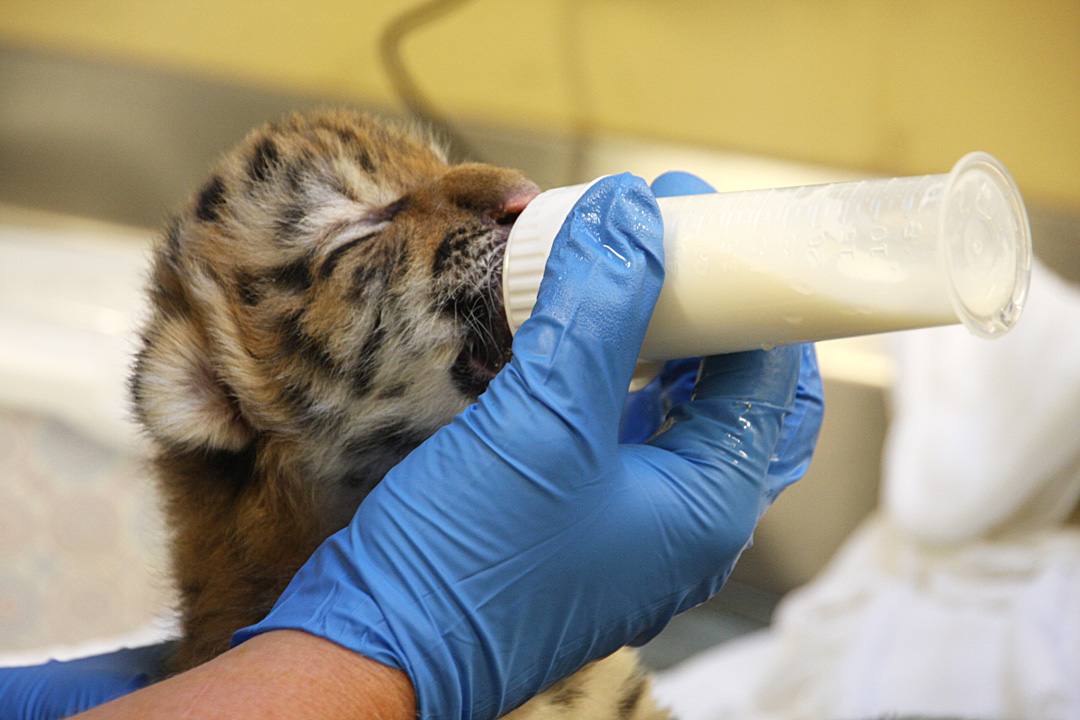
    The Minnesota Zoo is hand raising a brand new bundle of joy. On June 17, two endangered Amur Tiger cubs were born to first-time mother Angara and father Molniy after a 105 day gestation period. After observing the mother with her cubs overnight, Zoo officials decided to pull the babies for hand-rearing. Angara wasn't displaying the quality of maternal care required to successfully raise the cubs. During the critical first days under round the clock human care, the smaller of the two cubs passed away. About two thirds of Amur Tiger cubs survive the first 30 days of life.

    Amur-Tiger-Cub---Bottle-Feeding

    Amur-Tiger-Cub---Napping

    Amur-Tiger-Cub---Sleeping
    Photo credits: Minnesota Zoo

    The Amur Tiger’s home range, reputation as a threat to livestock and humans, and value to poachers has led to its population decline. Around 1940, the wild Amur Tiger population in Russia was estimated to be as low as 20 or 30. In 2005, scientists estimated that the population had recovered to 430-500 individuals, but it is thought that wild Amur Tigers have declined since then to about 350. Concerted conservation efforts help protect these remaining endangered Tigers from the persistent threats of poaching and habitat loss.

    (more…)

  • , ,

    Dhole Pupst at Minnesota Zoo 1

    On April 12, the Minnesota Zoo welcomed its first-ever litter of endangered Dhole pups and on April 14th, the Zoo welcomed a second litter! These births mark the 10th and 11th litters ever born in the United States. Dholes are exhibited at only two other North American institutions besides the Minnesota Zoo. This also marks the first time ZooBorns has shared these fascinating canines. 

    The pups are currently in their “toddler” stage, just starting to venture outside of the den. At this time, the exact number of pups is unclear as keepers are giving mothers and pups time to bond and have not ventured into the den, but current estimates are around four pups. The two adult females are sharing maternal duties so the exact parentage of the pups is still unknown.

    Dhole Pup at Minnesota Zoo Plays with Mom 1b

    Dhole Pupst at Minnesota Zoo 2Photo credits: Galen / Minnesota Zoo

    Also known as Asian wild dogs, Dholes are a primitive canine species that reside in highly structured social packs. Highly adaptable, they live in diverse habitats in Thailand, Russia, China, and India in areas with plenty of prey, water and suitable den sites. Exclusive carnivores, the Dhole’s diet consists of mostly small to medium-sized deer and wild boar. They den in abandoned burrows and have litters of up to 12 pups. All members of the pack care for the litter.

    With less than 2,500 in the wild, Dholes are an endangered species. Due to human population growth in Asia, major threats to the species include habitat loss, lack of prey, and disease from domestic and feral dogs. The Minnesota Zoo supports Dhole conservation in Thailand.

  • ,

    Minnesota Zoo Baby Anteater 2

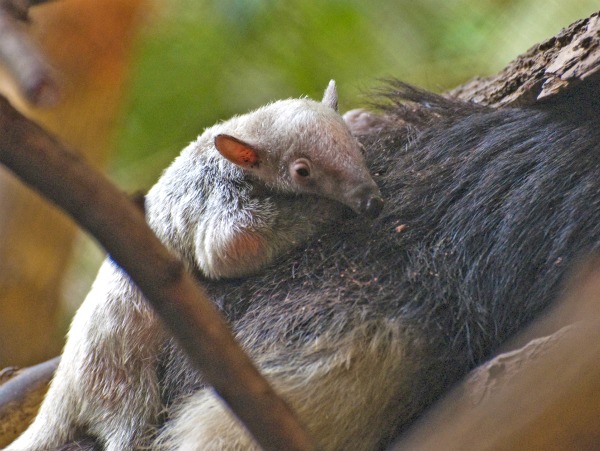
    The Minnesota Zoo is thrilled to announce the  rare birth of a Southern Tamandua (pronounced tah-man-do-ah) infant. It is the first Tamandua ever born at the Zoo.  

    Born April 8, the Tamandua – a female – has been spending time bonding with her mom in their exhibit on the Tropics Trail. She weighs just under one pound; zoo keepers are still deciding on a name. There are just 30 Tamanduas in AZA-accredited institutions in North America. 

    Baby Tamandua with Mom at Minnesota Zoo

    2012.04.12 Tropics PM 40Photo credits: 1st and 3rd photos, Galen Sjostrom. 2nd photo Delaina Clementson.

    Also known as Lesser Anteaters, Southern Tamanduas have long, curved snouts and long arms that end in sharp claws. Well-designed to take advantage of the abundance of insects living in the rainforest, their thick, coarse fur helps keep ants from biting their skin.  They eat ants, termites, grubs, bees, and honey. Tamanduas can be found in a variety of tropical habitats, from rain forests to arid savannas, and are commonly found near rivers and streams. Clumsy on the ground, these animals spend most of their time in trees, using their long tails to grab branches while climbing. Sometimes called “the stinkers of the forest,” Tamanduas give off a strong smell to mark their territory and scare away other animals.

  • Front

    The Minnesota Zoo’s Zoomobile program has three new baby chinchillas! Born August 6, the trio were born precocial  – with their eyes open and fully furred. They weighed about 47 grams (1.6 ounces) at birth. They are nursing and doing well with mom. Typically they are weaned between 6-8 weeks of age.

    They are long-lived, with records of some scurrying about to the ripe old age of 20 years. Adult females are heavier than males, weighing up to 28 ounces (800 gms), while males are about 17.5 ounces (500 gms). These rodents are from South America and  were once abundant in the High Andes. While there are quite a few chinchillas in captivity, they are considered to be endangered in the wild due to exploitation because their thick, incredibly soft fur brings a very high price. Pelt hunting diminished populations greatly, but increased the demand as these shy animals became increasingly rare. Commercial trade of wild Chinchillas is now banned.

    CU

    Two

    Mom
    Photo Credit: Minnesota Zoo

    The Minnesota Zoomobile and its team of trained naturalists travel to schools and community events throughout the state of Minnesota and beyond, providing an educational and entertaining environmental experience to a variety of audiences. Zoomobile Naturalists use live animals, biological artifacts, theater techniques, story telling, and audience participation to create a dynamic, personal, and fun program for all ages.