The Newest, Cutest Baby Animals from the World's Zoos & Aquariums

Category: Monkey

  • ,

    Squirrel monkey 1

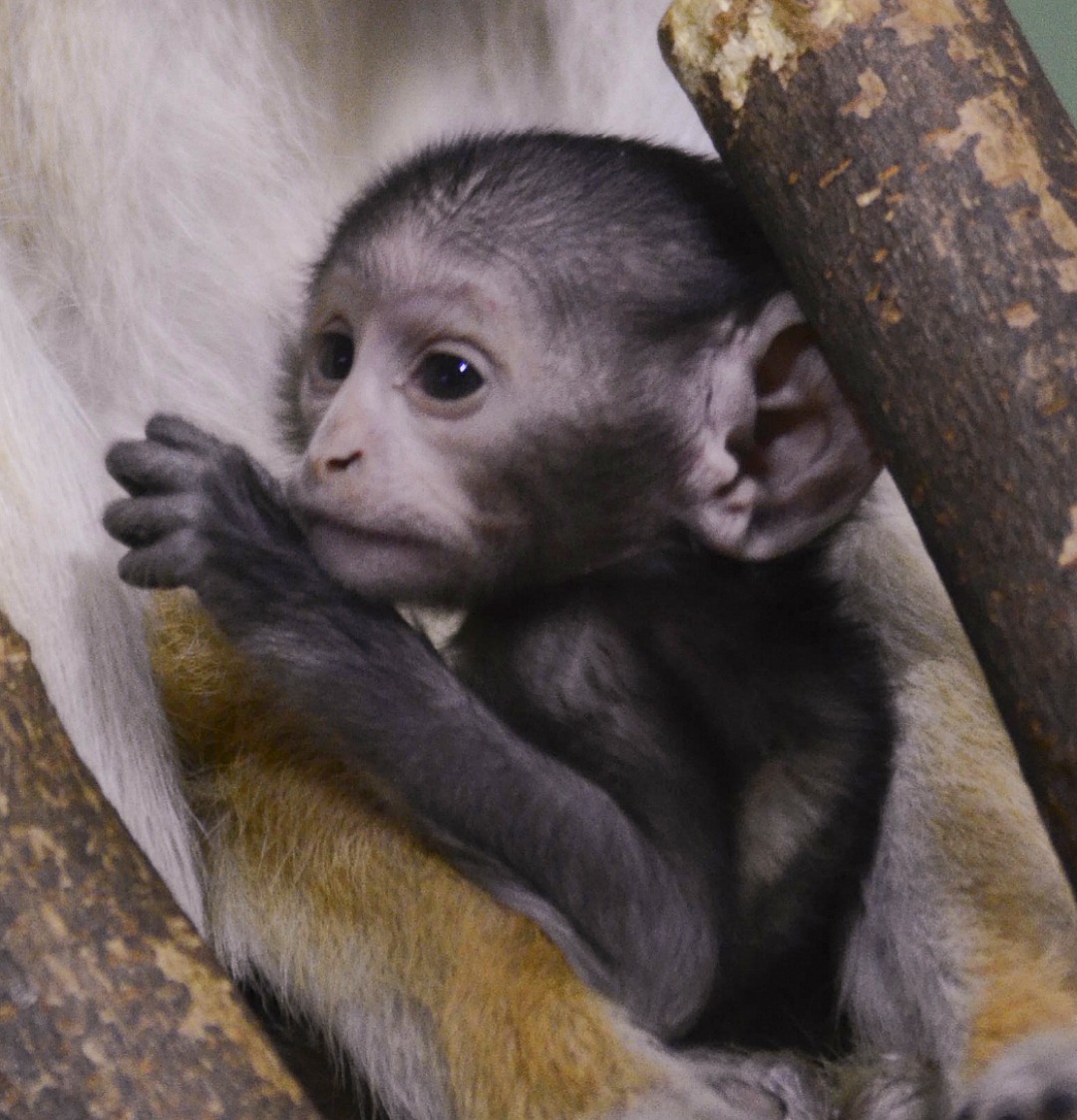
    An orphaned Common Squirrel Monkey is in very good hands at Warsaw Zoo. The infant was born at the zoo on March 28th and is now being bottle fed and raised by dedicated caretakers. The tiny monkey is male who weighed just 167 grams at birth. He is healthy and doing well.  

    Squirrel monkey 3

    882924_563105870396038_338400625_o

    921576_565819436791348_819970592_o

    Squirrel monkeyy
    Photo credits: Warsaw Zoo

    Common Squirrel Monkeys are found abundantly throughout the rain-forests of South America. Very agile and playful, they are highly social animals that live in hierarchical groups. Males and females live in separate social groups. The females tend stay based around certain feeding and resting sites, while males travel more widely. During the mating season, the dominant male will mate with many or all the mature females that his group encounters.

    Learn more after the fold! 

    (more…)

  • ,

    Mimibaby21-1

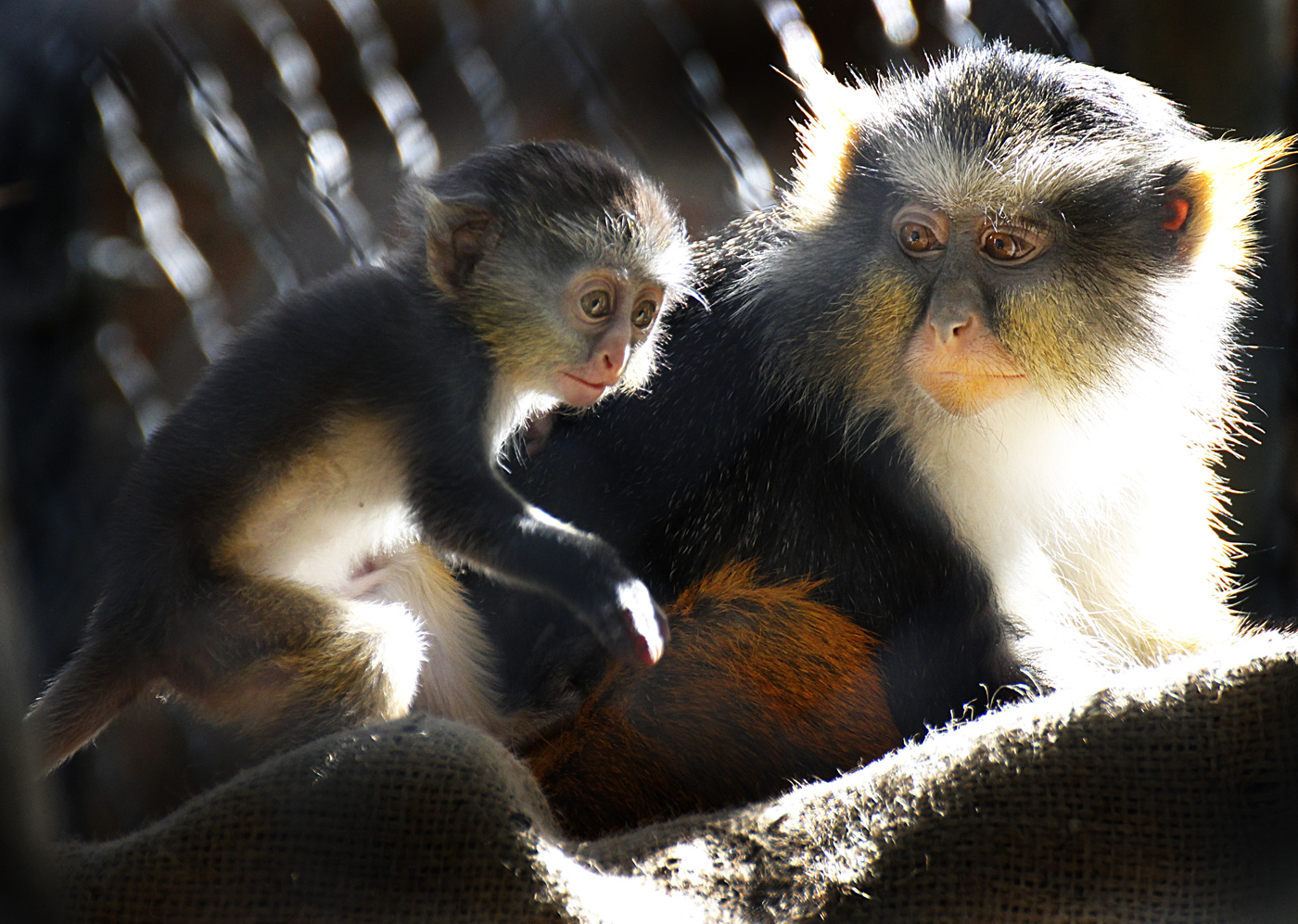
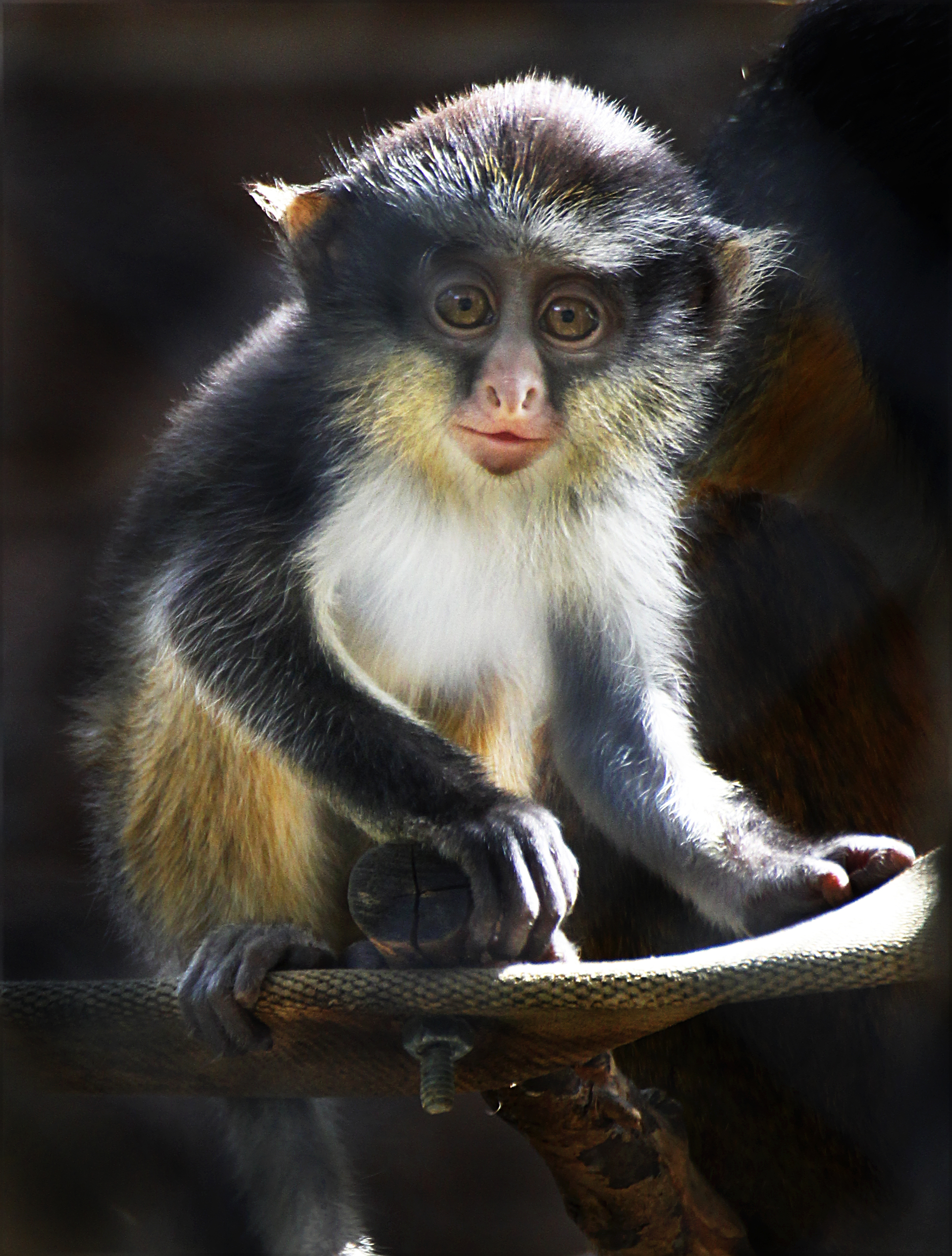
    On January 26th,
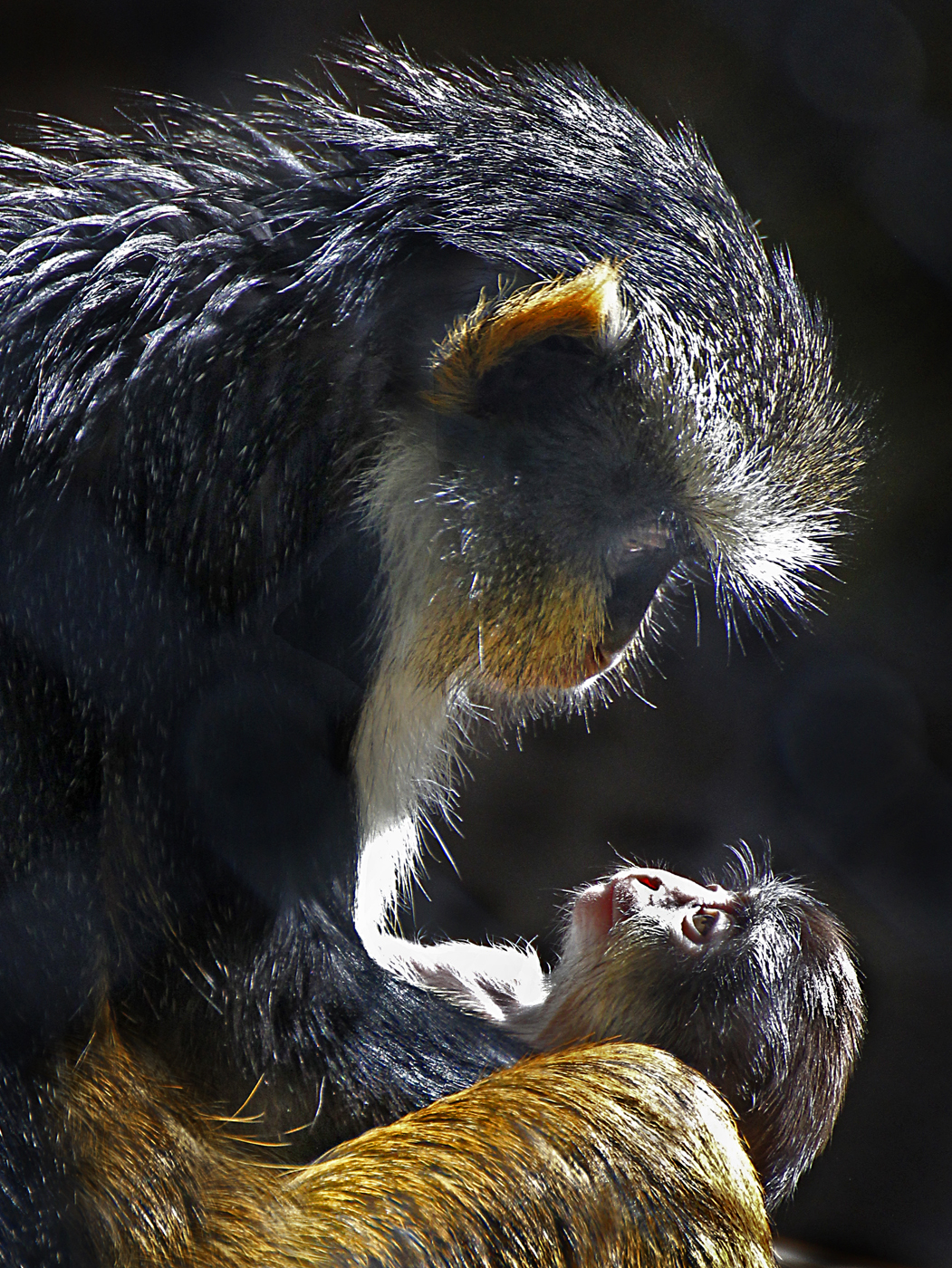
    Sacramento Zoo's female Wolf's Guenon gave birth to her first infant.
    Currently, there are fewer than 35 of these monkeys, housed at 11 AZA
    institutions in the United States. Mother Mimi and father Eddie have been very
    protective of the baby, making it difficult for keepers to determine the weight
    or even its sex.

    Mimibaby17-1

    Mimibaby23-1
     
    “Little is known about Wolf’s Guenons because of
    their small population in zoos. In the wild, the dense forests in which they
    live make them hard to spot,” said Harrison Edell, Sacramento Zoo General
    Curator. “This birth is significant to the Sacramento Zoo; with every birth, we
    learn more about this species’ biology, contributing to our overall knowledge
    about this species.” 

    Wolf’s Guenons are native to central Africa where
    they inhabit forests and forage for fruits, seeds, and an occasional insect.
    Forming loose family groups in the wild, these monkeys are even known to spend
    time with other primate species including Bonobos, colobus monkeys and other
    guenons. A larger mixed-species group may mean that there are more eyes on the
    lookout for predators, and many guenons have learned to recognize other
    monkeys’ alarm calls so that they know how to respond correctly if a neighbor
    spots a leopard or eagle.

    Guenonbaby3

    MimiBaby8-1

    Mimibaby15-1
    Photo Credit, Mike Owyang, Sacramento Zoo

    Related articles

    It's a Tiny Baby Titi Monkey for Belfast Zoo
    Monkey business at Baltimore zoo
    Maryland Zoo Welcomes Baby Colobus Monkey
    Maned Wolf Pups Romp in the Snow at Zoo Liberec
  • ,

    Titi Look

    Belfast Zoo is celebrating the arrival of a tiny Titi! The zoo has
    been home to Red Titi Monkeys since 2010 when mother, Inca, and father, Aztec,
    arrived from London Zoo and Blackpool Zoo respectively. They welcomed daughter, Maya, in July 2011; with this new baby, the Zoo is now home to a total of four Red Titi Monkeys.

    Delighted Zoo manager, Mark Challis, said, “2013 is already proving to be an exciting year for Belfast Zoo, with the birth of our Linne’s Two-toed Sloth and now, the arrival of our Red Titi Monkey. The whole team is excited about what the new year has to bring!”

    Red Titi
    Monkeys are found in South American rain forests and are an unusual primate, as
    they are monogamous and mate for life. Aztec and Inca can often be seen sitting or sleeping with their tails
    intertwined. It will, however, be
    Aztec who has his hands full with the little one. Male Titi Monkeys play a very active role in the parenting, often carrying and caring for the young.

    Titi 3

    Titl fam
    Photo Credit: Belfast Zoo

  • ,

    Patas vert cu

    ”We are pleased to announce that our youngest Patas Monkey is a
    girl,” said Ted Fox, Director of the Rosamond Gifford Zoo. “She has been named
    Zarina.” And so the result of the naming contest for the New York Zoo's newest baby monkey was known.  

    After the birth of the baby on November 30, the public was asked to vote on names. Since the baby is female, the choices
    were: Cheche, Kenya and Zarina. After nearly a week of voting, Zarina rose to
    the top with 54.5 percent of the votes. Marishka Biela, age 7, of Bernhard’s
    Bay, had submitted the winning name in 2011. It is an African word meaning
    “golden.”

    Zarina is the second offspring to parents Sara and
    M.J.  Her brother Ty was born
    earlier in the year, on January 17. She also has two half sisters, D.J. and
    Kibibi. You can read all about the baby, see several great pictures and watch another video of her HERE on ZooBorns.

    Patas CU 2

    Patas mom

    Patas CU

    Photo Credit: Rosamond Gifford Zoo  

    Watch below as she practices a few wobbly steps to catch up with Mom.

  • ,

    Monkey1

    New York’s Rosamond
    Gifford Zoo
    is pleased to announce the birth of its fourth Patas Monkey in just
    under two years. Parents Sara and M.J. welcomed the new baby early in the
    evening on November 30. You can get a peek at
    the new baby via web cam.

    Though the baby’s gender is not yet known, you are invited to help the staff
    choose a name so they’ll have a moniker ready when the sex is determined.  Cast your vote here by 4 PM EST December 19.

    Girl
                                  Boy                                        

    Cheche                        Harry Patas
    Kenya                          Jabari
    Zarina                          Jabu

    Monkey3

    Monkey2

    Monkey4

    The Rosamond Gifford Zoo is one of only 15 American zoos to house Patas Monkeys. “The Association of Zoos and Aquariums (AZA) is working diligently to
    increase the Patas Monkey population,” said Ted Fox, zoo director. They are
    part of a Species Survival Plan (SSP) – a collaborative effort between AZA
    zoos to help ensure their survival. 

    Patas Monkeys are
    members of the Guenon family, a diverse group of African monkeys found from the
    rain forests of Western Africa to the savannahs of Kenya. Patas Monkeys are one of the fastest primates, capable of reaching speeds of 30 mph.
    Patas are recognized by a black brow ridge and nose, as well as by a
    distinctive white area surrounding their mouths that resembles a mustache.

    Photo credit:  Terri Redhead

  • ,

    2012 10 PZ colobus 1

    There’s been a royal birth at Paignton Zoo!  A King Colobus Monkey was born on October 3.

    This is the fourth baby for father Martin and mother
    Ivy.  King Colobus babies typically weigh
    under two pounds.  The sex is not yet
    known – the first vet check is not due until the youngster is at least 6 months
    old.

    2012 10 PZ colobus 2

    Colobus babies are born with pure white fur, but they develop the
    species’ typical black markings at about one month of age.  The new arrival brings the zoo’s Colobus
    troop to six individuals.

    The baby is important, as Paignton Zoo Curator of Mammals
    Neil Bemment explained: “There are only six collections in Europe holding King
    Colobus, so the birth is special as we and EAZA – the European Association of
    Zoos and Aquaria – want this population to grow.”

    The species is listed by the IUCN as Vulnerable. It is
    threatened by habitat destruction and hunting for food. Paignton Zoo participates in the European
    zoos' Endangered Species Programme (EEP) for King Colobus.

    King Colobus Monkeys live in the forests of central Africa, where
    they feed on leaves.  They often rest
    quietly for hours while they digest this low-value food in their unusually
    large stomachs. King Colobus Monkeys spend their lives in the tree-tops. Four long
    fingers on each forelimb grasp branches like hooks.

    Photo Credit:  Ray
    Wiltshire

  • , , ,

    LangurPortrait2

    A black and orange baby arrived at the San Francisco Zoo in synch with the baseball Giants' playoff success. The good luck baby is a female Francois' Langur Monkey. She is the 17th of her kind to be born at the zoo since 1985. San Fransisco is one of the most successful zoos at breeding this rare monkey, of which only around 2000 remain in the wild.

    Parenting duties are shared amongst females in the Langur group. This gives mom a break and allows the infant's aunts and sisters to gain valuable mothering experience. The baby will remain orange and black for the next three to sixth months.

    LangurPortrait

    SFZoo_Hale_FrancoisLangur

    LangurKissyFoot

    Photo credit: Marianne Hale / SF Zoo


  • ,

    Baby-Goeldi's-MonkeyNeilFisher3

    The Goeldi’s Marmoset troop at the Vancouver Aquarium
    welcomed a new addition in early September. 
    This is the fourth baby born to Ginger, the troop’s matriarch, and an
    important addition to the captive population of these primates, which are classified
    as Vulnerable by the International Union for the Conservation of Nature (IUCN).

    189604_Baby-Goeldi's-MonkeyNeilFisher2

    Baby-Goeldi's-Monkey NeilFisher

    Kristen Brown, the animal care specialist responsible for
    these animals, says that female Goeldi’s marmosets generally have two offspring
    a year. Kristen says the baby will spend the next couple of weeks hanging
    on to its mom’s shoulders, crawling to her belly when it’s time to nurse.  Eventually, the baby will begin to venture
    out on its own and become interested in what everyone else is eating: fruits,
    vegetables and insects.

    After two months, the baby will start jumping and climbing
    as it grows stronger. And if past experience is any indication, it will also
    start to chase and be chased by its brothers and sisters.

    Goeldi’s Marmosets are native to the upper Amazon Basin in
    South America.  These tiny primates are
    only about 8 inches (20 cm) long, excluding the tail.  Like most tropical primates, they feed on
    fruit, insects, and small vertebrates. 
    During the dry season, they feed on fungi, making them the only tropical
    primate to depend on this food item.

    Photo Credit: Neil Fisher

  • ,

    Monkey 1

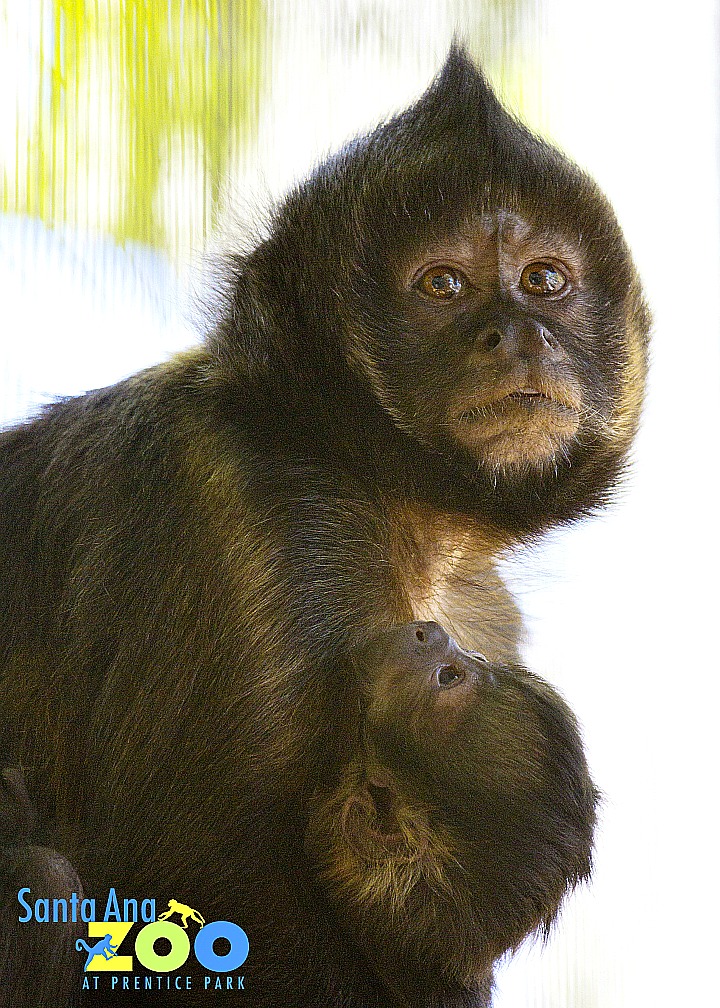
    The Santa Ana Zoo in Prentice Park is pleased to announce the birth of a rare Crested Capuchin Monkey (Cebus robustus) on May 7. The new infant is the Zoo's third birth of this species, which is considered endangered by the International Union for Conservation of Nature This birth is an important contribution to the conservation program established in North America. 

    Crested capuchin monkeys are a medium sized primate native to rapidly disappearing forests along the Atlantic coast of Brazil. In the wild, capuchins feed on a wide variety of fruits, insects, seeds, leaves, and even small mammals. Zookeeper Dina Orbison says “it is immensely gratifying to participate in this international effort and to educate our visitors about such unique and inquisitive animals”.

    22

    Photo Credits: Ethan Fisher/Santa Ana Zoo

    Read more after the jump:

    (more…)

  • ,

    CU

    Brevard Zoo’s first Saki Monkey was born on April 27 to first-time mom Chuckie. The baby is a female, but has not yet been named. The 8 year-old mom, or dam, was born at Sacramento Zoo. The sire, Yuki, age 20, was born at Jackson Zoo.

    Saki Monkeys are part of the Species Survival Plan through the Association of Zoos and Aquariums. and Chuckie and Yuki are a recommended breeding. Females are desperately needed in the captive population so it is an extra boon that their offspring is a girl. Both mom and baby are on exhibit in the La Selva loop. 

    1

    2
    Photo Credit: Brevard Zoo