The Newest, Cutest Baby Animals from the World's Zoos & Aquariums

Category: Paignton Zoo

  • ,

    1 slow loris

    Dedicated keepers at Paignton Zoo in England are caring for a rare baby that weighed little more than a CD at birth.

    The Pygmy Slow Loris – which weighed just 22 grams when it was born – was one of twins born to a first-time mother. One twin did not survive, and keepers stepped in to save the other when its mother abandoned it.

    For the first night Head Mammal Keeper Craig Gilchrist slept in an office at the zoo, feeding the tiny youngster every couple of hours. It was given a milk replacer using a 1 milliliter syringe and a small rubber teat.

    2 slow loris.jpg

    3 slow loris

    4 slow lorisPhoto credit: Paignton Zoo

    Seven mammal keepers now take turns feeding the tiny baby day and night. One takes the incubator home each evening. The baby needs more frequent feeds overnight as Slow Lorises are nocturnal and eat more at night.

    Now, at around a month old, it has gone from 22 grams – less than a single AA battery – to over 30 grams – the weight of a dessert spoon. 

    Keeper Lewis Rowden said, “You have to take care not to squirt the milk into the lungs – you have to let the baby suckle at its own rate. We are just moving on to feeding some solids now – small amounts of mashed boiled sweet potato.”

    See and read more after the fold.

    (more…)

  • ,

    1 giraffe

    A Rothschild’s Giraffe has been born at Paignton Zoo in the UK! The female calf was born to mother Sangha and father Yoda on the afternoon of January 25.

    “She was born during the day, which is unusual but not unheard of. Giraffes mostly give birth overnight,” said Paignton Zoo Curator of Mammals Neil Bemment. 

    The yet unnamed calf is doing well and stands nearly six feet tall.

    The gestation period for a giraffe is between 400 and 460 days. Mothers give birth standing up – the calf's fall to the ground breaks the umbilical cord. The little calf's head is protect by small, knoby horns. Calves can stand and run within a few hours of birth. 

    2 giraffe

    3 giraffePhoto credit: Paignton Zoo

    See a video of the birth:


    Paignton Zoo's giraffes are a subspecies called the Rothschild or Baringo Giraffe. Rothschild's Giraffes are classified as Endangered, and their breeding across European zoos is managed by a European Endangered Species Program. 

    Father Yoda came from Givskud Zoo, Denmark, where he was born in November 2004. He arrived at Paignton Zoo in September 2006. Sangha came from Liberec Zoo in Slovakia. The Zoo’s other female is Janica, who came to Paignton Zoo from Duvr Kralove Zoo in the Czech Republic.

    The other youngsters at the zoo are Valentino, born to mother Janica in February 2012 and Otilie, who was born to mother Sangha in September 2012. A male calf was born in August 2013 to Janica and Yoda, but sadly, he died soon afterwards.

  • , , ,

    Baby Capy

    Paignton Zoo Environmental Park has welcomed a crop of early summer babies. Among them is this Capybara, who was born on May 15, getting a nuzzle from mom. The Capybara hails from South America and is the largest rodent in the world. To aid them when in water, where they go for tender greens to eat and to beat the heat, they have webbed feet and thick fur — and their eyes, ears, and nose are positioned high on their head, which they hold above the surface.

    Just five days later, on May 20, this Brazilian Tapir was born. The Tapir uses its short, trunk-like nose to sniff its way through the forest, to pull leaves and shoots towards its mouth, and as a snorkel – they love water and are excellent swimmers.

    And a Bornean Orangutan baby came into the world on April 11. In the wild, Orangutans are threatened by hunting, the pet trade, and the destruction of their rainforest habitat. Their forest home is rapidly being replaced by palm oil plantations due to a massive demand for this product in many of the foods we eat. You can help by looking at labels and switching to products that don't use palm oil. 

    2013 05 PZ young tapir by Ray Wiltshire

    2013 05 PZ yawning orang baby by Ray Wiltshire
    Photo Credit: Ray Wiltshire

  • ,

    Or 1

    Paignton Zoo's Orangutan mom Mali gave birth on May 11 to what keepers are 99% sure is a little girl. She is healthy and has bonded exceptionally well with Mom. Paignton Zoo spokesperson Phil Knowling said:  “Mali and baby are doing well. They have the largest of our Orangutan islands and an off-exhibit den to themselves. We hope that visitors will be able to catch a glimpse of the youngster, which will become more mobile over the coming months."

    The Bornean Orangutan (Pongo pygmaeus) is threatened by hunting, the pet trade and the destruction of its rainforest habitat. That forest is being destroyed to create plantations producing palm oil, an ingredient found in an enormous amount of products people use daily Given the declining populations, measures such as switching to alternative oil products and maintaining sustainable populations of Orangutans in zoos are becoming ever more important. Everyone can help by reading labels at the grocery store to determine what products are made without palm oil. 

    Or 3

    Or 4
    Photo Credit: Photos 1, 2 4: Ray Wiltshire, Photo 3: Simon Maddock

    Bornean Orangutans have suffered declines and the population is estimated at around 50,000. To put this in context, there are fewer Bornean Orangutans in the entire world than there are human beings in Torquay (the population of Torquay is about 62,000).

    Article continued after the fold:

    (more…)

  • ,

    2012 10 PZ colobus 1

    There’s been a royal birth at Paignton Zoo!  A King Colobus Monkey was born on October 3.

    This is the fourth baby for father Martin and mother
    Ivy.  King Colobus babies typically weigh
    under two pounds.  The sex is not yet
    known – the first vet check is not due until the youngster is at least 6 months
    old.

    2012 10 PZ colobus 2

    Colobus babies are born with pure white fur, but they develop the
    species’ typical black markings at about one month of age.  The new arrival brings the zoo’s Colobus
    troop to six individuals.

    The baby is important, as Paignton Zoo Curator of Mammals
    Neil Bemment explained: “There are only six collections in Europe holding King
    Colobus, so the birth is special as we and EAZA – the European Association of
    Zoos and Aquaria – want this population to grow.”

    The species is listed by the IUCN as Vulnerable. It is
    threatened by habitat destruction and hunting for food. Paignton Zoo participates in the European
    zoos' Endangered Species Programme (EEP) for King Colobus.

    King Colobus Monkeys live in the forests of central Africa, where
    they feed on leaves.  They often rest
    quietly for hours while they digest this low-value food in their unusually
    large stomachs. King Colobus Monkeys spend their lives in the tree-tops. Four long
    fingers on each forelimb grasp branches like hooks.

    Photo Credit:  Ray
    Wiltshire

  • ,

    Red-Panda-_-Paignton-Zoo2_kead

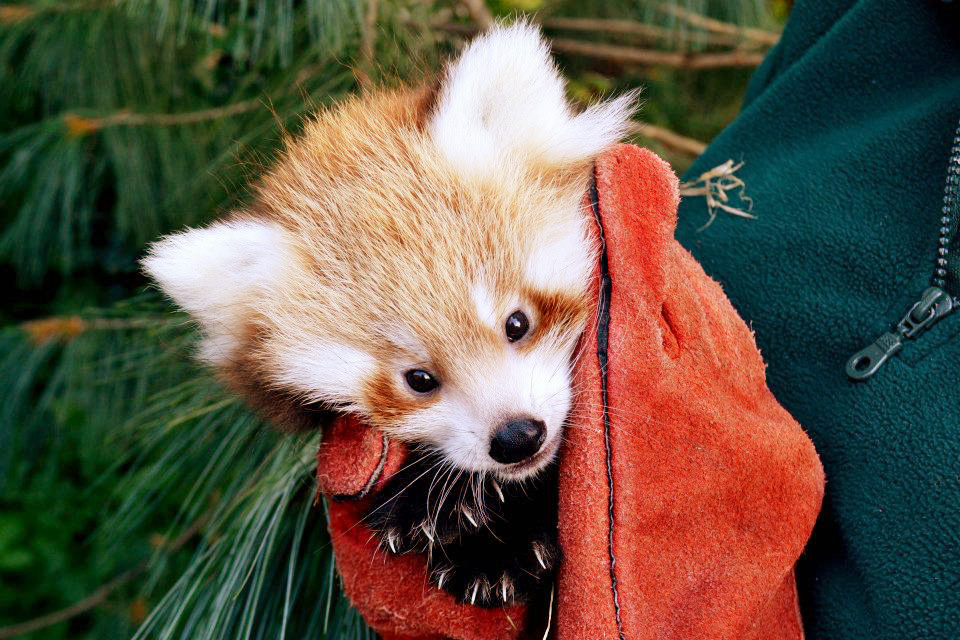
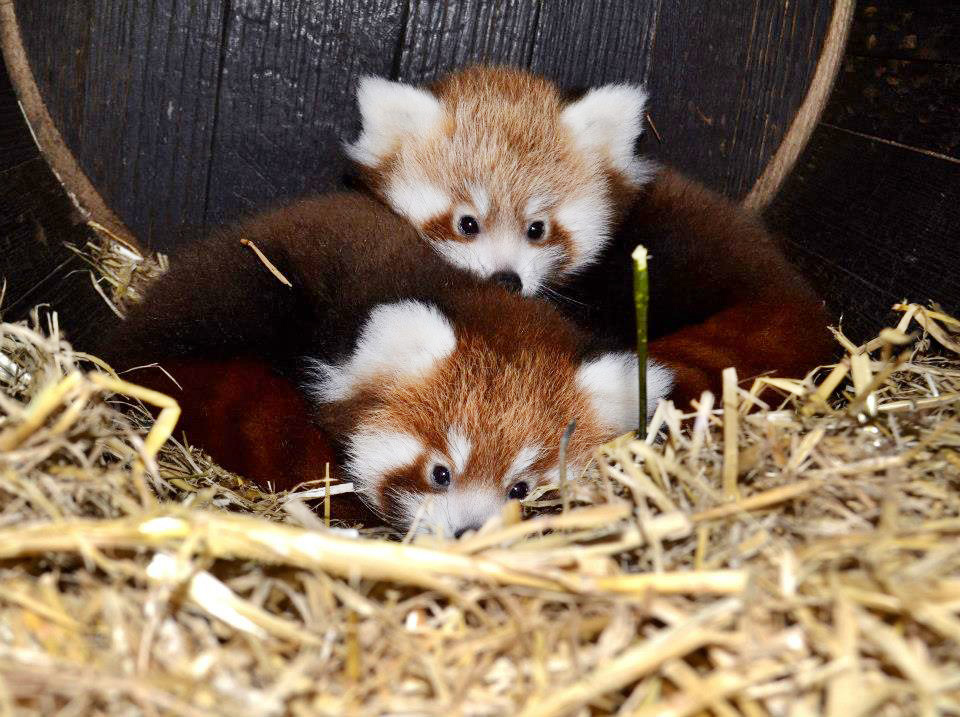
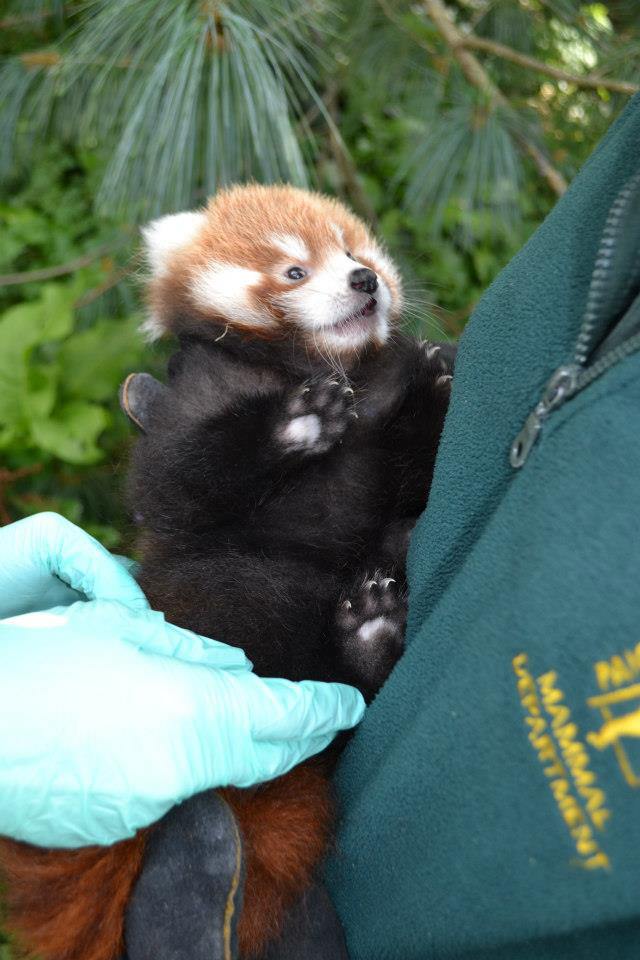
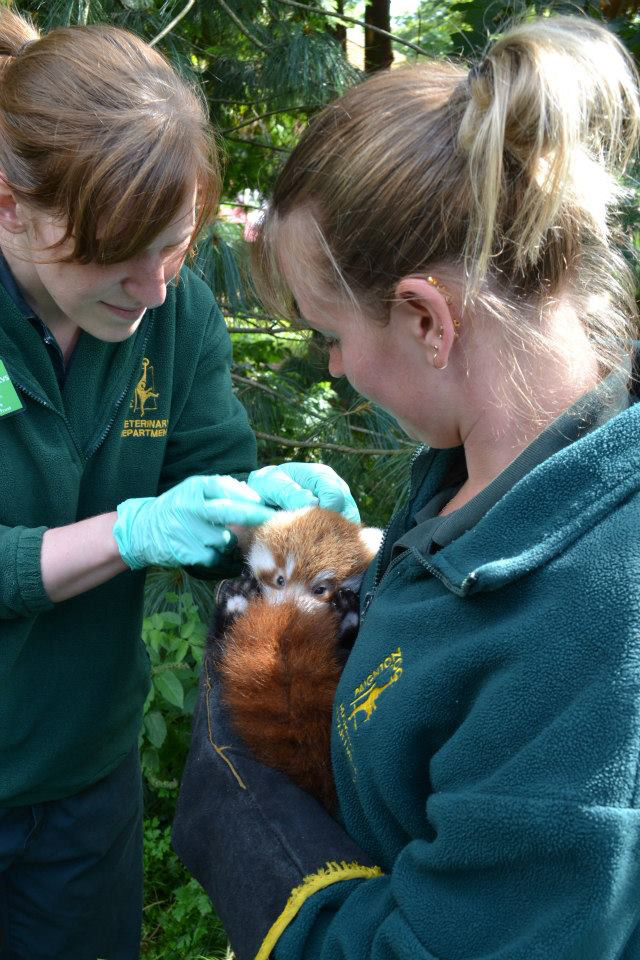
    Paignton Zoo's Red Panda cubs are starting to venture out of their den! The female cubs were born on July 9th. Here they are being checked over by the zoo's veterinary team.

    Red-Panda-_-Paignton-Zoo

    47216_472521126102318_332468477_n

    Red-Panda-_-Paignton-Zoo1

    Red-Panda-_-Paignton-Zoo2
    Photo credit: Paignton Zoo

  • ,

    Cu noses

    Zoo keepers are watching over a baby Rothschild's Giraffe born at Paignton Zoo. The new arrival was came into the world at around 6:00 a.m. on September 4 to mother Sangha and father Yoda. The as yet unnamed calf stands at nearly six feet tall. Rothschild Giraffes are one of the most threatened of the nine giraffe sub-species, with fewer than 700 remaining in the wild.

    Although the youngster tried valiantly to nurse, its keepers have now taken the baby under their wing to hand-rear because it was not getting enough milk. Parent rearing is always preferable and keepers were hopeful, as this mother has done it before quite successfully — but in this case they ended up having to step in. Luckily, a local dairy, Riverford Organic Dairy, has been able to supply them with the necessary milk.

    Nurse

    Face

    Photo Credit: Paignton Zoo

    Read more after the fold:


    (more…)

  • ,

    Lion3

    The four rare Asiatic Lion cubs (Panthera leo persica) at Paignton Zoo Environmental Park have been to the vet – or rather, the vet has been to them – for their 9-week vaccinations. 

    For the zoo staff, it’s thrilling to be up close to the cubs, who were born May 15, but they must carefully follow safety protocols.  Speed and efficiency are essential so the cubs can be reunited with the protective mother Lion who is prowling nearby.  

    The keepers wear big leather gauntlets because the cubs are feisty, snarling throughout, while the growls of their mother echo in the den. The four are vaccinated, micro-chipped, given a quick health check and weighed. They are soon back with their mother.

    Lion1

    Veterinarian Catherine Bergzoll says, “We use a cat vaccine – the process is essentially the same as for pet cats. We give them a thorough exam to check things like their hearts and in male cats we check that their testicles have descended.”

    At 9 weeks the four Lion cubs weighed between 16 and 19 pounds (7.6 to 8.8 kilos) – far more than your average adult domestic cat which tips the scales at around 8 to 11 pounds (4 to 5 kilos). The Lions are also stronger, wilder and come fully-equipped with claws and teeth.

    “We try to handle them as little as possible,” says Bergzoll of the cubs. “Making sure they are growing and increasing in weight is important.”  Closed circuit cameras allow the staff to check on the cats often without disturbing the new family. 

    Lion4

    Photo Credits:  Paignton Zoo

    (more…)

  • ,

    4

    Four little Asiatic Lion cubs (Panthera leo persica) were born on May 15 after a gestation of about 3.5 months to mother Indu and father Mwamba at the UK's Paignton Zoo Environmental Park. This is the parent first success after several failed attempts. 

    Neil Bemment, Director of Operations and Curator of Mammals said, “They have come through the critical first few weeks. We have been letting her get on with being a new mum and so far she seems to be doing really well. We are cautiously excited. If she is successful then it will be thanks to a lot of care and attention from the keepers. It is very good news for the species.” 

    Asiatic lions are threatened by hunting and habitat destruction. Fewer than 400 survive in the wild in the Gir National Park and Lion Sanctuary (India). There are conservation breeding programs in zoos including a European Endangered species Programme (EEP). The Asiatic lion is smaller than the African lion and has a distinctive fold of skin on the belly. Also, the male's mane is smaller and lighter in colour. 

    Trio

    Solo

    Photo credit: Paington Zoo

  • ,

    Foal

    The UK's Paignton Zoo is celebrating its first zebra birth in a decade when a new baby Hartmann’s Mountain Zebra was born in the early morning on February 28 to six-year-old mom Goma. Senior Head Keeper of Mammals Matthew Webb said: “We had to help him get to his feet, but after that he started to suckle well.” The as-of-yet unnamed foal is thought to be a male. 

    “This is great news," said Paignton Zoo Director of Operations and Curator of Mammals Neil Bemment said. "We need more foals to increase the zoo population and, as there is presently a lack of available males in the European Endangered species Program, he will certainly have a future part to play in saving his species.”

    A single foal is born after a gestation of 11.5 months (350 days). Some populations are protected in national parks. There is a European Endangered species Program (EEP) for this zebra managed by Marwell Zoo.  

    Mom and zeb

    Nursing
    Nose

    Photo Credit: Paignton Zoo

    Read more about Zebras after the jump!

    (more…)