The Newest, Cutest Baby Animals from the World's Zoos & Aquariums

Category: Paradise Wildlife Park

  • ,

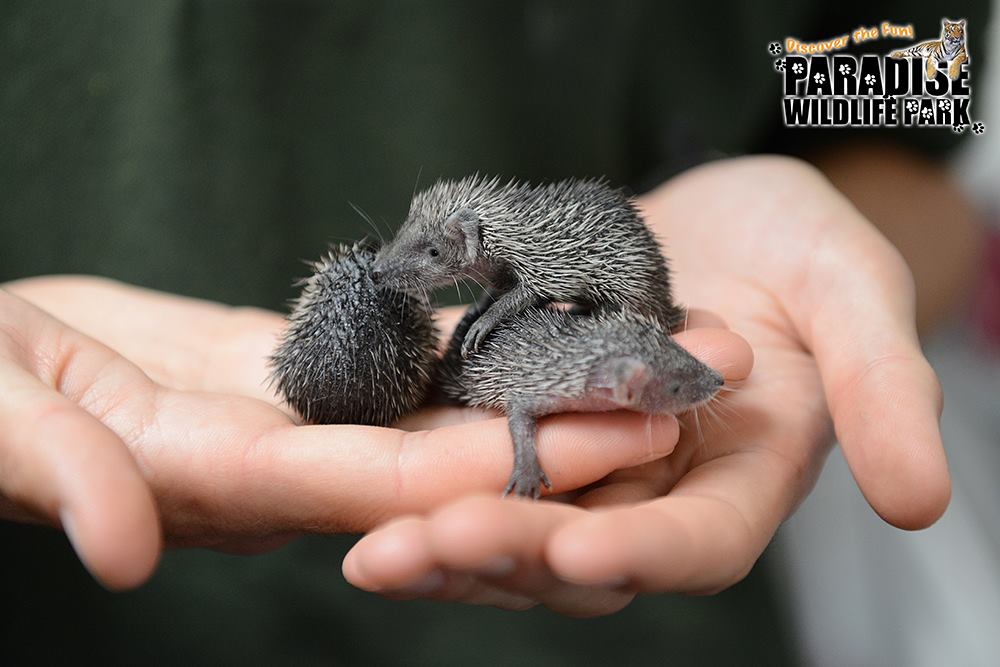
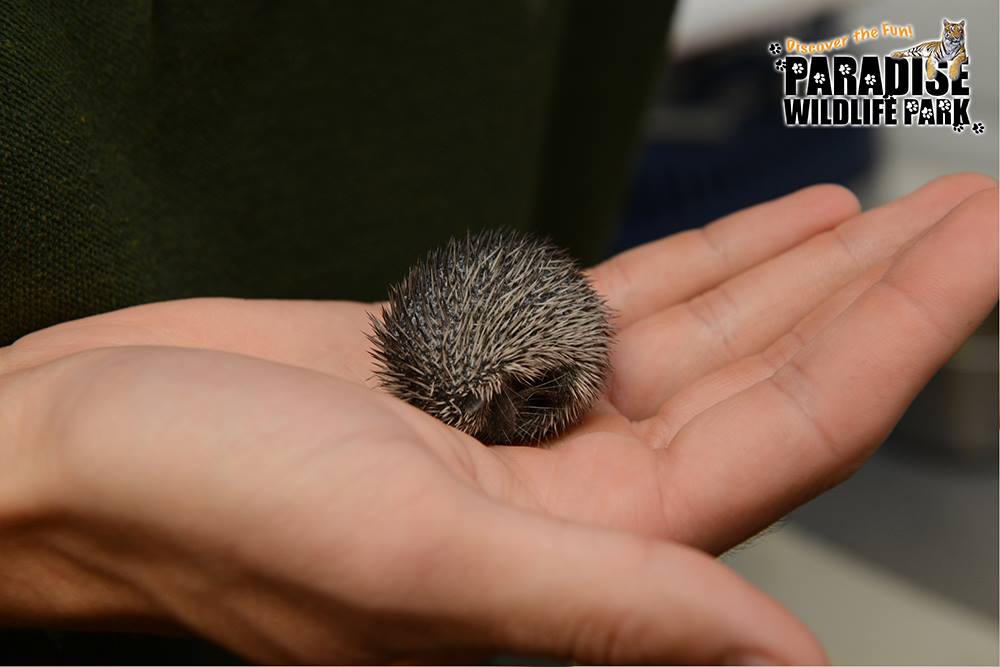
    Ten 3 curled

    The UK's Paradise Wildlife Park announced the birth three Tenrec babies! Born to mom Maisy on the 10th of July, these prickly little balls look a lot like Hedgehogs… but are, in fact, completely unrelated! They have simply evolved the same method of defense, which is to roll up in a ball so that predators are met with only their outer coat of prickles. This is called convergent evolution, a process by which organisms not closely related independently evolve to have similar traits as a result of having to adapt to similar environments or ecological niches.

    Tenrecs hail from the island of Madagascar but can be found in areas on the African mainland as well. They live and forage for food up in the trees, so they are particularly good climbers. They tend to be omnivorous, the largest part of their diets being comprised of invertebrates. Most species are nocturnal; while their eyesight is not that sharp, their other senses are very well developed. Their whiskers are especially sensitive, aiding them as they move around branches and leaves in the dark. 

    Ten ball


    Ten side crop

    Ten portrait crop
    Photo Credit: Paradise Wildlife Park

    The new babies are in the farmyard section and can often be seen out and about by lucky guests.

    See more pictures of the Baby Tenrecs, after the fold:

    (more…)

  • ,

    Yianna Meerkats Small

    On February 14, Meerkat mom Twig delivered three kits at the
    Paradise Wildlife Park in the United Kingdom. 
    The little Meerkats, all males, were named Mr. Darcy, Romeo, and Puck
    after characters in classic romantic stories. 
    The trio’s arrival brings the grand total of Meerkats at the park to 13.

    DSC_2022_tn

    DSC_2019_tn

    DSC_2016_tn
    Photo Credits:  Paradise Wildlife Park

    It doesn’t take Meerkat kits very long to become busy,
    active members of their clan.  At about
    three weeks old, the kits emerged from the burrow for the first time and quickly
    learned to forage with the adults.  They
    now spend much of their day investigating their exhibit and playing with each
    other, according to the Park’s staff.

    In the wild, Meerkats construct a complex system of
    underground burrows in which they sleep, bear young, and hide from
    predators.  They live in family groups of
    20-30 individuals and often share duties parenting the young, acting as
    lookouts, and babysitting kits.  Meerkats
    spend most of the day foraging for insects, bird and reptile eggs, lizards,
    scorpions, spiders, and small mammals. 

    Meerkats are native to southernmost Africa, where they
    inhabit portions of the Kalahari and Namib deserts, Angola, and South
    Africa.  They are not considered a
    threatened species. 

    See more photos below the fold:
    (more…)

  • ,

    Tank-the-Tortoise-3

    Tank is a Hermann's Tortoise and he's about 4 months old. He has a brother who's even teenier and tinier than he is. He was left to the U.K.'s Paradise Wildlife Park by their former head of reptiles as a leaving present.

    Hermann's Tortoises live across Southern Europe, although their once expansive range has been reduced to scattered pockets. Abundant as pets in captivity, this species is in significant decline in the wild due to habitat destruction.

    Tank-the-Tortoise

    Tank-the-Tortoise-2

    Tank-the-Tortoise-5

    Tank-the-Tortoise-4
    Photo credit: Paradise Wildlife Park

  • ,

    Bowl

    Keepers at Paradise Wildlife Park in Hertfordshire in the UK were stunned after one of their Meerkats gave birth to six pups in one litter. It's an incredibly rare occurrence — a normal litter is between two and four kits – and it's even more unusual that their mom, Twig, is successfully raising them all. What's more, she gave birth to two babies just two months ago, and to another one two months before that!

    Meerkat keeper Jessie Croone said, “I came in early to check on them last week, and when I lifted the lid off of their nest box, I had the shock of my life. There was just a mass of baby meerkats! I couldn't even count them all at first, there were so many!”

    Slender-tailed meerkats live in large family groups called mobs in their native habitat of the Kalihari and Namib deserts. Mobs are matriarchal and are run by one breeding pair. The top female is the only female in the group permitted to breed, but all of the others in the group help to raise the young. Meerkats have risen massively in popularity in recent years, from exposure as Alexandr in the car insurance marketing campaign and television programs such as Meerkat Manor.

    Spillin

    Solo

    Yellow
    Photo Credit: Paradise Wildlife Park

    More meerkat pictures and information after the jump:

    (more…)

  • , ,

    Lar Gibbon Paradise Wildlife Park3

    Paradise Wildlife Park in Broxbourne, U.K. is proud to announce the arrival of a baby Lar Gibbon born to mother Mugwai and father Gremlin on Thursday 5th January 2012. Mother and Baby are doing very well. Section Leader of Primates, Steve Goodwin says, “This is the first baby for Mugwai, but she is proving to be a really good mum. We haven't been able to get close enough to sex the baby yet, and we're excited to find out if it is a boy or a girl.”

    Also known as a White-headed Gibbon, this endangered species is threatened in the wild by habitat destruction, the illegal pet trade, and poaching.

    Lar Gibbon Paradise Wildlife Park2

    Lar Gibbon Paradise Wildlife Park6

    Lar Gibbon Paradise Wildlife Park

    Lar Gibbon Paradise Wildlife Park5

    Lar Gibbon Paradise Wildlife Park7
    Photo credit: Paradise Wildlife Park

  • ,

    Born last week and standing a mere 4 and 1/2 inches (12 cm) tall in these photos, this tiny African Crowned Crane is being hand-reared by keepers at Paradise Park in the UK. Note that the little booties are in place to speed the process of unfurling the crane’s naturally curled feet, and thereby helping it learn to toddle quicker. The chick’s name is easy to remember – “Little Crane.”

    Grey-Crowned-Crane-and-keeper-Mark-by-Michelle-Turton

    Grey-Crowned-Crane-and-keeper-Mark-2-by-Michelle-Turtona

    Grey-Crowned-Crane-and-keeper-Mark-2-by-Michelle-Turton

    Curator David Woolcock explains “In the past, the female parent of this chick has not done very well when she has laid a clutch of eggs inside rather than outside her hut. So when this happened again, and with this species having been recently upgraded to ‘Vulnerable’ status, we made a decision to remove the eggs and incubate them ourselves. We were delighted when one hatched. So the keepers are now full time mums with 2 hourly feeds and giving some much needed tender loving care to this little one.”

    Grey-Crowned-Crane-Look-at-me-by-Michelle-Turton

    (more…)

  • ,

    Our Monday Meerkat prompted a ZooBorn’s reader to point us to the UK’s Paradise Wildlife Park and their new baby Meerkat “Picasso.” Outstandingly cute pictures that we had to share. 

    Baby meerkats paradise wildlife park 2

    Baby meerkats paradise wildlife park 3

    Baby meerkats paradise wildlife park 4

    Baby meerkats paradise wildlife park 1

    Baby meerkats paradise wildlife park 5 

    Thanks to Mark Saint for alerting us and Paradise Wildlife Park for the photos.