The Newest, Cutest Baby Animals from the World's Zoos & Aquariums

Category: Penguin

  • ,

    1_TLPZ - African penguins (5)

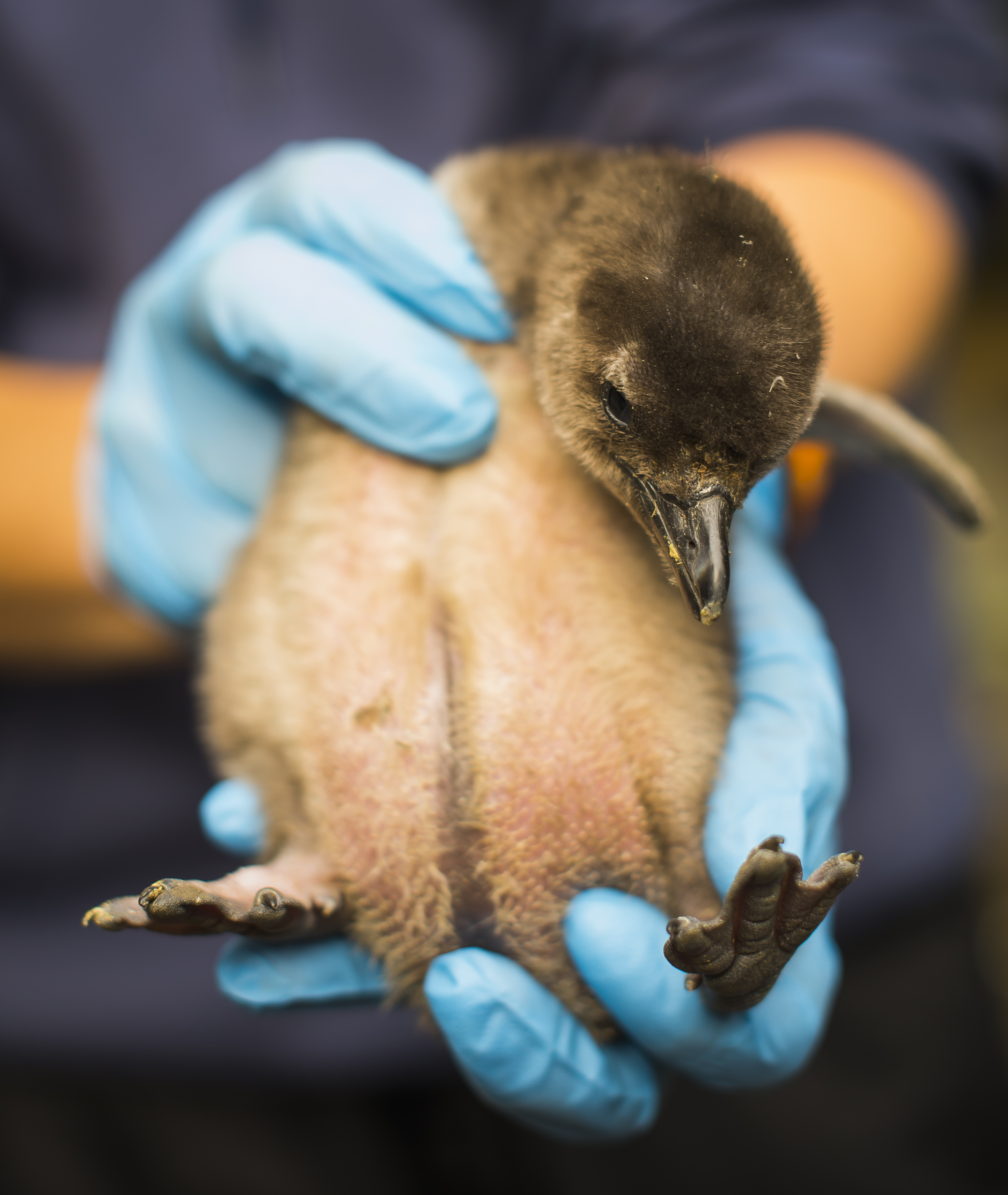
    A baby boom continues at Tampa’s Lowry Park Zoo with the hatching of three African Penguin chicks. The Zoo’s “clutch mate” chicks hatched on January 7 and January 9 (weighing in at 54 grams and 48 grams) to experienced parents Tinkerbell and Loki.

    “Clutch mates,” means that Tinkerbell’s two chicks hatched from eggs that she laid a few days apart. The third African Penguin chick at the Zoo hatched on January 12 (weighing in at 53 grams) to first time parents Tyke and Tyra.

    “Both pairs of parents are doing a great job taking care of their chicks,” said Chris Massaro, General Curator at Tampa’s Lowry Park Zoo. “The addition of these chicks is a great win for the species and an exciting time for our community to learn more about these beautiful birds.”

    2_Penguin chick

    3_TLPZ - African penguins (4)

    4_TLPZ - African penguins (2)Photo Credits: TLPZ

    The Zoo, currently home to a colony of twelve African Penguins, participates in the African Penguin Species Survival Plan (SSP). The program of the Association of Zoos and Aquariums (AZA) protects wildlife species at risk of extinction. Tampa’s Lowry Park Zoo (TLPZ) also participates in the AZA SAFE: Saving Animals From Extinction program which focuses on having animal experts identify threats, develop action plans, raise new resources and educate visitors on animal conservation. At the same time, SAFE will build capacity to increase direct conservation spending, as well as our members’ impact on saving species through work in the field, in our zoos and aquariums, and through public engagement. We have done it before. Some species exist only because of the efforts of aquariums and zoos and their contributing partners. The three chicks will be the first additions to the Zoo’s colony since June 2014.

    According to keepers, it is very difficult to tell a penguin chick’s sex. A DNA blood test will be used to determine the sex of the chicks when they are old enough. The Zoo uses bands on the adult penguins’ flippers to differentiate: right flippers for males and left flippers for females. TLPZ plans to publicly reveal the sex of the chicks in the near future.

    Native to the coastlines of South Africa and Namibia, the African Penguin (Spheniscus demersus) is one of five true warm weather species. The species is classified as “Endangered” by the IUCN due to food shortages from commercial fishing, oil spills, egg collection and fishing nets. The population declined more than 50 percent during the last 40 years.

    5_TLPZ - African penguins (1)
    5_TLPZ - African penguins (1)

  • ,

    1_DSC_1156

    The Maryland Zoo in Baltimore is thrilled to announce the hatching of their 1,000th African Penguin chick!

    This historic milestone marks the first time that any zoo or aquarium in North America has hatched 1,000 African Penguin chicks! The newest chick hatched on February 13th and is the thirteenth to have hatched at the Zoo during the 2017-2018 breeding season. The little one is being parent-reared, behind-the-scenes, in the Zoo’s Penguin Coast Conservation Center.

    “I am sure the people who started this penguin colony in 1967 had no idea where it would take the Zoo over time,” stated Don Hutchinson, President/CEO of The Maryland Zoo. “But they had the foresight to manage the penguin colony strategically, applying new scientific techniques as they emerged, while creating one of the most historically memorable Zoo exhibits at Rock Island. Today, we welcome the 1,000th chick at the award-winning Penguin Coast exhibit. This is truly a momentous achievement.”

    2_DSC_1161

    3_DSC_1168

    4_DSC_1165Photo Credits: The Maryland Zoo in Baltimore

    The Maryland Zoo has been a leader in African Penguins for 50 years, hatching their first chick in 1969 and winning the prestigious Edward H. Bean Award for the “African Penguin Long-term Propagation Program” from the Association of Zoos & Aquariums (AZA) in 1996. The Zoo currently has the largest colony of African penguins in North America.

    “This chick is not only the 1,000th to hatch, it also becomes the 94th in our Penguin Coast colony,” said Jen Kottyan, Avian Collection & Conservation Manager. “Our penguins are bred according to recommendations from the AZA African Penguin Species Survival Plan (SSP) which helps maintain their genetic diversity. Many of the penguins previously bred at the Zoo have helped establish new colonies at zoos and aquariums around the world.”

    Penguins from the Zoo have moved to zoos and aquariums in thirty-five states and six countries including: Canada, the Netherlands, Spain, Italy, Hungary and South Africa.

    (more…)

  • , ,

    Gentoo Penguin Chick 01-2018-9160 E

    Meet the new Gentoo Penguin at Milwaukee County Zoo! The chick hatched on December 18 to parents Oscar and Fiona.

    The chick still has its soft, fluffy down feathers, which provide warmth but are not suited for swimming. Only when the chick molts into its waterproof plumage, usually around one or two months of age, will it begin learning to swim.

    Gentoo Penguin Chick 01-2018-9155 E
    Gentoo Penguin Chick 01-2018-9155 EPhoto Credit: Milwaukee County Zoo

    Gentoo Penguin parents take turns feeding and caring for their chicks. Both Oscar and Fiona have reared chicks before. The gender of the new chick is not yet known, and will be determined by a blood test. It’s not possible to tell males from females by sight alone.

    Penguin chicks at the zoo must learn to take fish from zoo keepers, and this training usually occurs after they have been weaned from their parents and begin to molt. It’s during the molt that the chick’s “baby fuzz” is replaced by sleek, waterproof feathers.

    Once the chick has its shiny new feathers, it will be gradually introduced to the exhibit pool and to the other birds in the habitat.

    Gentoo Penguins are native to Antarctica. They stand two to three feet tall as adults, making them the third-largest Penguin species, after Emperor and King Penguins. Gentoos live in colonies of several hundred birds along the Antarctic Coast and surrounding islands. These Penguins may dive as many as 500 times per day in search of fish, krill, and squid to eat.

    The International Union for Conservation of Nature lists the Gentoo Penguin as a “Species of Least Concern,” though some individual populations have declined rapidly in recent years.


    Related articles

    'King' of the Penguins Named at Kansas City Zoo – ZooBorns
    Lynx Kittens Play All Day
  • ,

    1_Louie 1

    There’s a new Penguin in the Kansas City Zoo’s ‘Helzberg Penguin Plaza’ exhibit!

    Several months ago, the Zoo was fortunate to receive a King Penguin egg from the St. Louis Zoo. The Kansas City Zoo incubated the egg until it was ready to hatch, and on November 8, the new chick made its way out of his shell.

    He was hand-raised, behind the scenes, by a group of dedicated Zookeepers until ready to acclimate to the temperatures and feathered friends that come with his permanent exhibit.

    Now, through the course of voting via social media, the handsome young King Penguin has been given the very regal name “Louie”.

    2_Louie 2Photo Credits: Kansas City Zoo

    The chick has grown a lot in two short months, and the Zoo encourages visitors to see him in his ‘penguin playpen’, right on the other side of the glass at the Helzberg Penguin Plaza.

    The King Penguin (Aptenodytes patagonicus) is a large species, second only to the Emperor Penguin in size. There are two subspecies: A. p. patagonicus (found in the South Atlantic) and A. p. halli. (found at the Kerguelen Islands and Crozet Island, Prince Edward Islands, Heard Island and McDonald Islands, and Macquarie Island).

    King Penguins eat small fish, mainly lanternfish, and squid. They are less reliant on krill and other crustaceans than most Southern Ocean predators.

  • ,

    1_95A0268

    The two juvenile Magellanic Penguin chicks, at Point Defiance Zoo & Aquarium, recently slipped into the water of their on-exhibit pool and excitedly darted from end to end.

    Members of the adult Penguin colony stood watch on the rocks above, squawking loudly, acting as black-and-white sentries warily guarding their turf from these upstart juveniles. “That’s normal behavior,” staff biologist Amanda Shaffer said. “Eventually, the adults will welcome the younger Penguins into their midst.”

    In just 12 weeks, the chicks have grown from fuzzy balls, weighing just under 6 ounces, to recognizable Penguins almost as large as the adults from whose eggs they hatched.

    According to zoo staff, the chicks have been off exhibit for a few weeks, gaining strength, getting accustomed to feeding schedules, and growing the coarse feathers and stiff wings needed for swimming. Point Defiance zookeepers have kept careful watch over the brother-and-sister pair as they learned to swim.

    The siblings are now on-exhibit daily in the Penguin Point habitat at the zoo.

    2_95A0090

    3_MG_0287

    4_95A0228Photo Credits: Point Defiance Zoo & Aquarium /Brian DalBalcon

    ZooBorns eagerly shared news and adorable pics of the Penguin siblings when their birth was announced earlier in the summer: “Point Defiance Zoo Welcomes Magellanic Penguin Chicks”.

    The chicks broke out of their shells on May 23 and May 25 and are the first Magellanic Penguins to hatch at the zoo since 2006.

    The little Penguins aren’t given names. They are known by the colors of the bands on their wings. These two are the offspring of mother “Pink” and father “Red.” The male chick is banded as “Red/White” and the female is “Pink/Black.”

    Point Defiance Zoo’s Penguin colony now numbers a total of ten: five males and five females.

    “I’m pleased with their progress,” said Shaffer, the zoo’s lead Penguin keeper. “They are healthy and they did great while learning to dive into the off-exhibit pool, swim and then pull themselves out.”

    (more…)

  • ,

    1_Gentoo Penguin chick at 21 days old credit Casey Phillips Tennessee Aquarium

    It may only weigh a few pounds, but two of the biggest features of the Tennessee Aquarium’s newest Gentoo Penguin chick have already earned it an unofficial nickname.

    Born on June 5 to experienced parents Bug and Big T., the large feet of the newest addition to Penguins’ Rock immediately inspired the moniker “Big Foot.”

    “Our animal trainer Holly Gibson chose that name, and it is very fitting,” says Senior Aviculturist Loribeth Lee. “Besides his belly, the feet are the biggest thing on this guy right now! Penguin chicks have almost comically large feet until they grow into them. Having big feet helps Penguins to balance while they are so oddly shaped.”

    This nickname is just a placeholder. It will be replaced by an official name, chosen from a crop of keeper-selected alternatives, during a public contest on the Aquarium’s Facebook page later this year.

    2_The Gentoo Penguin chick at two days old credit Casey Phillips Tennessee Aquarium

    3_Gentoo Penguin Chick at two days old credit Casey Phillips Tennessee Aquarium

    4_Senior Aviculturist Loribeth Lee holds the new baby Gentoo Penguin credit Casey Phillips Tennessee AquariumPhoto Credits: Casey Phillips / Tennessee Aquarium

    Aquarium staff began noticing signs that the new chick was breaking out of its egg, a process called “pipping,” at 8 a.m. on June 5. The baby Gentoo was fully hatched at 3:30 p.m., a faster-than-average pace, Lee says.

    The chick’s gender will remain indeterminate until November, when it can be properly assessed by staff during the colony’s next round of semi-annual physical exams. A drop of the chick’s blood will be sent to a lab, and the DNA results will be available a few days later.

    For now, the Aquarium’s Penguin experts are closely monitoring the chick’s growth and health, Lee says.

    “The first four weeks of a chick’s life are the most concerning, as there are lots of obstacles to overcome,” she says. “We will continue to keep a close eye on this little bird, especially making sure the nest stays clean and the chick continues to get fed by both parents.”

    Until the arrival of its waterproof adult feathers in six to seven weeks, the chick will remain safely corralled with its parents behind a clear, acrylic “play pen.” This barrier around the nest keeps nosey neighbors at flipper’s length away and prevents the baby Penguin from accidentally tumbling into the water.

    Despite the uncertainty of this early period in its development, so far the chick has exhibited robust vitals and a healthy appetite. And it is gaining weight at a healthy rate, which indicates the chick’s body should start catching up with its enormous feet soon.

    “We like to see the chicks on the higher end of the weight range, as if they do have a drop in weight at any point, then it is less critical than a bird who is on the low end of the weight range,” she says.

    The chick’s parents, Bug and Big T., are one of the exhibit’s most prolific breeding pairs, having successfully hatched four chicks: Roxie, Bobber, Rodan and Terk. In all, the residents of Penguins’ Rock have hatched 20 chicks since 2009.

    “Even after seeing over 20 chicks hatch here, it never gets old,” Lee says. “It’s so exciting to have a new young one in the group and watching our guests enjoy their progress! The best part of my job is seeing thriving birds in the exhibit, and this one seems to be doing well so far.”

    The chick will reach its full, adult size when it is about 75 days old and its full adult weight a few months later after its swim muscles develop.

    (more…)

  • ,

    1_170602_pdza_18

    Point Defiance Zoo & Aquarium recently celebrated the hatchings of two Magellanic Penguin chicks. After their first well check examinations, veterinarians determined the pair is healthy and thriving. They are the first Penguin chicks to hatch at the Zoo since 2006.

    The first of the new chicks arrived on May 23 and weighed 5.3 ounces at the first exam. The second chick hatched on May 25 and weighed 3.9 ounces, staff biologist Amanda Shaffer said. Each chick was tenderly placed on a towel in a lightweight container and weighed on a portable scale.

    “They both look great and were quite active during their physical examinations,” said Zoo Veterinarian, Dr. Kadie Anderson, after the first well check exam. Anderson carefully examined each chick for overall body condition and energy and hydration levels to assess their health.

    2_170602_pdza_19

    3_95A0102

    4_95A0107Photo Credits: Point Defiance Zoo & Aquarium/ Images 1,2: PDZA-Ingrid Barrentine / Image 5: PDZA-Kris Sherman /Image 6: PDZA-Brian DalBalcon

    The hatchlings are the offspring of 7-year-old mother “Pink” and 7-year-old father “Red.” The Magellanic Penguins at Point Defiance Zoo & Aquarium are not named but rather are known by the colors of the identification bands on their wings.

    “Pink and Red are attentive parents,” said Shaffer, the Zoo’s lead Penguin keeper. “Pink often keeps watch over the burrow while Red broods the chicks, keeping them warm with a special patch on his abdomen that allows them contact with his skin. The father also has exhibited protective behavior and vocalizations”, said Shaffer.

    The new little family of four is currently on exhibit in the Penguin Point habitat at the Zoo, but spotting the chicks will take patience. They’re safely hidden under one of the parents while they’re being kept warm during the day, coming out occasionally for feeding. The parents feed the chicks a slurry of regurgitated fish after the adults have eaten herring and capelin.

    Point Defiance Zoo & Aquarium now has four male-female pairs of adult Penguins, and all have been sitting on eggs.

    Parents incubate the eggs in shifts; they generally hatch between 38 and 42 days after they’re laid.

    (more…)

  • , ,

    Two penguin Chicks 2 - Paradise Park

    Two rare Humboldt Penguin chicks named Pedro and Perdy are being reared by keepers at Paradise Park Wildlife Sanctuary.

    Penguins typically lay two eggs a few days apart. When the first chick hatches, it receives all of mom and dad’s attention. Penguin chicks are very demanding and squeal loudly as they appeal for food, which is regurgitated by the parents.  By the time the second chick hatches a few days after its sibling, the older chick, which may have nearly doubled in size by now, continues to get all the attention and parents may ignore the younger chick. The younger chicks in penguin nests often do not survive in nature.

    Because Humboldt Penguins are rare, keepers took the Pedro and Perdy, who were both second chicks, into their care to ensure the birds’ survival.

    Two penguin Chicks - Paradise Park
    Two penguin Chicks 4 - Paradise ParkPhoto Credit: Paradise Park
    Keeper Bev Tanner explains, “Pedro and Perdy are being hand-reared as often in a nest with two chicks only one is successfully raised by the parents. As this is an endangered species it is very worthwhile for us to take the second chick and rear it to increase our flock.”   

    When chicks are in the nest, they have fluffy grey down feathers. They remain in the nest for about three months, at which time they have developed the waterproof plumage needed for swimming. Juveniles are grey and white, developing the distinctive black-and-white adult plumage at one year old. The pattern of dark speckles on the adult’s lower chest is unique to each Penguin and helps to identify each individual.

    Humboldt Penguins are native to the western coast of South America, where they fish in the cold Humboldt current for which they are named.  They are listed as Vulnerable by the International Union for Conservation of Nature.  Historically, Humboldt Penguins were threatened by extensive mining for their guano (accumulated droppings), which was used for fertilizer. Today, the main threats are habitat loss and competition with invasive species.

    See more photos of Pedro and Perdy below.

    (more…)

  • ,

    1_PA_Felsenpinguin1

    Since mid-April, Zoo Vienna Tiergarten Schönbrunn has welcomed eleven Northern Rockhopper Penguin chicks!

    After about 33 days of incubation, the hatchlings were greeted by caring penguin parents that have since been providing all the food and warmth they need.

    The species is currently classified as “Endangered” on the IUCN Red List of Threatened Species. Therefore, conservation efforts in zoos around the world are important for their survival.

    "The Northern Rockhopper Penguin breeds on the island group around Tristan da Cunha, in the southern Atlantic, and is strongly endangered. The main causes of its threat are the overfishing and pollution of the seas, as well as climate change," explains Animal Garden Director, Dagmar Schratter.

    2_PA_Felsenpinguin2

    3_PA_Felsenpinguin3Photo Credits: Daniel Zupanc

    Currently, only 96 Northern Rockhopper Penguins live in European zoos. The largest colony, with 45 adults, can be found in Schönbrunn. The Tiergarten also runs the European Conservation Program (EEP) for this endangered and distinctive penguin. Since 2004, the Tiergarten has delivered 41 Rockhopper Penguins to other zoos.

    Schratter continued, "Through our many years of experience in breeding, we would like to help build up colonies in other zoos…"

    The Northern Rockhopper Penguin (Eudyptes moseleyi) is also known as “Moseley's Rockhopper Penguin”, or “Moseley's Penguin”.

    More than 99% of them breed on Tristan da Cunha and Gough Island in the South Atlantic Ocean. Rockhopper Penguins have been considered to consist of two species: Northern and Southern Rockhopper (research published in 2006 demonstrated morphological, vocal, and genetic differences between the two populations).

    In the wild, the Northern Rockhopper Penguin feeds on krill and other sea life such as crustaceans, squid, octopus and fish.

    The species prefers to breed in colonies in a range of locations from sea level or on cliff sides, to sometimes inland. An interesting difference between the two subspecies is their mating ritual. They both use different songs and head ornaments in their mating signals. The reproductive isolation has led to not only physical difference but also behavioral. Adults feed their chicks lower trophic level prey than they themselves consume.

    A study published in 2009 showed that the world population of the Northern Rockhopper had declined by 90% since the 1950s, possibly because of climate change, changes in marine ecosystems and overfishing for squid and octopus by humans. Other possible factors in the decline include: disturbance and pollution from ecotourism and fishing, egg harvesting, and predation and competition from sub Antarctic fur seals. Surveys show that the birds are also at risk of infection by goose barnacles. House mice (Mus musculus) have also been introduced into their environment by human sea expeditions, and the mice have proven to be invasive, consuming Northern Rockhopper eggs, as well as hunting their young.

  • ,

    1_Easter penguin chicks (ZSL London Zoo) (5)

    The first of two Penguin chicks timed its arrival perfectly, at ZSL London Zoo, by hatching on Easter Monday (April 17).

    Followed two days later by its feathery sibling, both Humboldt Penguin chicks are now being hand-reared by keepers in the Zoo’s custom-built incubation room, after their parents were unable to care for them.

    Covered in soft grey feathers, the tiny birds are weighed every morning and hand-fed three times a day by their keepers, and can be seen by visitors cozying up to a cuddly toy Penguin under the warming glow of a heat lamp.

    ZSL’s Head of Birds, Adrian Walls, said, “While everyone was tucking into chocolate eggs over Easter, the first Penguin chick of the year was hatching at ZSL London Zoo. It was great timing!”

    Keepers at ZSL London Zoo are taking turns looking after the youngsters, who aren’t shy about letting them know when they’re “peck-ish”.

    “The chicks’ bodyweight increases by around 20 per cent every day, so they grow extremely quickly and are always eager for their next meal,” said Adrian. “They make sure we know it’s feeding time…they may be only weeks old but they’ve definitely perfected their squawks already.”

    The feisty fish-lovers are being fed a special diet of blended fish, vitamins and minerals, referred to by ZSL London Zoo’s bird keepers as ‘penguin milkshake’. But as they grow bigger, they’ll also be given small portions of fresh fish to support their development.

    The chicks are expected to stay in the incubation room until they reach 10-weeks-old, by which time they should have grown from around 70g at hatch to 3kg in weight.

    They’ll then move into the Zoo’s specially-designed ‘penguin nursery’, which includes a shallow pool for their swimming lessons, before eventually being introduced to the other 70 Humboldt Penguins in the colony.

    2_Easter penguin chicks (ZSL London Zoo) (1)

    3_Easter penguin chicks (ZSL London Zoo) (4)

    4_Easter penguin chicks (ZSL London Zoo) (3)Photo Credits: ZSL London Zoo

    The Humboldt Penguin (Spheniscus humboldti), also known as the Chilean Penguin, Peruvian Penguin, or Patranca, is a South American species that breeds in coastal Chile and Peru. Its nearest relatives are the African Penguin, the Magellanic Penguin and the Galápagos Penguin. The Penguin is named after the cold water current it swims in, which is named after Alexander von Humboldt, an explorer.

    (more…)