The Newest, Cutest Baby Animals from the World's Zoos & Aquariums

Category: Perth Zoo

  • ,

    Otter group 1

    Four Asian Small-clawed Otter pups, seen here with their older siblings, were born on
    March 23 to parents Asia and Tuan
    at Australia’s Perth Zoo. They've recently begun to venture out of their nest box to explore their surroundings and take a dip. The two males and two
    females are the third litter born at Perth Zoo in the past 12 months as part of
    an Australasian breeding program for the species.

    The pups have begun taking swimming lessons from their four male older siblings in the afternoons. The big brothers also carry food into the nest box for the youngsters! Though the female is dominant, the males take an active role in rearing pups,
    including nest building, supplying food to the female and pups during
    weaning, and teaching the pups to swim. Senior vet, Dr. Simone Vitali, said, “This is very important to the development of the older male siblings, as well as important for the regional breeding program.”

    Otter check 1

    Otter side


    Otter fish

    Pictures courtesy of Perth Zoo.

    The
    Asian Small-clawed Otter is the smallest of the 13 otter species, weighing just
    3.5kg when fully grown. They live
    in streams, rivers, marshes, and rice
    paddies, and also along sea coasts and in mangroves. They are found in parts
    of India, southern China, Malaysia, and
    Indonesia.

    See
    more pictures and continue reading the pups' story after the fold:

    (more…)

  • ,

    WST2

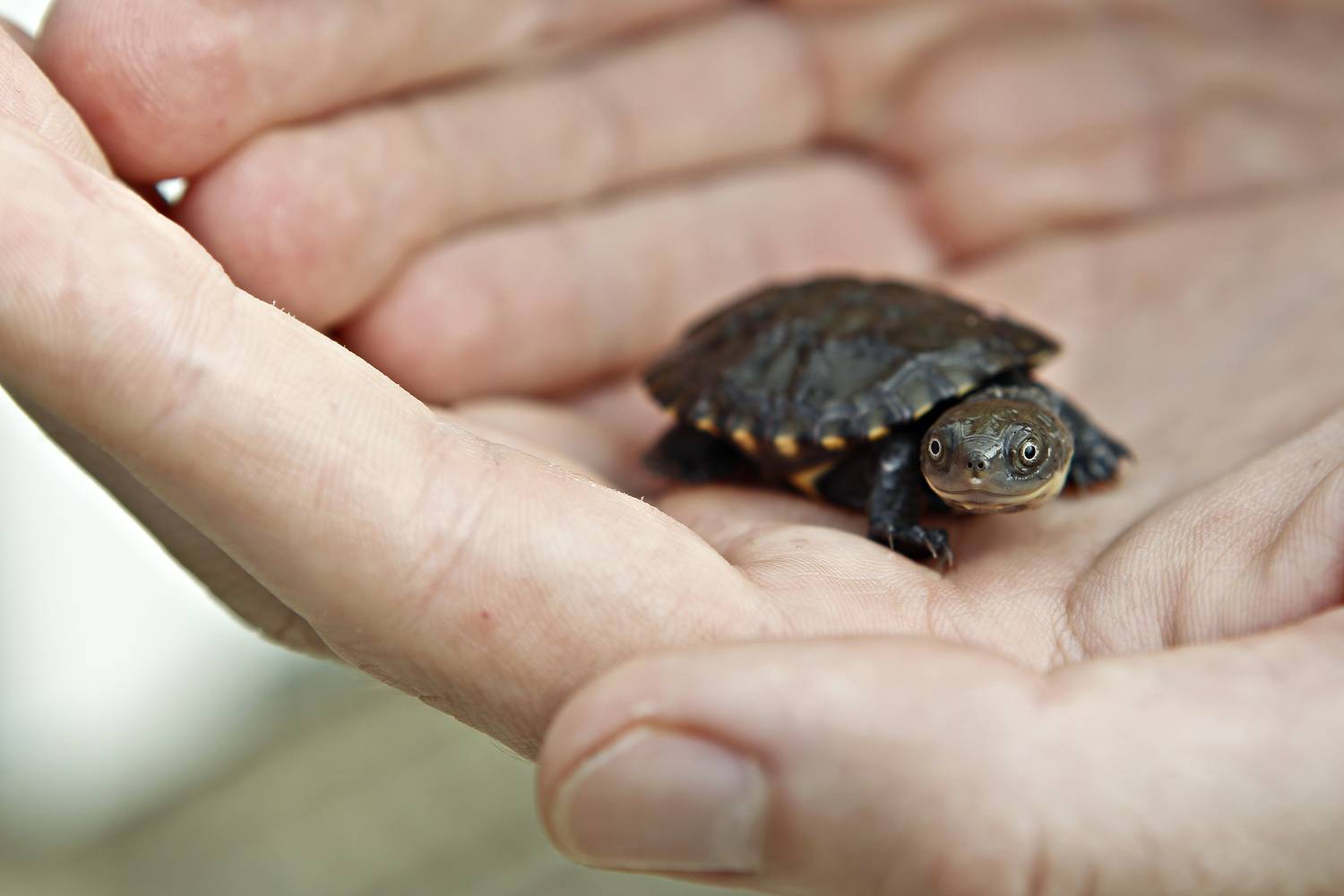
    The Perth Zoo in Australia had another successful season in their efforts to conserve Western Swamp Tortoises with 33 successful hatches. The zoo has been working hard since 1989 to help conserve this critically endangered species by rebuilding their wild population through a captive breeding and reintroduction program. Since the program's initiation, the zoo has hatched more than 800 tortoises, 600 of which have been successfully reintroduced to the wild. 

    In order to help increase the hatching success, after tortoises lay their eggs, keepers dig them up and place them in incubators. They remain here for four to six months until the hatchlings emerge. This year, the zoo was able to capture rare footage of two tortoises emerging from their shells, which can be found below. After they are born, the hatchlings are weighed and marked with nail polish on their shells so that they can be individually identified.

    WST3

    WST6
    Photo credits: Daniel Scarparolo / Perth Zoo
    Hatchlings are raised at the zoo for about three years until they reach 100 grams in weight. At this point they are released into one of four sites that are managed by the Western Australian Department of Environment and Conservation to help boost the wild population. In addition, the zoo maintains an "insurance population" of 150-200 Western Swamp Tortoises in case of an unforseen  drastic decline in wild number.

    See more photos after the fold!

    (more…)

  • ,

    398804_10151391359616715_1780314465_n
    Photo credits: Perth Zoo

    This Banded Knob-tailed Gecko hatched off-display on 4 March at Perth Zoo. Found in the Pilbara region of West Australia, this is the fifth Gecko of its kind to hatch at Perth Zoo since 2010. The Gecko weighed 2.18g when it hatched. The youngster’s older siblings can be seen in the zoo's Nocturnal House.

  • ,

    Nabarlek2

    A rarely-seen young Nabarlek, found curled up in his mother’s
    pouch after she was killed by a car, has taken up residence at Australia’s
    Perth Zoo.  Nabarleks are also known as Pygmy
    Rock Wallabies.

    Named Norbert, he is the only Nabarlek in a zoo anywhere, according
    to the Perth Zoo.

    Nabarlek3

    Nabarlek4

    Nabarlek1
    Photo Credit:  Perth Zoo

    Norbert was discovered by a wildlife rehabilitator, who provided
    care for several months.  At the time
    Norbert was taken in, he weighed just 6.5 ounces (186 grams).  Because he doesn’t have the skills to survive
    in the wild, Norbert was brought to the Perth Zoo where he will become a
    pint-sized ambassador for this little-known species.  

    Perth Zoo Director of Animal Health and Research Dr. Peter
    Mawson said adult Nabarleks are only about 12 inches (30 cm) tall.  They are rarely seen because they inhabit
    remote areas and emerge only at night to feed on ferns and reeds.

    Nabarleks are in the macropod family of marsupials,
    which includes kangaroos and wallabies.  “An
    interesting feature is that because of the tough nature of the plants included
    in their diet, the four or five molar teeth in each section of the jaw
    progressively move forward during the Narbalek’s life, ensuring that it is
    never without the teeth it needs to chew its tough food. Narbaleks are the only
    macropod that do this,” said Dr. Mawson.

    Guests can meet Norbert starting this weekend at the Perth
    Zoo.

    Related articles

    Kangaroo Joeys Think Outside the Pouch at Brookfield Zoo
    Are Those Hippos Smiling? Lowry Park Zoo's Newest Baby Gets Her Name
  • ,

    Echidna2

    Perth Zoo’s groundbreaking Echidna
    breeding program has produced two puggles (baby Echidnas) and a breeding milestone: These
    puggles represent the first successful breeding from zoo-born Echidnas and have
    shown that Echidnas breed at a younger age than previously thought.

    The puggles were born to four-year-old first-time mothers
    Mila and Chindi, both bred and born at Perth Zoo.  The new additions were named Nyingarn (Nyoongar
    for Echidna) and Babbin (Nyoongar for friend).  The puggles weighed less than one gram each
    when they hatched in August and spent their first two months in their mothers’
    pouches before being deposited in nursery burrows. DNA testing will reveal the
    puggles’ genders.

    Echidna4

    Echidna1

    Echidna5

    Echidna7


    “Until now, it was believed female Echidnas did not breed
    until the age of five so these latest births have shed new light on Echidna
    reproduction,” Environment Minister Bill Marmion said.  The groundbreaking work of the Perth Zoo’s Short-beaked
    Echidna breeding program could help conserve its endangered cousin, the
    Long-beaked Echidna.  The Perth Zoo has
    produced eight of the 24 Short-beaked Echidnas that have been bred in
    captivity.

    Short-beaked Echidnas are part of
    a group of mammals called monotremes. 
    Females lay a single egg, which is incubated for about 11 days before it
    hatches.  The baby, called a puggle,
    completes its development in the mother’s pouch.  As adults, Short-beaked Echidnas are covered
    with spines.  They feed on insects, which
    are collected with their long, sticky tongues.

    Photo Credit:  Perth Zoo

  • ,

    1

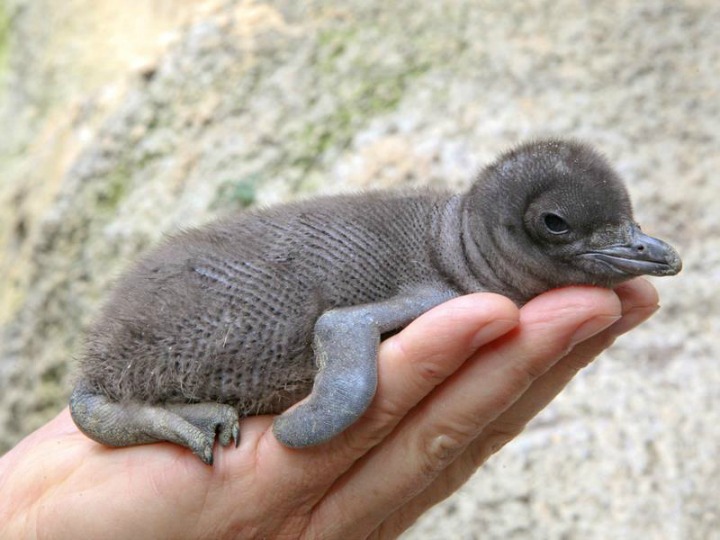
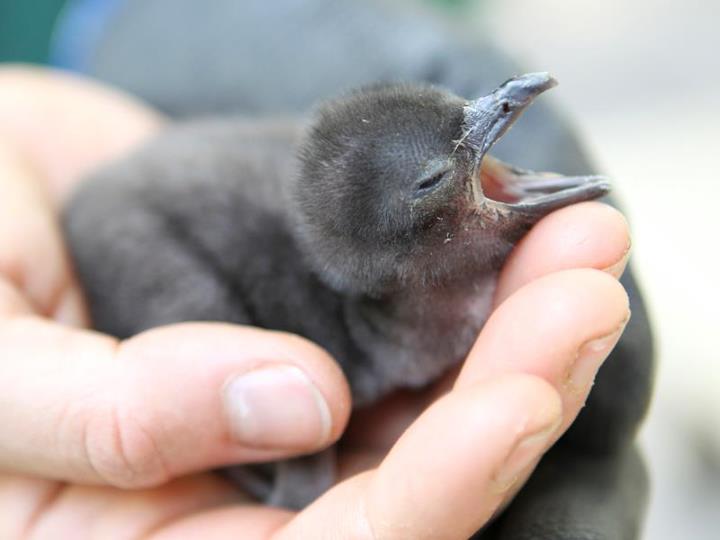
    This little Penguin chick hatched at Perth Zoo on July 29. Its parents took turns sitting on the egg and caring for the chick in their burrow. And once it hatched, they provided excellent care; the chick grew very quickly, weighing over 1 kg by the time it was five weeks old. These photos were taken weekly, starting on July 20 when the chick was one day old, ending at the age of five weeks. Very soon the chick will emerge from the burrow, ready to take its first swim! Its sex is still not known. 

    Penguins are found around the southern coast of Australia and around New Zealand. While listed as Least Concern by the IUCN Red List, they are threatened by changes to their coastal environments, predation by dogs, cats, foxes and rats, and become entangled in discarded fishing line and plastic bags. Perth Zoo is part of a regional breeding program for the species and has had many successful births over the years. 

    2

    2 weeks

    3 weeks

    4 wks

    5weeks
    Photo Credit: Perth Zoo

  • ,

    Perth Zoo Otters 13

    Meet Perth Zoo's new Asian Small-clawed Otter pups. Perth has had two litters of four pups born at the zoo in the past few months. One of the litters can be seen in their exhibit opposite the Red Pandas. Perth Zoo is part of regional breeding program for Otters and the births are the zoo's first in 18 years. These highly social critters pair for life, with males playing an important role in the rearing of pups. Dad's duties can include building the nest, supplying food for mom and her pups, as well as teaching the young to swim! Hunted for their fur, meat and body parts, otters are under threat in the wild.

    Perth Zoo Otters 3

    Perth Zoo Otters 4

    Perth Zoo Otters 5

    Perth Zoo Otters 8
    Photo credit: Perth Zoo

    Learn and see more beneath the fold…

    (more…)

  • ,

    Numbat4

    These baby Numbats, photographed shortly after their mother deposited them in an underground burrow, are part of the Perth Zoo's Native Species Breeding Program.  This unique program breeds Numbats and other endangered animals for release into the Australian wilderness.  So far in 2012, 19 Numbats have been born at the zoo for release into the wild to help rebuild populations of this endangered marsupial. 

    Numbat1

    Numbat5
    Photo Credit:  Perth Zoo

    (more…)

  • , ,

    Pups2012-health_0030_edit

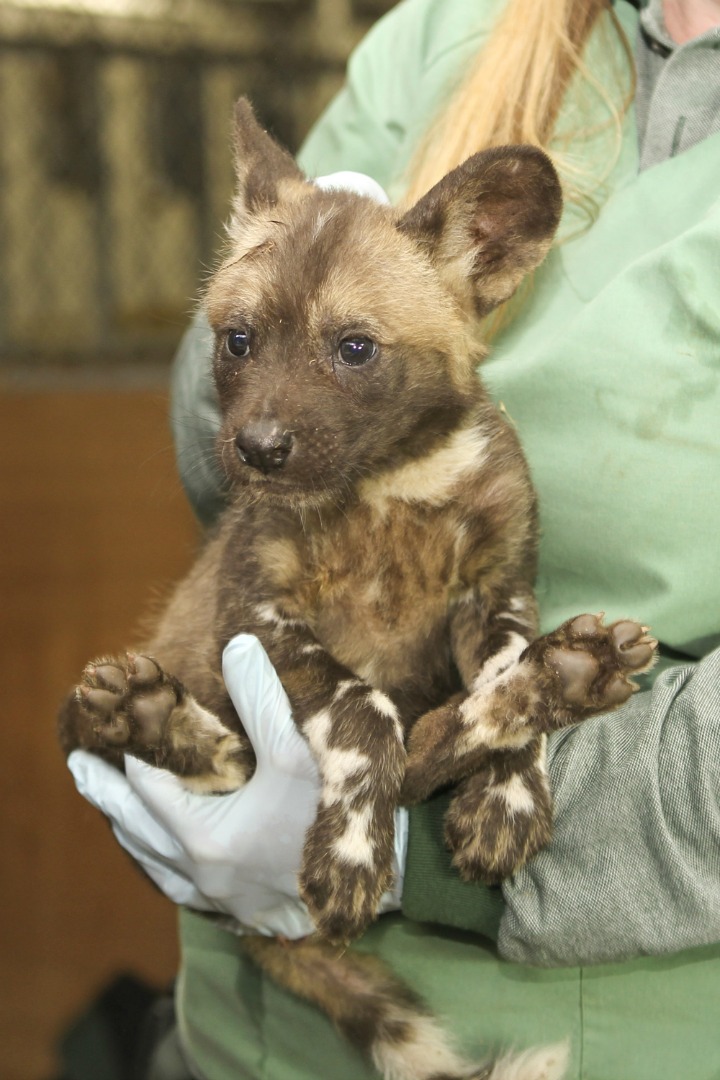
    Last week Perth Zoo celebrated an important milestone when their seven African Painted Dog pups emerged from the den for the first time and received a clean bill of health. The veterinary check-up included weighing, determining sex, adding microchips and noting each pup's unique markings. 

    Unlike most canines, African Wild Dogs allow their their pups to eat first and, in the case of young pups, feed them directly. The Zoo's Environment Minister, Bill Marmion, explained “The adult dogs have been regurgitating their meals to help feed the pups. This is natural behavior that ensures the young develop and become part of the group.”

    Pups2012-health_0137_edit

    APD-Pups-2012-3weeks_0065_edited003Photo and video credits: Perth Zoo

    In the wild these unique animals are endangered due to poaching, car accidents and disease among other threats. Learn more about these unique animals on the Perth Zoo website. More photos below the fold.

    (more…)

  • ,

    Red-panda06

    Perth Zoo’s latest breeding success – two Red Panda cubs – made their first brief public appearance today as veterinary staff gave them a health check and vaccinations. The cubs, who have been tucked away in their nest box under the care of their mother Tiamat since their birth on 20 December, were given a quick physical check and vaccinations this morning.

    Red-panda00

    Red-panda01

    Red-panda02

    Perth Zoo senior veterinarian Simone Vitali said the eight-week-old cubs, which are not expected to start venturing out of their nest box for another six to eight weeks yet, looked to be strong and in good health.

    More information and photos below the fold…

    (more…)