The Newest, Cutest Baby Animals from the World's Zoos & Aquariums

Category: Porcupine

  • , ,

    1_Photo 5 Virginia Zoo Porcupine

    The Virginia Zoo kicked off Spring with two new babies! A Bongo calf and a Porcupette were born recently, and both will soon be seen on exhibit.

    A Crested Porcupine baby, or 'porcupette', was born to parents, Wilma and Flapjack, on March 26. This is the second offspring for the parents. Keepers have been calling the new little female, Stompers. She weighed just over a pound at birth and is already starting to nibble on solid foods. Mom and baby are expected to be off exhibit in the ZooFarm for another week or so while they bond and the exhibit is “baby-proofed”. Crested Porcupines are native to various regions in Africa. The species can grow up to 25 to 32 inches long and weigh from 25 – 32 pounds.

    2_Photo 4 Virginia Zoo Porcupine

    3_Photo 3 Virginia Zoo Porcupine

    4_Photo 1 Virginia Zoo BongoPhoto Credits: Virginia Zoo

    A handsome male Eastern Bongo calf was born to mom, Betty, on April 5. He weighed 48.5 pounds at birth and is the seventh offspring for mom, Betty, and fifth for father, Bob. The new calf, which keepers named Boomer, brings the herd total to eight. Betty and new baby are out on exhibit with the rest of the herd and can be seen in their exhibit in the Africa – Okavango Delta at various times throughout the day, depending on weather conditions and their activity levels.

    Bongo are large-bodied, relatively short-legged antelope with long spiraling horns that make one complete twist from base to tip. Bongos inhabit lowland forest of Kenya.

    Visit virginiazoo.org for more info.

    5_Photo 2 Virginia Zoo Bongo

  • ,

    1_DSC_6718 (7-8)

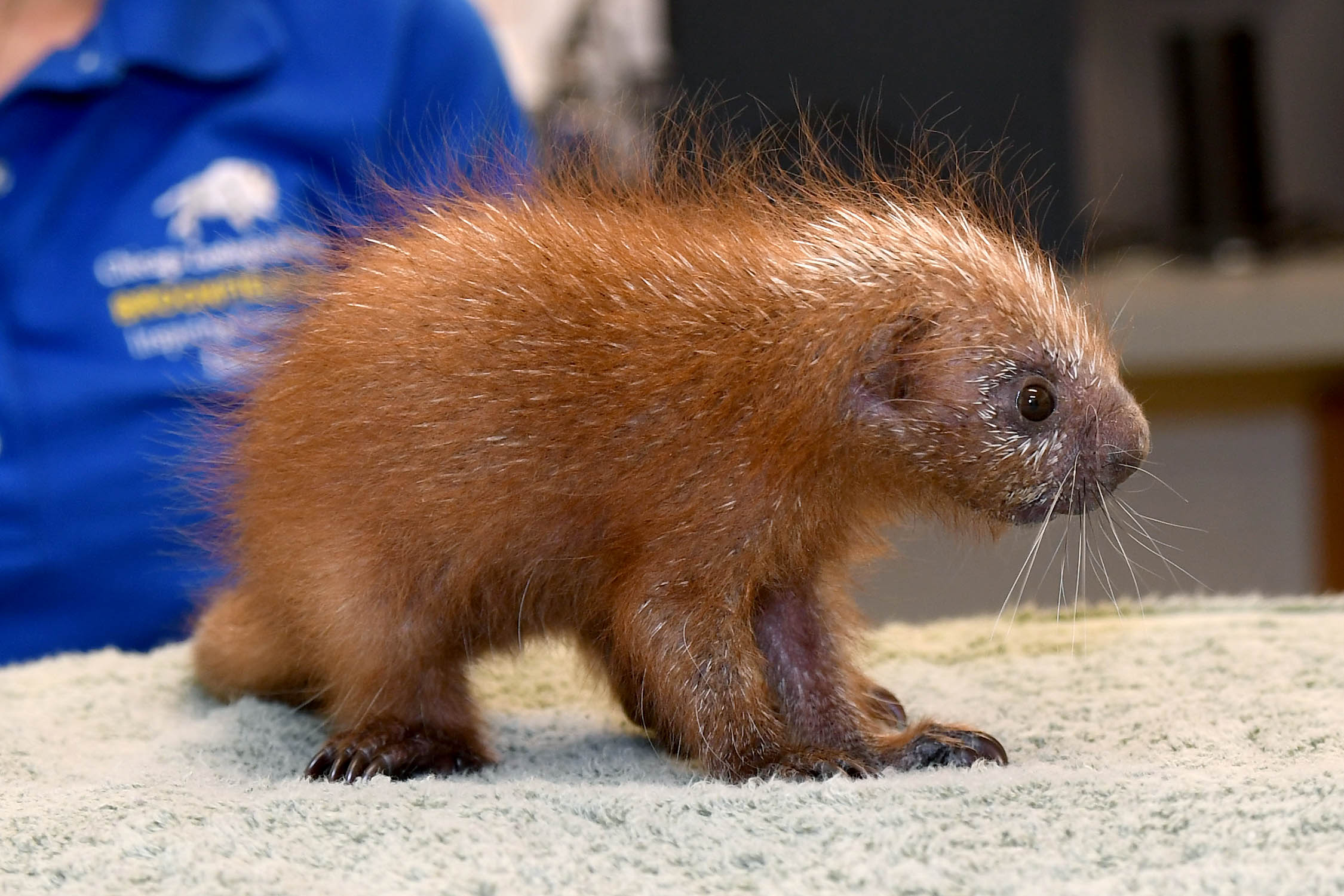
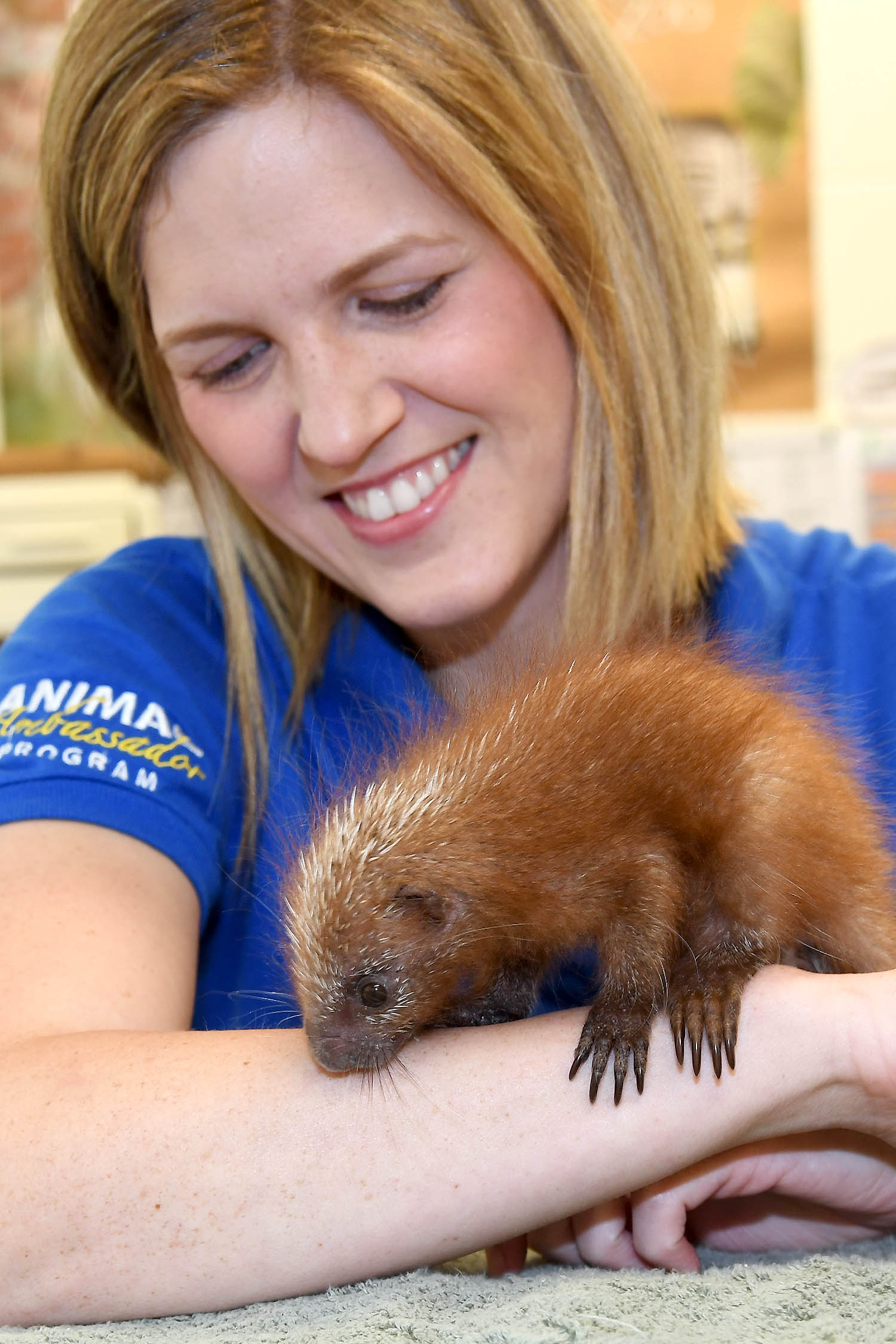
    The Chicago Zoological Society, which manages Brookfield Zoo, is getting right to the “point” by announcing the birth of a Prehensile-tailed Porcupine on July 2. The little male porcupette is the first of his kind to be born at Brookfield Zoo.

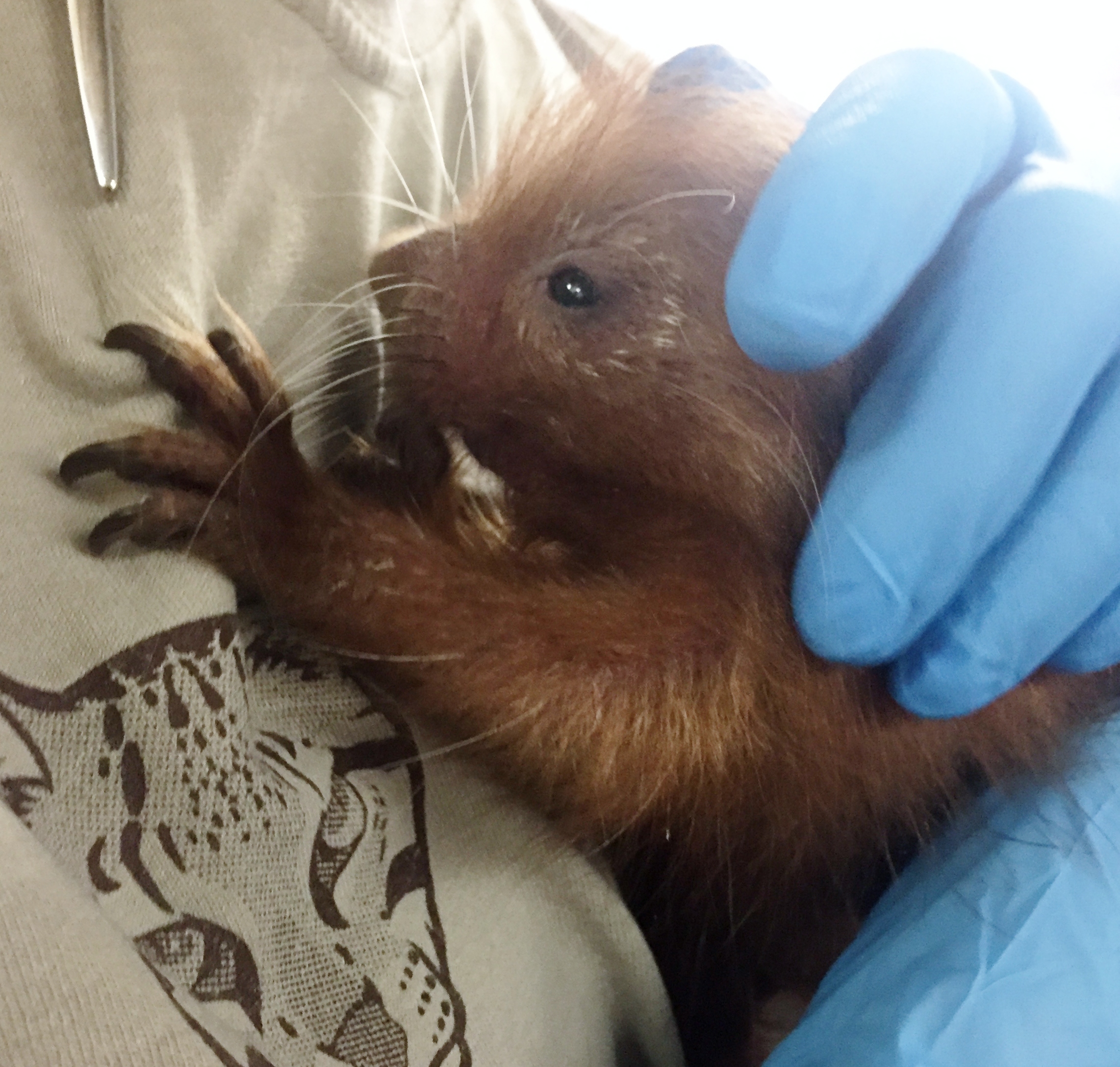
    After monitoring the mother, 5-year-old Lucia, for an extended period of time, it became clear that she was not allowing the baby to nurse and would not be able to provide her offspring proper maternal care. At that time, animal care and veterinary staff made the decision to intervene and hand-rear the porcupette, who is now thriving.

    2_DSC_6746 (7-8)

    3_DSC_6720 (7-8)

    4_DSC_6726 (7-8)Photo Credits: Jim Schulz / Chicago Zoological Society / (Images 4-7 feature Maggie Chardell, a lead animal care specialist for the CZS, assisting in hand-rearing) 

    Following a gestation of about 203 days, the baby was born weighing just under a pound. The baby has soft quills that protect the mom during the birthing process, but after a few days, the quills harden with keratin, which gives them their sharpness.

    Baby porcupines are relatively mature and mobile immediately following birth. Prehensile-tailed Porcupines are born with a rusty-brown colored coat that help them blend in with their environment. Similar to a young deer fawn, a porcupette hides and waits for its mother to come to it for nursing. A baby will typically continue to nurse until it is weaned at approximately 10 weeks of age.

    Both Lucia and the porcupette’s dad, 4-year-old Eddie, are members of Brookfield Zoo’s Animal Ambassador Program and can be seen in Hamill Family Play Zoo. Once the young porcupine is weaned from the bottle, he will also be a part of this program, which offers guests the opportunity to have up-close experiences with many of the animals.

    Prehensile-tailed Porcupines are native to South America and live in high-elevation rain forests. Their long tail is used to wrap around branches while climbing.

    Despite what some might think, porcupines do not shoot their quills, which are just modified hairs made out of the same substance found in human hair and fingernails. Porcupines have muscles at the base of each quill that allow the quills to stand up when the animal is excited or alarmed. Like all hairs, quills do shed, and when the porcupines shake, loose quills come out. The ends of Prehensile-tailed Porcupines’ quills have a small barb (like a fish hook) that snags the flesh, keeping the quill stuck.

    More pics below the fold!

    (more…)

  • ,

    BaumstachlerNachwuchs_TierparkBerlin (4)

    The North American Porcupine family at Tierpark Berlin made a ‘prickly’ welcome to their newest offspring.

    The baby arrived on April 20, and for a brief moment, the porcupette was soft and furry. However, the quills began to harden soon after the birth, just like those of mom and dad.

    This is the second North American Porcupine birth at Tierpark Berlin. The baby joins older sister, Pixie.

    "Although the Porcupine looks very cute with their short legs and their otherwise rather chubby body shape, they are extremely defensive," said Zoo Curator, Dr. Florian Sicks. "This is ensured by the approximately 30,000 spines, which are up to 75 mm long and barbed at their ends. Also, the high-contrast brown-white coloring of the spines is a warning signal for cougar, lynx or golden eagle, better to keep a distance."

    BaumstachlerNachwuchs_TierparkBerlin (7)Photo Credits: Tierpark Berlin

    The species is also known as the Canadian Porcupine or Common Porcupine. It is a large rodent in the New World porcupine family. In their natural habitat in Canada, the US, and northern Mexico, the North American Porcupine (Erethizon dorsatum) spends much of the day asleep in trees or caves.

    Tierpark Berlin’s Zoo Director, Dr. Andreas Knieriem, shared his thoughts about the successful breeding of the new porcupette’s parents: "Although the Porcupines moved to the zoo only in 2016, they have become an integral part of the future North American part of the zoo.”

    “The fact that Oskar and Anni got offspring so quickly is not only a pleasure for the visitors, but also a confirmation for us that they feel comfortable here. They are a popular motif, and their sight is now so much the zoo, that we have immortalized them in our new zoo Animal Park.”

  • ,

    1_Porcupettes 8

    Cotswold Wildlife Park is celebrating the birth of the first Porcupine twins in the Park’s forty-seven-year history!

    The as-yet-unnamed and unsexed twins were born recently to first-time mother, Stempu, and father, Prickle. The newborns are currently on show in the enclosure they share with a trio of inquisitive Dwarf Mongooses.

    According to Cotswold staff, the twins are perfect miniature versions of the adults, even born with a full set of quills, which begs the question visitors have been keen to ask keepers: “How does the female give birth without injury?” After a gestation period of approximately one hundred and twelve days (the longest gestation period of any rodent), the female gives birth to offspring covered in soft, moist and flexible quills, enclosed in a thin placental sac. Immediately after birth, the quills quickly harden in the air and become prickly. The babies, also known as Porcupettes, are also born relatively well developed, with eyes open and teeth present.

    2_Porcupettes 11

    3_Porcupettes 2

    4_Porcupettes 20 (5)Photo Credits: Cotswold Wildlife Park

    African Crested Porcupines (Hystrix cristata) are the largest of the twenty-five Porcupine species. They are also the third largest rodent in the world, behind the Beaver and Capybara.

    Their Latin name means, “quill pig”. Porcupines possess a spiny defense that is unique among rodents: approximately thirty thousand sharp quills adorn their back. Contrary to popular belief, they cannot fire their quills at enemies, but the slightest touch can lodge dozens of barbed quills into a predator’s body. Quills are modified hairs made of keratin (the same material as human hair, fingernails and the horn of a Rhino). Each quill can boast up to eight hundred barbs. If threatened, Porcupines reverse charge into a predator, stabbing the enemy with its sharp quills. The resulting wound can disable or even kill predators including Lions, Leopards and Hyenas.

    (more…)

  • ,

    1_porcupines in grass

    Utica Zoo is excited to announce the birth of two African Crested Porcupines. The delightful pair of “porcupettes” were discovered on May 1 with their parents, Kutarna and Darius. At their neonatal vet exam, they were determined to be a male and a female.

    Mom Kutarna is 7-years-old and has been at the Zoo since 2010. Dad Darius is 6-years-old and has been at Utica for about the same time. Although the two have lived and bred with each other for about 4 years, they have never produced young until now.

    The species has a gestation period of 93 to 94 days, after which one to three young are born, just 300 to 350 grams and about 6 inches long.

    “When I came in that morning and discovered two new adorable faces snuggled in with their parents I was so excited” said Kristy Bussard, one of the Porcupines’ zookeepers.

    2_porcupine drink

    3_Kristy Bussard porcupinePhoto Credits: Utica Zoo

    The Association of Zoos and Aquariums’ (AZA) Species Survival Plan (SSP) encouraged the breeding of Kutarna and Darius. The SSP works to promote genetically diverse populations of African Crested Porcupines. These are the first offspring for this pair, although Darius sired another porcupette with a different female 5-years-ago. That animal, known as Joey, is one of the Zoo’s ambassador animals in the Education Department.

    Porcupettes are born with soft quills that slowly become stiffer, more sharp, and longer with time. Once Porcupines have their armor and size, they have very few natural enemies.

    “They are born so vulnerable, so we wanted to hold off on their public debut until we were more certain they had their natural defenses in place”, added Pearl Yusuf, Director of Animal Operations. “Because of their size and no protective quills, they could easily fall prey to native raptors like hawks that fly over the exhibit.”

  • ,

    1_crawling

    The El Paso Zoo welcomed a new baby into their South American Pavilion exhibit. A Prehensile-tailed Porcupine was born on September 16 to mom, Flower, and dad, Vito.

    This is first offspring for the parents and the first baby Prehensile-tailed Porcupine born at the Zoo.

    El Paso Zoo keepers are waiting to name the baby porcupine (or porcupette) as soon as the sex is determined in a few weeks.

    “Animal care staff were excited getting ready for the first Prehensile-tailed Porcupine birth at the Zoo since they confirmed the pregnancy,” said Collections Supervisor, Tammy Sundquist. “It’s always a joy getting to watch a baby grow and the animal care staff is monitoring Flower and baby closely.”

    Flower and her baby are bonding behind the scenes and will be on exhibit next month.

    2_mommy and baby

    3_baby face

    4_holding onPhoto Credits: El Paso Zoo

    The Prehensile-tailed Porcupines (Coendou prehensilis) are native to Central and South America. They are closely related to the other Neotropical tree porcupines (genera Echinoprocta and Sphiggurus).

    Among their most notable features is the prehensile tail. The front and hind feet are also modified for grasping. These limbs all contribute to making this species an adept climber, an adaptation to living most of their lives in trees.

    Prehensile-tailed Porcupines fee on leaves, shoots, fruits, bark, roots, and buds. Because of their dietary preferences, they can be pests of plantation crops.

    They make a distinctive "baby-like" sound to communicate in the wild.

    Very little is known about how these porcupines court each other, and they also have no regular breeding season.

    A female usually gives birth to a single offspring. The baby is hairy, reddish-orange, and weighs about 14 ounces at birth. They are born with eyes open and can climb almost immediately. The spines will harden within about one week of birth, and in time, the baby porcupine will change color.

    Females nurse their young until about 3 months of age. The young will reach adult size in less than a year and will reach sexual maturity in less than two years.

    Adults are slow moving and will roll into a ball when threatened on the ground. The record longevity is 27 years old.

    This birth is part of a breeding recommendation from the Association of Zoos and Aquariums (AZA) Species Survival Plan® (SSP) to aid in the species’ conservation. Prehensile Tailed Porcupines are not listed as threatened or endangered, but they are pressured by habitat loss and killed in parts of their range by hunters.

    (more…)

  • ,

    1_Julie Larsen Maher_9335_North American Porcupine_CZ_BZ_05 20 16

    A North American Porcupine was born April 24 at WCS’s (Wildlife Conservation Society) Bronx Zoo and is now on exhibit with his family in the newly renovated Children’s Zoo.

    The male porcupette was born to mother, Alice, and father, Patrick, and this is the pair’s fourth offspring.

    2_Julie Larsen Maher_9352_North American Porcupine_CZ_BZ_05 20 16

    3_Julie Larsen Maher_9241_North American Porcupine_CZ_BZ_05 20 16

    4_Julie Larsen Maher_8294_North American Porcupine_CZ_BZ_05 20 16Photo Credits: Julie Larsen Maher/WCS’s Bronx Zoo

    The North American Porcupine (Erethizon dorsatum), also known as the Canadian Porcupine or Common Porcupine, is a large rodent in the New World Porcupine family. The beaver is the only rodent in North America that is larger than the North American Porcupine.

    The Porcupine’s most recognizable physical characteristic is its spiky quills. They can have as many as 30,000 quills covering their bodies and use them as a defense against predators. Despite popular belief, Porcupines cannot shoot their quills. The quills of the North American Porcupine have a tiny barb on the tip that, when hooked in flesh, pull the quill from the Porcupine’s skin and painfully imbed it in a predator’s face, paws or body.

    Gestation lasts for 202 days. Porcupines give birth to a single young. At birth, they weigh about 450 g, which increases to nearly 1 kg after the first two weeks. They do not gain full adult weight until about two years old.

    At birth, the quills are very soft. They begin to harden a few hours after birth and continue to harden and grow as the baby matures.

    Female Porcupines provide all the maternal care. For the first two weeks, the young rely on their mother for sustenance. After this, they learn to climb trees and start to forage. They continue to nurse for up to four months, which coincides with the fall mating season. They stay close to their mothers.

    The North American Porcupine is listed as “Least Concern” on the IUCN Red List. It is common throughout its range, except in some U.S. states in the southeast part of its range. However, they are threatened by hunting and habitat loss. As of 1994, it was listed as an endangered species in Mexico.

  • ,

    1_2016_porcupine_baby4

    The Binghamton Zoo at Ross Park, in New York, is proud to announce the birth of a Prehensile-tailed Porcupine on March 17 to second-time parents Mattie and Zoey.

    In honor of its day of birth, St. Patrick’s Day, the porcupette has been named Clover!

    This birth is a major success for the Prehensile-tailed Porcupine’s Species Survival Plan. Mattie arrived at the Binghamton Zoo in November 2014, under recommendations from the SSP as a breeding candidate for Zoey. Mattie and Zoey successfully had Norwan on Father’s Day 2015 and now are caring for their newest addition.

    2_2016_porcupine_baby2

    3_2016_porcupine_baby3

    4_2016_porcupine_baby

    Photo Credits: Binghamton Zoo at Ross Park

    Each SSP carefully manages the breeding of a species to maintain a healthy and self-sustaining captive population that is both genetically diverse and demographically stable. The Binghamton Zoo is proud to be a contributor to the captive population and is eager to continue participating in the program.

    Zoo officials have been monitoring the progress of the porcupine and its parents. Weighing in at 410 grams, the baby has progressively gained weight since birth. The porcupine will not be sexed for several more weeks.

    Porcupines are not born with sharp or barbed quills. Instead, the quills are soft and bendable, gradually hardening in the first few days after birth. Their quills will reach maturity after ten weeks. They are dependent on mother for nutrition the first four weeks after birth, eventually foraging for other food sources and will then be completely weaned at 15 weeks.

    Prehensile-tailed Porcupines are found in South America. They feed on the bark of trees, buds, fruits, roots, stems, leaves, blossoms, seeds, and crops like corn and bananas.

    The new porcupine is currently on exhibit with parents, Zoey and Mattie, and sister Norwan– in the New World Tropics building.

    Related articles

    Binghamton Zoo Celebrates Arrival of New Porcupine
    Prickly Situation for Porcupine Newborn
  • ,

    23360416010_c59a5e429e_k
    On October 5, Smithsonian’s National Zoo welcomed its newest (and prickliest) baby: Charlotte, the Prehensile-tailed Porcupine!

    23288147279_3f81097112_k
    23288147679_bc47f2bae0_k
    23573662281_6acbefd0a8_kPhoto Credit:  Jen Zoon/Smithsonian’s National Zoo

    Whenever the zoo welcomes a baby animal, keepers work closely with veterinarians and nutrition staff to ensure newborns are healthy. For Charlotte, this meant regular weigh-ins to ensure that she was nursing and gaining weight. Vets gave her a clean bill of health during her first wellness exam, but then she began to lose weight. The animal care team determined that Charlotte was not able to nurse properly and was therefore not receiving enough milk.

    The zoo’s nutrition staff created a formula using a mixture of puppy milk replacer, exotic milk replacer,  and egg whites, which resembled the composition of North American Porcupine milk. Once they were able to express milk from Charlotte’s mother, nutrition staff compared it to the formula to ensure Charlotte was getting the nutrition she needed.

    To manage Charlotte’s dietary and medical needs, zoo vets surgically inserted an esophagostomy tube and fed her formula every three hours, around the clock, for five days. The feeding tube was removed on November 11 because Charlotte was consistently eating all of her diet by mouth. Today, at 2.8 pounds, Charlotte is healthy and developing normally.

    Native to the forests of South America, Prehensile-tailed Porcupines feed on leaves, flowers, and tree bark.  Their prehensile (grasping) tails are not covered in spines and help these animals climb about in trees.  When threatened, these rodents curl into a ball, erecting their spines to appear larger and more intimidating.  They cannot shoot their spines (nor can any Porcupine), but the spines are loosely attached and can become painfully embedded in an attacker.

  • ,

    1_Julie Larsen Maher_1819_North American Porcupines and Porcupette_CZ_BZ_08 10 15

    A North American Porcupine was born at Wildlife Conservation Society’s Bronx Zoo

    The young male was born on July 28 to mother, Alice, and father, Patrick.  This is the pair’s third offspring, and the family is currently on exhibit in the zoo’s newly renovated Children’s Zoo.

    2_Julie Larsen Maher_1646_North American Porcupine Porcupette_CZ _BZ_08 07 15

    3_Julie Larsen Maher_1650_North American Porcupine Porcupette_CZ _BZ_08 07 15

    4_Julie Larsen Maher_1981_North American Porcupines and Porcupette_CZ_BZ_08 10 15Photo Credits: Julie Larsen Maher / WCS's Bronx Zoo

    The North American Porcupine (Erethizon dorsatum) is a large rodent whose most recognizable physical characteristic are its spiky quills. They can have as many as 30,000 quills covering their bodies. The quills are modified hairs that are sharp, barbed hollow spines. They are used primarily for defense but also serve to insulate the body during winter. Despite popular belief, porcupines cannot shoot their quills, but when threatened, the porcupine contracts the muscles near the skin which causes the quills to stand up and out. The quills have a tiny barb on the tip that, when hooked in flesh, pull the quill from the porcupine’s skin and painfully imbed in the predators skin.

    Porcupines are herbivores and eat leaves, twigs, and green plants. In winter, they may also eat tree bark.

    Female porcupines are solitary, except during the fall breeding season. They have a long gestation period that lasts for 202 days and typically give birth to just one offspring. Baby porcupines (porcupette) weigh about 450 grams at birth. At birth, the quills are very soft but begin to harden a few hours after birth. The quills continue to harden and grow as the baby matures.

    (more…)