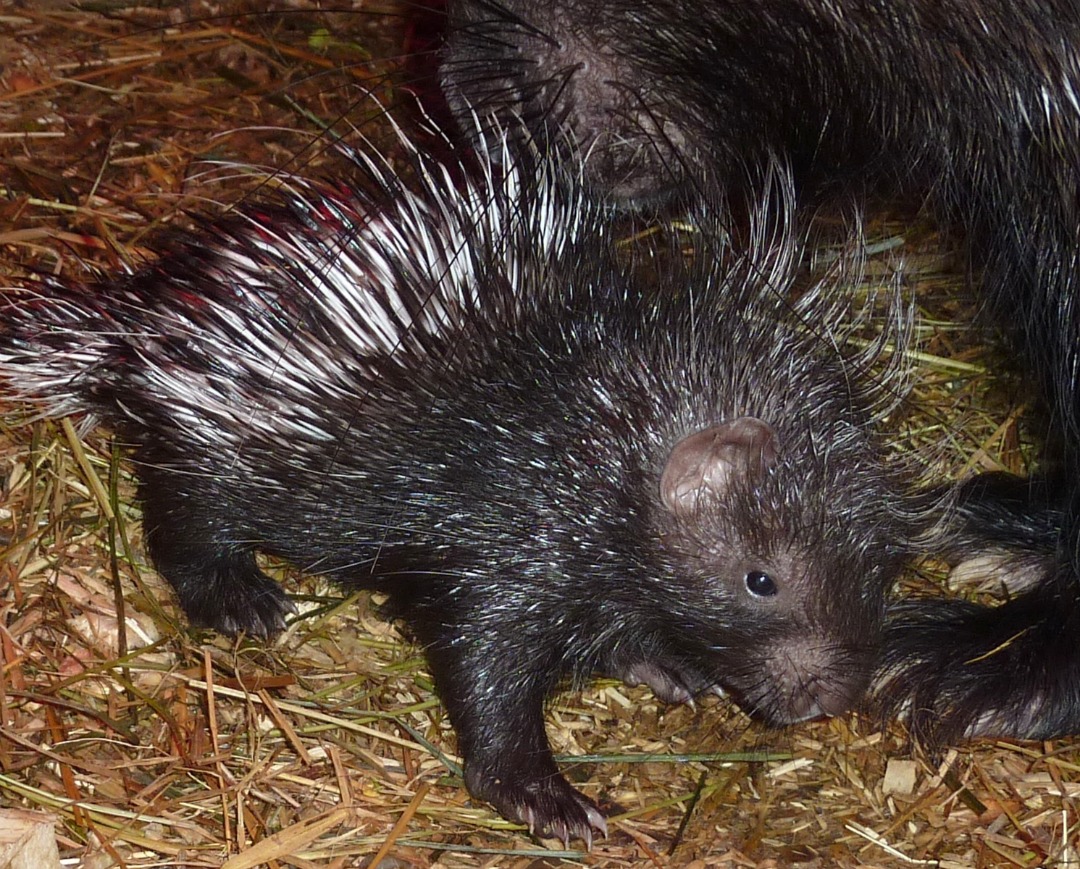
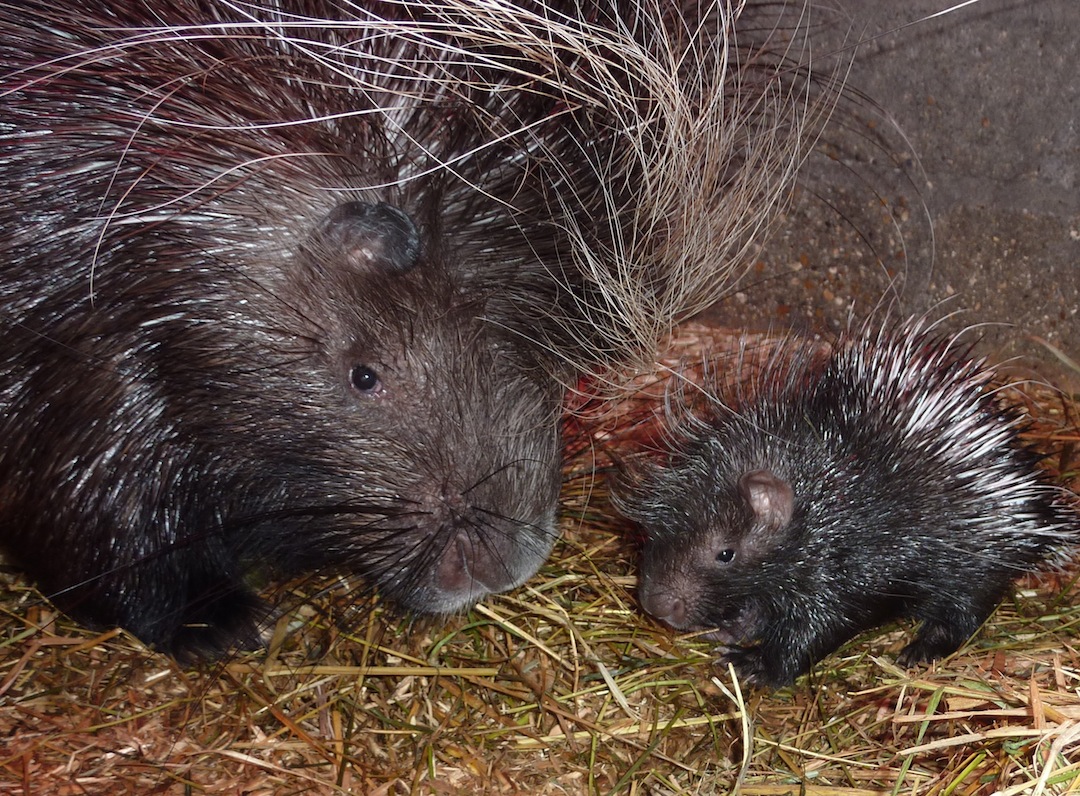
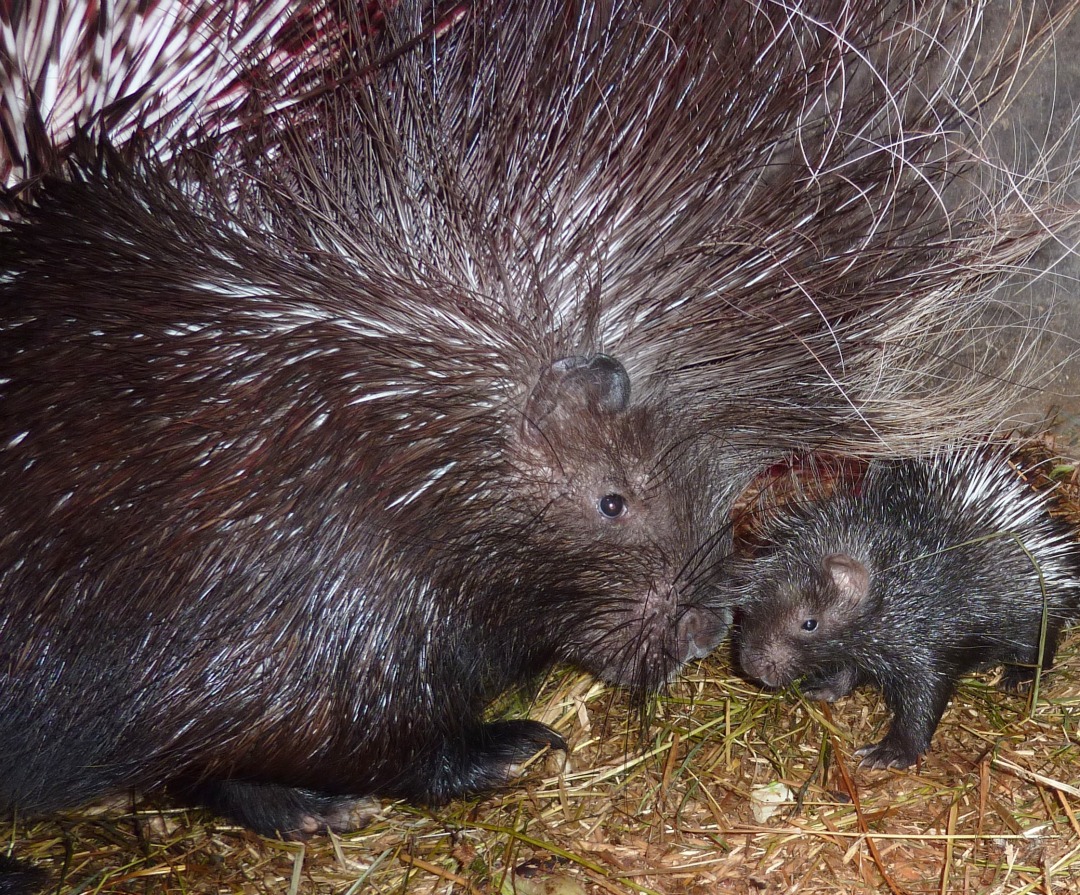
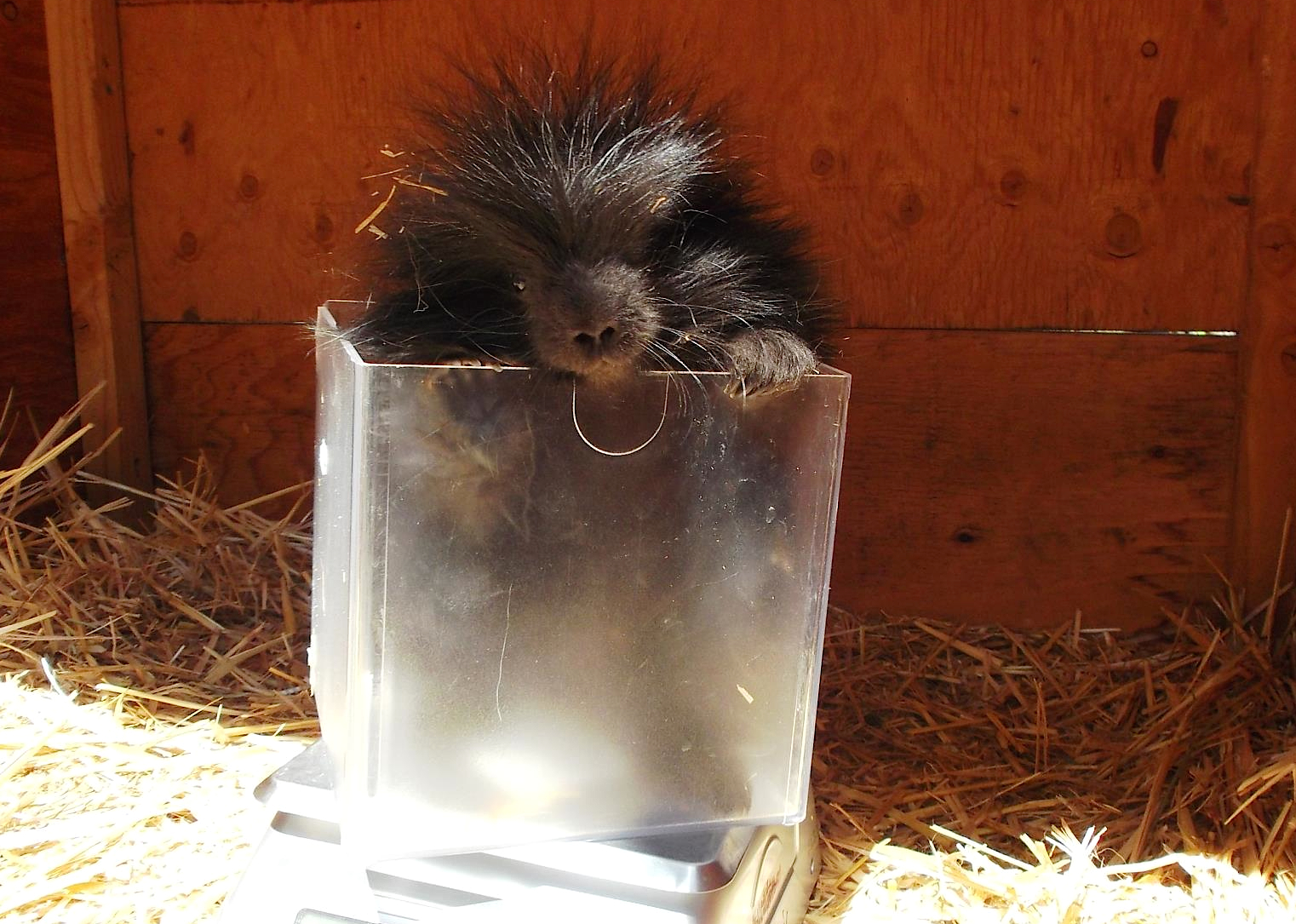
The Newest, Cutest Baby Animals from the World's Zoos & Aquariums

Category: Porcupine

  • ,

    IMG_1686

    Nale and Elan, Cheyenne
    Mountain Zoo
    ’s Porcupines, are first-time parents! Nale (nah'-lay) gave birth
    to a porcupette, or baby Porcupine, on May 8. The baby
    was born weighing a little over a pound and appears healthy. Zoo
    veterinarians will not be able to determine if it's a boy or a girl for
    approximately 30 days, at which time Zoo staff will name the newest Porcupine
    addition.

    IMG_0606.5

    601651_10151687373721019_1064063064_n

    IMG_1585

    IMG_1692
    Photo Credit:  Cheyenne Mountain Zoo

    "Porcupettes are
    born with their quills – they are soft when they are first born but harden
    quickly," Roxanna Breitigan, Animal Care Manager, said. "They are
    also precocious from the start. Nale's porcupette is active and crawling around
    the exhibit." 

    Nale joined the Cheyenne
    Mountain Zoo family at the end of June 2012, and Elan was smitten with her
    right away.

    "He started
    courting her almost immediately," Breitigan said. 

    Porcupines typically
    breed in the fall and their gestation is seven months long. Zoo staff started
    looking for signs of delivery starting on May 4 – Nale's first possible
    due date. 

    One of the keepers knew something was up when Nale’s behavior changed one morning. "She noticed right away that Nale didn't
    eat on Wednesday morning, wasn't climbing any trees (Nale is an
    expert climber, so that was very unusual for her) and was stretching a lot. [She] kept a watchful eye and was there when the baby was born," Breitigan
    said. 

    In the wild, males don't
    usually have a role in raising their young, but Elan is being a good dad. He is
    curious, interested, remains calm and keeps a watchful eye on his family from
    his favorite branch.

  • ,

    Stachelschwein_ZO26349

    Switzerland’s Zoo Basel welcomed a male porcupette
    (baby Porcupine) on April 6.  Porcupettes
    are born with soft, flexible spines, which harden after a few days.  The new baby lives with seven other
    Porcupines in the zoo’s exhibit.

    Stachelschwein_ZO26358

    Stachelschwein_ZO26390

    Stachelschwein_ZO26350
    Photo Credit:  Zoo Basel

    Zoo Basel’s Porcupines are clicker-trained,
    which allows zoo keepers to better monitor the health and well-being of these
    nocturnal animals, who would rather hide than interact with keepers.  The Porcupines have learned that a click
    means they’ll receive a tasty bite of food, so they eagerly emerge from their
    hiding places. 

    Porcupines are forest-dwelling rodents that
    feed on tubers, bark, roots and vegetables. 

    See more photos of Zoo Basel's porcupette below the fold.

    (more…)

  • ,

    Porcupette 1

    Zeus and Athena, a pair of North American Porcupines at Zoo Boise, had a porcupette on April 8th. The male baby hasn't been named yet. He is doing very well under the care of his mother Athena, and is on exhibit at the zoo. He weighed 517 grams at birth, and had gained 300 grams by his checkup just two weeks later. 

    The little male is the second porcupette to be born at Zoo Boise: in July 2012, Olympus ("Oly") was born to the same pair. Mostly arboreal, Athena spends most of her day sleeping in the trees while her baby stays on the ground. She comes down to care for him and to sleep near him at night. Within a few weeks, the porcupette will begin to eat vegetation and will learn to climb trees with her. 

    Porcupette 2


    011

    013

    Photo credits: Zoo Boise

    Porcupettes are born with open eyes and soft quills which harden within thirty minutes after birth.  Contrary to popular belief, porcupines do no shoot or throw their quills as a defense.  When attacked, a porcupine will tuck its head between its front paws and turn so their quills face the attacker. The hollow air-filled quills fall out of the porcupine’s skin easily.  One North American porcupine can have as many as 30,000 quills.

    Related articles

    Prickly New Baby Arrives at Stone Zoo
    Trio of Big-Eyed Baby Maras Born at Artis Zoo
    Shy North American Porcupette Weighs In at Zoo Magdeburg
    Prickly Porcupette a Surprise for Woodland Park Zoo
  • ,

    2013-04-19RHawk027PorcupineBaby

    Sometimes
    zoo babies are a surprise, and that’s exactly what happened when Molly, a North
    American Porcupine, surprised keepers at the Woodland Park Zoo by delivering a male porcupette (the actual name for a baby Porcupine) on April 18.

    Molly and her mate Oliver joined Woodland Park Zoo in June 2011 shortly after
    their second birthdays. At such a young age, zookeepers expected that Oliver was
    a year shy of sexual maturity, but Oliver wasn’t paying attention to the zoo
    keepers’ timetable. As keepers look back, they now realize that Molly became pregnant
    in September, giving her a seven-month gestation period before birthing the
    pair’s first baby.

    2013-04-19RHawk077PorcupineBaby

    2013-04-19RHawk087PorcupineBaby

    2013-04-19RHawk059PorcupineBaby

    2013-04-19RHawk072PorcupineBaby
    Photo Credit:  Ryan Hawk/Woodland Park Zoo

    A porcupette is born with a full coat and open eyes, in contrast to many other
    rodents. Within hours of birth its soft coat of quills begins to harden,
    immediately preparing it for protection from predators. The baby becomes active
    quickly and—as a natural tree dweller—its climbing instincts take hold within
    weeks of delivery. That climbing ability will come in handy as the youngster
    weans itself from mom and transitions to an herbivorous diet of leaves, twigs,
    and bark.

    Molly and the newborn are currently in
    an off-exhibit den, though Molly sometimes leaves to stretch her legs in their
    exhibit. In the wild, a mother Porcupine would leave the newborn to nest in a
    safe area on the ground and she would retreat to the trees for food and
    shelter.

    In the warmth of their den box, the pair nuzzles close to one another until the
    porcupette breaks free from her embrace and explores their shared space. Time
    and time again, Molly will swoop her paws beneath his belly and pull him back
    to her chest for what looks like a Porcupine hug. 

  • ,

    Porcupine 1

    There's a spikey new addition to Zoo Magdeburg's family of North American Porcupines: a porcupette, whose sex is still undetermined, was born on April 1st. Recently, the shy porcupette sat quietly on a scale to be weighed, but scurried back to mom as soon as the adventure was over. The baby weighed a healthy 870 grams. Fully grown, North American Porcupines will weigh from five to ten kilograms. 

    In addition to the newborn, Zoo Magdeburg has two adult females and one adult male, which live in an exhibit with Black-tailed Prairie Dogs. The zoo's first successful breeding occured in 2003, with the offspring now living at Duisburg Zoo. 

    Porcupine 4
    Photo Credits: Zoo Magdeburg

    Read more about North American Porcupines below the fold.

    (more…)

  • , ,

    Porcupine-_-StoneZoo3

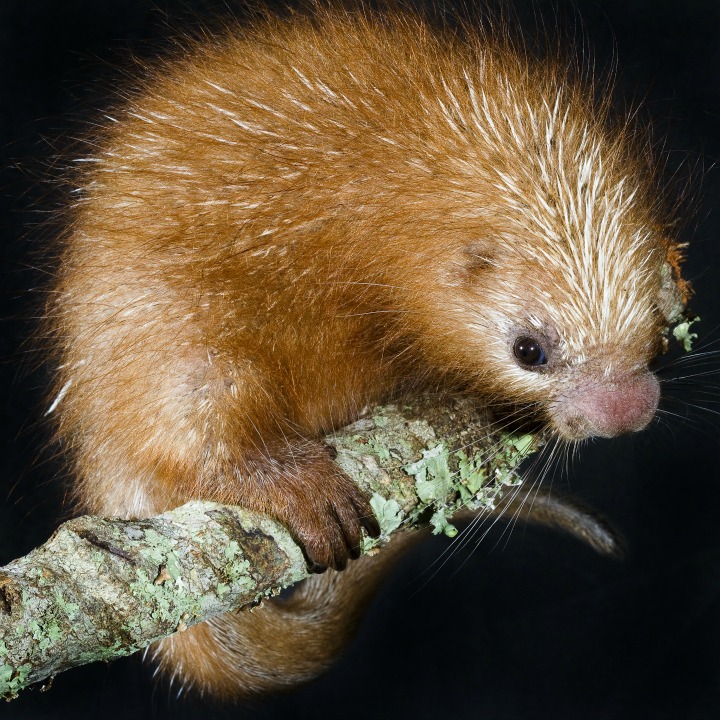
    The Stone Zoo, part of Zoo New England, recently welcomed a few new members to their collection. Among them, was a Prehensile-Tailed Porcupine that was born just over a month ago on February 16th. The little one was born to mother Comica (14) and father Elvis (6), after a gestation of roughly six and half months. The breeding was a result of a recommendation by the Association of Zoos & Aquariums' Prehensile-Tailed Porcupine Species Survival Plan, which aims to conserve the species. 

    Prehensile-Tailed Porcupines are born with the eyes already wide open, and are able to use their unique prehensile tails, which are used to grip various objects, right away. Babies have dense coats of reddish hair and sharp quills that are around 15 millimeters long. Not surprisingly, there isn't a whole lot of contact between the prickly mother and offspring, and the two only typically come together when it is time for the baby to nurse.  

    Porcupine-_-StoneZoo2

    Porcupine-_-StoneZoo
    Photo credits: Stone Zoo

    Prehensile-Tailed Porcupines are native to Central and South America. They live primarily arboreal lives, and use their prehensile tail to help them navigate through the forest canopy. In the trees, they forge for their vegetarian diet of flowers, leaves, shoots, and a special cambium layer that can be found beneath the bark of certain trees. When threatened, porcupines will curl up into a ball and shake their spines vigorously to fend off potential attackers. 

    Related articles

    Baby Gorilla Gets a Name at Oklahoma City Zoo
    Nashville Zoo Keepers Administer Emergency Mouth To Snout CPR To Save a Baby Tapir
    Meet Brevard Zoo's Newest Jaguar Cub
    Take a Peek Inside a Sumatran Tiger's Den!
  • ,

    Pork CU

    Just when the staff at Linton Zoo thought that they were done with baby animal births for the year, they were delighted to discover this tiny bundle on the 10th of December, sporting more prickles than a Christmas tree! The baby African Crested Porcupine was born to first-time mom Halla and dad Henry, who are proving to be the perfect parents,
    regularly feeding and grooming the little porcupette and keeping it nice and warm
    under the heat lamp. The gestation period is approximately 112 days and a baby is born looking just like a miniature adult.

    And now the public has been invited to suggest names on Linton Zoo's Facebook page. Since the baby's gender is not yet known, they ask for names that are suitable for
    either a male or female. The person who suggests the
    chosen name will receive an annual sponsorship of the porcupette. A sponsorship pack can be mailed anywhere in the world. 

    African Crested Porcupines come from Sub-saharan Africa and live in rocky
    outcrops and hills. They are nocturnal and spend most of the day sleeping, waking
    occasionally to eat. Their quills, which are simply modified hairs, detach easily, giving rise to the myth that they ‘fire’ the quills… but that is untrue. If a predator approaches, the Porcupine will rattle the hollow quills in its tail, followed by a
    series of growls, grunts and foot-stomping. Only if this fails to deter the
    attacker will it charge backwards to impale the threat with their spikes. 

    Pork w: dad(2)

    Pork w. dad xxx
    Photo Credit: Linton Zoo

    Naturally the new arrival is proving to be bit of a distraction. Due to infrared lamps, it’s easy for staff to see into the nest box without the porcupines knowing they are there. They find it fascinating to watch the interaction between the parents and their new baby. Both Mom and Dad are very attentative, especially Henry, who’s often left to babysit while Halla goes forraging for food.

    Watch this video to see for yourself; it shows how really tiny the porcupette is!

  • ,

    Porc-Noko CU

    Two baby Porcupines have had
    their first ever health check-ups at Chester Zoo. The African Crested
    Porcupines, named Stempu and Noko, were born on September 1 and
    4 respectively, to mom Roxie and dad Nungu. 

    Keepers gave the duo a
    physical examination, inserted microchips and took their weights during the
    routine checks. 
Keeper Chris Grindle, seen here, said, “We're very pleased to say
    that both of our spiky new arrivals are in great shape. Noko tipped the
    scales at 865g (1.9 pounds) while Stempu was a little heavier at 1075g (2.4 pounds). Both look
    to be very healthy indeed and so we are extremely pleased with them – as are
    our visitors judging by their reactions when they see them.” 


    Porc Noko keep

    Porc weighed

    Porc-Stempu

    299472_10151161074135912_1030254088_n
    Photo Credit: Chester Zoo

    Read more after the jump:

    (more…)

  • ,

    1 baby

    The St. Augustine Alligator Farm Zoological
    Park
     announced their first ever birth of a Prehensile-tailed
    Porcupine (Coendou prehensilis). She's been named Pollie. Olivier, the Porcupette’s father, has
    been at the zoo since 1998 and is a star education animal. His mate, Miss Piggy, arrived in 2010
    as a breeding companion and to ease Ollie’s show schedule.

    In late 2011, Miss Piggy’s weight began to
    steadily increase. The zoo’s
    veterinary staff attempted to perform a couple of voluntary ultrasounds during
    her pregnancy, but due to normal gas pockets within a porcupine’s abdomen, they
    were unsuccessful in viewing the growing baby. After a gestation of roughly 203 days, the
    uncomfortable mother finally gave birth on August 2, to a baby weighing just about 12 ounces (396
    grams). She was covered with
    long, soft, reddish quills at birth, but the thicker, sharper adult quills
    quickly began to appear.

    Prehensile-tailed Porcupines are listed as
    a species of Least Concern due to their wide distribution across northern South
    America and a presumed large population. Just over 100 individuals live within AZA zoos.  Ollie and Miss Piggy were one of
    twenty-two pairs recommended to breed by the Species Coordinator.

    Weigh

    Size

    Nose
    Photo Credit: St. Augustine Alligator Farm Zoological Park

  • ,

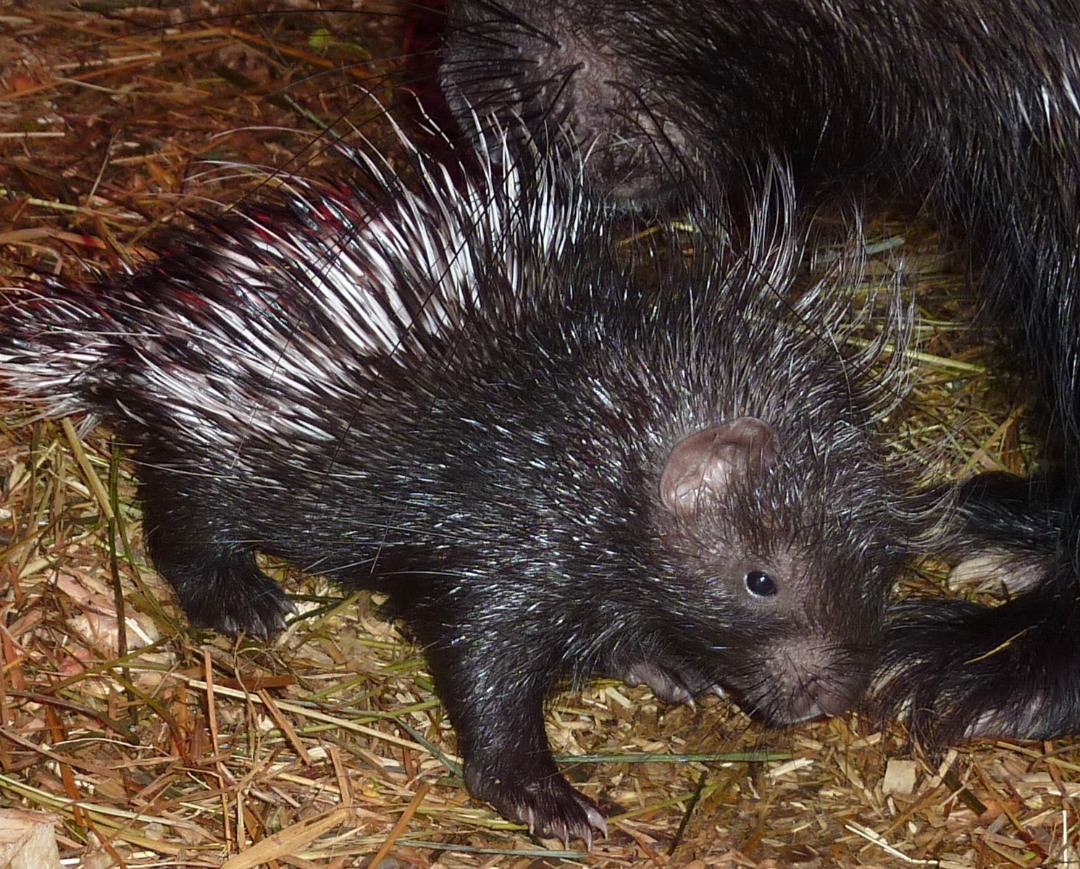
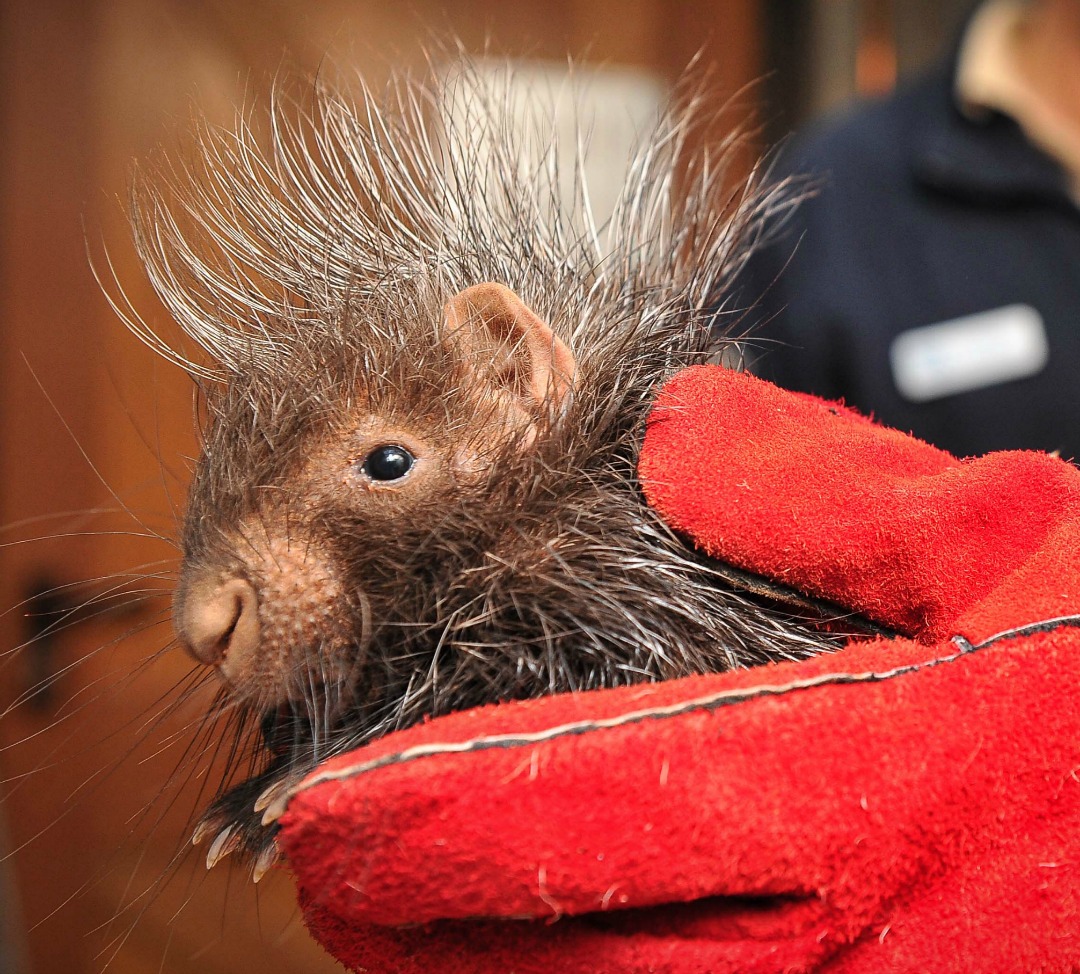
    The Durrell Wildlife Conservation Trust recently welcomed a baby African Crested Porcupine named Pippa or Pip for short. Baby porcupines are called "porcupettes" and their quills are soft for the first few days. However in adulthood this porcupine's quills provide a potent defensive weapon. When threatened, this species turns away from its aggressor, stamps its little feet, then charges rear-end first with its sturdiest quills sticking straight out. Doesn't look like Pip or mom have too much to be upset about though in salad paradise.

    Newborn porcupine Pippa Credit Colm Farrington

    Newborn porcupine Pippa Credit Colm Farrington20Photo credits: Colm Farrington