The Newest, Cutest Baby Animals from the World's Zoos & Aquariums

Category: Sacramento Zoo

  • ,

    Red 4 wks

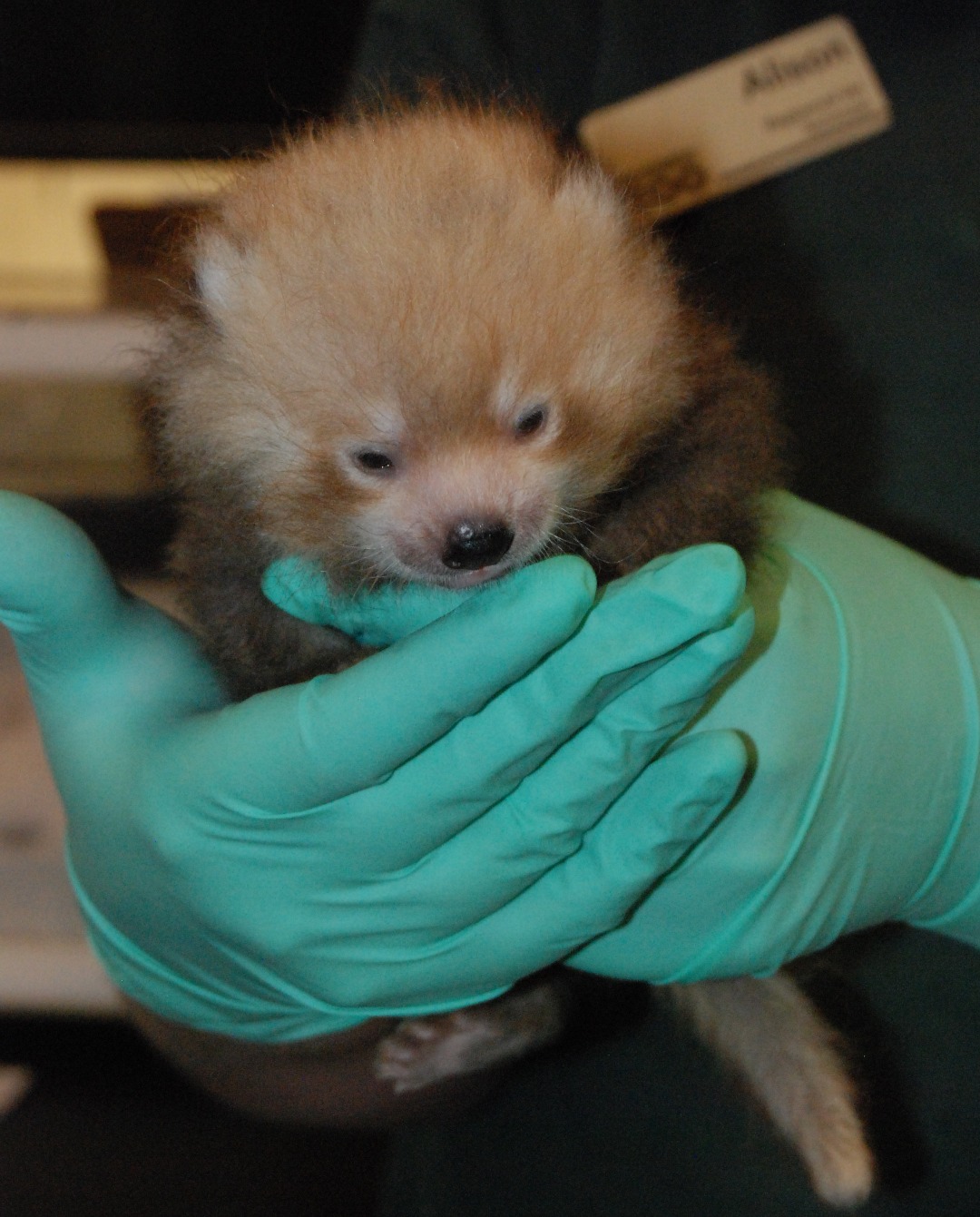
    On June 9, a pair of endangered Red Pandas at the Sacramento Zoo welcomed their first offspring, a male. While the first-time mother was attentive, it seemed she might not have been producing enough milk to adequately feed her cub. After two and a half weeks, discussions between veterinary and animal care staff and the Red Panda SSP Coordinator led to a decision to hand-rear the cub. Red Panda cubs have a high mortality rate (50%) within the first 30 days of life. The staff were hopeful that the cub would thrive with additional attention from keepers and veterinary staff. They gave it a stuffed Mama animal to curl up with and began their work.


    Red Erik


    Red hands

    Red  nap

    Red Smile

    Photo Credit: Photos 1,3,4,5: Sacramento Zoo, Photo 2: Erik Bowker

    Now, at five weeks old, the Red Panda cub is progressing well. He currently weighs all of 1 pound (0.45 kg) and has steadily gained strength and mobility. Guests have caught a glimpse of the cub through the window at the Murray E. Fowler Veterinary Hospital, where he is fed at around 10:30 a.m. and 2:30 p.m., daily.

    Here is the Panda cub at one month old:

    And the most recent footage at the age of five weeks!

  • ,

    14 days old - Christa Klein

    The Sacramento Zoo welcomed four Black-and-white Ruffed
    Lemur babies on May 17. The babies have been growing fast in an off-exhibit area with
    mom.

    8 days old - Christa Klein

    12 days old - Christa Klein

    4 days old - Christa Klein

    BWRuffed Lemurs 06102013 (10)
    Photo Credits:  Christa Klein (1,2,3,4); Sacramento Zoo (5)


    Ruffed Lemurs are the only primates that keep their young in nests instead of
    carrying them. In the wilds of their native Madagascar, these Lemurs nest in
    tree cavities. At the zoo, keepers
    provide tubs and crates as nesting sites. Just as she would in the wild, the mother Lemur moves her babies from
    nest to nest in her enclosure.

    At a few weeks of age, the baby Lemurs began following mom around and
    practicing their climbing skills. For now, the babies’ father and older brother
    live separately from mom and her young, but they can all see and smell each
    other through a mesh door. This will
    make the introduction process, when the family is completely reunited in a few
    months, go much smoother.

    Infant Lemurs are pint-sized versions of adults, with the same black-and-white
    coat colors. Each individual has a slightly
    different coat pattern with varying amounts of white, black, and even some
    shades of brown. Eye color often starts out as blue and then changes (often multiple
    times in the same individual) to yellow, gold, or green.

    In Madagascar, Black-and-white Ruffed Lemurs are listed as
    Critically Endangered by the International Union for Conservation of
    Nature. Because they are large, these
    Lemurs are hunted for their meat. As rain
    forests are cut to make way for agriculture, the Lemurs’ habitat is
    destroyed. They now live in only a few
    isolated forest pockets on the island. 

  • ,

    BurrowingOwl3

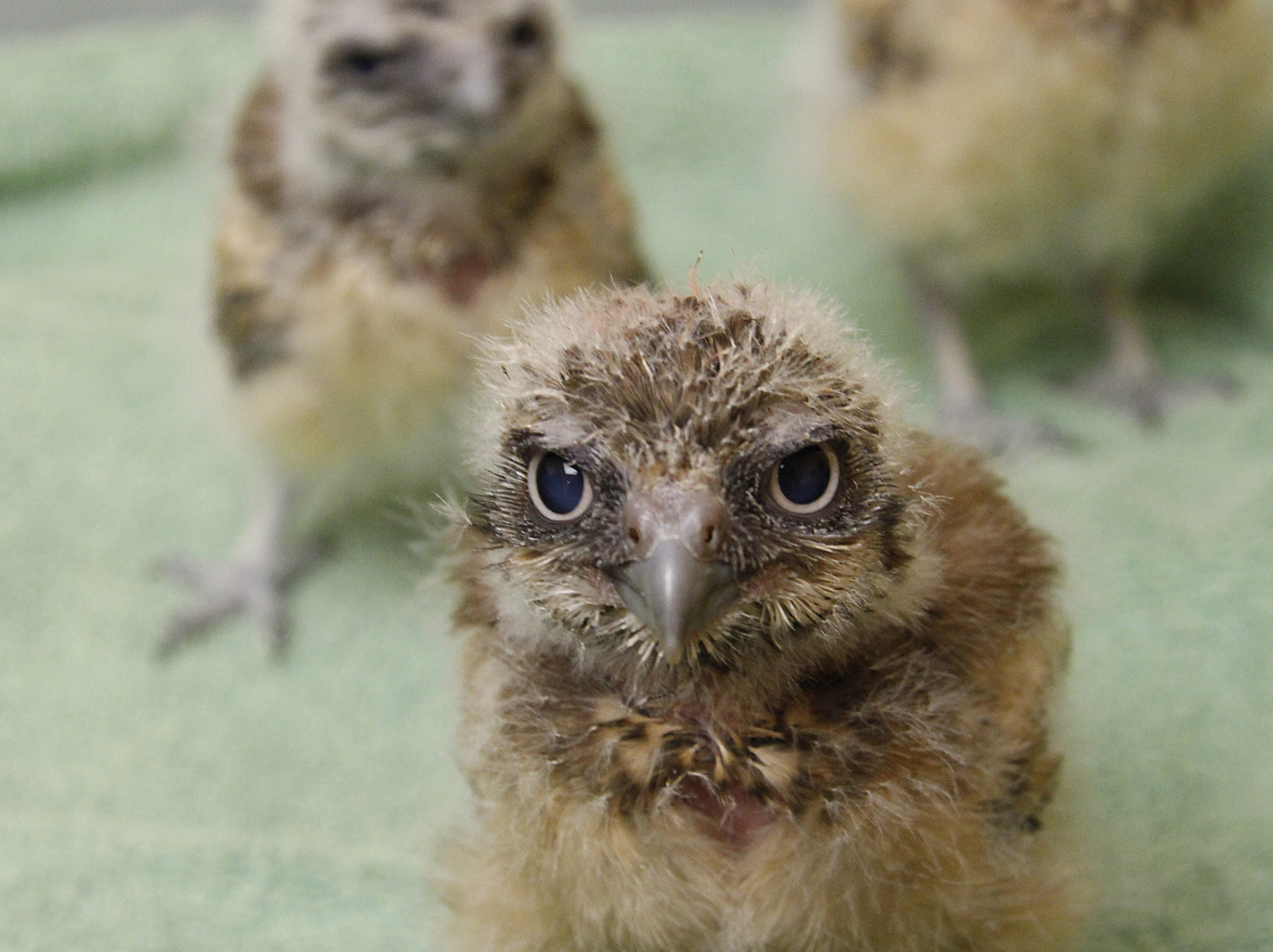
    Three Burrowing Owlets recently hatched at the Sacramento Zoo. These fluffy little ones will grow to weigh anywhere between 4.5-9 ounces, and become 7.5 – 10 inches tall with a wingspan of 21 – 24 inches! Males of this species are slightly heavier and have a longer wingspan than the females, which is not the norm with most owls.
    Found in dry, open areas with low vegetation like deserts, grasslands, farms, and even golf courses and vacant lots in urban areas, this species hunts either while on the ground or by swooping down from a perch. They will also catch bugs while in flight. In addition to insects, they eat small mammals and at times supplement their diet with reptiles and amphibians. 

    Not so for these chicks at the moment. Keeper Maureen Cleary dedicates herself to diligently feeding each Owlet. First she weighs out the amount of food that is appropriate for them at this weight and age, then patiently feeds them one bite at a time from medical scissors, which mimic a beak, just like their own mother would. The Owlets instinctually know what to do, even when their eyes were closed, as seen in the video below, where the chicks are just six days old. 

    Burrowingowl1

    BurrowingOwl10
    Photo Credit: Mike Owyang

    Burrowing Owls are listed as Endangered in Canada and Threatened in Mexico. The U.S. Fish and Wildlife Service (USFWS) list it as a Bird of Conservation Concern at the national level. At the state level, Burrowing Owls are listed as Endangered in Minnesota, Threatened in Colorado, and as a Species of Concern in Arizona, California, Florida, Montana, Oklahoma, Oregon, Utah, Washington, and Wyoming 

    In the video below, notice that each chick has a colored dot on their little heads. This is temporary, used so the keeper can distinguish them from each other:

    See many more pictures of the Owlets after the fold:

    (more…)

  • ,

    T swats tail

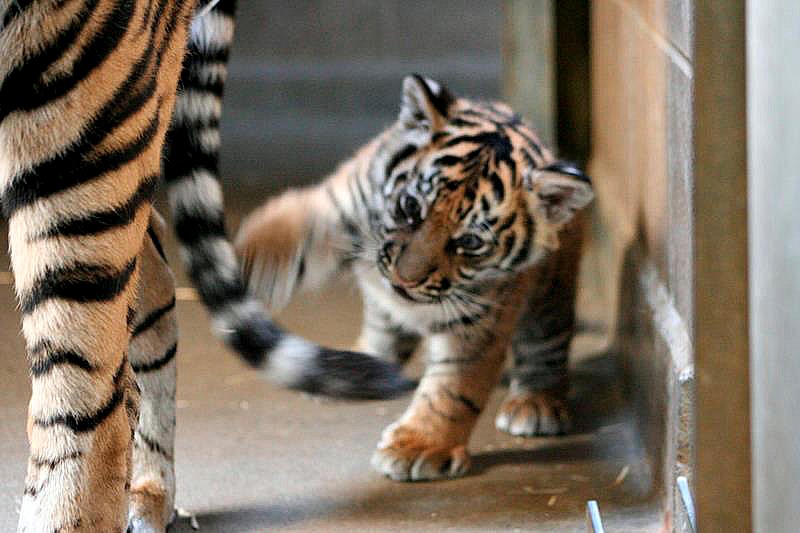
    The little male Sumatran Tiger cub, born on March 3rd to mother Bahagia at the Sacramento Zoo, is now eight weeks old. ZooBorns has been reporting on the baby's birth and growth, which you can find HERE and HERE. Named CJ, the cub is now a hefty 16 pounds, has almost all of his teeth in and is very playful with mom. He is not eating solid food yet, but has shown interest by investigating Mom's meals.

    The latest development is that CJ is walking!  He spends a lot of time following Mom around, exploring the den, and expanding on his his new abilities with little bouts of jumping.
    T mom and mouth

    T feet

    T hugs mom

    Photo Credit Erik Bowker

    You can see how playful CJ is with Mom in the video below. Listen to him practice his baby roar near the beginning!

    See more pictures after the fold:

    (more…)

  • ,

    Mimibaby21-1

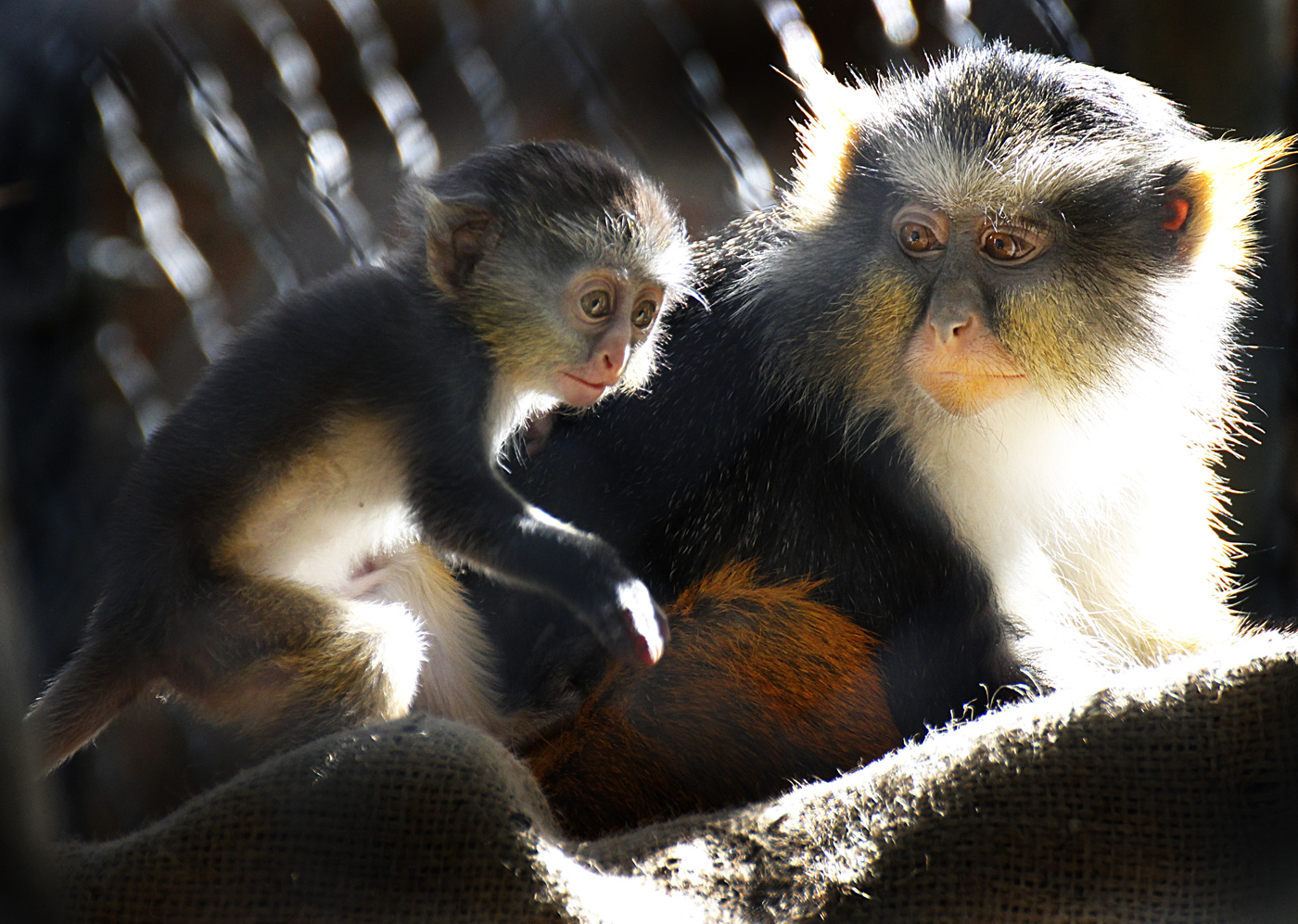
    On January 26th,
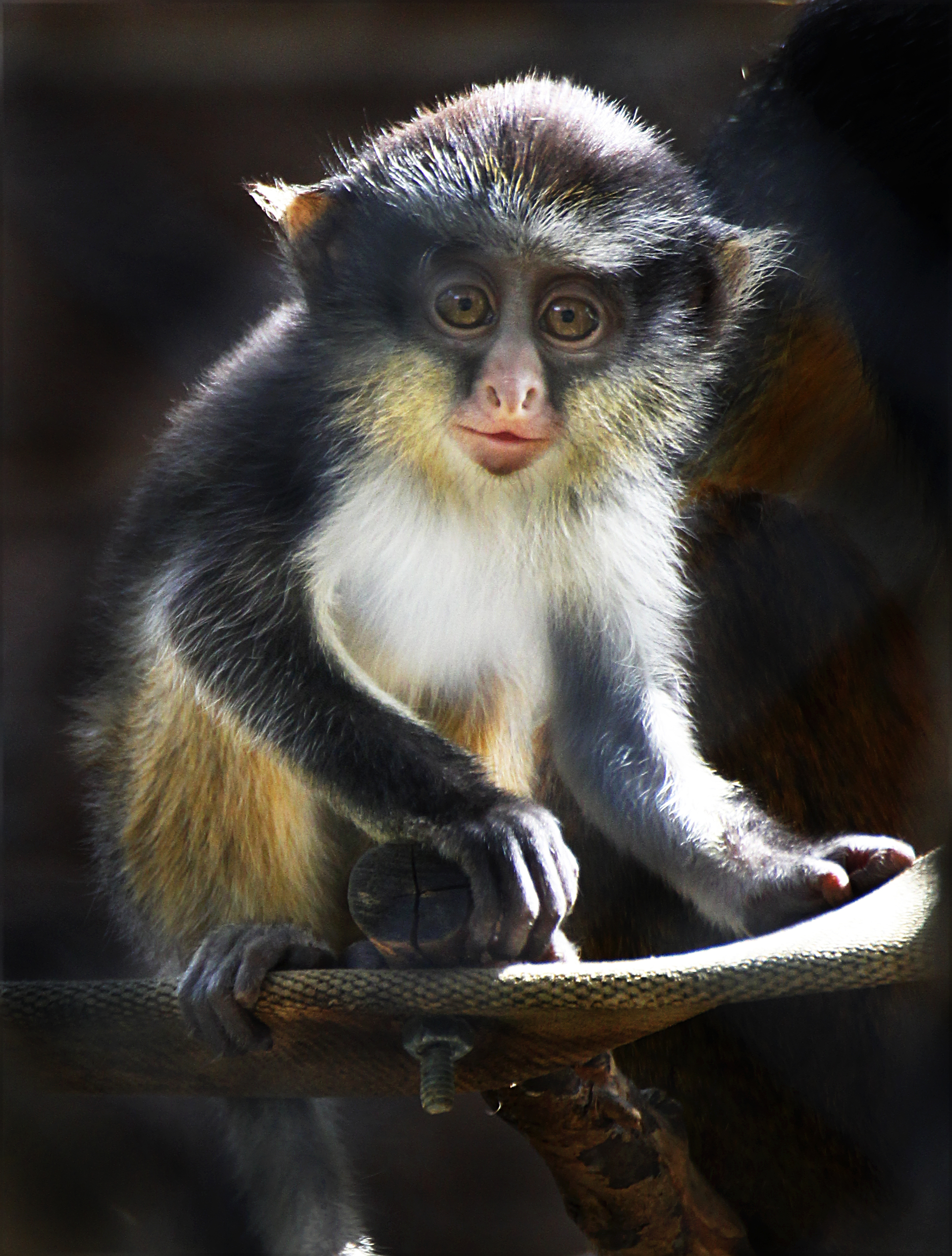
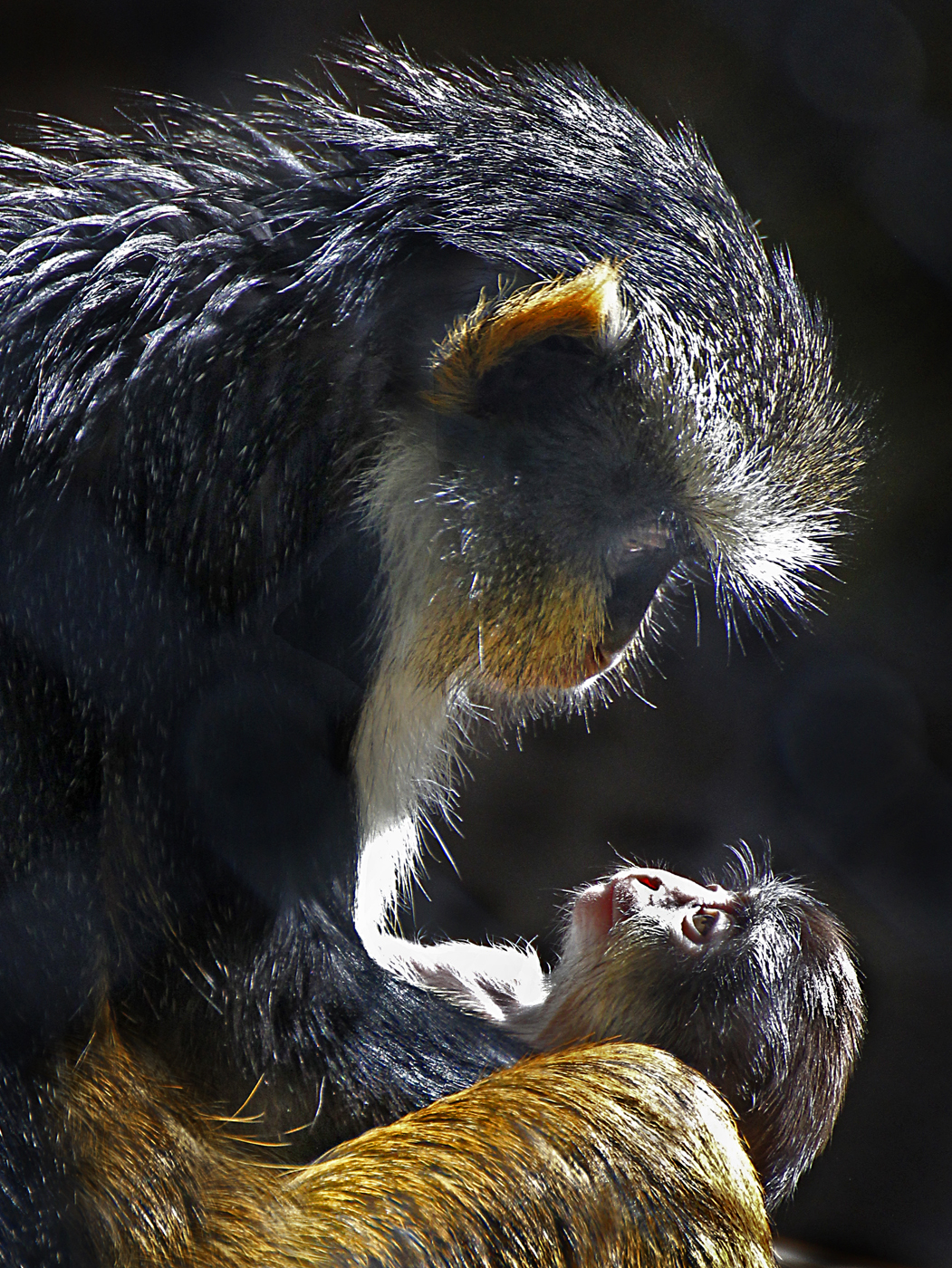
    Sacramento Zoo's female Wolf's Guenon gave birth to her first infant.
    Currently, there are fewer than 35 of these monkeys, housed at 11 AZA
    institutions in the United States. Mother Mimi and father Eddie have been very
    protective of the baby, making it difficult for keepers to determine the weight
    or even its sex.

    Mimibaby17-1

    Mimibaby23-1
     
    “Little is known about Wolf’s Guenons because of
    their small population in zoos. In the wild, the dense forests in which they
    live make them hard to spot,” said Harrison Edell, Sacramento Zoo General
    Curator. “This birth is significant to the Sacramento Zoo; with every birth, we
    learn more about this species’ biology, contributing to our overall knowledge
    about this species.” 

    Wolf’s Guenons are native to central Africa where
    they inhabit forests and forage for fruits, seeds, and an occasional insect.
    Forming loose family groups in the wild, these monkeys are even known to spend
    time with other primate species including Bonobos, colobus monkeys and other
    guenons. A larger mixed-species group may mean that there are more eyes on the
    lookout for predators, and many guenons have learned to recognize other
    monkeys’ alarm calls so that they know how to respond correctly if a neighbor
    spots a leopard or eagle.

    Guenonbaby3

    MimiBaby8-1

    Mimibaby15-1
    Photo Credit, Mike Owyang, Sacramento Zoo

    Related articles

    It's a Tiny Baby Titi Monkey for Belfast Zoo
    Monkey business at Baltimore zoo
    Maryland Zoo Welcomes Baby Colobus Monkey
    Maned Wolf Pups Romp in the Snow at Zoo Liberec
  • ,

    DSC_0284

    The Sumatran Tiger cub born on March
    3 at the Sacramento Zoo is meeting important developmental milestones as he
    grows bigger and stronger each day.  With
    fewer than 500 Sumatran Tigers in the wild and only 200 in zoos, this little
    cub represents hope for this critically endangered species.

    DSC_0260 (1)

    DSC_0273

    DSC_0290
    Photo Credits:  Sacramento Zoo


    You first met this cub on ZooBorns a
    few weeks ago
    .  Born to mom Bahagia,
    the cub has been named after his dad Castro but he’s already
    been nicknamed CJ, for Castro Jr.  Castro
    (the father) was diagnosed with lymphoma, a form of cancer, in early February. 

    CJ’s eyes are now open and he is
    learning to walk, though you’ll see in the video that he prefers to scoot on all
    four legs.   A veterinary exam on March 22
    revealed that CJ weighed nearly eight pounds, had no teeth yet, and was 53 cm
    from neck to tail. 

    Bahagia and CJ spend most of the day inside the nest box,
    emerging only for short periods each day, which is typical for Tigers in the
    wild and in zoos.  Zoo keepers expect mom
    and cub to remain behind the scenes until sometime in May or June.

    Sumatran Tigers are critically endangered and found only on
    the Indonesian island of Sumatra.  The Sacramento Zoo participates in the Sumatran Tiger
    Species Survival Plan (SSP), coordinated by the Association of Zoos &
    Aquariums. SSPs are cooperative breeding and conservation programs designed to
    maintain genetically viable populations of animals in captivity, and to
    organize zoo and aquarium-based efforts to preserve the species in nature.

    See more photos of CJ below the fold.

    (more…)

  • ,

    Tiger 1

    A three pound (1.38 Kg) male Sumatran Tiger cub was born at 2:55 am, Sunday, March 3rd at Sacramento Zoo. At this early point in the cub’s life, the mother Bahagia and baby appear healthy.

    Tiger cubs are usually about two pounds (1 Kg) at birth, born with eyes closed and relying entirely on their mother for the first three months.  Mother and cub will live inside the den, away from public view, while the cub gains strength and coordination during the first few months. Both should be on exhibit by late May or early June.

    Tiger 2

    Tiger 3

    Tiger 4

    Photo Credits: Sacramento Zoo

    “The birth of any Sumatran Tiger is a great contribution to this critically endangered species,” says Mary Healy, Director of Sacremento Zoo. “We are especially excited for this birth because it is the first time we have had a camera in the den, allowing zookeepers and veterinarians to keep a close eye on Bahagia and her cub.” 

    Peek inside the mother tiger’s den: 
     

    Read more after the fold!

    (more…)

  • , ,

    Mongoose-Leumr-Sacramento-Zoo

    Is it a boy or a girl? Only time will tell. All baby Mongoose Lemurs are born looking like females. However, at around 6-8 months, males begin to change color and develop their trademark black masks. These pictures were taken yesterday at Sacramento Zoo, when the little Lemur was just ten days old. 

    Infant Mongoose Lemurs cling tightly to mom’s waist (like in the picture below) and are weaned between five and seven months. Mongoose Lemurs tend to live in small groups of three to four consisting of a mature pair and their immature offspring. The Ankarafantsika Reserve is the only protected area in Madagascar for the Mongoose Lemur. It is under heavy pressure due to forest clearance for pasture, charcoal production and croplands.

    Mongoose Leumr Sacramento Zoo 2
    Photo credit: Sacramento Zoo

    Can you spot the baby in the photo above?

  • , ,

    Checking back in on the Sacramento Zoo's Sumatran tiger cub, we discover that mom has an enormous tongue and uses it to powerful hygienic effect on her tiny cub.


    And some footage of the cub exploring…

  • , ,

    Born March 18th, the Sacramento Zoo's tiniest tiger cub calls out to mom in his video debut. In the second video, keepers weigh the cub to make sure his growth is on track. Sumatran tigers are critically endangered with only an estimated 500 remaining in their home on the Indonesian island of Sumatra.

    The Zoo participates in the Sumatran tiger Species Survival Plan (SSP), coordinated by the Association of Zoos and Aquariums, who recommended the breeding of the Sacramento Zoo tigers. SSPs are cooperative breeding and conservation programs designed to maintain genetically viable populations of animals in captivity, and to organize zoo- and aquarium-based efforts to preserve the species in nature.