The Newest, Cutest Baby Animals from the World's Zoos & Aquariums

Category: San Antonio Zoo

  • ,

    Cooter hero

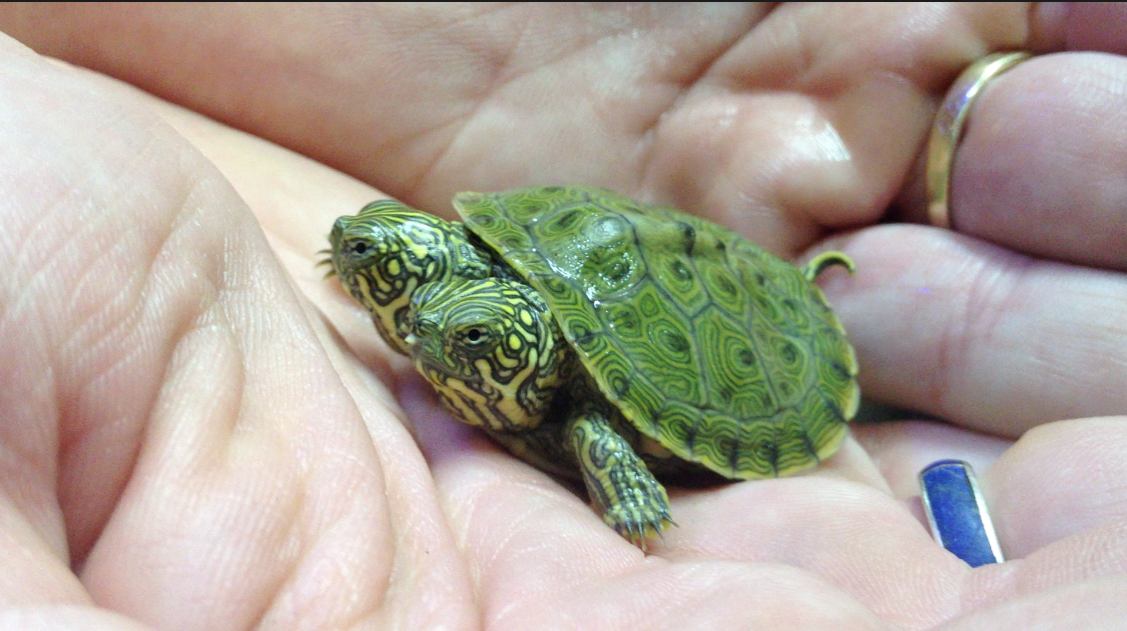
    The San Antonio Zoo welcomed a very special arrival to their aquarium: a two-headed (bicephalic) Texas River Cooter named Thelma and Louise! Thelma and Louise were part of a quartet of Texas Cooters hatched at the zoo on June 18 that made their public debut on June 25.

    Craig Pelke, Curator of Reptiles, Amphibians, and Aquatics, notes that while this is uncommon, it is not unheard of in both the wild and captive populations. Bicephalic animals are actually twins that did not separate, resulting in two or more heads on one animal. Bicephaly occurs most commonly with snakes and turtles, without any accompanying health issues. Pelke said, “At this time, Thelma and Louise are doing well on exhibit and eating with both heads!”

    Cooter size 2

    Cooter duo


    Cooter hand
    Photo Credit: San Antonio Zoo

    The San Antonio Zoo is no stranger to two-headed reptiles. A two-headed Texas rat snake named Janus lived there from 1978 until it passed away in 1995. Visitors can see the Cooter hatchlings in the Friedrich Aquarium located inside the zoo.

    See more photos below the fold:

    (more…)

  • ,

    San-Antonio-Zoo-Tawny-Frogmouth3

    These Tawny Frogmouth chicks were hatched at the San Antonio Zoo on April 24th and 26th 2011. The San Antonio Zoo has exhibited these secretive natives of Australia for over 30 years. Their extraordinary large eyes and mouth aid them in catching prey at night. They wait patiently in the branches of trees for prey, such as insects or mice, to wander by and quietly flutter down upon their unsuspecting meal. Each chick that hatches is the result of cooperative breeding programs between AZA (Association of Zoos & Aquariums) and zoos aimed at ensuring population viability, inspiring the public and promoting conservation in the wild.

    San-Antonio-Zoo-Tawny-Frogmouth1

    San-Antonio-Zoo-Tawny-Frogmouth
    Photo credits: San Antonio Zoo

  • ,

    And now for something completely different… Last month the San Antonio Zoo welcomed about 1,000 "baby" Moon Jellies. Young jellyfish go through a variety of stages in their development so bear with us on this one…

    New Moon Jellies start out as eggs carried by the mama jelly. After fertilization, the eggs hatch into a young larval stage called a planula, which float around for a day or so munching on delicious plankton. After chowing down, these planula float to the sea floor and attach themselves like sea anemones. At this stage they are called polyps, seen below.

    Baby jellyfish san antonio 2 

    Baby jellyfish san antonio 3 

    These polyps then divide into multiple ephyrae which look like little snowflakes.

    Baby jellyfish san antonio 4 

    Baby jellyfish san antonio 1

    These ephyrae eventually grow into medusae, which is the adult form of jellyfish that you have come to know and love, or possibly fear, at the beach… 

    Baby jellyfish san antonio 5 

    All of these pictures come courtesy of Eddie Sunila of the San Antonio Zoo and we encourage visitors in the area to go see these strange critters in person. In case it was not clear from the bizarre development cycle outlined above, jellyfish are most definitely not fish.