The Newest, Cutest Baby Animals from the World's Zoos & Aquariums

Category: San Diego Zoo

  • ,

    1 giraffePhoto credit: San Diego Zoo

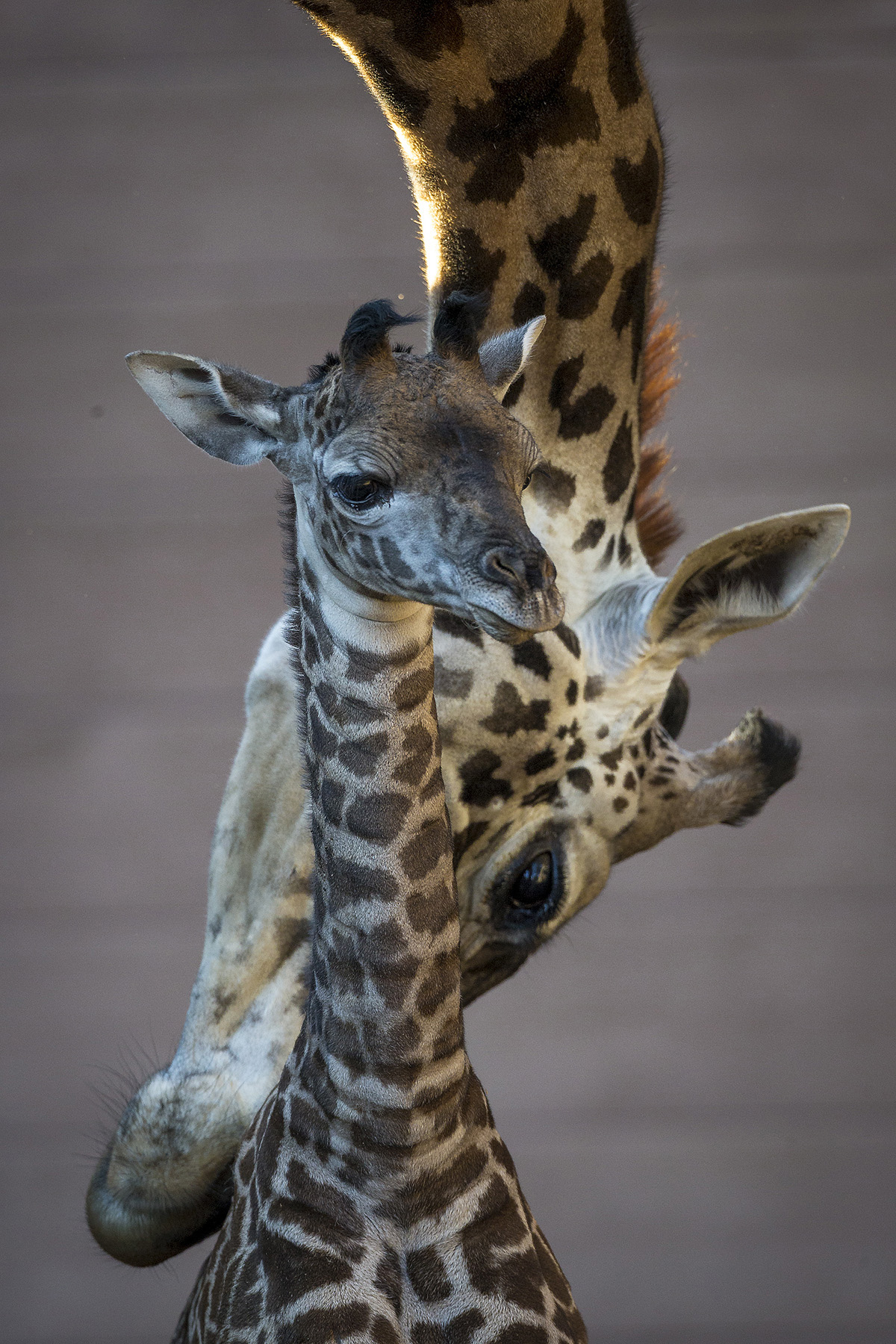
    On December 31, a 10-day-old female Masai Giraffe at the San Diego Zoo took her first venture around her exhibit, meeting other members of her herd and running, kicking and appearing very comfortable with her new surroundings. The calf was born in the early hours of December 22 and, until today, has been in a restricted 'playpen' area of the habitat until animal care staff felt she was old enough to venture into the larger space. 

    Mom, Bahati, introduced her new calf to the rest of the herd, after tenderly grooming her to make sure she was presentable enough to meet the rest of the family. 

    Keepers report the calf is healthy and progressing very well, even though she is still getting used to her legs, as evidenced by a few spills taken during her morning run. She measured 6 feet 1 inch tall (185.4 cm) and weighed 157 pounds (71 kg) at birth. She may weigh as much as 500 pounds (227 kg) and stand up to seven-and-a-half-feet tall (229 cm) by the time she is six months old. 

    Masai Giraffes are native to Africa and are threatened in some areas. Also known as the Kilimanjaro Giraffe, the Masai Giraffe is the largest Giraffe subspecies and tallest land mammal on Earth.  

    This is the tenth calf born to mother, Bahati; the father is the herd sire, Silver.  Other Giraffes in the herd include two adult females and a female youngster born last May. Visitors to the San Diego Zoo can see the active and curious Giraffe calf, yet to be named, on exhibit in the Urban Jungle.  

  • ,

    LionCubsSafariPark_004_Web

    Lions Izu and Oshana of San Diego Zoo Safari Park are parents again! On December 6, Oshana gave birth to two healthy cubs, one male and one female. Although Oshana is an experienced mom who nursed and cared for her previous litters, she shows no interest in nursing these two. We may find it upsetting, but animal mothers both in captivity and in the wild may reject their young for many reasons, and we don't always understand why.

    Zoo staff are hand-raising this litter in the zoo's animal care center, so that the little Lions will be able to grow up healthy and safely. So far the yet-to-be-named cubs are doing well under the care of dedicated staff. Keep an eye out—zoo visitors will be able to see them in the coming weeks!

    1 lion

    2 lion

    3 lionPhoto credits: San Diego Zoo Safari Park. First photo credit: Ken Bohn / San Diego Zoo Safari Park

  • ,

    SlothBaby_002_LG2
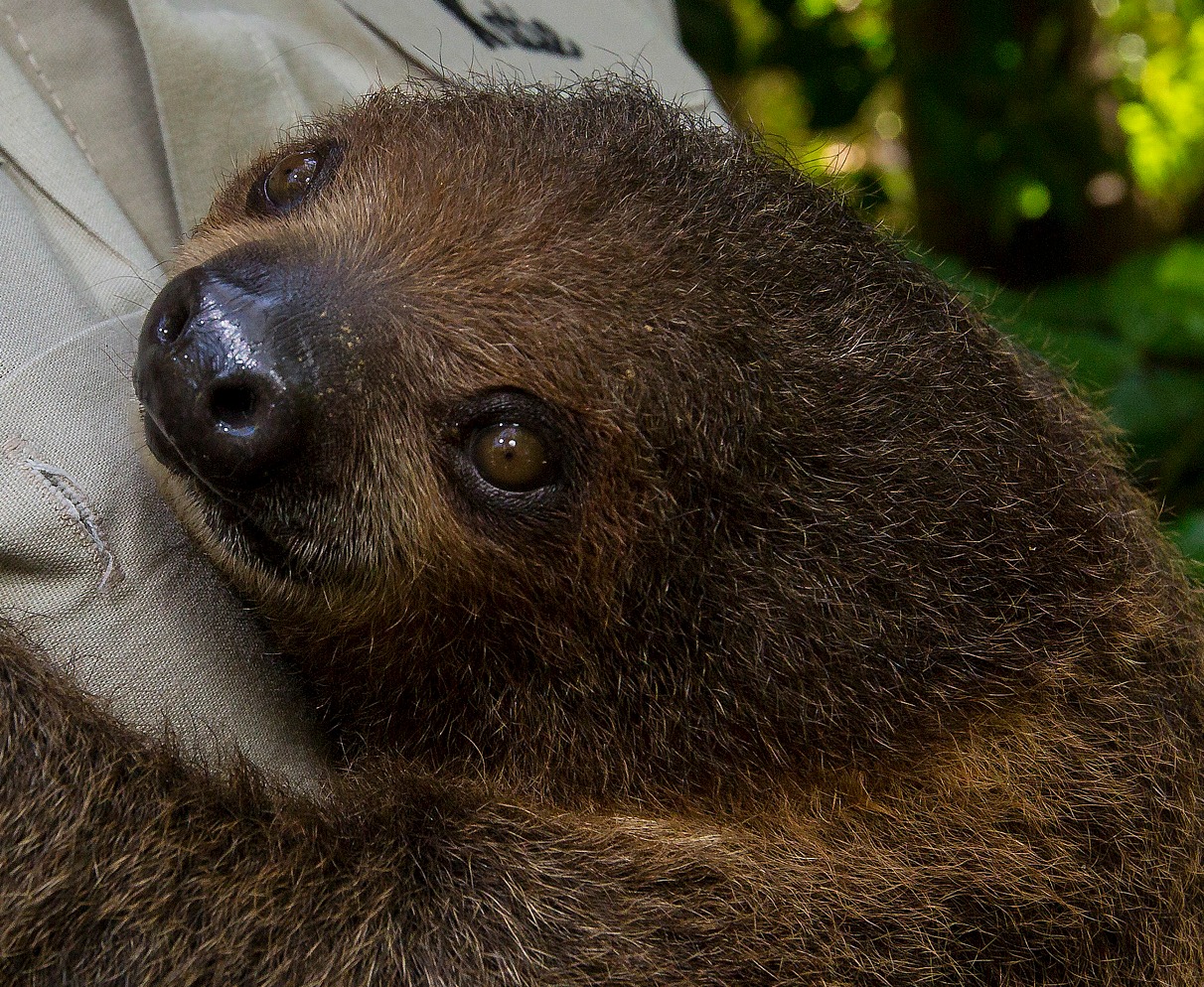
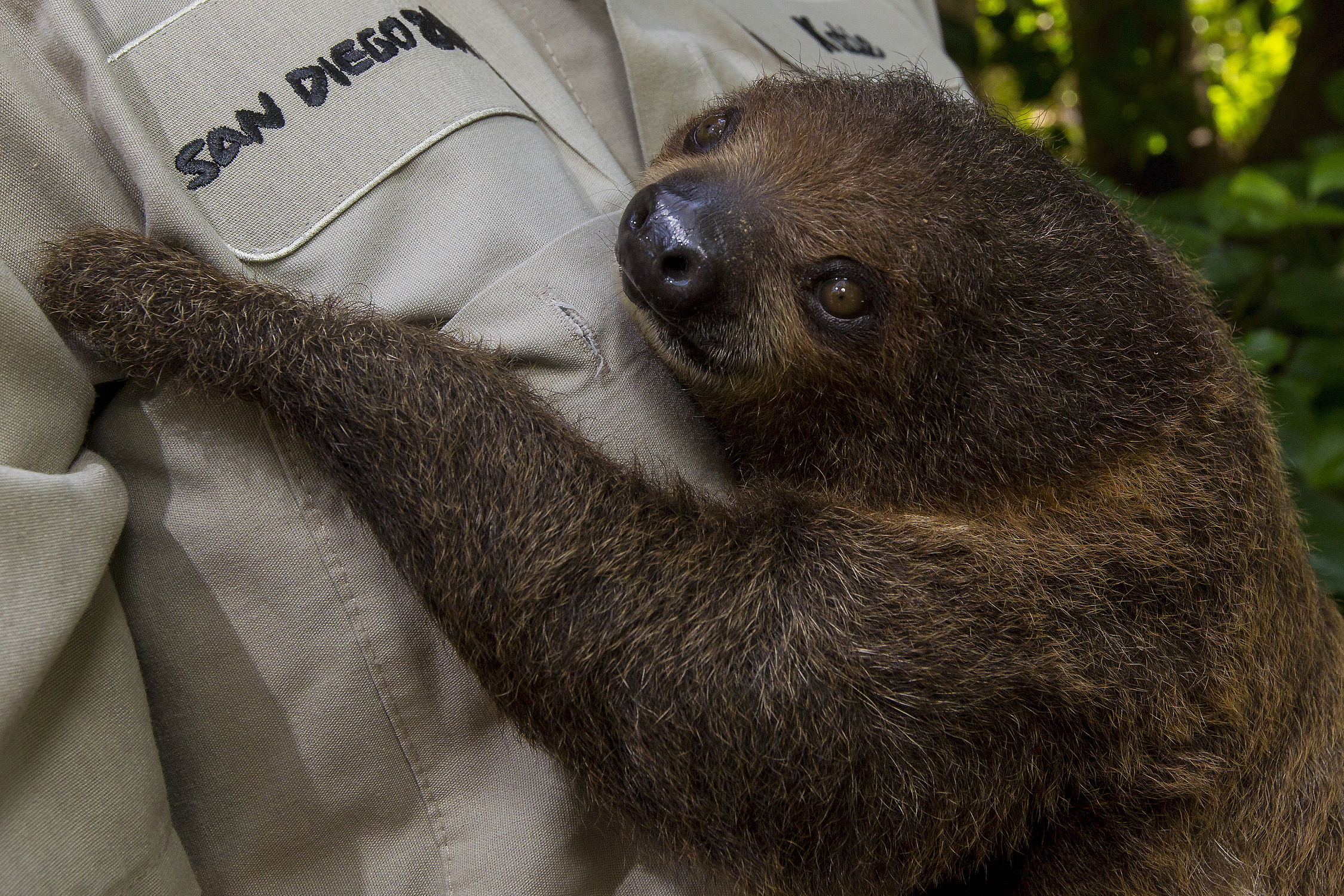
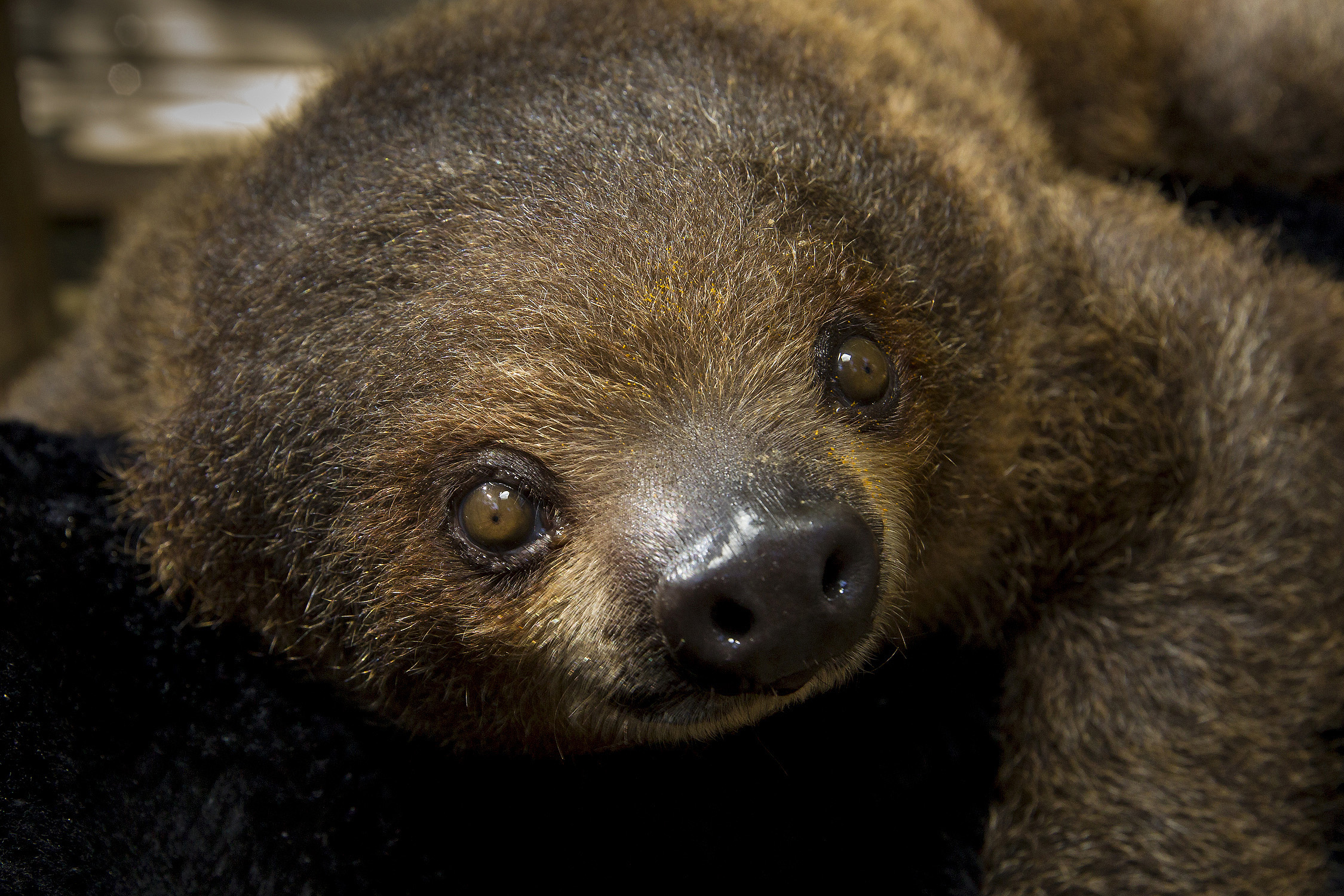
    The youngest member of the San Diego
    Zoo's
    animal ambassador team is a five-month-old Linnaeus's Two-toed Sloth, and
    this female baby needs a name!

    SlothBaby_003_LG
    SlothBaby_002_LG
    SlothBaby_004_LG
    Photo Credit:  Ken Bohn, San Diego Zoo

    The zoo staff has selected four
    names for the public to vote on:

    Xena (pronounced ZEE-nah): The taxonomic superorder
    Xenarthra is comprised of Armadillos, Sloths and Anteaters.

    Dulce (pronounced DUEL-say): This is Spanish for sweet

    Guiana (pronounced gee-ON-a): Two-toed sloths are
    native to this region in northeastern South America.

    Subida (pronounced soo-BEE-dah): In Spanish, this word
    means rise, increase, ascent, and way up.

    Visit this website
    to cast your vote.    The baby Sloth is currently being
    trained to meet people up close during special animal presentations and
    outings.

    Sloths are slow-moving, solitary,
    arboreal, forest-dwelling nocturnal herbivores, found in tropical forests and
    cloud forests in Central and South America. Their sharp claws are 3 to 4 inches
    long and come in handy for hanging onto trees. Sloths sleep 15 to 18 hours per
    day and (slowly) look for food the rest of the day.

  • ,

    PacificPM9-4-13webPhoto Credit, Tammy Spratt, San Diego Zoo Global

    A Pacific Pocket Mouse at the San Diego Zoo Safari Park enjoyed a late-night snack in the zoo's off-exhibit breeding facilities. The mouse is
    part of the first-ever breeding program of the critically endangered species. The program has yielded five litters of pups since June. Pacific Pocket
    Mice are nocturnal animals. True to the name, these mice are pocket sized—they weigh less than 9 grams. Aside from the occasional lettuce, they eat seeds and have been known to eat insects.
    Interestingly, these rodents don't drink water. Instead, they are hydrated from the vegetation they eat. The breeding program is managed by the
    San Diego Zoo Institute for Conservation Research in cooperation with the U.S. Fish and Wildlife services. Scientists are working to increase the
    overall population and to maintain genetic diversity within the native-Californian species.

    Related articles

    Playful Baby Binturong at The Staten Island Zoo
    A Whole Lotta Nappin' Goin' On — Red Panda Cub Grows at Zoo Boise
    Baby Elephant Born at Lowry Park Zoo Makes Important Genetic Contribution
  • ,

    OkapiBaby_002_Web

    This 24-day-old female Okapi calf took her first stroll around her exhibit at the San Diego Zoo last week. She stepped out first thing in the morning with her mother, Safarani, who she stayed close to for most of the time. While she appeared a little tentative she was nevertheless still quite curious about her new surroundings. Okapis are naturally shy in the wild as well, relying on the thick foliage found in their environment to protect them from predators.

    Born on May 19, she had up until that day been raised behind the scenes and out of public view in the Zoo's Okapi barn with her mom. The Animal Care staff report the calf is healthy and progressing well. In fact, she almost doubled her birth weight in a little over two weeks! This is the fourth calf born to Safarani and the 23rd okapi born at the San Diego Zoo.

    OkapiBaby_003_Web

    OkapiBaby_001_Web

    Photo Credit: Ken Bohn, San Diego Zoo

    Okapis look a little like they might be related to horses or deer and yet have some stripes as if they were part zebra, but are in fact a relative of the giraffe. They are native to the Ituri Forest, a small,dense rain forest in Central Africa. The species is Near Threatened, mainly due to habitat destruction. It is believed there are currently less than 25,000 Okapis in the wild and less than 90 Okapis reside in zoos across the United States. 

  • ,

    Panda 1

    It was all about new experiences as the youngest member of the Giant Panda family, Xiao Liwu, got to play in the snow for the first time today at the San Diego Zoo. The seven-month-old cub explored his snowy exhibit and had fun climbing all over mom Bai Yun, playfully nipping and wrestling with her in the snow.

    Over 15 tons of fresh snow was blown into the pandas' exhibit early in the morning on March 19th as part of an enrichment surprise for the pandas. The snow for the Giant Pandas was made possible by generous donors who contributed enough funds to the Zoo's online Animal Care Wish List to provide 30,000 pounds of snow.

    Panda 4 
    Panda 2
    Photo Credits: San Diego Zoo
    Watch the pandas enjoying their snow day: 
     
    See more photos after the fold.

    (more…)

  • , ,

    CondorFeeding_001_LG

    Wesa, a two-week-old California Condor chick, hatched on February 24, 2013, making this chick the first of the season at the San Diego Zoo Safari Park. Wesa has maintained a healthy weight and has quite an appetite according to keepers, eating up to 15 mice daily.

    Ron Webb, a San Diego Zoo Safari Park senior Condor keeper, has been monitoring Wesa closely and has been puppet rearing the chick as part of preparing Wesa to be released into the wild one day.


    COndor-SD-Zoo


    CondorEggCandled_001_LG
    Photo credits: Ken Bohn, San Diego Zoo Safari Park


    “The puppet is like a fancy glove,” said Rob Webb, senior Condor keeper, “It covers our hands so the chick does not get any beneficial experiences from people. We do not want it imprinting on people or getting used to us when it goes out into the wild.  We want it to be a nice, wild animal, not relying on people for food.”

    Wesa is a part of the San Diego Zoo Safari Park’s highly successful California Condor breeding program.  Since the California Condor Recovery Program began in the 1980s, when there were only 22 condors left in the world, the Safari Park has hatched 173 chicks and released more than 80 birds into the wild. Today, there are over 400 condors, half of which are flying free at release sites in Baja California, Mexico, California and Arizona.

    Related articles

    Takin Baby Arrives in the Early Morning at the San Diego Zoo
    UPDATE! Giant Panda Cub’s Wiggly Vet Check at the San Diego Zoo
    Southern White Rhino Calf Charges Into San Diego Zoo Safari Park
    Rhino Calf Gets Bottle Feeding from Keepers at San Diego Zoo Safari Park
  • ,

    SWRhinoBaby_001_LG

    On the afternoon of February 25th, the San Diego Zoo Safari Park welcomed the newest member of their East African Plains exhibit with the birth of a healthy male Southern White Rhino calf. The young boy has since been named Kayode, which means "he brings joy" in the African language of Yoruba. He is sure to do just that for the visitors who come to see him as the youngster is already showing lots of quirks and personality. "Kayode is a little tank, a very cute little tank, and he is showing lots of personality. He loves running and interacting with his mom, sticking out his tongue, and showing the buffalo in his enclosure he’s a rhino and he’s in charge," said the lead keeper at the San Diego Zoo Safari Park, Jane Kennedy.

    While Kayode was just an estimated 150 pounds when he was first born, this small stature, for a rhino that is, won't last long. In the first year of his life, Kayode will grow around 100 pounds each and every month. By the time he is full grown, he will be a massive 4,000-5,000 pounds.

    SWRhinoBaby_002_LG
    Photo credits (above): Ken Bohn / San Diego Zoo Safari Park
    Photo credits (below): Greg Pinter

    SDZ Rhino-3


    Although Kayode is his mother Kacy's first offspring, she has been a fantastic mom thus far. She has taken care to protect her son and make sure he never strays too far off in their expansive enclosure. In addition, where Kacy's experience lacks, the staff at the San Diego Zoo Safari Park more than makes up for it. Kayode is the 93rd Southern White Rhino calf born at the facility in its 41 years in existence, more than any other zoo in the world. In addition, Kayode is just the sixth 3rd-generation calf born at the zoo.

    See and learn much more after the fold!

    (more…)

  • ,

    Duiker nose

    Meet Rashidi, the nosy new member of the Black Duiker family at the San Diego Zoo. Born in mid December, his name means "rightly guided" in Afrikaans. He nursed for the first few weeks, forming a close bond with his mother, Robin. He has now moved on to solid foods and is growing as he should, starting from about 5 pounds at birth to weighing 17 pounds now, at a little over 7 weeks old. He will continue until he reaches between 25 to 55 pounds at full maturity.

    This is the second offspring for parents Robin and Luke. Kodi, their first baby, was the first Duiker to be born at the San Diego Zoo. The species is categorized as Near Threatened in the wild, mainly due to natural predators and agricultural burn off, making these babies significant for the genetics of the species. Black Duikers are native to the continent of Africa and get their name from the Afrikaans word duikerbok, which means "diving buck," because when frightened they tend to dive into bushes to hide.

    Zoo staff captured this kiss from Mom to her baby just the other morning! 

    Duiker kiss

    Duiker side

    Photo Credit: Ken Bohn/Sand Diego Zoo

    Click the video below to see the little one enjoying his favorite snack – acacia leaves – and nosing the camera, while in the habitat that the Duiker family shares with two Okapis.

    Related articles

    Panda Cub Has a Ball at His Exam
    Elephantastic News! African Elephant Born at Tampa Zoo
    This Blue Duiker Baby Has a Red Rudolph Nose!
    Takin Baby Arrives in the Early Morning at the San Diego Zoo
  • ,

    Takin#1

    Visitors at the San Diego Zoo were in for a surprise this past Saturday when they were unexpectedly greeted by the zoo's newest inhabitant, a newborn Takin. The baby boy, born sometime between 7:30 and 8:00 AM on February 2nd, was quick to its feet as mother Summer immediately started work on cleaning her new son off. While this was not Summer's first child, it was the first for his father Lian. Summer's grown daughter Mei Long was also there to help her mother care for her new half brother. These photos, taken less than an hour and a half after the birth, document some the intimate first hours of this newborn's life.

    TAKIN #2

    Takin#3
    Photo Credits: Rita Petita

    Takins, closely related to the Sheep, are native to China and the eastern Himalayas. They have many specialized adaptations to cope with this cold environment such as a secondary coat of fur and a special nasal cavity that helps warm up the cold air they breath in. As herbivores, Takin eat essentially any vegetation that they come across including tough leaves, bark and bamboo. Although they are considered national treasures in their native China, Takin are still facing a declining population, primarily due to habitat loss. This has led to their classification as an endangered species by the IUCN. 

    See more photos after the fold.

    (more…)