The Newest, Cutest Baby Animals from the World's Zoos & Aquariums

Category: Snake

  • ,

    Snake1

    The newest additions to the
    Smithsonian’s National Zoo were a surprise even to the keepers: eight Tentacled
    Snakes were born October 21 to parents that have not produced viable young in
    the past four years, despite breeding attempts. Tentacled Snakes are aquatic,
    produce live young and are ambush hunters. They use their tails to anchor
    themselves and wait underwater for their prey. They get their name from the
    unique tentacles that protrude from their snout and function as sensory
    mechanisms that allow the reptiles to pick up vibrations from fish that swim
    by.

    Snake2

    Snake4

    Snake3

    “Within a few hours of being born, the snakes were already acting like adults,”
    said Matt Evans, Reptile Discovery Center keeper. “Instincts took over and they
    were hunting. We don’t know much about this cryptic species, but we’re already
    learning so much just watching them grow.”

    Tentacled Snakes are native
    to the mangrove swamps of southeast Asia. 
    They can remain underwater for up to 30 minutes.  Known as rear-fanged snakes, their venomous fangs are located in the back of the mouth.  They are not considered dangerous to humans. 

    The zoo’s four adult snakes are on exhibit at the Reptile Discovery Center,
    while the eight young snakes will likely be sent to other zoos when they get
    older. Only a few zoos exhibit this species, which is listed as Least Concern
    by the International Union for Conservation of Nature (IUCN).

    Photo Credit: Brittany Steff,
    Smithsonian’s National Zoo.

  • ,

    Snake3

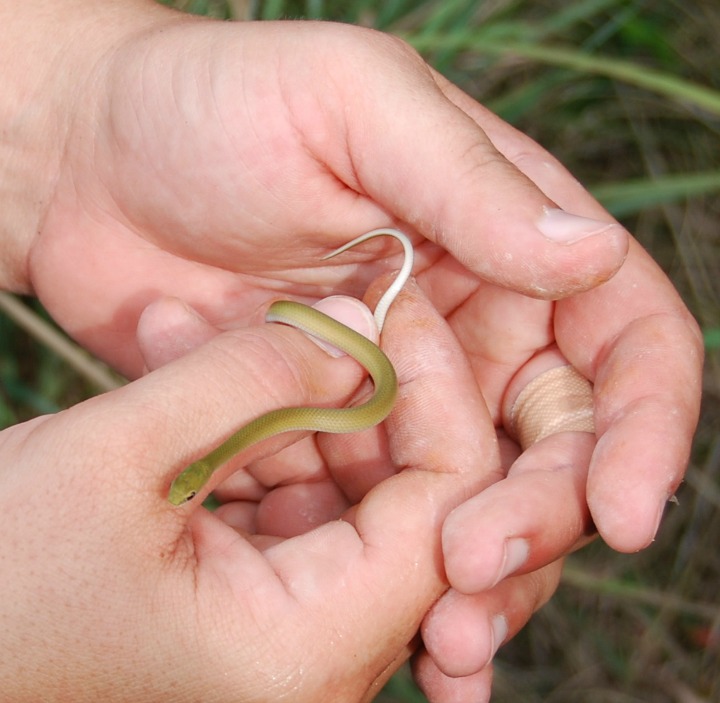
    Eighteen of the cutest creepy crawlers in Chicagoland were
    released into the wild on August 29 as part of a joint conservation effort by
    Lincoln Park Zoo and the Lake County Forest Preserve District that seeks to
    restore the Smooth Green Snake to its native prairie home.

    Categorized as an Illinois Species in Greatest Need of
    Conservation, these tiny, jewel-colored snakes have drastically dwindled in
    population over the past few decades.

    “Snakes need champions too,” said Lincoln Park Zoo
    Reintroduction Biologist Allison Sacerdote, Ph.D. “People like the warm and
    fuzzy animals, but it is important that conservation stretches across the
    entire ecosystem.”

    After years of development across Illinois, the Prairie
    State has less than one percent of its original prairie intact.

    “Our wildlife monitoring program revealed, that even in
    areas with the suitable habitat, Smooth Green Snakes were absent or extremely
    rare despite our habitat restoration efforts,” said Gary Glowacki, Wildlife
    Biologist of the Lake County Forest Preserve District. “The decline we have
    seen is largely due to habitat loss as prairies were converted into
    agriculture, urbanization, and the widespread use of pesticides.”

    Essentially, the grasslands and the critters that call them
    home need all the help they can get.  In the case of the Smooth Green Snake, the help begins with a
    “head start” at the zoo. Animal care
    staffers provide optimum conditions for hatching and development so the snakes
    have a fighting chance when they are released.

    Snake1

    Snake2
    Photo Credit: James Seidler

    (more…)

  • ,

    View2

    Officials from the Wildlife Conservation Society’s Bronx Zoo announced yesterday that after a thorough seven-day search in the zoo’s Reptile House, the missing Egyptian cobra has been found inside the building. Officials made the announcement at a news conference, where they showed a photograph of the adolescent snake resting comfortably in a secure enclosure. This morning kicked off a whirlwind media tour with the yet to be named female Cobra joining the ladies of The View for a special live broadcast.

    View3

    Cobra-blog480
    Photo credit: Julie Larsen Maher / Wildlife Conservation Society

    HAPPY APRIL FOOL’S DAY!

  • , ,

    Green Tree Pythons brown baby 4

    Green Tree Pythons are a favorite among reptile fans due to their vibrant green color. However, zoo visitors are often amazed to see that newly hatched babies are either bright yellow or brick red. The Houston Zoo recently hatched 18 little Green Tree Pythons, 8 yellow and 10 red.  These colors help them hide in their preferred habitat, which is in low lying tree branches along the forest edge. When they grow to about 22 inches long their color changes to bright green – sometimes this color change can occur in only 8 days! The red and yellow colors are not related to sex or any other trait. While these reptiles may eventually reach over 4 1/2 feet in length, at birth they are about the length of a pencil. 

    Green Tree Python hatching 2

    Green Tree Pythons curled around branch 1

    (Below) An adult Green Tree Python in its trademark colors

    Adult color Green Tree Python Houston Zoo1Photo credits: Stephanie Adams

    More photos and info below the fold

    (more…)

  • , ,

    Had enough of exotic kittens?  We didn't think so, but it's high time we represented the reptiles. These pictures taken yesterday at the National Zoo present pythons in a new light. Be careful though, adult green tree pythons grow to seven feet in length! Thanks to Linda Lombardi for the pictures and info.

    Python 4b

    Python2

    Python4

    Python6

    This fellow was born in April. Read on to see more from the National Zoo…

    (more…)