

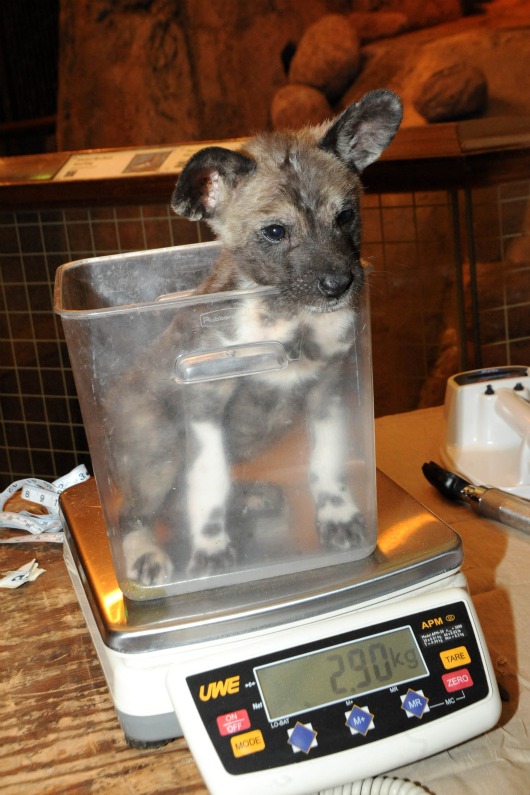
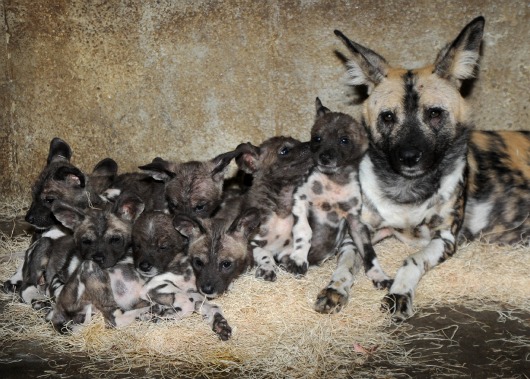
Now that's a fine litter! The Chicago Zoological Society, which manages the Brookfield Zoo, proudly announced the birth of not one, not two, but TEN African Wild Dog puppies. This pile of pups was only the third (and final) litter of African Wild Dogs to be born in North American zoos in 2010. Today veterinarians performed physicals and vaccinations on the pups. African Wild Dogs are endangered in the wild due to human encroachment, diseases transmitted from domestic dogs, snaring and poisoning. “This litter is critically important to the managed population of African wild dogs in North America. We are excited about the role the puppies will play in inspiring a connection between our guests and these incredible animals, as well as communicating the plight of these dogs’ counterparts in the wild,” said Amy Roberts, curator of mammals for the Chicago Zoological Society.


All photo and video credits: Chicago Zoological Society
More photos and information below the fold.


The Chicago Zoological Society (CZS), which manages Brookfield Zoo, is thrilled to announce the birth of 10 African wild dog puppies. The pups, born on Thanksgiving Day, November 26, 2010, are currently off exhibit with their mother Kim, 6, father Digger, 4, and Digger’s brother Duke, 4. Today, veterinarians performed physicals that included routine vaccinations and sexing of the 8-week-old pups. Just like vaccinating a family dog, they will receive additional inoculations at 12 weeks and 16 weeks of age.
The pups, six males and four females, will remain off exhibit until spring, at which time they will have access to their outdoor area at Habitat Africa! The Savannah. Until then, a taped video loop of the pups will be viewable for guests in the exhibit or online at http://www.CZS.org.
African wild dogs, also known as painted dogs, have been part of Brookfield Zoo’s animal collection since 1985. In addition to the most recent litter of 10 pups, two other successful litters have been born at the zoo—one in 1998 that had five pups and another in 2000 that had four pups. The breeding of Kim and Digger was based on a recommendation by the coordinator of the Association of Zoos and Aquariums’ African Wild Dog Species Survival Plan (SSP). The SSP is a cooperative population management and conservation program for a species. Currently, there are 120 wild dogs in 37 North American zoos accredited by the Association of Zoos and Aquariums. Brookfield Zoo is one of 11 zoos to have a breeding group and one of only three accredited zoos to produce litters this year. Stephanie Rhodes, a lead keeper at the zoo, is the studbook keeper for the African wild dog population in these zoos. Rhodes works closely with the SSP coordinator in maintaining documents that include the pedigree and entire demographic history of each wild dog in the North American zoo population.


Once common in virtually every environment in southern Africa, excluding rain forests and the driest deserts, African wild dogs now inhabit only the savannahs and grasslands, making them one of the continent’s most endangered predators. A century ago, dog packs numbering 100 or more individuals could be seen roaming the Serengeti Plains. Today, pack sizes average about 10 animals and the total population on the Serengeti is probably less than 60 dogs. Research suggests there are between 3,000 to 5,000 free-ranging wild dogs found in isolated populations in central, northeast, and southern Africa, where the largest population is found. Major threats to the species are habitat fragmentation; contact with human activity resulting in road casualties, poisoning, or snaring; the spread of distemper from domestic dogs; and competition for prey by larger carnivores.
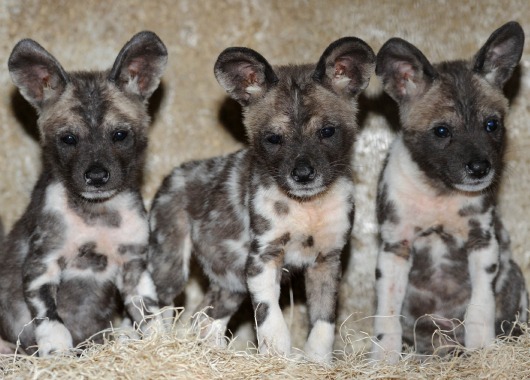
The Latin name for the species, Lycaon pictus, means “painted wolf,” referring to the dogs’ mottled coat. Puppies are born with a black and white coat that begins to change to a distinctively patterned coat of black, tan, dark brown, and white at about a month old. Like a human fingerprint, no two dogs’ coats are the same. African wild dogs differ from their other canid relatives in that they have four toes on their front feet instead of five. They have long legs and a lanky body, which gives the dogs both speed and endurance. Their large, rounded ears provide them with excellent hearing and help keep the dogs cool in warm climates.
African wild dogs have a social structure similar to wolves’ social structure but seem to be gentler within their pack. Some social carnivores keep the peace by using aggressive posturing to keep subordinates in line, whereas wild dogs seem to do the opposite. Exaggerated submissive posturing and greeting ceremonies reinforce the pack social structure. Each pack has a dominant male and female, but all adult members help raise pups and care for sick or elderly members of the group. Although still nursing from Mom, the puppies at Brookfield Zoo have begun accepting regurgitated food from all the adults, who are very protective of the young.



Leave a Reply