The Newest, Cutest Baby Animals from the World's Zoos & Aquariums

Posted in ,

Rhino-13

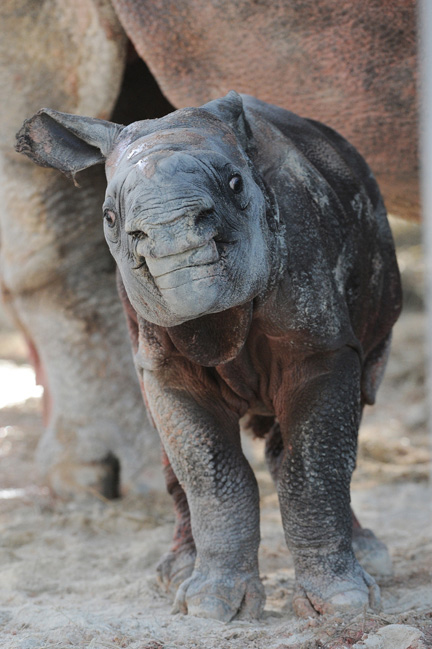
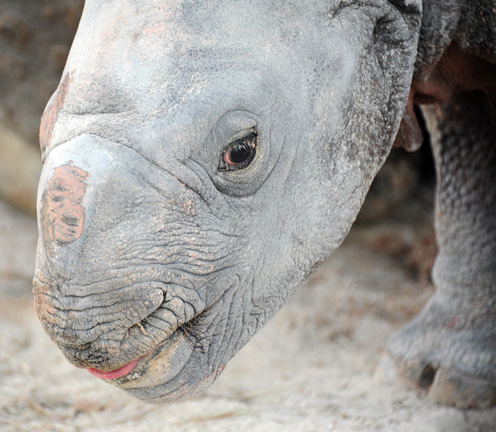
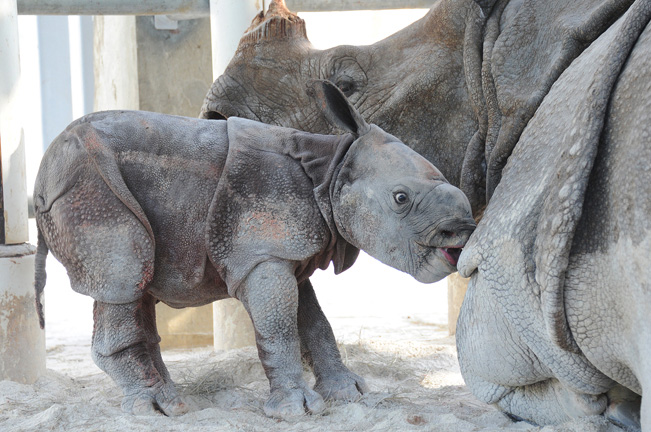
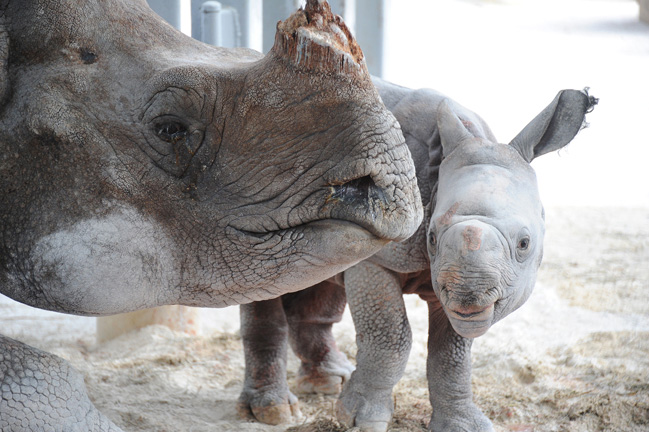
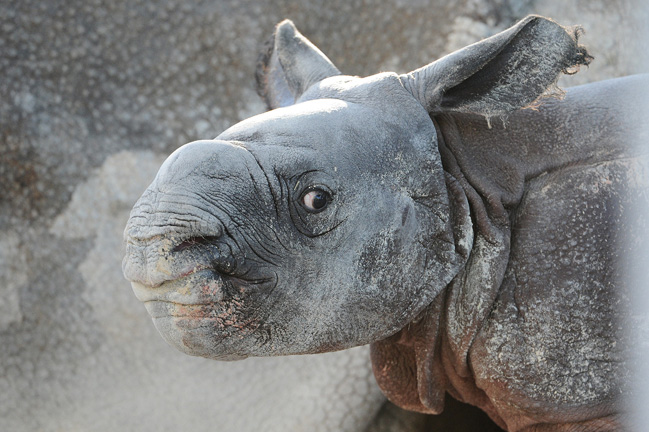
Early yesterday morning, after a nearly 16 month pregnancy, “Kalu,” an 11 year old Indian one horned Rhinoceros, gave birth at Zoo Miami.  This is the first ever successful birth of this highly endangered species for Zoo Miami and in fact, in the history of all South Florida zoos.

Kalu was born at the Bronx Zoo on December 22, 2000 and arrived at Zoo Miami as part of a breeding loan on June 10, 2004.  The father’s name is “Suru” and he was born at the San Diego Wild Animal Park on December 31, 2000.  He arrived at Zoo Miami on October 19, 2003 as part of a breeding loan with the San Francisco Zoo.  This is the first offspring for both individuals.
Rhino-1

Rhino-4

Rhino-12

Rhino-8
Photo Credits: Ron Magill

There are less than 3,000 Indian Rhinos left in the wild occurring in small protected areas of Nepal, India, and Assam.  Over the years, they have been poached extensively for their horn which is used for medicinal purposes and for dagger handles that are revered in some Asian cultures.  They are the world’s fourth largest land mammal sometimes reaching a weight of 6,000 pounds.

More photos below the fold…

Rhino-6

Rhino-14

Rhino-11

Rhino-7

This very rare birth is not only significant for Zoo Miami, it is incredibly important to the international efforts to maintain a healthy captive population of this highly endangered species throughout the world.  It is only the third captive birth of an Indian rhino in the U.S. this year. 

Initial indications are that the newborn is a female but more specific information will not become available until the veterinary team is able to do a neonatal exam.  This will be performed when the staff feels that it can safely separate the infant from its very protective mother for the few minutes that the exam will take and after it has been observed to successfully nurse.  It is critical that the mother and newborn are able to establish a bond which can sometimes be a challenge for first time mothers.  Because of the extreme sensitivity of the situation, there will be no media access until zoo management has determined that everything is stable and the new mother and baby have been able to adjust to their new lives.  If everything goes well, it will probably be a few weeks until the newborn is on public display.

10 responses to “Rhino Baby Is a First For Zoo Miami!”

  1. lucyorta@cox.net Avatar
    lucyorta@cox.net

    what happened to the mother’s horn. If it was raised in a zoo, a poacher didn’t cut it off? Is it growing longer?

  2. lucyorta@cox.net Avatar
    lucyorta@cox.net

    The baby is spectacular. Zoo’s are wonderful for ensuring that our children and their children can someday see these beautiful creatures and just for taking care of them.

  3. Nina Avatar
    Nina

    I am also wondering why mommy’s horn appears so unhealthy — hope the zoo lets us know!
    Other than worrying about the horn, baby is beautiful =]

  4. Holger Avatar
    Holger

    Hi everyone, cute little baby. but if you would like to see a black rhino baby look at zoo-magdeburg (Germany). a baby was born there on christmas night, Dec.24. on their site is also a live webcam where you can watch it togehter with mumy Mana 🙂 Mana is already 30 years old and this is here 4th child now.
    maybe the zoo could add them to their site 😉
    here is the live-stream: http://www.zoo-magdeburg.de/aktuell/aktuellste-nachrichten.html?tx_ttnews%5Btt_news%5D=86&cHash=361030cf72a9dfaf46926efb3bb9a58d

  5. Desiree Avatar
    Desiree

    Baby is so cute, congratulations.
    I too would like to know what happened to moms horn?

  6. Suzanne Zelle Avatar

    Zoo Miami Website has this to say about Johnny, another rhino at the zoo:
    “You’ll notice that Johnny does not have a horn. He has rubbed it down to a nub by marking his territory. In the wild, rhinos rub them into a sharp point to use them as defense and other purposes.”
    http://www.miamimetrozoo.com/animals-and-attractions.asp?Id=531&parentId=41&rootId=2
    While the site doesn’t mention anything like that about Kulu, perhaps she’s rubbing as well?

  7. Suzanne Zelle Avatar

    Kalu, not Kulu

  8. Lori Avatar
    Lori

    I’m worried about mom’s horn as well . . .
    It’s so sad and disturbing that the idiotic practice of cutting off rhino horns, or killing rhinos for their horns, still happens. I think the fine for doing that should be the loss of an appendage.

  9. Corey W Avatar

    With this species having the horn broken or rubbed down to a nub is the norm, in her case it looks like she broke it rather than rubbing it off. Their horns are relatively easy to break off. While it make look bad it is much like the ragged nail left when you break it, and the zoos know how to take care of it (it even has it’s own section in the care manual for this species! Keep it clean and it regrows). Kalu may need a nail file 😉
    Normally all rhino species use objects to groom their horns into points. In captivity this behavior may get messed up a bit so they rub their horns to nubs, and is being looked at by a number of zoos to try and prevent the habit from starting. It’s a bad habit that is hard to stop once started.
    I hate the practices that put so many of these species in danger of extinction, but it’s much like asking a practicing christian to stop believing in God. It is hard to have people give up their beliefs when that is just about all they have. Or, well, the people in it just for the money (but they are just making a buck off the believers – less believers mean less demand, and less people making a buck).

  10. eloise Avatar
    eloise

    Broken horn are nothing to worry about. Horns are made of keratin. Some places even cut horns off rhinos making them less desirable to poachers.
    The problem is that poachers cut off the horn at the root.
    It’s likes like how cutting human hair isn’t harmful, but scalping someone is.

Leave a Reply

Discover more from ZooBorns

Subscribe now to keep reading and get access to the full archive.

Continue reading