

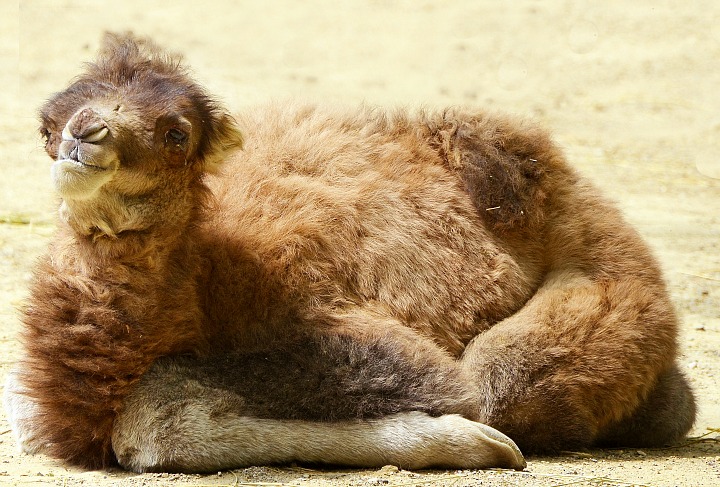
Saarai (pronounced “sorry”), the Cincinnati Zoo & Botanical Garden’s three-year-old Bactrian camel, gave birth to her first calf on Monday, April 23 and it's a boy. The last time the Zoo celebrated a camel birth was in 1983, so this birth was much anticipated by Zoo staff.
Saarai became restless early Monday morning, and keepers noticed that she wasn’t eating or behaving as normal. As the afternoon approached, she began to pace and shortly thereafter keepers noticed the first signs of active labor. Staff blocked the outdoor exhibit off to the public and Saarai delivered the calf at 3:15 p.m. while the father, three-year-old Humphrey, watched from the neighboring exhibit. Soon after delivery, Saarai began nuzzling her calf; the baby first attempted to stand around 4 p.m. Mom and calf are doing well and will remain off exhibit, spending time nursing and bonding.
The Zoo is asking for help in naming the baby. Keepers have selected their top three choices (Henry, Lyn and Cain), and the public can vote for their favorite online through Monday, April 30. The winning name will be announced on May 1.



Leave a Reply to Classic SteveCancel reply