The Newest, Cutest Baby Animals from the World's Zoos & Aquariums

Posted in , ,

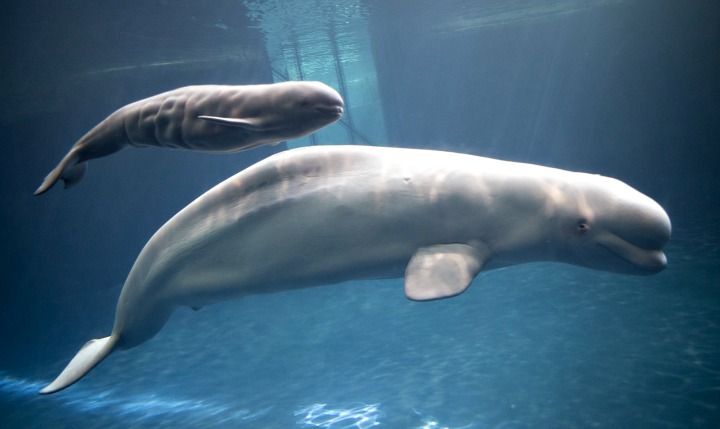
Mauyak and Calf Shedd Aquarium Resize 3

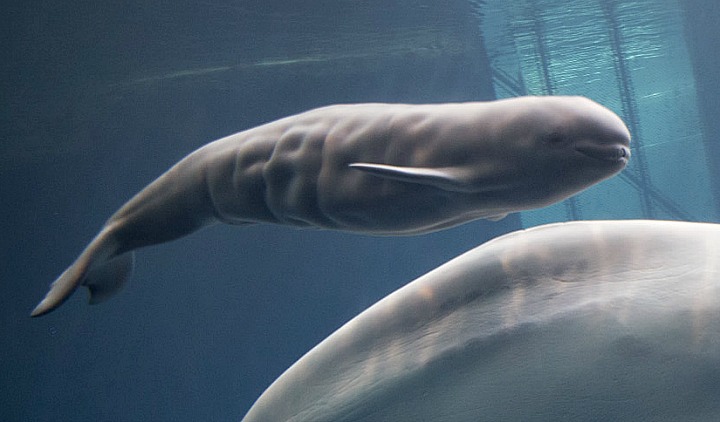
At approximately 2:00 AM yesterday morning, August 27, Chicago's Shedd Aquarium welcomed a healthy Beluga calf to mother Mauyak. Shedd’s animal care team estimates that the calf is 4½ feet long and weighs about 150 pounds. Both mother and calf appear to be doing well and will remain under 24-hour observation by the animal health staff in Shedd’s Abbott Oceanarium.

“We are thrilled to welcome the newest member of the Shedd Aquarium family. A newborn calf must reach several milestones in its first days and months so we remain cautious; however, the calf has demonstrated incredible progress,” said Ken Ramirez, executive vice president of animal care and training at Shedd. “Mauyak is an experienced mom having given birth to two calves in the past, so the labor was quick and went very smoothly.”

Mauyak and Calf at Shedd Resized 2

Mauyak and Calf Shedd 5

Mauyak and Calf Shed Aquarium 4

“In less than 24 hours after birth, the calf achieved the first critical milestones that we look for, including taking its first breath, bonding with mom and we’ve seen attempts at nursing,” continued Ramirez, who has nearly four decades of marine mammal expertise, including serving as the past president of the International Marine Animal Trainer’s Association (IMATA). “Shedd’s long history of research and care of these animals tells us that these initial behaviors indicate a strong calf; but we will continue to monitor for signs of development, including steady nursing and growth.”

Animal care is Shedd’s top priority, so mother and calf are currently off exhibit in the Secluded Bay habitat of the Abbott Oceanarium. During the first few critical days following a birth, Shedd’s animal care experts do not physically interact with the whales. Instead, the team observes day and night, allowing time for the mother to nurture her newborn and build a strong bond. As a result, the marine mammal staff has not determined the calf’s gender through a physical examination. 

Beluga Calf Close-up Shedd Aquarium RS1Photo credits: ©Shedd Aquarium/Brenna Hernandez

Watch the baby breath, swim and frolic in its first few hours of life!

Video credits: ©Shedd Aquarium

More photos and information below the fold!

The Beluga calf arrives just under three months after Shedd celebrated the successful birth of its first Pacific white-sided dolphin calf on Memorial Day. Guests can see dolphin mom Piquet (pee-KEHT) and her male calf in Misty Passage of the Abbott Oceanarium. The coastal walkway of Secluded Bay will be open to guests, but panels in that area as well as in the underwater viewing gallery of Polar Play Zone will allow privacy for Mauyak and her calf during this time.

Mauyak came to Shedd in 1997 from Point Defiance Zoo and Aquarium in Tacoma, Wash. as part of the aquarium’s involvement in the North American Beluga whale breeding cooperative. Shedd is one of seven North American zoological institutions accredited by the Association of Zoos and Aquariums (AZA) and the Alliance of Marine Mammal Parks and Aquariums (AMMPA) that manage the health and future of the Beluga whales in their care through coordinated breeding partnerships. Today, more than 35 Beluga whales are part of the North American breeding cooperative program. Shedd Aquarium is home to seven Belugas, including the calf.

Beluga Calf Close Up Shedd Aquarium 2

Mauyak and Calf at Shedd Resized 1

“Each birth provides the international scientific community with vital knowledge about the reproductive health and life cycles of Beluga whales,” said Tim Binder, a 22-year marine mammal researcher and vice president of animal collections at Shedd. “The understanding gained from this incredible birth supplements the ongoing studies about this magnificent species happening beyond the aquarium walls.”

The newborn is the sixth successful birth as part of Shedd’s collaboration in the Beluga whale breeding cooperative. The other Belugas born at Shedd include Kayavak (KYE-yah-VOK) in 1999; Qannik (kah-NIK) in 2000; Bella in 2006; Miki (MEE-kee) in 2007; and Nunavik (NOO-nah-VIK) in 2009.

10 responses to “Baby Beluga Born to Mauyak at Shedd Aquarium”

  1. Tom Ballou Avatar
    Tom Ballou

    Alas, another marine mammal born into captivity, destined to spend a lifetime aimlessly swimming back and forth in a tiny concrete pond, never to experience the wild, open ocean.

  2. dangermouth Avatar
    dangermouth

    And what are you doing to fix that, Tom? Something more than just complaining, I hope.

  3. Andrew Bleiman Avatar

    We here at ZooBorns also believe that wild animals were meant to live free and the more active and intelligent the species, the greater the challenge of providing that animal with an engaging and fulfilling life in captivity. The unfortunate reality however is that the greatest threat to these wild animals is human indifference. While some of us may be intrinsically motivated to protect rare species in far flung locations, the vast majority of people are not. Responsible, accredited aquariums serve an invaluable role in forging connections between humans and animals, building empathy and educating people about ways to help.
    Additionally, in many cases, observing and caring for captive born animals provides biologists with insights that simply could not feasibly be identified in the wild. Shedd’s marine mammal biologists have taken what they’ve learned with their belugas and directly contributed to efforts to assess the health of wild belugas to better determine the health of the overall population. More info here – http://www.sheddaquarium.org/pdf/publicrelations/CON1104_CCR_Fact_Sheets_Belugas.pdf
    Many zoos and aquariums across the United States are doing groundbreaking, impactful conservation work:
    From the Lincoln Park Zoo’s epidemiology work in the Serengeti – http://www.lpzoo.org/cs_projects_serengeti.php
    to the Point Defiance Zoos Red Wolf Recovery Program – http://www.wcs.org/saving-wildlife.aspx
    to the Monterey Bay Aquarium’s Sea Otter Research and Conservation Program – http://www.montereybayaquarium.org/cr/sorac.aspx
    and Seafood Watch Program – http://www.montereybayaquarium.org/cr/seafoodwatch.aspx
    to Oregon Zoo’s work with the Western Pond Turtle – http://www.oregonzoo.org/Conservation/westernpondturtle.htm
    to the Wildlife Conservation Society’s (Bronx Zoo, Central Park Zoo, Prospect Park Zoo, NY Aquarium) work all over the world – http://www.wcs.org/saving-wildlife.aspx
    And many many more.
    Finally, for what it’s worth, one-half of the ZooBorns co-founding duo (me), lives in Chicago and have met and observed Shedd’s marine mammal team many times. No one is more committed to these animals’ health, emotional and physical, than these brilliant, passionate individuals. You certainly don’t go into zoo science for the paycheck. You do it because you care deeply for the animals as individuals and for the plight of their species in the wild, and Shedd’s personnel are among the world’s best.

  4. Tom Ballou Avatar
    Tom Ballou

    Research on wolves, otters, turtles, and numerous other species in captivity is very interesting and possibly even important on a number of levels. Keeping belugas, orcas, dolphins, and other cetaceans in captivity for any reason, I believe, is inherently immoral and cruel. These are highly intelligent animals that evolved in a limitless, acoustic world, and we keep them in tiny sound reflectors. I admit my experience in this regard is limited, but what I have observed at the Atlanta Aquarium beluga exhibit told me everything I need to know. Back and forth, back and forth, back and forth….

  5. Tom Ballou Avatar
    Tom Ballou

    For starters, I will not visit any zoo or aquarium that keeps cetaceans of any species. I don’t hunt or kill them, or eat them. And complaining serves an important purpose by focusing the thoughts of the readers on this important issue.

  6. Blue Footed Booby Avatar
    Blue Footed Booby

    The plural of anecdote is not data.
    More importantly, you need to learn to separate what’s best for the animal from what your empathy tells you you’d feel in the situation. Cetaceans are not humans, and though they have thoughts and feelings they are not your thoughts and feelings. You have demonstrated no thought on this matter more in-depth or nuanced than “nooo that’s sad”, which is not a constructive approach to conservation.
    What it comes down to is that the species is in peril because of humans, and there comes a point where steps must be taken to right past wrongs, even if they come with a chance of doing harm through well-intentioned ignorance. If nothing is done the tragedy of the commons will win, and another species will be lost.

  7. Tom Ballou Avatar
    Tom Ballou

    The entire planet is in peril because of humans, but that does not justify imprisoning cetaceans. Past wrongs are not addressed by current wrongs. Doing nothing in this case (ie not keeping cetaceans in captivity) is the right thing.
    And it doesn’t take much insight to understand that intelligent creatures of the open ocean live highly deprived lives in captivity.

  8. ZoyaJackson1 Avatar

    Awesome pics! i think the pics of mother and baby together look amazing.
    http://www.hksconsultants.com/

  9. Lee Avatar
    Lee

    Belugas don’t migrate much and generally stay in a set area, btw as long as US law is followed both shedd and the GA aquarium have every right to help in the breeding of the lovely (and endangered) animals.

Leave a Reply

Discover more from ZooBorns

Subscribe now to keep reading and get access to the full archive.

Continue reading