

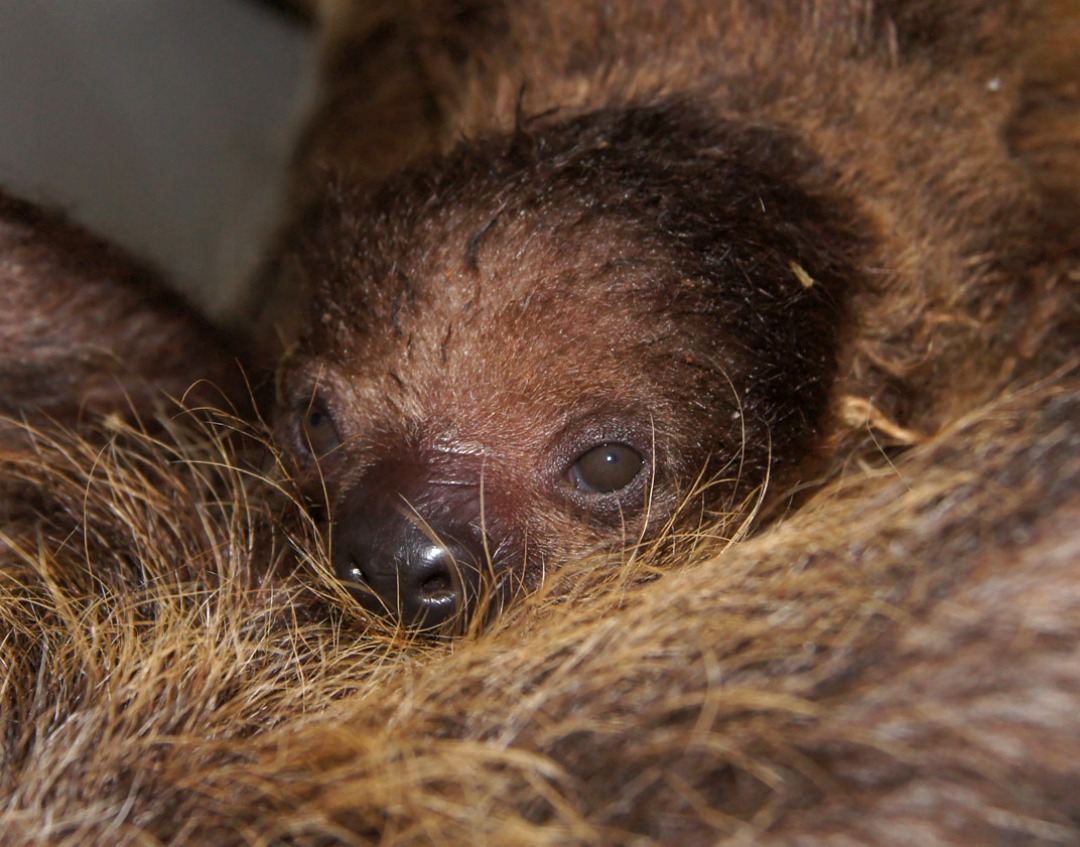
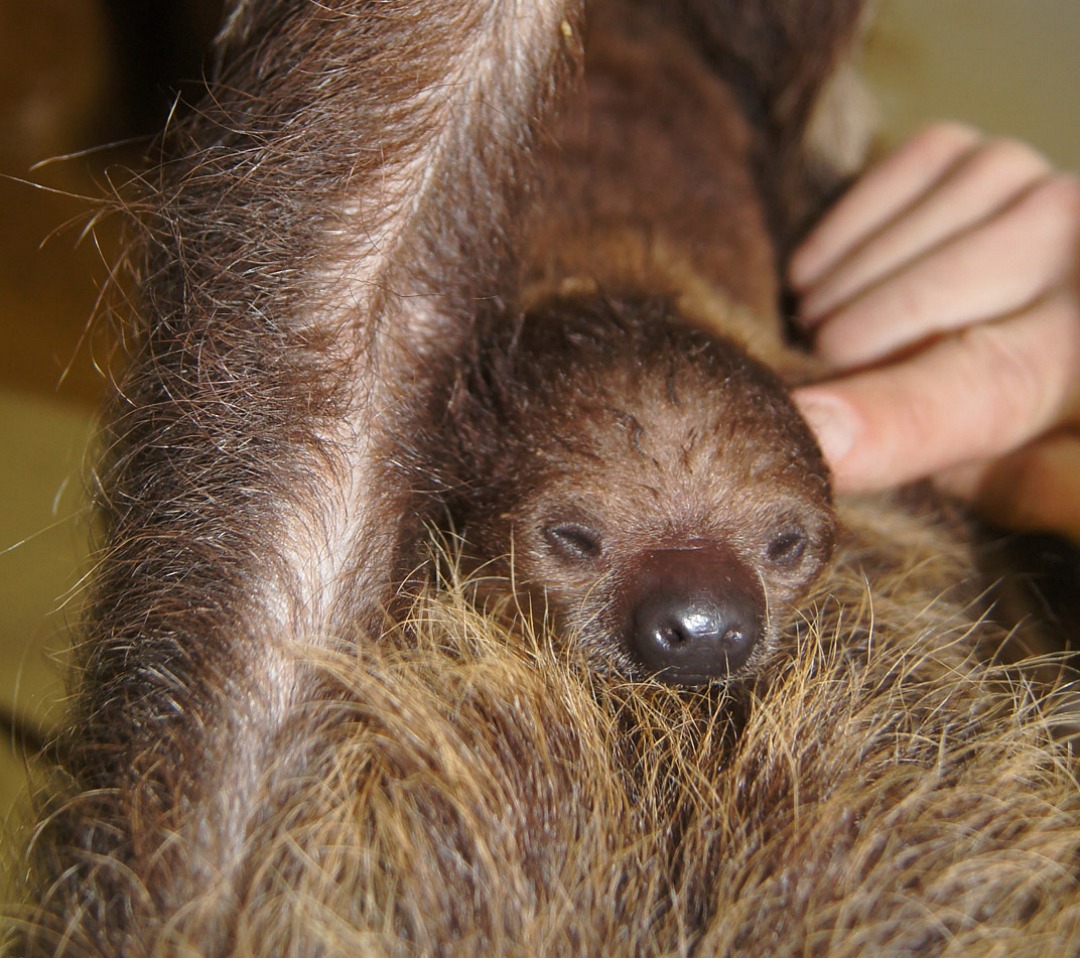
Belfast Zoological Garden’s baby boom isn’t slowing down, although the latest newborn there is considered the world’s slowest mammal! On December 12, keepers were delighted to discover a baby
Linne’s Two-toed Sloth.
Sloths are found in the treetops of Central and South
American rain forests. They spend nearly all of their time aloft, hanging
from branches with a powerful grip, due in large part to their long claws. They are a nocturnal species, and so sleep for 15 to 20 hours every day. Their diet of leaves provides little energy; in order to conserve their
resources, they move very slowly. In fact, even when they are awake, they
often remain motionless.

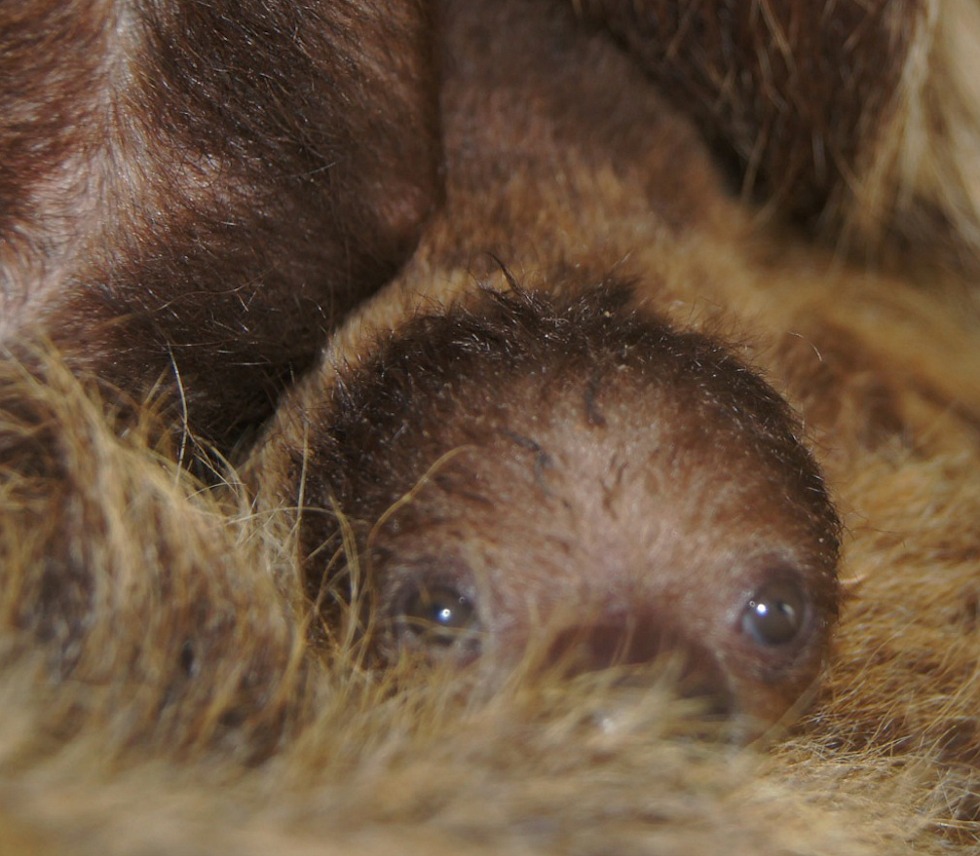
Photo Credit: Belfast Zoo
Due to the Sloth’s nocturnal behavior, the baby has
been named Luna, which means ‘moon’ in Spanish. Zoo Curator, Andrew Hope, said, “Newborn Two-toed Sloths use
the stomach of their mother as a cradle and are well camouflaged in her fur so
it can be quite difficult to spot them. Our keepers discovered that Natja
had given birth at 12:00 p.m. on the 12th of December in 2012 — and if that isn’t special
enough, this is the first Sloth to be born at Belfast Zoo and in Ireland!
It is fair to say that we are ‘over the moon’ with Luna’s arrival.”
See another picture of the sleepy Sloth after the fold:

The baby's father, Enrique, and mother, Natja, arrived in Belfast in 2011 from Papiliorama in Switzerland. The Sloth family are currently off-show but will return to the Rainforest House in the summer, when the weather improves.
Related articles


Leave a Reply