

The Alaska SeaLife Center is currently caring for a blind Harbor Seal. He was the last Harbor Seal pup rescue of 2014, after being found at Land's End in Homer, AK.

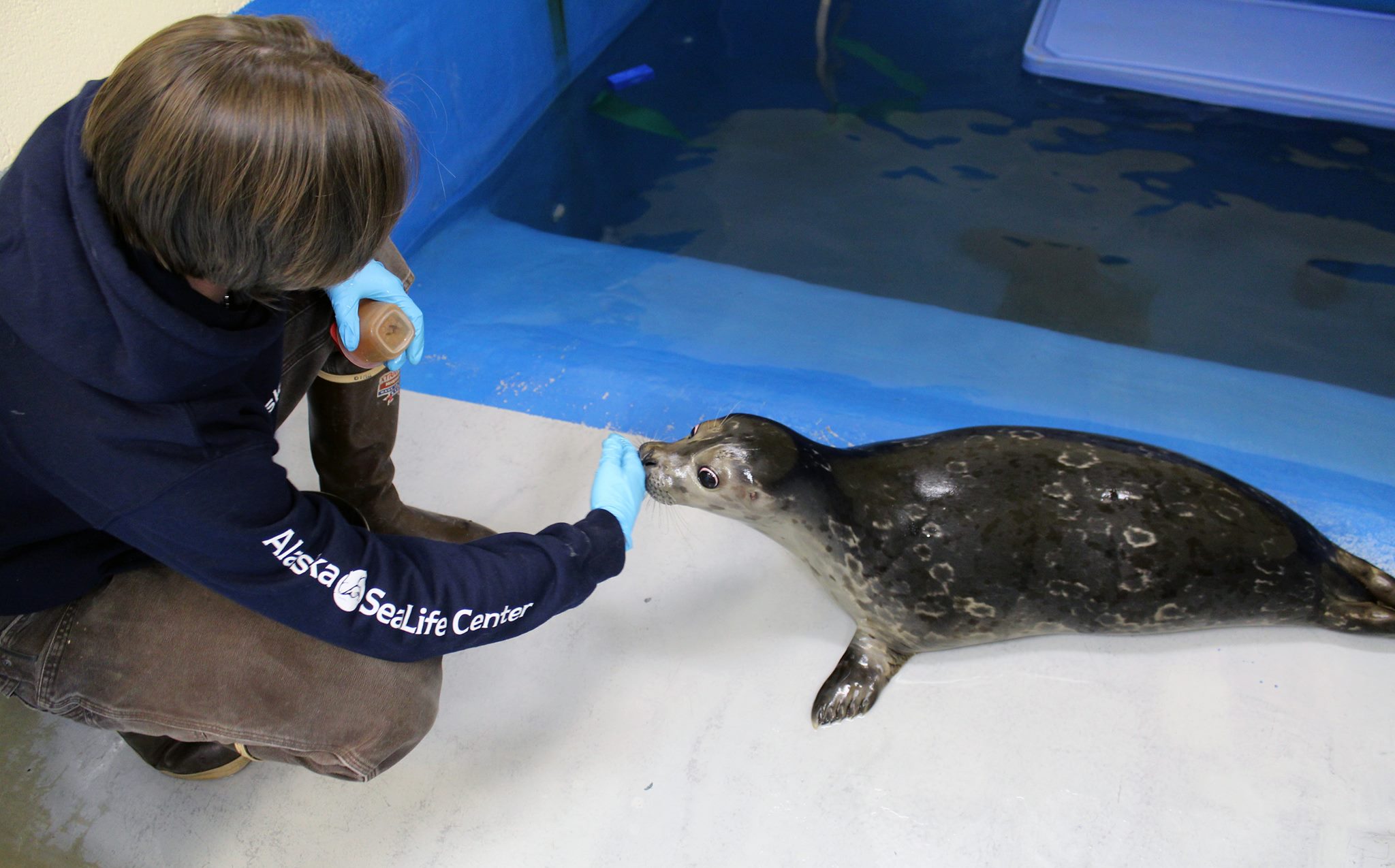
 Photo Credits: Alaska SeaLife Center
Because of his blindness, the pup, named ‘Bryce’, has been deemed non-releasable by the National Oceanic and Atmospheric Administration-National Marine Fisheries Service. Veterinary staff believe he suffered head trauma that was the likely cause of his vision loss.
While Harbor Seals are normally quite shy and skittish, staff have been pleasantly surprised by Bryce's spirit of adventure. He is quick to explore pools, enrichment items, and other changes to his environment. Staff utilize Bryce's inquisitive nature and heightened reliance on sound when teaching him husbandry behaviors, such as hand-feeding and targeting.
Since he cannot see, staff rattle a "shaker" in place of a target buoy. This allows Bryce to use audio cues rather than the customary visual cue. These behaviors help Bryce in adjusting to environmental changes and make veterinary exams easier.
Veterinary staff have noticed a slight improvement in his sight, however, only in one eye. His progress under human care is very encouraging. Bryce will stay at the Alaska SeaLife Center until a permanent home is determined.


Leave a Reply