

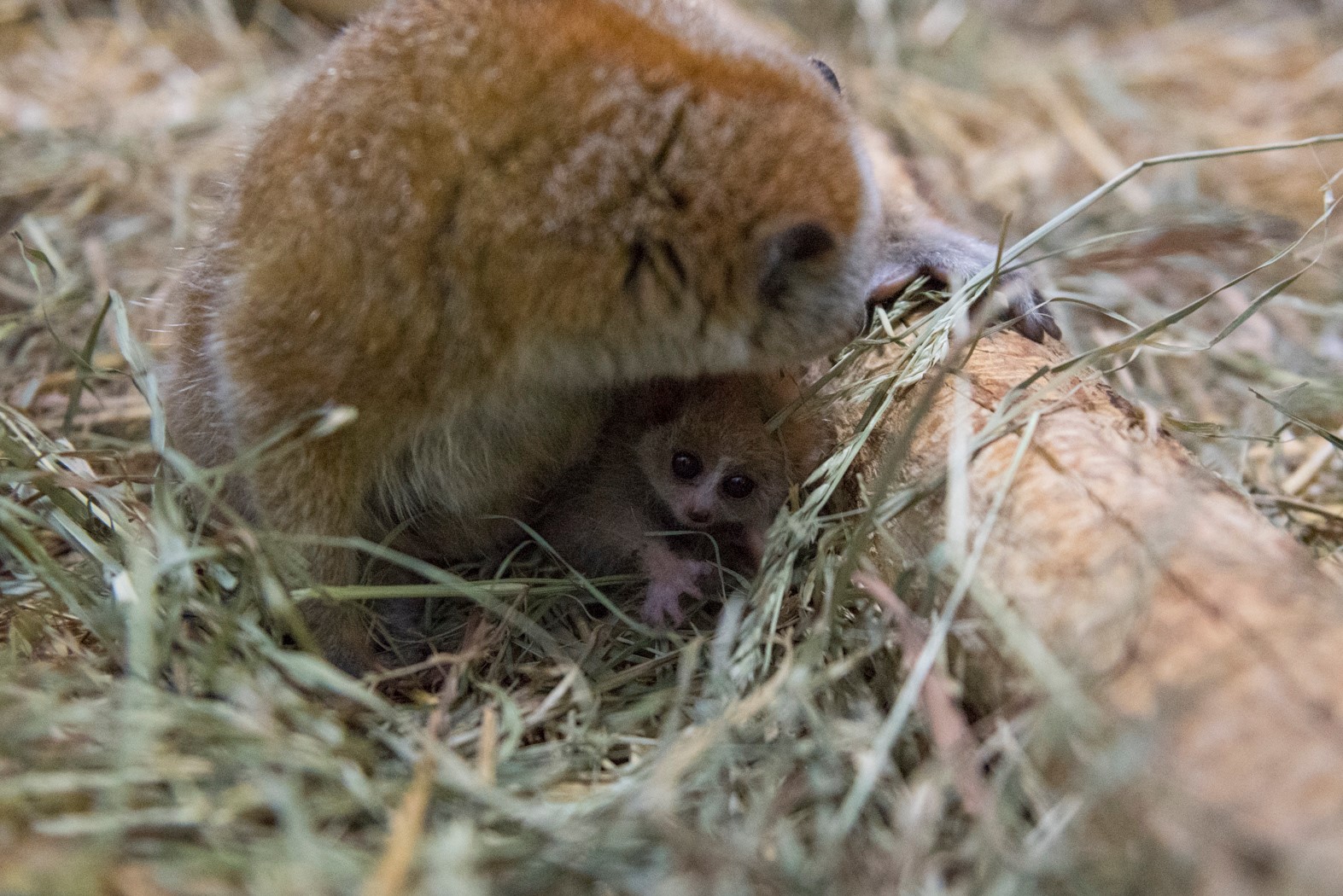
A very tiny primate at the Columbus Zoo had a very tiny baby on June 9! Pygmy Slow Lorises weigh only one pound as adults, and their babies weigh only a few ounces but are born fully-developed and with eyes wide open.


 Photo Credit: Columbus Zoo
First-time parents Gouda and Muenster were paired through the Association of Zoos and Aquariums’ Species Survival Plan. The baby’s gender is not yet known, but it is already climbing with mom Gouda in the zoo’s nocturnal house.
These little Lorises are not monkeys, but belong to a group of primates called prosimians. Prosimians include Lemurs, Lorises, Aye-ayes, and Tarsiers. Slow Lorises produce a toxin from scent glands on their elbows. When alarmed, they lick the scent glands so the toxin becomes mixed with their saliva, rendering bite from these animals dangerous.
During the day, Pygmy Slow Lorises sleep curled up in the treetops. At night, they emerge to forage for leaves, fruits, and insects.
Pygmy Slow Lorises are native to southeast Asia, including Vietnam, Laos, and Cambodia. Their habitat was devastated during the Vietnam War, and they are listed as Vulnerable by the International Union for Conservation of Nature.


Leave a Reply to Noorazura NoorzukiCancel reply