

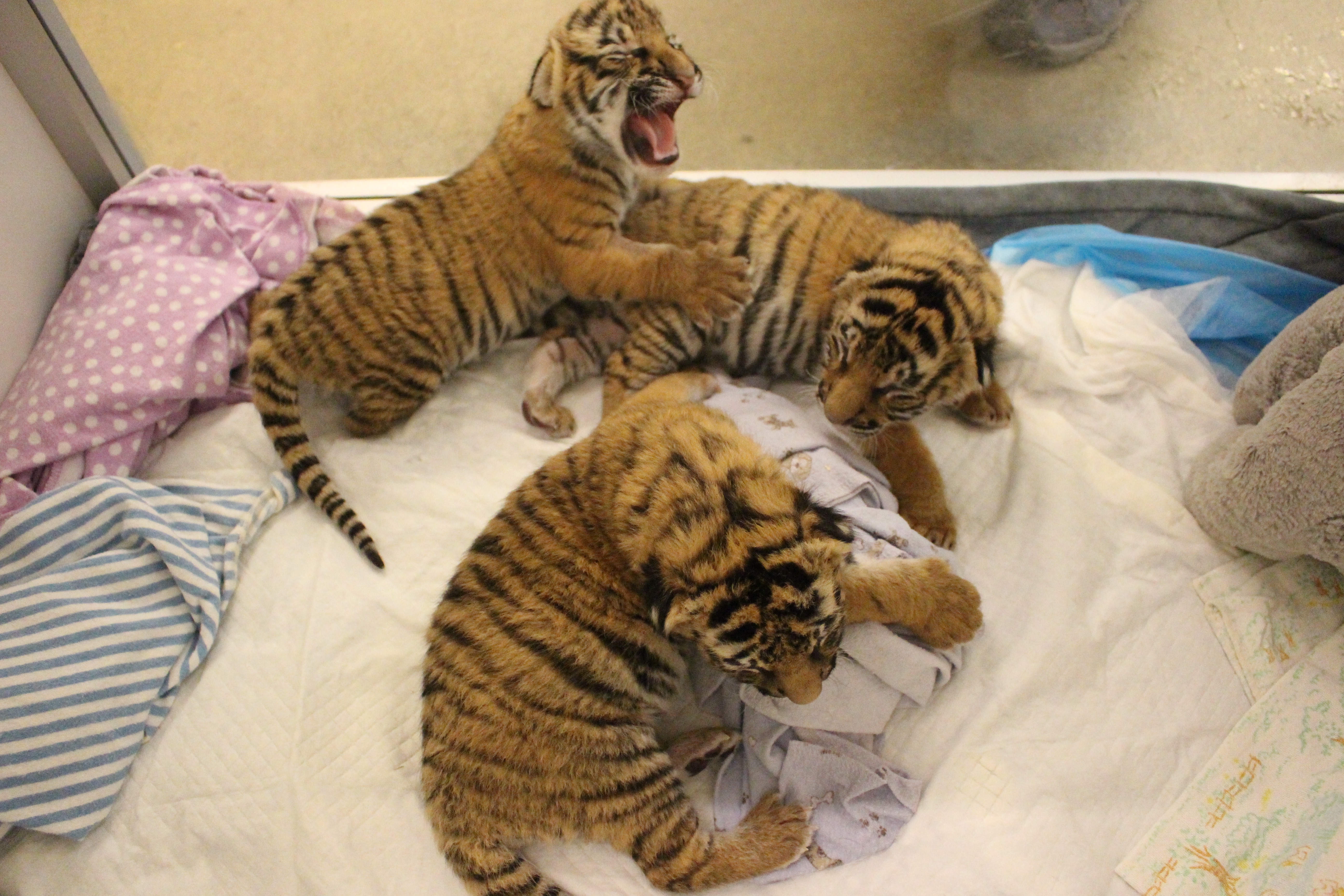
Three Malayan Tiger cubs were born February 3 at the Cincinnati Zoo & Botanical Garden and are now being cared for in the Zoo’s nursery. First-time mom Cinta’s maternal instincts did not kick in, and vets, concerned that the cubs' body temperatures would dip too low without the warmth of mom's body, made the call to remove them from the den.
“It’s not uncommon for first-time Tiger moms not to know what to do. They can be aggressive and even harm or kill the cubs," said Mike Dulaney, Curator of Mammals and Vice Coordinator of the Malayan Tiger SSP. “Nursery staff is keeping them warm and feeding them every three hours.”
The cubs will be cared for in the nursery for now and will move to Cat Canyon when they’re weaned and no longer require constant care. Visitors should be able to see them playing and running around in their outdoor habitat in early spring.
“The three will grow up together. They will not be re-introduced to their mom as she would not recognize them as her own after a prolonged separation,” said Dulaney.


Three-year-old Cinta is the 2nd most genetically valuable female in the Zoo population, and dad, 15-year-old Jalil, is the 3rd most genetically important male. This combination of lineage gives these cubs the opportunity to contribute much-needed genetic diversity when they eventually receive breeding recommendations from the Malayan Tiger Species Survival Plan (SSP), the group that manages the health of the population in the 28 accredited Zoos that care for this subspecies.
Jalil sired four male cubs at the Cincinnati Zoo in 2009. They were raised by their mother, Hutan, and are now living at other Zoos.
The Malayan Tiger (Panthera tigris jacksoni) is a subspecies that inhabits the southern and central parts of the Malay Peninsula.
Malayan Tigers are classified as “Critically Endangered” by the IUCN, with fewer than 500 left in the world. Major reasons for population decline include habitat destruction, fragmentation and poaching. The Zoo is committed to ensuring the survival of endangered Tigers.
One way the public can help is by avoiding the purchase of consumer products that contain unsustainable palm oil. Harvesting palm oil can destroy habitats for Tigers and many other endangered species.
The public can also support the Cincinnati Zoo’s work with Panthera, the only organization in the world devoted exclusively to conserving all species of wild cats and their ecosystems. The Zoo proudly partners with Panthera’s Tigers Forever program. In Malaysia, Panthera works with international partners to train local rangers to patrol forests, install camera traps, and arrest poachers.
For more information on ways to help conservation efforts of the Cincinnati Zoo, please see their website link: http://cincinnatizoo.org/conservation/


Leave a Reply