
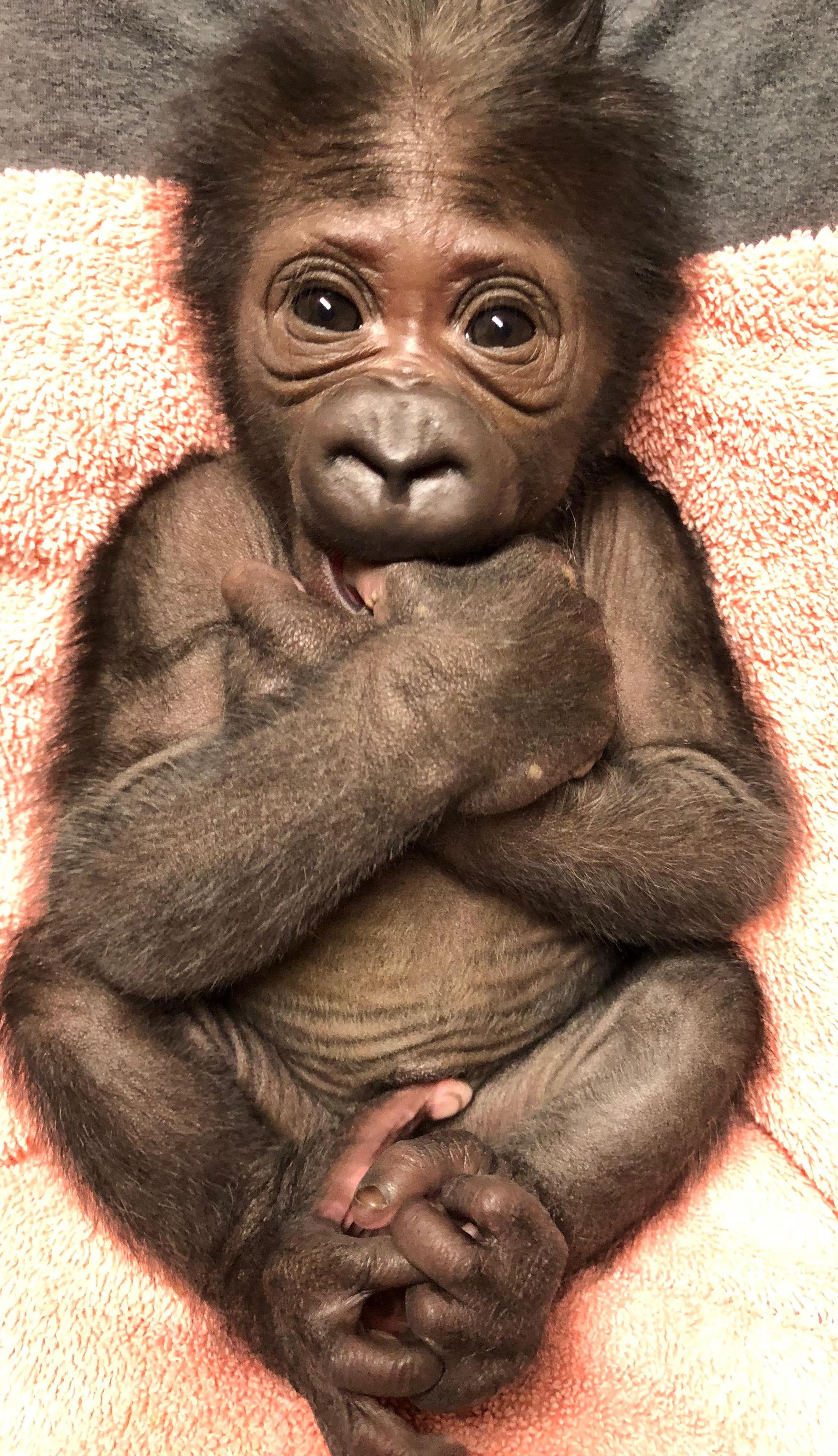
Jacksonville Zoo and Gardens is pleased to announce that 22-year-old, Western Lowland Gorilla, Kumbuka, gave birth to a healthy infant. The 4.8-pound female was born on September 28th at 1:30 pm.
Labor began in the mixed-species habitat the Gorillas share with Colobus Monkeys and Mandrills, but concluded in the birthing-suite within the Gorilla shelter building. As soon as labor was reported, staff was able to call the Gorilla family indoors so that Kumbuka could be closely monitored in a quiet environment.
Kumbuka’s initial maternal behavior toward the baby was perfect and normal. Unfortunately, Kumbuka was cradling and carrying her youngster improperly- similarly to the way that she behaved when she lost two previous offspring at another zoo.
It is theorized that Kumbuka’s hearing disability may prevent her from detecting when her youngsters are in distress. Faced with a life-threatening situation, the extremely difficult decision was made to remove Kumbuka’s baby for short-term assisted rearing by Gorilla care staff. This decision is supported by the Association of Zoos and Aquariums’ Gorilla SSP (Species Survival Plan) group.
The Gorilla SSP recommended that Kumbuka join the Jacksonville Zoo troop to learn maternal behavior from the other mother Gorillas and participate in a maternal training program.
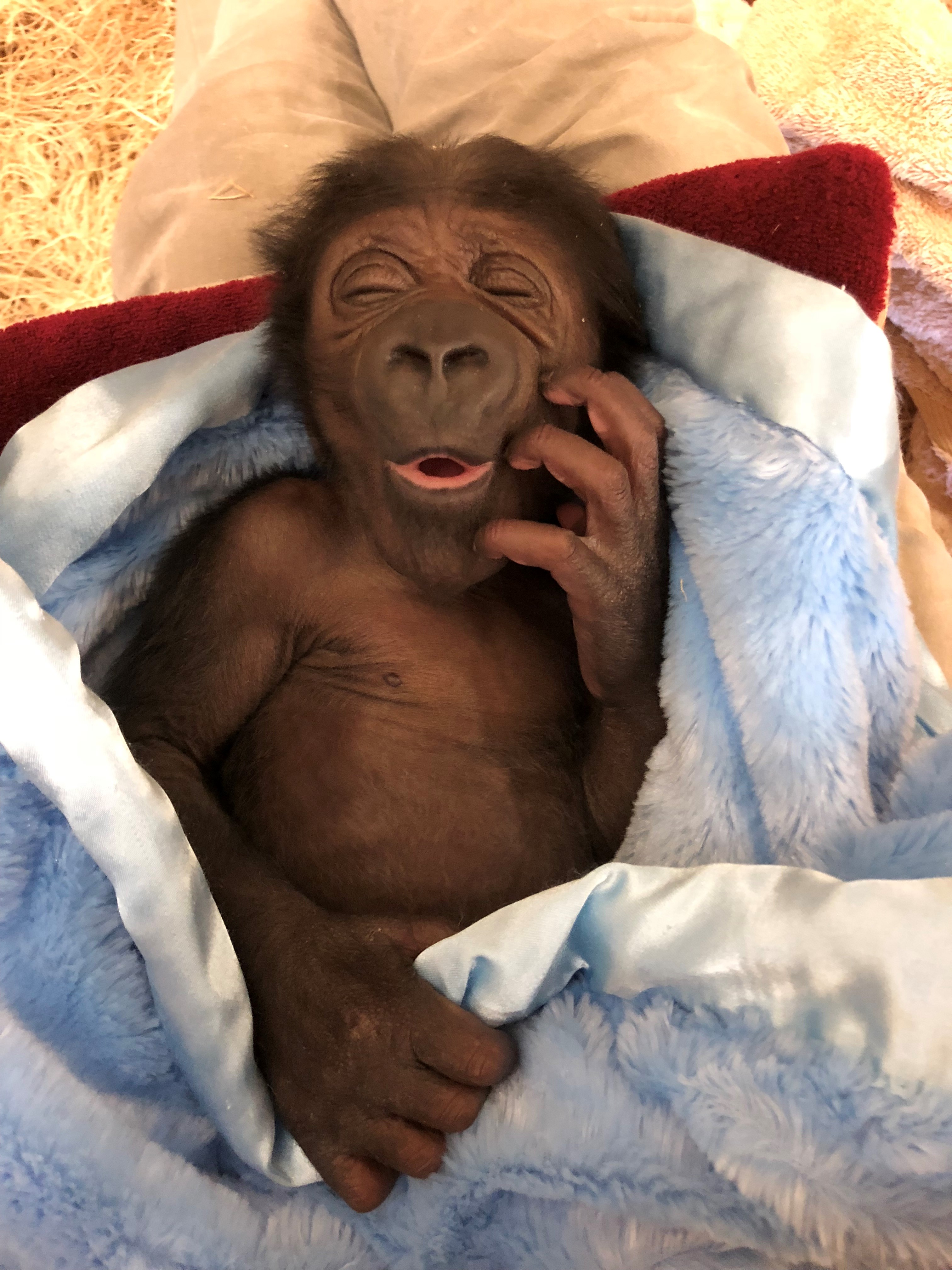

 Photo Credits: Jacksonville Zoo & Gardens/ Images 1-3: Kim Skelton/ Images 5-6: Lynde Nunn
After her arrival in 2014, Jacksonville Gorilla care staff began suspecting that Kumbuka may be hearing-impaired. In 2017, her condition was confirmed through consultation with audiologists from Nemours Children’s Specialty Care.
Her diagnosis provided valuable information for developing a specialized birth management plan to improve Kumbuka’s chances for maternal success. Throughout Kumbuka’s pregnancy, keepers worked to teach her the correct way to position an infant and other essential maternal skills, while also planning for the potential need to intervene based on her history.
Now the training continues with keepers showing her the proper way to hold and carry the infant. Kumbuka is watching and learning as keepers provide around-the-clock care to her infant, right next door to her and the rest of the Gorillas. Kumbuka can see and smell her baby and shows particular interest when the keepers demonstrate walking “gorilla-style” while holding the little one. Maintaining the close connection between mother and daughter is essential for a successful reintroduction. Once the baby is strong enough to adjust herself, she can hopefully be reunited.
Keepers will care for the youngster for approximately the next four months. To ensure healthy socialization, the infant will be kept near her mom, Kumbuka, and the rest of the Gorillas. Keepers are taking great care to provide mom with constant opportunities to look in on her baby. The newborn has many challenges ahead, but so far, she’s progressing well.
“Welcoming the newest member of our zoo family is always exciting, and this little Gorilla’s arrival is both special and challenging,” said Dan Maloney, JZG Deputy Director of Animal Care and Conservation. “I’m so proud of the animal care and health teams who are working so hard on behalf of Kumbuka and her baby.”
Kumbuka is the most genetically valuable female in the Gorilla Species Survival Plan (SSP), and after being recommended to pair with Jacksonville’s silverback, named Lash, she conceived in early February 2018. Lash, 42, was born at the Cincinnati Zoo and came to the Jacksonville Zoo in Gardens in 1998. The pair’s new daughter is very important to the entire North American program, which relies upon cooperative pairings of gorillas already in human care. Wild Gorillas are no longer captured for zoos.
Jacksonville Zoo and Gardens recently opened the newly renovated home for the great apes, African Forest. The $9.5 million renovation features a 50-foot-tall kapok tree that animals can climb and swing on, a mixed-species exhibit, a trail system that allows the animals to traverse the area as they choose, and many more wellness-inspired design elements.
The new little Gorilla does not have a name yet. The Zoo plans to raise critical funds for her care, and for wild Gorilla conservation, by offering the opportunity to name her at their special event, “Toast to Conservation”, on November 17. This year’s event highlights the conservation work being conducted in the field, supported by Jacksonville Zoo and Gardens and will feature speakers from Lola Ya Bonobo Sanctuary and the Gorilla Rehabilitation and Conservation Education Center, both based in Democratic Republic of Congo.


Leave a Reply