The Newest, Cutest Baby Animals from the World's Zoos & Aquariums

Category: Berlin Zoo

  • ,

    1 cat

    One year after their arrival at Zoo Berlin in Germany, a pair of Palawan Bengal Cats has had a litter of two! The two kittens, a male and a female, have been named Ilian and Taytay, after two places on the island of Palawan, the island in the Philippines where this subspecies of the Leopard Cat originates. 

    Ilian and Taytay are very special cats: they are the first offspring of Zoo Berlin's breeding program for this subspecies, which is listed as Vulnerable to extinction by the Interantional Union for Conservation of Nature. Zoo Berlin is currently one of only two zoos outside of the Philippines to house Palawan Bengal Cats. The zoo is working to establish a breeding program that will build up a healthy population of Palawan Bengal Cats across zoos. Members of this captive-bred population can eventually be reintroduced on Palawan, to help the wild population recover. In the fall, once they are mature, Ilian and Taytay will move to Prague Zoo and Pilsen Zoo in the Czech Republic. 

    2 cat

    3 cat

    4 catPhoto credit: Zoo Berlin

  • ,

    1 hyena

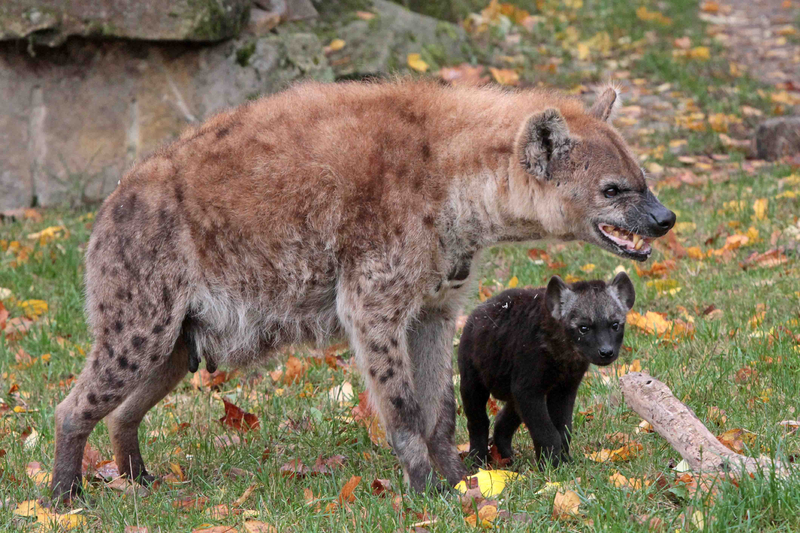
    On July 27, a Spotted Hyena named Malindi gave birth to a healthy male cub at Berlin Zoo. The cub, named Toki, was born with a beautiful black coat, which will start to lighten over the next few weeks to resemble his parent's speckled fur. 

    The cub's father, Kara, also lives at Berlin Zoo. But as in the wild, he won't play a role in rearing his offspring. In Hyena packs, females are dominant over males, and raise their pups on their own, so it's understandable that Kara keeps a bit of distance from the rest of the family.

    B7abd6e9b6


    1d7a939e91

    9d37819355

    Spotted Hyena are common on the savannas of sub-Saharan Africa. They were long seen as scavengers, but they are in fact persistent hunters, capturing up to 70% of their own food themselves, including large like gazelles, wildebeest and zebras. 

  • ,

    4b7b096ba3
    Four fluffy
    Caracal kittens were born on July 21 at Germany’s Zoo Berlin.  The two male and two female cubs, with their
    rusty-colored coats, bright blue eyes, and long black ear-tips, are now out of
    the nest box and charming zoo visitors.

    B677f4a54f
    16f0c92e72
    Photo Credit:  Zoo Berlin

    Parents Sarek
    and Amanda came to the zoo from South Africa in 2004, and have reliably
    produced offspring nearly every year since. Quadruplets are rare in Caracals,
    making this litter of kittens unique.  The
    subspecies living at Zoo Berlin has an intense cinnamon-red coat color.

    The name
    Caracal is derived from the Turkish “kara kulak,” which means “black ear,” referring
    to the black ear tufts, which can be nearly half the length of the ear itself.  These tufts probably aid in sound detection.

    Caracals, also
    known as Desert Lynx, are widely distributed throughout Africa, Central Asia,
    and parts of India.  They inhabit dry
    steppes and rocky terrain.  Caracals are
    becoming rare in parts of their range, particularly in North Africa, Central
    Asia, and India.


  • ,

    1391736_10151896496917557_129661379_n
    Shiva, a rare Persian Leopard cub born at Zoo Berlin, was not shy about voicing her displeasure when she received her latest round of vaccinations. 

    Despite Shiva's disapproval, it was important for the
    veterinary staff to vaccinate the cub against feline distemper
    and other diseases.  This was a challenging
    task because Shiva had to be separated from her mother, Yerevan.  Since her birth on July 1, Shiva and her mother have been inseparable.  Shiva made her public debut last week.

    2893c08a90a
    38e42aeff8a
    Fc30bf020ea
    Photo Credit:  Zoo Berlin

    Shiva is the fifth cub for Yerevan, age 11. 
    Shiva’s father Haakon is age 16 – quite an advanced age for a big cat.

    Persian
    Leopards were once found throughout central Asia, but they now live only in
    fragmented populations in Iran, Afghanistan, Turkmenistan, and the Caucasus.  Iran holds the largest population of wild
    Persian Leopards, with about 700 remaining there.  These small, separate groups of Leopards are
    threatened by further loss of habitat, armed conflict, and reduction of prey
    species.  Currently, about 100 Persian
    Leopards live in zoos, where managed breeding programs could counteract the
    long-term decline of these cats in the wild.

  • ,

    1 ocelot

    Kittens always seem to be crowd-pleasers, but sometimes it takes a little while for them to venture outside. Zoo Berlin welcomed an Ocelot kitten on July 16, and the little one has been nursing, sleeping and growing strong out of the public's sight, until recently. Keepers have noticed some stirrings now that the kitten is about nine weeks old. Even though these cats are mostly nocturnal, visitors have an increasing chance of catching a glimpse of the beautifully-patterned mother and baby.  As the zoo's press release noted, the elusive nature of these creatures might not be the best draw for the zoo— but it certainly is typical cat! The nine-year-old mother does a good job keeping her baby out of sight. 

    2 ocelot

    3 ocelot

    4 ocelot

    5 ocelotPhoto credits: Zoo Berlin

    Ocelots live in a variety of ecosystems in Central and South America, from tropical forests of all types to grasslands, coastal mangroves and marshes, and thorny scrublands. Their range once included the Gulf Coast of the United States, but now only a very small number remain, mostly in south Texas and Arizona. These cats were heavily hunted for their spotted fur, but are now protected throughout most of their range. 

    Because Ocelots are solitary and territorial cats, the father is living in a separate enclosure to ensure that mother and baby have the space and privacy that they need. Ocelots have a  fairly low reproductive rate, which poses a challenge to conservation. A litter size of one kitten is typical, and offspring develop slowly.  A kitten's eyes remain closed for up to 18 days, and juveniles often stay with their mother for up to two years before leaving to establish their own territory.

  • ,

    548905_10151797223615149_1848888243_n

    Zoo Berlin in Germany has its hands full with a baby Porcupine, or porcupette, born on July 24. The gender is still unknown, and therefore the porcupette remains nameless. Though only a week old, the porcupette has large spines. Unlike the spines of their parents, however, a porcupette's spines are soft and harmless to their mothers during birth.

    1

    Mothers are protective of their babies. When danger is sensed, they puff up their spines, stamp their hind legs on the ground and rattle their hind legs. Because of their spines, nursing can be a challenge for Porcupines. Luckily, the mother's teets are located under her armpits.

    2

    3
     Photo Credit Zoo Berlin

    Related articles

    Wobbly Gerenuk Gets a Push From Mom at the Phoenix Zoo
    Giant Anteater Born at Zoo Berlin
    Meerkat Family Grows at Cotswold Wildlife Park
    Woodland Park Zoo Otter Quadruplets Learn to Jump, Run and Whistle!
  • ,

    Don w mom CU

    Born at Berlin Zoo in June, this Sardinian Miniature Donkey earns its name. When it stands next to its mom, Grisella, and sister, Pink, who are themselves only waist high, the new foal looks positively tiny. This is the second foal for 8-year-old Grisella, who has proven to be loving and experienced in looking after her baby.

    The Sardinian Miniature Donkey is the smallest equine on earth. The breed originated in the Mediterranean islands of Sicily and Sardinia, but can be found all over the world now. Adults range in height from 26 to 36 inches (66-91cm) and weigh between 200 and 300 pounds (90-136 kg). The most common color is gray, like this foal, usually with a dark stripe on their back. Donkeys are herd animals and need to be given a companion. If another donkey is not available, they can easily bond with a pony, llama, goat, or cow. Sometimes they also make friends with the family dog!

    Don body

    Don nose

    Donkey w keeper
    Photo Credit: Berlin Zoo

  • ,

    10236_10151645225282557_1451534259_n

    Zoo Berlin welcomed a baby Giant Anteater on May 26. The baby, named Evita by her keepers, is a female. The name was chosen because "E" is the fifth letter in the alphabet, and this is mom Griseline's fifth surviving baby. Before Evita there were Adolpho, Benita, Carlos, and Danita, all born at Berlin Zoo. Evita is being hand-fed by keepers and receives three additional bottle meals per day.

    1270_10151647269732557_588242013_n

    1043928_10151654704402557_117359357_n

    Evita was just 1,570 grams, or 3.5 pounds, when she was born, but has now increased her weight to 2.5 kg, or 5.5 pounds. She's strong enough to ride on her mother's back — a behavior that is common in Giant Anteaters. Keepers, however, must keep a close eye on Evita since her coloration makes it difficult to distinguish her from her mother's fur.

    5c90d1082a

    Giant Anteaters are insectivores native to South America. As the name implies, their diets consist of ants as well as other small insects. They use their strong claws to tear open termite mounds and anthills. Since Giant Anteaters have no teeth, their two-foot-long tongues and sticky saliva help them to extract the insects.

    924dbc3f53


    02d2390141

    Photo Credit Zoo Berlin

    Related articles

    White Canadian Wolf Parents Have a Play Day with Their Five Pups
    Rare Southern Tamandua Born at Buffalo Zoo
    Tiny Southern Pudu Fawn Born at Detroit Zoo
  • ,

    Wolves parents

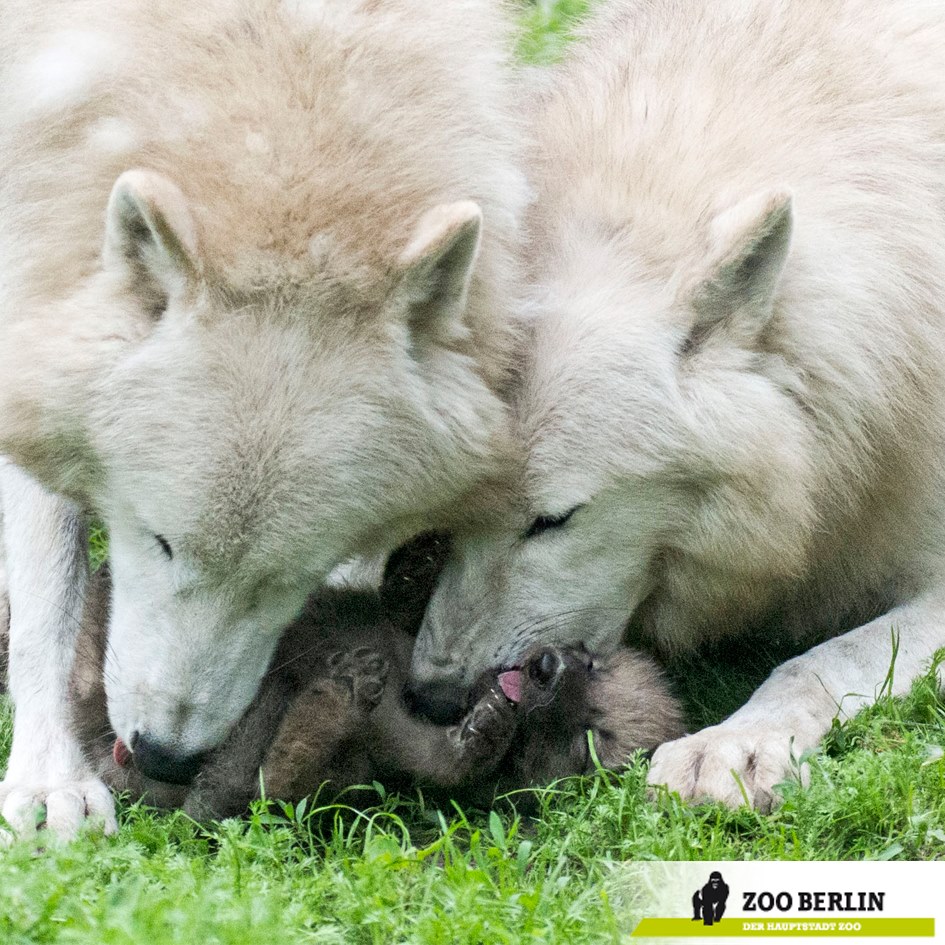
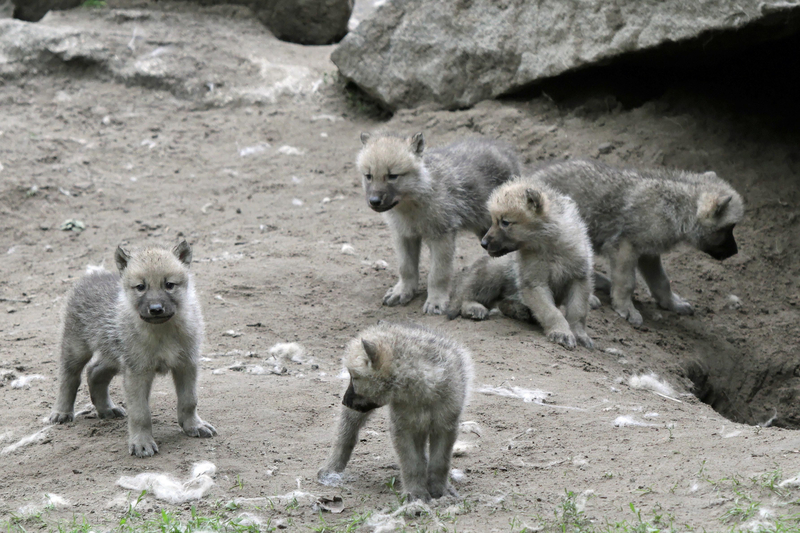
    Whose little feet are those? They belong to one of the new White Canadian Wolf pups born at Berlin Zoo. On April 29, keepers noticed that the four-year-old Ava, who had been pregnant, emerged from the wolf cave looking considerably leaner. It was not long before five pups ventured out to be seen by staff and visitors alike. They sport their puppy coat of brownish spotted fur, but in time will come to have the magnificent white coat of their parents.

    The Arctic or White Wolf inhabits the Canadian Arctic and the islands, parts of Alaska and northern parts of Greenland. All wolves in Canada are members of the species Gray Wolf (Canis lupus). Like those in the U.S., Canadian wolves can range from coal black to off-white in color, but most have a creamy white coat. The white hair shafts have more air pockets than those with pigmentation, therefore providing better insulation in a climate that at best is cool in mid-summer but can become absolutely frigid in the dark of their long winter.

    Wolves families
    Wolves pups

    Wolves 3
    Photo Credit: Berlin Zoo

    Canadian wolves are usually larger than their counterparts in the United States, an adaptation that came about because the north has much larger prey, like caribou and moose, compared to the US wolves who feed on smaller mammals. Wolf packs tend to be larger in Alaska and Canada – up to 10 or even 20 animals per pack.
  • ,

    Emu 3 CU

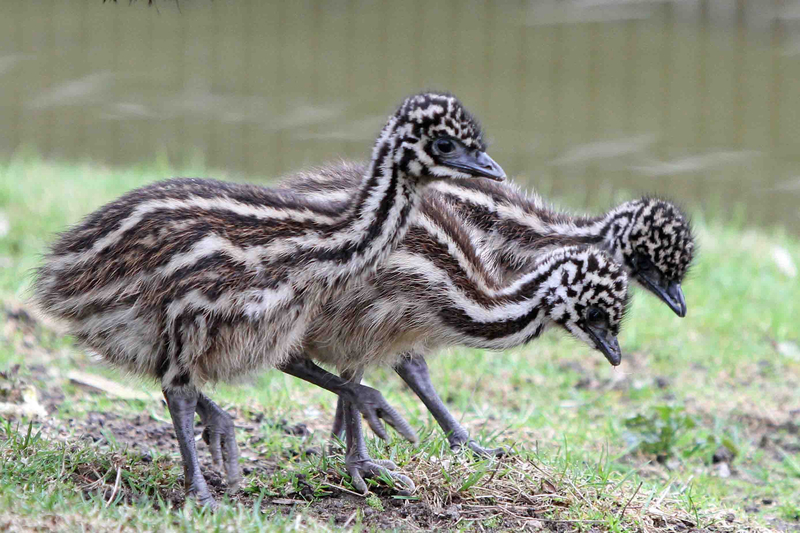
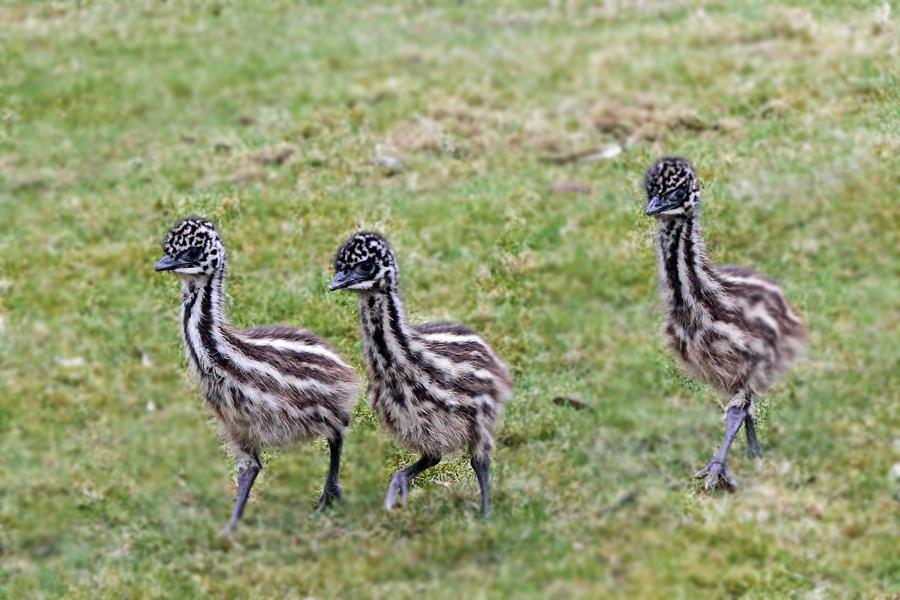
    Three little Emu chicks recently hatched at the Berlin Zoo. Emu pairs breed from October to April, usually producing one emerald green egg every three days which hatches in about 48 to 52 days. Chicks can walk within hours and run within days. And they grow rapidly, gaining their full height by one year of age.

    An interesting fact: after the mother hen lays and incubates the egg, she has nothing more to do with raising her chicks. All of those duties are taken up by the father, seen here out walking with them. They are hardy birds, flightless and strong runners. In time, they will be able to reach ground speeds of up to 40 miles per hour in short bursts and covering about nine feet in stride. 

    The Emu is native to Australia, and is the country's national bird. They are the second largest bird in the world, the first being the Ostrich. The adult Emu measure 5 to 6 feet tall and weighs between 90 to 120 pounds. They hatch at about 10 inches tall, sporting black and white stripes. By 3 months old, the chicks turn an almost solid black. Finally, by the time they reach adulthood, their feathers have changed to an elegant, downy mix of tan, brown, and black (some have a bluish neck).

    Emu dad

    EMU 3 FB page

    Photo Credit: Berlin Zoo