The Newest, Cutest Baby Animals from the World's Zoos & Aquariums

Category: Camel

  • ,

    1_WelshMountainZooBactrianCalmelWillow

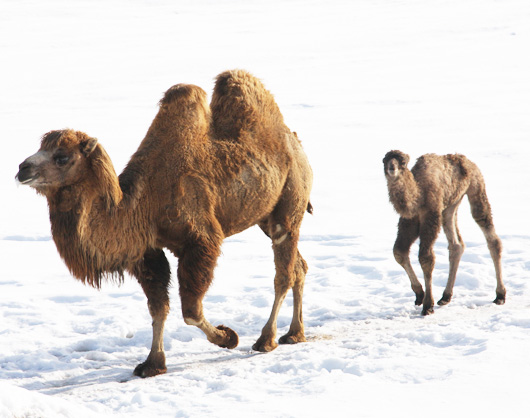
    The Welsh Mountain Zoo has excitedly revealed details of their latest arrival, a female Bactrian Camel, named Willow.

    At a little over five-weeks-old, the double-hump-backed baby is said to be fit and well, cautiously exploring her new surroundings under the watchful eye of parents, Clara and Ghengis.

    The Zoo has a 15-year history with this breed of rare Camels, and the arrival of Willow marks the fourth baby to be born there.

    Jamie Toffrey, Marketing Officer at the Welsh Mountain said, “Willow is a real delight and she is very much out and about, fitting in comfortably in her new home.”

    There are now three Bactrian Camels in total at the Zoo. The breed is endangered, with only 1,000, or less, of their relatives remaining in the wild.

    The Welsh Mountain Zoo is part of a carefully controlled international captive species breeding programme, and they welcomed the first Bactrian Camel ever to be born in Wales, some 10 years ago. Jamie added, “We’re incredibly proud of our successful breeding programme and the role we are playing raising awareness of the species.”

    2_WelshMountainZooBactrianCalmelWillow

    3_WelshMountainZooBactrianCalmelWillowPhoto Credits: Welsh Mountain Zoo

    The Bactrian Camel (Camelus bactrianus) is a large, even-toed ungulate native to the steppes of Central Asia. It has two humps on its back, in contrast to the single-humped dromedary camel. The Bactrian Camel’s population of two million exists mainly in the domesticated form. Some authorities, notably the International Union for Conservation of Nature (IUCN), use the binomial name ‘Camelus ferus’ for the wild Bactrian Camel and reserve ‘Camelus bactrianus’ for the domesticated Bactrian. Their name comes from the ancient historical region of Bactria.

    The mating season occurs in the fall. Males are often quite violent and may bite, spit, or attempt to sit on other male camels. The age of sexual maturity varies, but is usually reached at 3 to 5 years. Gestation lasts around 13 months, with most young being born from March through April. One or, occasionally, two calves are produced, and the female can give birth to a new calf every other year.

    Young Bactrian Camels are precocial, being able to stand and run shortly after birth, and are fairly large at an average birth weight of 36 kg (79 lb). They are nursed for about 1.5 years. The young calf stays with its mother for three to five years, until it reaches sexual maturity, and often serves to help raise subsequent generations for those years.

    The domesticated Bactrian Camel has served as a pack animal in inner Asia since ancient times. With its tolerance for cold, drought, and high altitudes, it enabled the travel of caravans on the Silk Road. Its range in the wild is restricted to remote regions of the Gobi and Taklamakan Deserts of Mongolia and China. A small number of wild Bactrian Camels still roam the Mangystau Province of southwest Kazakhstan and the Kashmir Valley in India. Feral herds of Bactrians are found in Australia.

    The wild form has dwindled to a population estimated at 800 in October 2002 and has been classified as “Critically Endangered” on the IUCN Red List of Threatened Species. The immediate threats faced by the species are all human related. Habitat loss has been high due to development for mining and industrial complexes. Due to increasing human populations, wild Camels are forced to share food and water sources with introduced domestic stock, thus are sometimes shot by farmers. Included in this stock are domesticated Bactrians, which freely mate with wild individuals. This has led to a concern of a loss of genetically distinct wild Bactrian Camels.

  • ,

    1898268_10152233235990479_63306391_n

    A Bactrian Camel born on February 25 is already winning fans at the Cincinnati Zoo.  Keepers announced the male baby’s name, Jack, one week and one day later – on Hump Day, of course.

    1899888_10152233236005479_1360579146_n

    1623757_10152231346225479_2134561039_n

    1911738_10152233236100479_863176209_n
    Photo Credit:  Cincinnati Zoo

     
    Zoo keepers filmed Jack’s first steps, which were taken just an hour after he was born.  Because the weather was so cold during his first week, Jack wore a coat to help him stay warm!  Luckily, the cold spell did not last and the zoo captured photos of Jack and his mother, Sarrai. 

    Bactrian camels are native to the steppes of Central Asia.  They have two humps, in comparison to the one-humped Dromedary Camel native to the Middle East and northern Africa.  They were domesticated thousands of years ago and transported humans vast distances in ancient times.  Able to survive up to 10 months without drinking water, Bactrian camels are listed as Critically Endangered by the International Union for Conservation of Nature.  Fewer than 1,000 Bactrian Camels survive in the wild; interbreeding with domestic populations is diminishing the genetic integrity of the species.
    See more photos of Jack below.

    (more…)

  • ,

    Wiel3

    There’s
    a new addition in the Camel yard at Poland’s Krakow
    Zoo
    :  a female Bactrian
    Camel was born on May 15.

    Wiel2

    Wiel1

    Wiel4_
    Photo Credit:  Krakow Zoo

    Bactrian Camels are pregnant for about 13 ½ months.  Prior to giving birth, females remove
    themselves from the herd for a short time, which is a sign to zoo keepers that
    the baby’s arrival is imminent.  Females
    give birth every two to three years. 

    Male
    and female Camels mature at different rates. 
    Females are mature by age three, while males don’t mature until they are
    five to seven years old.  Young males
    typically form bachelor herds, while females remain in the same herd as their
    mothers.

    Related articles

    Krakow Zoo Welcomes An Important Male Pygmy Hippo Calf
    Sneak Peek: Infant Squirrel Monkey Gets Bottle-Fed at Warsaw Zoo
    Wobbly Little Camel Gets Upright at Zoo Zurich
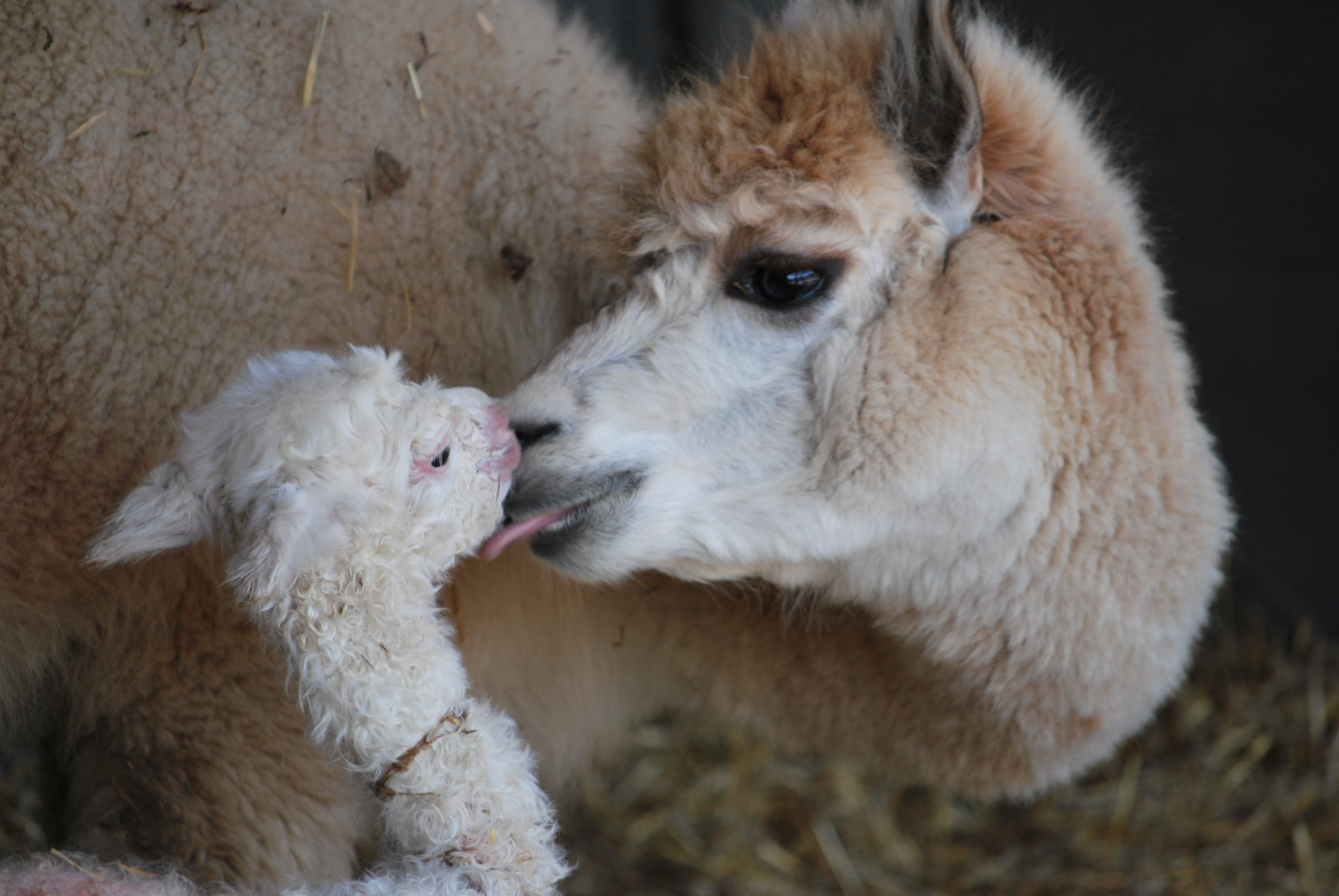
    Welcome to the World! Little Alpaca Born at Parken Zoo
  • ,

    Alpaca4

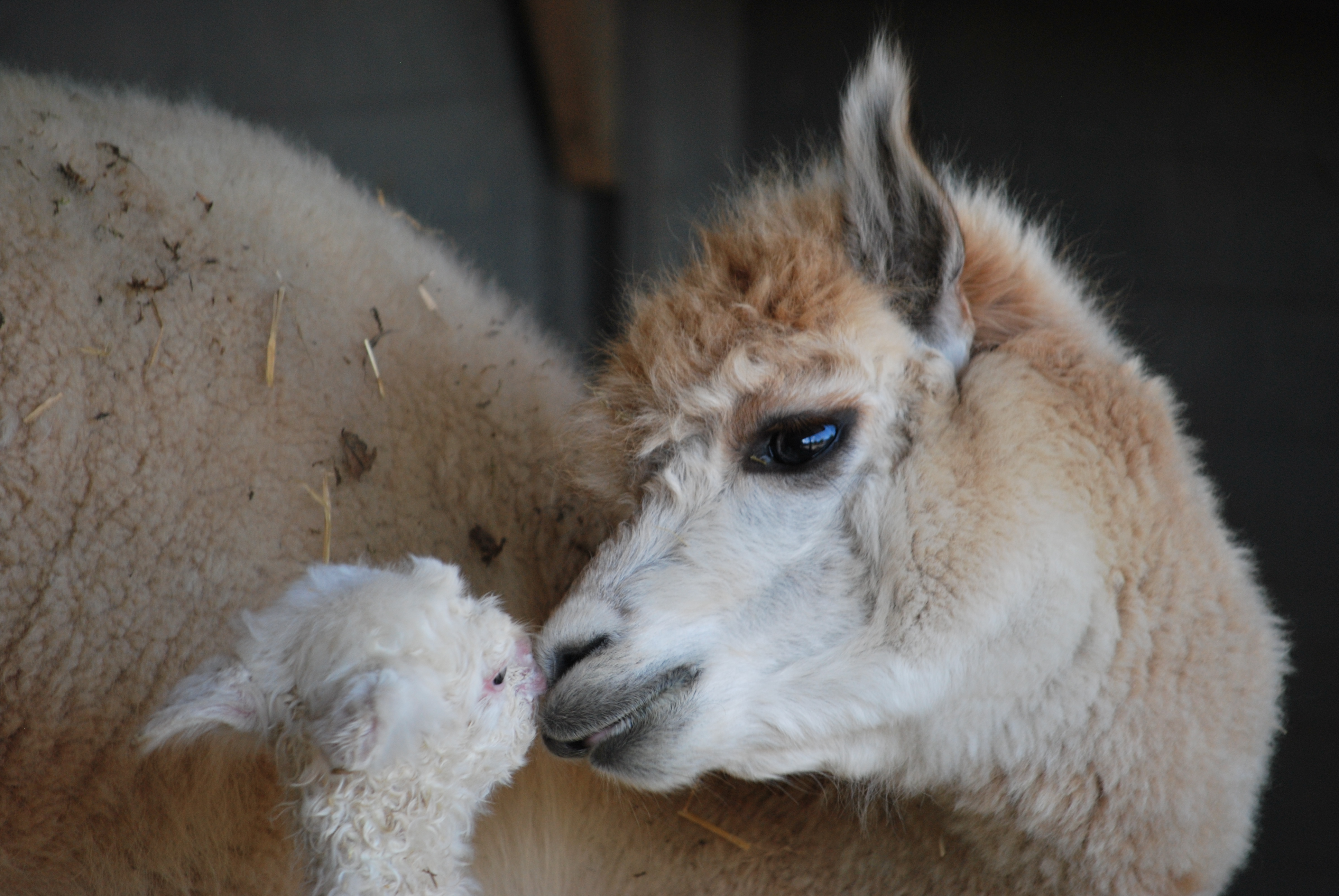
    Sweden's Parken Zoo has a new arrival. First-time mom Alpaca Sabrina delivered the baby with ease on Friday the 13th at 11:00 a.m. The baby is healthy and both are doing well. Babies tend to weigh between 10 and 17 pounds and will grow to a weight of anywhere between 100-190 pounds as adults.

    Alpacas are a member of the camel (camelid) family, domesticated, and shorn for their valuable fleeces. Alpacas do not have a heat (estrus) cycle and so can be bred any time of the year. The average gestation period of 335 days produces a single baby which is usually delivered from a standing position during daylight hours. 

    Alpaca1

    Alpaca2.1

    Alpaca3

    Photo Credits: Parken Zoo

    There are about 3.5 million Alpacas in the Andean
    highlands, mostly in
    Peru. The North American herd has
    increased, after they were first imported in 1984, from a few Alpacas in zoos and private collections to about 20,000!
    Alpacas are in demand for their luxurious shorn fur and as pet, show,
    and investment animals in Canada, England, Poland,
    France, Israel, and Australia, New Zealand, as well as the USA.

  • ,

    PBO_3390k

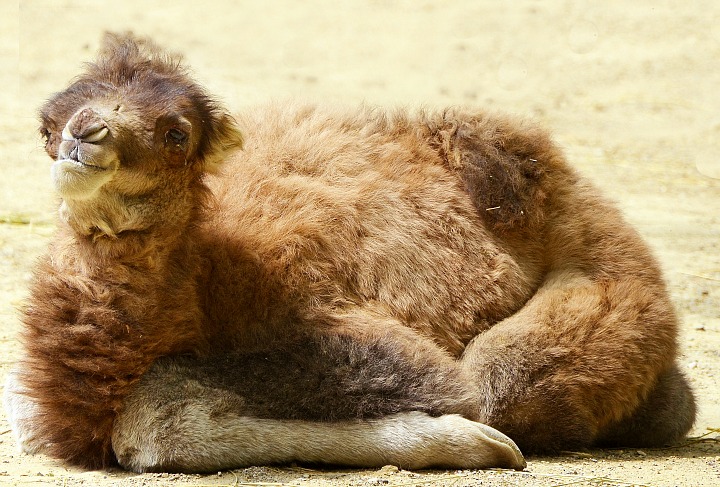
    Standing up can be a big challenge when you've got extra-long legs and haven't had much practice.  But Nara, a female Bactrian Camel born on April 24 at Zoo Zurich, finally got the hang of it.

    PBO_3550k

    PBO_3378k
    Photo Credit:  Zoo Zürich, Peter Bolliger

    Bactrian Camels have been domesticated for use as pack animals in central Asia for centuries.  Their exceptional tolerance of extreme heat and freezing temperatures and their ability to go for several months without water makes them ideal for travelling across the remote steppes of central Asia.  More than two million domesticated Bactrian camels exist, but they are critically endangered, possibly extinct, in the wild. 

  • 20120718_095549_Dromedario_Foto_Carlos_Nader_Zoo_SP

    Sao Paulo Zoo in Brazil welcomed a male Dromedary Camel calf in the early hours of July 18th. Zara, the calf's mother, was not able to feed her baby, and zookeepers have begun to bottle-feed him with goat's milk. Until August 27th, the public can suggest a name for the baby and participate in a drawing to win a chance to feed him by hand!

    20120801_134005_Dromedario_Foto_Carlos_Nader_Zoo_SP

    20120801_133723_Dromedario_Foto_Carlos_Nader_Zoo_SP

    20120801_132928_Dromedario_Foto_Carlos_Nader_Zoo_SP
    Photo credits: Carlos Nader / Sao Paulo Zoo

    More photos beneath the fold!

    (more…)

  • ,

    CUcam

    Saarai (pronounced “sorry”), the Cincinnati Zoo & Botanical Garden’s three-year-old Bactrian camel, gave birth to her first calf on Monday, April 23 and it's a boy. The last time the Zoo celebrated a camel birth was in 1983, so this birth was much anticipated by Zoo staff. 

    Saarai became restless early Monday morning, and keepers noticed that she wasn’t eating or behaving as normal. As the afternoon approached, she began to pace and shortly thereafter keepers noticed the first signs of active labor. Staff blocked the outdoor exhibit off to the public and Saarai delivered the calf at 3:15 p.m. while the father, three-year-old Humphrey, watched from the neighboring exhibit. Soon after delivery, Saarai began nuzzling her calf; the baby first attempted to stand around 4 p.m. Mom and calf are doing well and will remain off exhibit, spending time nursing and bonding. 

    The Zoo is asking for help in naming the baby. Keepers have selected their top three choices (Henry, Lyn and Cain), and the public can vote for their favorite online through Monday, April 30. The winning name will be announced on May 1.

    Mom and

    Milk
    Photo Credit: Cincinnati Zoo 

  • ,

    CU

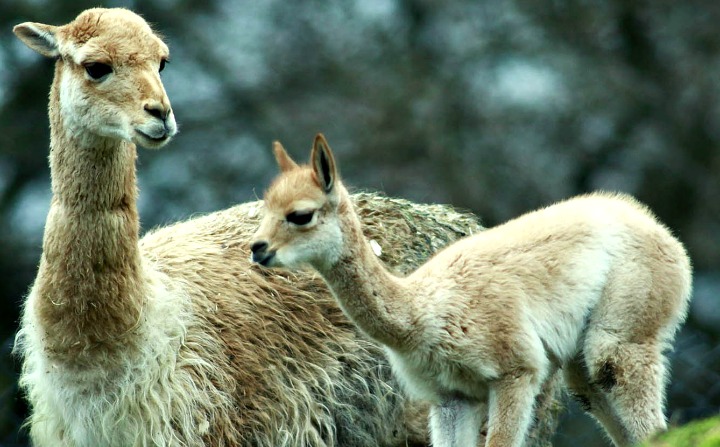
    On February 6, Belfast Zoo keepers celebrated the zoo's first birth of 2012, to parents Douglas and Colonia, with the arrival of Georgie the Vicuña.

    Vicuñas are the smallest member of the camel family and originate from the mountainous regions of Argentina, Bolivia, Chile and Peru. This species was once hunted to the brink of extinction for their wool and meat. However, in the 1960’s, the creation of national parks and trade restrictions helped to protect the species.  Zoos also played their part in their conservation and vicuña are now part of a European breeding program.

    Zoo Manager, Mark Challis, is delighted with the arrival, “The vicuña family live right at the top of the Belfast Zoo site and visitors can now visit Georgie and her parents in their hilltop enclosure. Their Cave Hill home is perfect, as vicuña are specially adapted to live in rocky and mountainous terrains. We are looking forward to celebrating the arrival of many more!”

    Trio

    2
    Photo Credits: Belfast Zoo 

  • ,

    BN_KissingCamels_03close

    It's little wonder this doting mum can't get enough of her newborn – as he's one of the most endangered animals in the world. But like all children, the adorable baby Camel preferred to squirm in embarrassment and duck out of the way of his mother's sloppy kisses. The critically endangered Camel, named Lemmy, was too slow and got a loving smacker right on his hairy head. Little Lemmy is one of the newest Bactrian Camels to be born at Longleat Safari Park, to mum Bhali, 13, and dad Khan, nine. He was born weighing a hefty 65 lbs after a gestation period of 13 months, and is now busy exploring his large enclosure at the park. Now one month old, Lemmy is one of eight Bactrian Camels at the park – and is the first to be born at Longleat in two years.

    BN_KissingCamels_03

    BN_KissingCamels_04
    Photo credits: BNPS

    (more…)

  • ,

    IMG_3006

    Just in time for St. Patrick’s Day (and the upcoming Farm Babies event beginning April 1), a male Bactrian Camel calf is now on exhibit on the Northern Trail at the Minnesota Zoo. Born March 7 weighing a whopping 125 pounds, the calf – who hasn’t been named yet – has been kept offexhibit with his mother to ensure that he was healthy and gaining weight. Camels usually gain approximately two pounds per day, and will reach adult size (1600–1800 pounds and eight feet tall) in 3-4 years. The gestation period for Bactrian camels is just over one year. This is the fifth calf for mom “Sanya” and the eighteenth for dad “Turk.” The calf will nurse for a full year, will be independent at age four, and fully mature at age five.

    IMG_3031

    IMG_3024

    IMG_3044

    IMG_3002
    Photo credits: Minnesota Zoo

    http://www.youtube.com/e/r7UFrKv0dFI

    (more…)