Two Pampas Cats born on October 30 at Uruguay’s Bioparque M’Bopicuá are the second generation of these little-known felines to be born at the facility.
Photo Credit: Bioparque M’Bopicua
With sturdy, compact bodies, Pampas cats resemble domestic cats in many ways. Because of their wide range along the western edge of South America, these cats are well adapted to a variety of habitats, from the pampas (grasslands) to forests, swamps, and cold deserts.
Not much is known about wild Pampas Cats, but they were extensively hunted for their pelts until international trade was banned in 1987. They are listed as Near Threatened by the International Union for Conservation of Nature. Habitat destruction poses the most significant threat to these cats today.
The nursery in Cincinnati Zoo's Children's Zoo has a brand new addition! Santos, the baby Ocelot, was born November 2 at the Abilene Zoo in Texas. He'll become a part of the Cincinnati Zoo's Cheetah Encounter Show in the summer of 2014.
Ocelots are native to much of South America and Mexico. They are expert hunters, and are fiercely territorial. They are listed as a species of Least Concern by the International Union for Conservation of Nature.
With big golden eyes and striped fur, this Rusty-spotted Cat looks like your average house cat. But there’s nothing average about Jaipur and Rashna, two female Rusty-spotted Cats who were born at France’s Parc des Félins on April 24.
Photo Credit: Emmanuel Keller
Rusty-spotted Cats are among the smallest of all felines. Weighing only two to three pounds (1-1.5 kg), these petite cats are found only in the forests of India and Sri Lanka. Hunting at night for rodents, birds, and lizards, Rusty-spotted Cats snooze in thick vegetation or hollow logs all day.
Due to loss of habitat as forests are cleared for agriculture, Rusty-spotted Cat populations are in decline. The International Union for Conservation of Nature lists them as Vulnerable. They are sometimes kept as pets.
ZooBorns’ 2nd all ages book, “ZooBorns CATS!” (Hardcover, 160 pages), features a Rusty-spotted Cat from France’s Parc des Félins, just like today’s feature! Pick it up on amazon and have it in time for the holidays!
Four fluffy
Caracal kittens were born on July 21 at Germany’s Zoo Berlin. The two male and two female cubs, with their
rusty-colored coats, bright blue eyes, and long black ear-tips, are now out of
the nest box and charming zoo visitors.
Photo Credit: Zoo Berlin
Parents Sarek
and Amanda came to the zoo from South Africa in 2004, and have reliably
produced offspring nearly every year since. Quadruplets are rare in Caracals,
making this litter of kittens unique. The
subspecies living at Zoo Berlin has an intense cinnamon-red coat color.
The name
Caracal is derived from the Turkish “kara kulak,” which means “black ear,” referring
to the black ear tufts, which can be nearly half the length of the ear itself. These tufts probably aid in sound detection.
Caracals, also
known as Desert Lynx, are widely distributed throughout Africa, Central Asia,
and parts of India. They inhabit dry
steppes and rocky terrain. Caracals are
becoming rare in parts of their range, particularly in North Africa, Central
Asia, and India.
Last Monday my ZooBorns' co-founder, Chris Eastland, and I (Andrew Bleiman) made a very special trip to Dallas Zoo to meet their twin Cheetah cubs, Kamau and Winspear. We also met their canine companion, a black Lab puppy named, Amani.
It's extraordinarily rare that we get to interact, let alone romp, with real-live zoo-borns. However these special cubs are being raised as education animals so socialization with humans, even goofy ZooBorns guys, is part of their regular day. Their puppy friend, Amani, is a calming influence who will also help with these efforts.
The feline duo put on quite a display. Stalking and pouncing on us / one another / furniture and just about anything else worth clawing at occupied most of the morning. The cubs made a variety of noises, from bird-like chirps, to gutteral growls, to purrs that would remind you of your house cat, just a lot louder.
With wild Cheetah populations hovering somewhere around 10,000, the species is considered vulnerable to extinction. Cheetahs thrive in vast expanses of land. Human encroachment and habitat destruction are central threats to this iconic species.
Institutions like Dallas Zoo serve an invaluable role in building empathy and awareness for wildlife conservation. We here at ZooBorns are proud to help spread the word about these efforts and consider ourselves incredibly priviliged to meet Dallas' newest Cheetah ambassadors.
Special thanks to the Dallas Zoo staff that made our visit possible. Pictured left to right: Chris Eastland (ZooBorns), Candice Davis, Chris Johnson, Robin Ryan, and Andrew Bleiman (ZooBorns). Not pictured: Laurie Holloway
For
the first time in the 33 year history of Zoo Miami, the birth of Lions is being
celebrated! On Tuesday, September
24th, “Kashifa’” a 3 year, 8 month old Lioness gave birth to three
cubs in a special den off exhibit.
Until today, the cubs were being observed in that den via a closed
circuit camera which indicated that the newborns are being well cared for by
the first time mother. This
morning, zoo staff was successful in shifting the mother, which allowed the
separation of the cubs and subsequent safe access for their neonatal
examination. The examination enabled
staff to determine the sex of the cubs as well as obtain weights while
carefully evaluating their overall condition. In addition, they received microchips for identification. The two males and single female
appeared to be in excellent health weighing between 1.63kg and 1.75kg and will
remain off exhibit with their mother for approximately 3 months until zoo staff
feels confident that the cubs can be introduced to the rest of the pride and
safely navigate the exhibit with the adults.
Kashifa
is one of four Lions that form the pride at Zoo Miami. She shares the exhibit with her sister,
Asha, and two unrelated brothers, Jabari and Kwame. Both females were born at the Bronx Zoo in New York in
January of 2010 and the males were born at the Racine Zoo in Wisconsin in
September of 2007. It is not
known for sure which if the two brothers is the father of the cubs as both
males had equal access to the females.
These
cubs were born as part of a carefully planned breeding that was the result of a
Species Survival Plan (SSP) recommendation. Species Survival Plans are part of the Association of Zoos
and Aquariums (AZA) mission to cooperatively manage specific, and typically
threatened or endangered species populations in accredited institutions.
The Memphis Zoo is closing out a purr-fect summer with a major announcement. The first Snow Leopard birth in more than a decade occured at the Memphis Zoo on July 19, helping a highly endangered animal make a comeback.
The cub, a male, was born to parents "Ateri" and "Darhan." Ateri, a first-time mother, is nursing the cub behind the scenes. The public will be invited to vote on their favorite of seven pre-chosen names.
"Ateri is a great mother," says Matt Thompson, Director of Animal Programs. "This was her first cub, and everything is going smoothly."
On September 3, Memphis Zoo veterinarians performed the first neonatal exam on the cub. He was declared to be in excellent health, and mother and baby are doing fine.
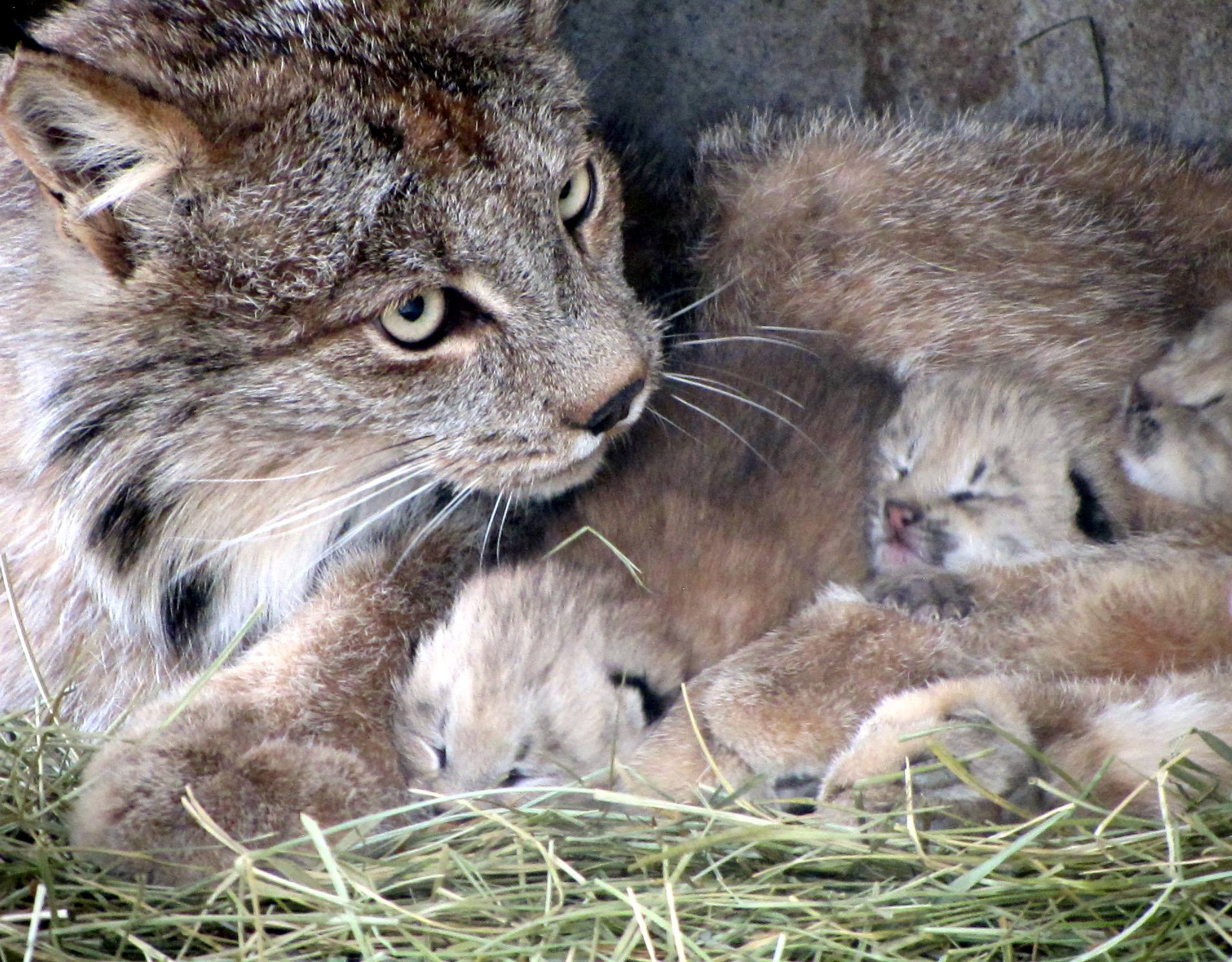
Cheyenne Mountain Zoo’s three curious, climbing Lynx kittens have been spotted exploring their public exhibit. Born on May 8, 2013, the two males and one female have been in an off-exhibit outdoor habitat until they were big enough to maneuver the larger public exhibit space. The zoo invites guests to view the growing kittens and their parents – mother, Magina (mah-jee’-nah), and father, Kajika (kah-jee’-kah).
The three Lynx kittens are the first Canada Lynx born at Cheyenne Mountain Zoo. Often mistaken for Bobcats, Lynx are classified by Colorado Parks and Wildlife as federally threatened and a Colorado state special concern. The zoo’s Lynx were paired together following a breeding recommendation from the Association of Zoos and Aquariums (AZA) Species Survival Plan. The birth of the three Lynx is truly exciting. Yet, the story of the parents living together is extremely rare and unique.
In the wild, Canada Lynx live as solitary cats. They don’t live in pairs, don’t hunt together, nor do they raise their young in family groups. In fact, other than breeding, males and females typically want nothing to do with each other and males want even less to do with their kittens. Cheyenne Mountain Zoo strives to mimic wild-living arrangements in a captive setting, but in the case of Cheyenne's Canada Lynx, they didn’t appear to want to live like their wild counterparts.
With their pointy ears peeking out from the long grass, this trio of Lynx kittens played hide and seek as they recently made their public debut at ZSL Whipsnade Zoo. The eight-week-old triplets named Ruby, Amber, and Opal, spent their first few weeks snuggled up inside with their mother, Maja, before taking their first tiny, tentative steps outside this week. And now they are big enough to venture out on their own! The playful kittens are getting bolder by the day and are often spotted perched on tree trunks from which to pounce, play fighting in the grass, and snoozing on logs.
Zookeeper Cliff Tack said: “All three kittens are doing fantastically well. Mum kept them well hidden in their den to begin with, but they’re now growing in confidence and becoming a lot more adventurous, especially with the warm weather encouraging them to come out to play.”
Photo Credit: ZSL Whipsnade Zoo
Known as a crepuscular species, European Lynx are most active at dawn and dusk, and the kittens are already showing signs of this behavior – with keepers spotting the cheeky trio at their most playful at the beginning and end of the day. The all-girl trio, who are parents Maja and Timo’s third litter, are a welcome addition to the European StudBook Breeding Program for Lynx. They are already showing off their distinctive pointed ears, and are just beginning to develop spotted markings on their coats which will continue to appear as they get older.
Read some Fun facts and see more pictures, after the jump:
Point Defiance Zoo's Clouded Leopard cub Tien, first announced HERE on Zooborns, has warmed up to Sumatran Tiger cub Kali at the Zoo's Cub Den. Tien was born on May 1st, making him just over two months old. Tien now weighs 7.8 pounds and continues to grow rapidly.
The Cub Den houses all the zoo's cubs, where keepers can care for them and visitors can get a rare glimpse of the interactions between various endangered species. While Kali lives in the den, keepers have been bringing Tien into the den twice a day for feedings and keeper interactions. Keepers are careful to keep an eye on the two because of their size difference. At 25 pounds, Kali is nearly triple the weight of Tien! Read more about Kali on Zooborns here, here and here.
Point Defiance Zoo is one of only three zoos in the US that breeds these Endangered cats. Native to Southeast Asia, the Clouded Leopard's habitats are threatened by the expansion of palm oil plantations. Point Defiance Zoo participates in the Association of Zoos & Aquariums’ Clouded Leopard Species Survival Plan (SSP®), which oversees the clouded leopard populations in zoos worldwide and makes breeding recommendations based on the genetics of each cat.


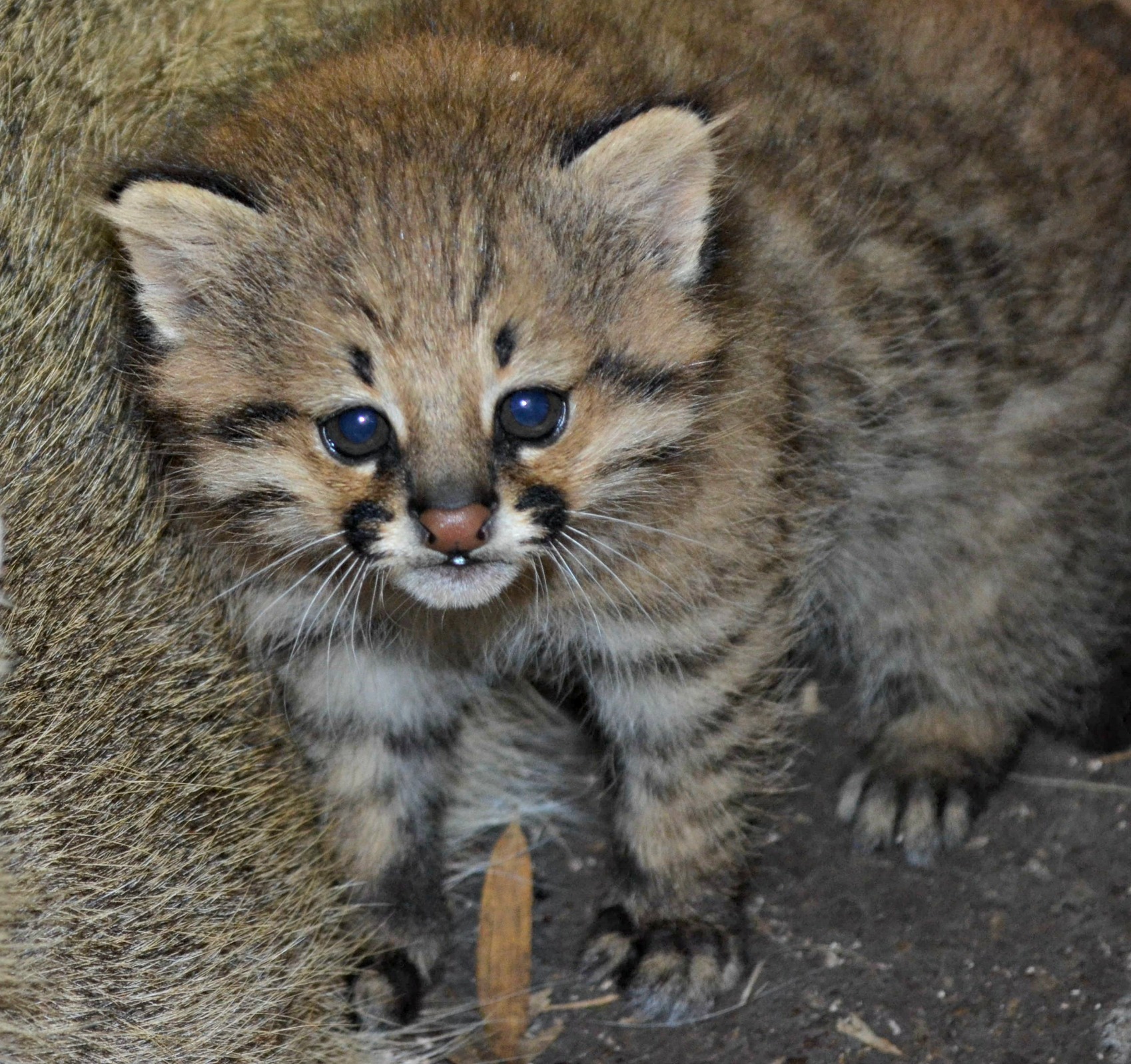
 Photo Credit: Bioparque M’Bopicua