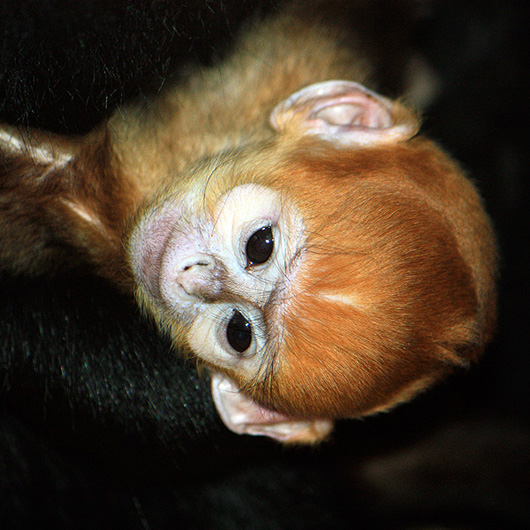
The Newest, Cutest Baby Animals from the World's Zoos & Aquariums

Category: Cleveland Metroparks Zoo

  • ,

    1

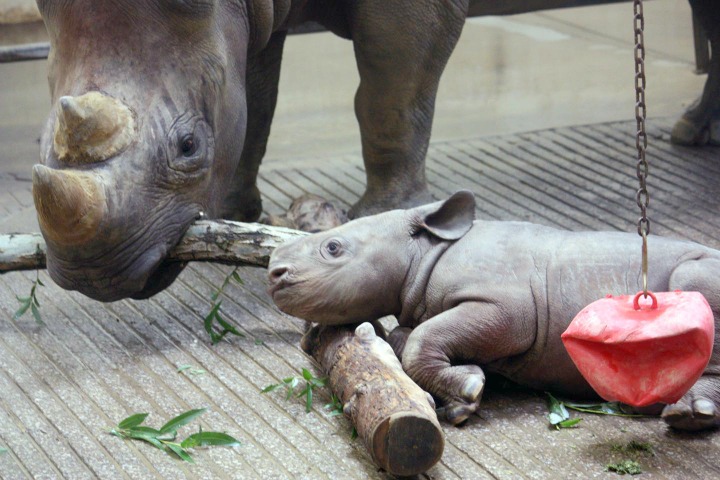
    A Eastern Black Rhinoceros calf was born on July 1 at Cleveland Metroparks Zoo, and it's a boy! The calf weighed about 80 pounds (36 kg) at birth and is growing fast. In just four weeks he now tips the scales at about 150 pounds (68 kg). When fully grown he will weigh about 3,000 pounds or 1360 kg! Animal keepers will give mother and baby time to bond and hope they can be put on exhibit shortly in the Zoo’s African Savanna. 

    The Zoo hopes the public will help name the calf by visiting clemetzoo.com and voting through August 9 for their favorite potential rhino name. Tthe winning name will be revealed on August 10.

    The Eastern Black Rhinoceros (Diceros bicornis michaeli) is classified as “Critically Endangered” in the wild by the International Union for Conservation of Nature, the primary organization for quantifying conservation assessment efforts.  The IUCN estimates there are less than 1,000 of this rhino subspecies left in the wild, concentrated primarily in Kenya, South Africa and Tanzania. Cleveland Metroparks Zoo has been very successful in breeding Eastern Black Rhinos as part of the Association of Zoos & Aquariums’ Species Survival Program; this is the fifth successful rhino birth at the Zoo since 2000. 

    4

    Push

    Nap

    Photo Credit: Cleveland Metroparks Zoo

    (more…)

  • ,

    CMZ slender horned gazelle hi res 1trimmed

    An endangered Slender-horned Gazelle with improbably long ears and big dark eyes will greet visitors at the Cleveland Metroparks Zoo beginning August 1 in the African Savanna.

    Born in late June, the female calf has been off exhibit for about four weeks to give her time to bond with her mother, Francis. The calf is the first offspring at the Zoo for Francis, who came to Cleveland in 2009 from the San Diego Zoo Safari Park, and for her father, Ziggy, who came to the Zoo in 2010 from the Sedgwick County Zoo in Wichita, Kansas. The calf brings the number of Slender-horned Gazelles at the Zoo up to five. The other members of the herd are adult females Bullet and Ella.

    Standing about 30 inches tall and weighing about 60 pounds, these graceful Gazelles have large ears, which serve as a cooling mechanism in the scorching desert heat, and slightly oversized hooves for walking in sand. Both males and females have horns.

    CMZ slender horned gazelle hi res 2trimmed

    CMZ slender horned gazelle hi res 3trimmed

    Slender-horned Gazelles were once one of the most common Gazelles in the Sahara Desert. While they still have a wide range, including Algeria, Chad, Egypt, Libya, Mali, Niger, Sudan and Tunisia, their populations are small and fragmented. They are classified as “endangered” by the International Union for Conservation of Nature (IUCN).

    The Cleveland Metroparks Zoo participates in the Association of Zoos and Aquariums’ Species Survival Plan for Slender-horned Gazelles.

    Photo credits:  Joe Yachanin


  • , ,

    Bfkitten three

    Reaching only about 3.5 lbs as adults, Black-footed Cats may be the world's smallest felines. When these two little kittens were born April 2 at the Cleveland Metroparks Zoo, they weighed-in at just 7 ounces (200 grams). The kittens' sexes have yet to be determined. They were born to mom, Godiva, and father, Wyatt.

    Wyatt is considered a genetically valuable animal whose genes and offspring are an important contribution to the Association of Zoos & Aquariums’ Species Survival Plan for Black-footed Cats. There are about 18 accredited institutions in North America with Black- footed Cats and this is the third litter for Cleveland Metroparks.

    Peek a Kitten

    Blackfooted Kitten up close and personal

    Blackfooted Kitten Looking Ferocious

    Black-footed Cats are the smallest of the African cats, with adults reaching about 3.5 pounds when fully grown. Their conservation status is listed as “vulnerable” in the wild. Black-footed Cats are found in the grasslands and savannas of Botswana, Namibia, Zimbabwe and South Africa. The gestation period is from 63 to 68 days, resulting in a litter of 1-3 kittens. Kittens develop quickly, eating solid food at five weeks and capturing prey at six.

    Two Blackfooted Cat Kittens at Cleveland Metroparks Zoo 1Photo credits: Cleveland Metroparks Zoo


  • ,

    5685-hires
    The eldest female Masai giraffe at Cleveland Metroparks Zoo has a new calf to raise. Lindi, 26, gave birth on July 11 in the giraffe barn to a male calf named Trevor. Trevor is the first successful offspring for father, Travis, 4, who came to Cleveland in 2008 from the San Diego Zoo.

    “Mom and baby are doing relatively well,” said Andi Kornak, the Zoo’s Curator of Carnivores and Large Mammals. “He was standing and moving around in an appropriate amount of time and was nursing within a few hours.” 

    Giraffes give birth standing up, so newborns get an abrupt introduction to the world by dropping up to 6 feet to the ground. They are about 6-feet tall when they are born and weigh between 100 to 150 pounds. The calf joins the other giraffes in the African Savanna exhibit, Jada, 4, Grace, almost 3, Shirley, 5, and Jhasmin, 5. Keepers will give mom and baby time to bond and hope they can join the other giraffes in the herd on exhibit shortly in the Zoo’s African Savanna. 

    5745-hires

    5676-hires
    Photo Credit: Jeanne DeBonis/Cleveland Metroparks Zoo

    (more…)

  • ,

    IMG_5965 first

    Photo Credit: Jeanne DeBonis

    Two orphaned Grizzly Bear cubs made their public debut on June 14, 2011 at Cleveland Metroparks Zoo.The little bear brothers traveled to Cleveland from Montana, where they were being cared for in a wildlife rehabilitation facility.

    The cubs, estimated to be about 4 months old, came to the Zoo on June 2 weighing about 20 pounds each. Currently they weigh about 40 pounds each. When fully grown, an adult male Grizzly Bear can weigh up to 900 pounds. After a routine stay in quarantine, the grizzly cubs are now ready to begin exploring their Northern Trek exhibit, which has been specially prepped for young bears.

    The Zoo wants the public to help determine the cubs’ new names. Visit www.clemetzoo.com and help us “Dub the Cubs” by voting in the online poll. Results will be announced on August 1.

    IMG_6020 Ball crop

    IMG_6015xxx

    IMG_6040.xxx

    Photo Credit: Jeanne DuBonis/Cleveland Metroparks Zoo

    A man looking for shed antlers in the Blackfoot-Clearwater Wildlife Management Area near Helena, Montana startled the cubs’ mother. The man shot the mother Grizzly in self-defense and the cubs were taken in by the Montana Department of Fish, Wildlife & Parks.

    (more…)

  • , ,

    Trumpeter Swan Cygnets Cleveland Metroparks Zoo 1

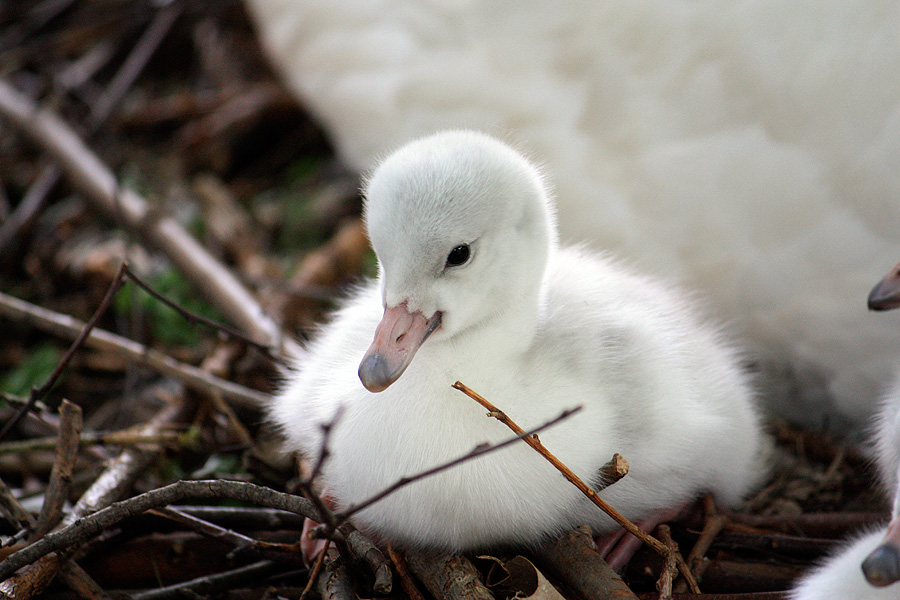
    Six Trumpeter Swan cygnets were hatched at Cleveland Metroparks Zoo last week. The largest North American bird, Trumpeter Swans vanished from most of the United Sates over 100 years ago due to over hunting and lead poisoning. In 1996 the Ohio reintroduction program was started by the Ohio Division of Wildlife and the Zoo. The father of these new cygnets was part of this program and all six of these cygnets will eventually be released into the wild.

    Trumpeter Swan Cygnets Cleveland Metroparks Zoo 4

    Trumpeter Swan Cygnets Cleveland Metroparks Zoo 2_picnik

    (more…)

  • , ,

    Cleveland-red-ruffed-lemurs-6

    Cleveland Metroparks Zoo announces the birth of two Red-ruffed Lemurs, the second litter for mom Vari and her breeding partner Toros. The twin girls, named Carina and Cassiopeia, were born May 8 and are on exhibit with their mom in the Zoo’s Primate, Cat & Aquatics building. While the twins currently spend a lot of time in their nest box, they get braver every day and will soon venture out to explore the rest of their exhibit.

    Cleveland-red-ruffed-lemurs-5

    Cleveland-red-ruffed-lemurs-2

    Cleveland-red-ruffed-lemurs-1

    Cleveland-red-ruffed-lemurs-3

    Red-ruffed Lemurs (Varecia rubra) are a critically endangered species native to the island nation of Madagascar off the southeastern coast of Africa. They are active throughout the day, and are characterized by their loud, peculiar sounding vocalizations. Red-ruffed Lemurs in the wild face increasing habitat deforestation, in addition to hunting and commercial exportation. Cleveland Metroparks Zoo participates in the Association of Zoos & Aquariums’ Species Survival Plan for red-ruffed Lemurs as well as the SSPs for ring-tailed, mongoose, crowned and collared lemurs.  SSP programs identify population management goals and make recommendations to ensure the sustainability, health and genetic diversity of those populations.

    (more…)

  • , ,

    Cleveland-black-footed-kittens-4

    Cleveland Metroparks Zoo announces the birth of two Black-footed Cat kittens! The kittens, whose sex have yet to be determined, are healthy and doing well with mom, Godiva. They were born April 17 and currently are on exhibit in the nocturnal animal area of the Zoo’s Primate, Cat and Aquatics building.

    The two kittens are the second litter for Godiva, 4, and her male breeding partner, Wyatt, also 4. Godiva’s first litter produced one kitten, a male, who is now part of a breeding pair at the Louisville Zoological Garden.

    Cleveland-black-footed-kittens-2

    Cleveland-black-footed-kittens-1

    Cleveland-black-footed-kittens-3
    Photo credits: Jeanne DeBonis/Cleveland Metroparks Zoo

    (more…)

  • , , ,

    Cleveland-MetroParks-Zoo-Langur-6

    Cleveland Metroparks Zoo announced the birth of a baby Francois’ Langur on January 25, 2011. Just like human infants, baby primates can often be demanding little bundles of joy, as evidenced in these pictures. The sex of the baby is yet to be determined, but the noisy little orange furball is currently on exhibit in The RainForest with mother Petunia, father Ike and brother Maynard, who was born in April 2009. Lucky for mom, two other adult females in the Zoo’s Langur group — Mei Mei and Leilu — share in the parenting duties as they would in the wild.

    Cleveland-MetroParks-Zoo-Langur-3

    Cleveland-MetroParks-Zoo-Langur-1

    Cleveland-MetroParks-Zoo-Langur-5
    Photo credits: Cleveland MetroParks Zoo

    More photos below the fold…

    (more…)

  • , , ,

    Cleveland-GLT7

    Less than a year after giving birth to baby Orolito, a pair of golden lion tamarins at Cleveland Metroparks Zoo welcomed two more little tufts of orange hair on December 27, 2010. The babies, whose sexes have yet to be determined, are clinging to mom, Brie, and dad, Cumin, and seem to be doing well. The Zoo is fortunate to have had three Golden Lion Tamarins (Leontopithecus rosalia) born in the last 10 months, as they are among the most endangered mammals on earth. Deforestation and habitat loss have relegated the golden lion tamarin to a small region in eastern Brazil. In fact, almost all golden lion tamarins found in U.S. zoos are actually considered to be on loan from the Brazilian government.
    Cleveland-GLT6

    Cleveland-GLT3

    Photo credits: Jeanne DeBonis / Cleveland Metroparks Zoo

    More [PHOTOS] after the jump!

    (more…)