The Newest, Cutest Baby Animals from the World's Zoos & Aquariums

Category: Colchester Zoo

  • , ,

    IMG_9666
    On July 1, Colchester Zoo welcomed a baby Serval named Nala. The kitten currently lives behind the scenes, where she is under the expert care of zoo keepers.

    Like most kittens, Nala is playful, as you can see in the video below. During play, she exhibits the amazing skill that Servals are known for: leaping into the air to pounce on top of their prey.

    IMG_9642
    IMG_9662Photo Credit: Colchester Zoo

    Servals live in much of Africa south of the Sahara Desert. Weighing 20-40 pounds as adults, these medium-sized Cats have the longest legs relative to body size of any feline. Their super-sized ears help them locate prey. Because Servals favor habitats with tall brush, long legs give them an advantage when tracking small mammals, birds, frogs, and reptiles through the grass. Once prey is within reach, Servals can leap more than six feet upward and ten feet forward to forcefully pounce on prey with their forepaws. A quick bite to the prey animal’s head or neck delivers the fatal blow.

    Much of Africa’s Serval population lives on protected land and hunting of Servals is prohibited in many, but not all, countries. Though Servals are currently listed as a Species of Least Concern by the International Union for Conservation of Nature (IUCN) Red List, continued degradation of habitats, especially wetlands and grasslands, could pose a threat in the future.

    See more photos of Nala below.

    (more…)

  • ,

    DSC_1236smal

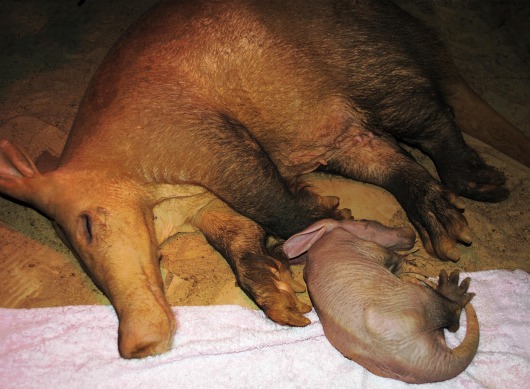
    On December 22, 2014, Colchester Zoo’s Aardvark, ‘Oq’, gave birth to a healthy baby! 

    DSC_1229

    DSC_1227Photo Credits: Colchester Zoo

    The exciting new arrival was the Zoo's last newborn of 2014 and is doing well! Both mom and keepers have a close eye on the baby during these early days.

    The Aardvark is a unique animal, only found in Africa. They are almost exclusively nocturnal and love to sleep during the day, curled in a tight circle in their burrow. 

    Aardvarks, such as Colchester Zoo’s group, have thick skin which is sparsely covered by hairs and varies in color from brownish grey to a pale sand. The newest little one is currently a hairless light grey, but within 12 months, it will be fully grown, just like its mother, and will soon be venturing out of the burrow. 

    Aardvarks enjoy a diet mainly made up of insects, such as ants and termites. Once fully grown, an adult Aardvark can eat up to 50,000 of insect prey in one night!
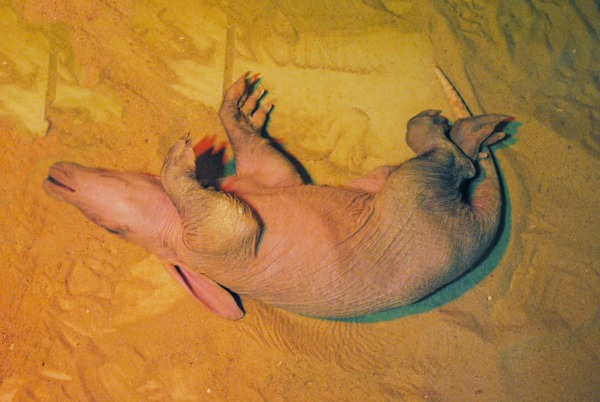
    The new arrival also joins the Zoo’s two other resident females ‘Puq’ and ‘Skyla’, and its dad ‘Adela’ can be seen at Colchester Zoo’s Aardvark Burrow.

    With the latest arrival this group continues to be the most successful breeding group in the UK and one of the most successful groups in Europe. 

  • ,

    Aardvark Baby edited 13 small

    Colchester Zoo’s group of Aardvarks welcomed
    a healthy offspring on March 15, adding to the most successful Aardvark breeding
    program in the United Kingdom, and one of the most successful groups in Europe. The calf, whose gender has not been
    confirmed, was born to female Aardvark Oq.

    Aardvark baby8
    Photo Credit:  Colchester Zoo

    Sarah Forsyth, one of Colchester Zoo’s curators, said, “We believe the baby is
    female and she has grown a great deal already! She is starting to venture into
    the outside enclosure at night and as usual, Oq is proving to be a great mother.”
    The new arrival will be named by keepers once the sex is confirmed.

    Oq and baby are currently housed in the birthing burrow while the baby grows
    stronger. When the youngster is strong enough, they will join the rest of the
    group, who are notoriously clumsy. Until Oq and baby join the group on exhibit,
    visitors can see them via closed circuit television.

    Aardvarks are native to grasslands and open woodlands throughout sub-Saharan
    Africa. They feed on ants, termites, and fruits. According to the International
    Union for Conservation of Nature, Aardvarks are listed as Vulnerable due to
    changes in land use and intensive crop farming.

    Related articles

    Antwerp Zoo's Baby Aardvark Gets A Little TLC
    Prematurely Born Giraffe Calf Getting Stronger at Zoo Brno
    Krakow Zoo Welcomes An Important Male Pygmy Hippo Calf
    It's a Boy! Second Giraffe Calf in Eight Months Born at Brookfield Zoo
  • ,

    420733_10151428441488262_789927124_n

    After a 16 month wait, the Colchester
    Zoo
    announced the birth of a female Southern White Rhinoceros calf to female Rhino
    Emily on April 13.

    This is the first Rhino calf to be born through a
    natural mating at Colchester Zoo and is the first calf for Emily and male Rhino
    Otto. Curator Sarah Forsyth said, “Emily is
    proving to be a very protective but excellent mother and the calf is very
    healthy and already building a close relationship with her keepers.”

    164634_10151428441398262_660547340_n

    385941_10151428441688262_1477347544_n
    Photo Credits:  Colchester Zoo


    Zoo keeper Jo Row expressed the excitement of the
    staff. “This birth is brilliant news not just for Colchester Zoo but also for
    conservation. It is a great privilege to be a part of the life of this new
    arrival and we look forward to watching baby develop and grow!”

    The calf, which has not yet been named, will be on
    display for only short periods each day until she is introduced to the other
    members of the zoo’s Rhino herd.  She
    will not be mixed with her father, Otto, for 4-6 months.

    See more photos below the fold.

    (more…)

  • ,

    578762_10150972686233262_1972480893_n

    On June 20th, Colchester Zoo's breeding Hyena pair produced the zoo's first ever zooborn Spotted Hyena! In 2011 Colchester Zoo became the first Zoo in the UK to house the species and so they are overjoyed that they've been able to breed successfully. The new arrival can be elusive, so you may have to wait to catch a glimpse. It spends much of its time in a den with mom now, but has occasionally been seen out on exhibit by keepers.

    561428_10150950152648262_1567136027_n

    527262_10150972686383262_377148485_n

    Did you know that Hyenas are more closely related to cats than they are to dogs?

    375633_10150972685998262_1290832700_n

    311499_10150972686143262_2121195547_n
    Photo credits: Amy Boliver taken at Colchester Zoo

    The Spotted Hyena is listed as least concern on the IUCN Red List due to the species continued widespread distribution within Africa, south of the Sahara. Populations of the species residing outside of protected areas are suffering mild threat of decline due to persecution and loss of habitat. 

    It is hoped that Abu and Kalabi continue their breeding success to help maintain the population of this species within the captive environment.

  • ,

    1

    On June 5, a pair of Victoria Crowned Pigeons, Violet & Ozzy, hatched a healthy chick for the first time at Colchester Zoo. The chick was first seen with its head peering out of the nest by keepers on the June 9. The chick will be tended to by both parents until it is 13 weeks old, when the chick becomes independent. 

    Curator, Clive Barwick says, “Victoria Crowned Pigeons are known to be notoriously clumsy parents as both eggs and chicks have been known to be accidentally kicked out of nests! The first week after the chick hatched was very tentative, but we are glad that our young and inexperienced hen proved highly competent”.

    According to the IUCN Red List the Victoria Crowned Pigeons current status in the wild is vulnerable due to hunting and logging. Colchester Zoo is proud to be part of the conservation of this species and are very pleased to have their first ever Victoria Crowned Pigeon chick. Victoria Crowned Pigeons are one of the largest pigeons in the world and are native to Indonesia and Papua New Guinea. Their habitat is generally lowland forests and roosting in trees, their diet consists of fruit and seeds.

    Chick 3

    2
    Photo Credit:Colchester Zoo

  • ,

    Baby Aardvark Asleep at Colchester Zoo1

    Colchester Zoo continued its incredible Aardvark breeding success with the birth of an eighth baby, the seventh for mama Aardvark Oq! Colchester Zoo Curator Lisa Doran reported that “Both mum and baby are doing well and baby is a very large and healthy size.”

    Oq and baby are currently housed in the birthing burrow whilst the baby grows strong. They will be able to return to the rest of the group within approximately a month, when the youngster will be strong enough to survive any bumps from the rest of the group who are notoriously clumsy.

    Aardvark Baby with Mom at Colchester Zoo 2b

    Aardvark Baby with Mom at Colchester Zoo 2a

    Aardvarks are native to Africa living mainly in the sub-Saharan areas. Their habitat is generally grasslands and open woodland and their diet consists of ants, termites, fruit and other insects.

    Anthony Tropeano, Zoological Director at Colchester Zoo said, “We are delighted to have another success with our breeding group of Aardvarks and very proud of the breeding record to date.  Our dedicated keepers are watching the new baby round the clock to ensure that it is thriving and we very much hope that it continues to do well.”

    Aardvark baby rolled on back

  • ,

    Mom, cubs

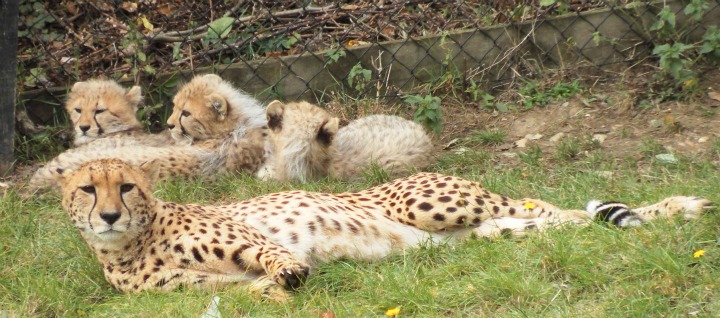
    Three cheetah cubs born at Essex's Colchester Zoo in July to parents Uria and Jack, have gotten big enough to begin exploring life outside in their habitat.

    Little Milawi, the male, and Tatu and Savannah the two females, have been allowed their first steps into the grass and sun in the cheetah enclosure.  At first all three were very tentative, staying close with mom at the entrance, but soon, two ventured out a bit more, though closely following mum, while the third cub shyly remained within the entrance area.

    In short order, the cubs are becoming more confident and independent as they are beginning to leave Uria’s side and explore their new surroundings.

    Cub

    2

    Cub in undergrowth

    Uria
    Photo Credit: Colchester Zoo

    (more…)

  • , ,

    223637_10150270404593262_26017858261_7601252_7703563_n

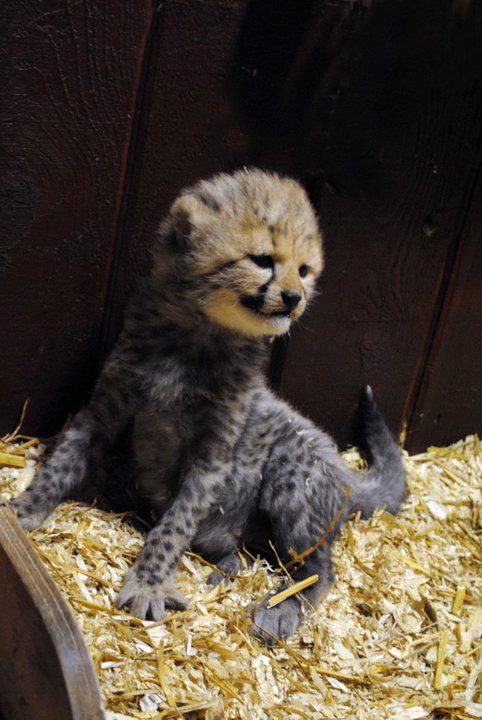
    Three Cheetah cubs were born to female, Uria and male, Jack in July at the UK's Colchester Zoo. Male Cheetah, Jack, joined the Colchester Zoo's collection in March 2011 to pair with Colchester's resident female Uria on a recommendation from the EEP breeding co-ordinator for this species, which has resulted in a successful mating and birth of three healthy cubs!

    308887_10150270404478262_26017858261_7601247_6634272_n

    316928_10150270404413262_26017858261_7601246_5212222_n

    293454_10150270404538262_26017858261_7601249_5593170_n

    305703_10150270403138262_26017858261_7601224_1348350_n
    Photo credits: Colchester Zoo

    The three cubs have remained under the watchful eye of their mother and keepers, and have been sexed as two females and one male but are yet to be named. Their keepers have been keeping a close eye on the new arrivals with weighing sessions to ensure that the cubs continue to gain weight to ensure good health and wellbeing. The trio are unlikely to be seen over the summer period as they will remain within the den whilst they develop under the close care of Uria, their mother, but it is hoped that the new arrivals will make an appearance within the autumn months. 

    In the past, Uria has been temporarily transferred from the collection in order to pair with breeding males in other zoos which has recently proved unsuccessful. The positive addition of Jack, our male cheetah, will hopefully allow the pair to continue to breed successfully in the future, helping to support the captive population of this species.


  • ,

    Baby Aardvark getting snouty with mom

    On February 7, the Colchester Zoo welcomed a bouncing baby Aardvark to mother, Oq and dad, Adela. This marks the sixth successful Aardvark birth at Colchester Zoo, which boasts the most successful breeding program of its kind in Europe.

    Aardvarks are notoriously clumsy and have a habit of bumping into one another so mama-vark and baby have been moved into a specially built birthing burrow to allow a close bond to be formed between the two, and keep the baby protected from any accidental knocks from fellow antbears (as they are sometimes called in Africa). As newborn Aardvarks are poor sighted and uncoordinated, keepers take turns sitting in with mother and baby 24 hours a day to ensure that the baby is feeding well and is kept safe from any accidental injury. 

    Baby Aardvark nap time with mom at Colchester Zoo

    Two sleepy Aardvarks

    Mum and baby will be able to return to the rest of the group within approximately a month of its birth, when the youngster will be strong enough to survive any bumps from the rest of the group! The birthing burrow is off show, but visitors wishing to catch a glimpse of Oq and her offspring this half term can still see the progress of mother and baby via a closed circuit television link to a large screen in the main viewing tunnel of the Aardvark burrow.