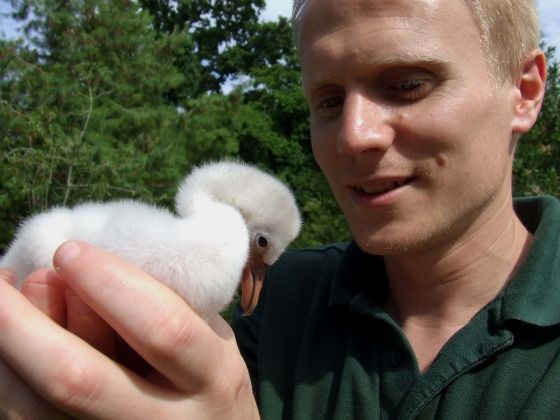
The Newest, Cutest Baby Animals from the World's Zoos & Aquariums

Category: Flamingo

  • ,

    BN_FlamingoBabies_03
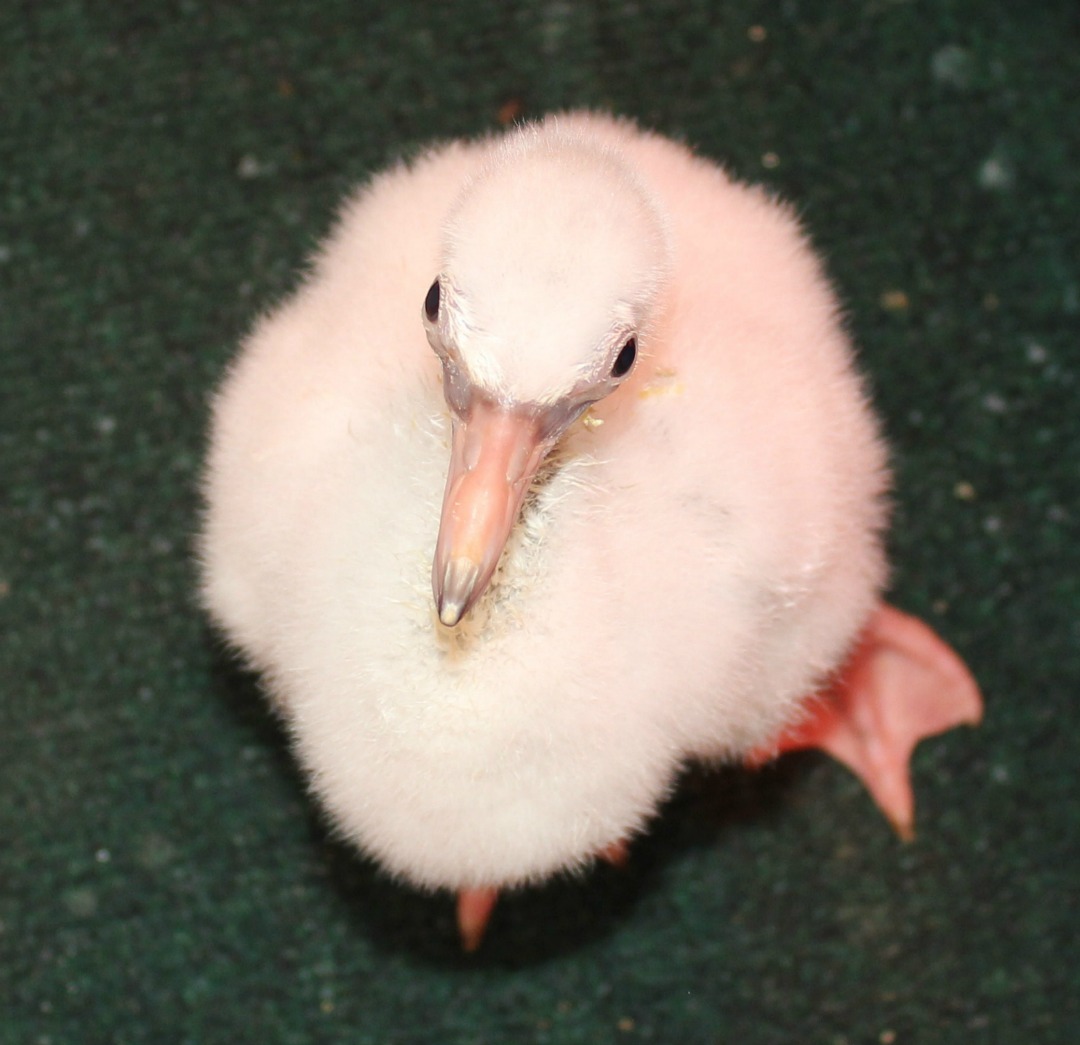
    Zoo keepers at Longleat Safari & Adventure Park have
    nicknamed five Chilean Flamingo chicks “Thunderbirds” after the eggs were
    abandoned by their parents during a thunderstorm.

    IT_Flamingo Chick_01
    BN_FlamingoBabies_01
    IT_Flamingo Chicks_08
    Photo Credit:  Longleat Safari & Adventure Park

    A violent thunderstorm apparently caused
    the parents to flee the nest and take shelter. 
    When the adult Flamingoes did not return to the nest, zoo keepers at the
    United Kingdom zoo collected the eggs from the nests and placed them in an
    incubator, where they hatched.  Now about
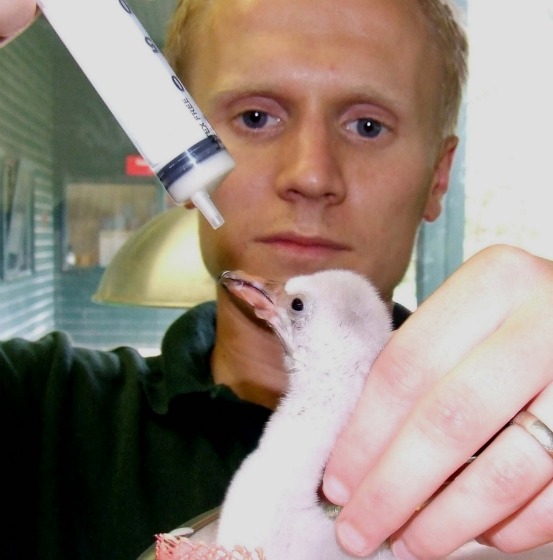
    a month old, the five chicks are fed by syringe five times per day.

    Adult flamingos build a volcano-shaped nest and lay a
    single egg, which they then usually sit on for around a month.  “It’s extremely unusual for all the parents
    to abandon their eggs at the same time, however the storm was particularly
    severe and the adults decided to head for cover – leaving us to look after the
    eggs,” said Longleat’s Mark Tye.

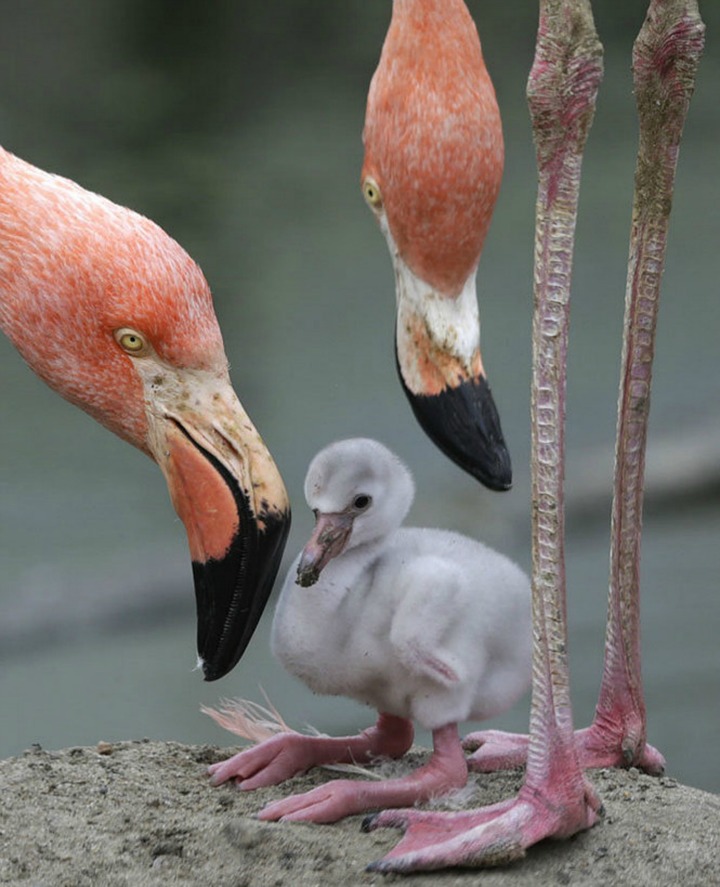
    All Flamingo chicks are born with white plumage, which they keep for around
    three years.  The bright red pigment in Flamingoes’
    feathers is derived from pigments in the small crustaceans and other
    microscopic plants that the birds eat. 
    In zoos, special pigments are added to the Flamingoes’ diet to maintain
    their brilliant hues.

    Chilean Flamingoes are native to lakes high in the Andes Mountains of South
    America and can easily withstand cold temperatures.

  • ,

    SW1_0492B

    Twelve Caribbean Flamingo chicks have hatched at SeaWorld San
    Diego
    in the past three weeks!  The
    chicks are being hand-raised by aviculturists in SeaWorld’s Avian Center.

    SW1_0463B

    SW1_0491B

    SW1_0493B
    Photo Credit:  SeaWorld San Diego

    Flamingos lay a single egg on a muddy mound, and both
    parents care for the chick for up to six years, when the young reach maturity.  Though adult Flamingos are pink, the chicks
    have downy white feathers.  The birds’ pink
    coloration comes from pigments in the aquatic organisms that they eat. 

    Caribbean Flamingos are also known as American
    Flamingos.  They are native to some Caribbean
    Islands, coastal Mexico, Venezuela, and Colombia, as well as the Galapagos Islands.

    Related articles

    Sea Lion Pup Welcomed at Seneca Park Zoo
    Trio of Endangered Penguins at the Audubon Aquarium
  • ,

    Flam hero

    Lion Country Safari in Florida welcomed three new baby Flamingo chicks that hatched on July 1, 2, and 4. Since safari staff flew up to Washington's Smithsonian National Zoo to pick up the eggs, and the hatchings occurred on and just before Independence Day, keepers are naming them all after United States Presidents. So far they have named hatchlings Washington, Lincoln, and Truman. 

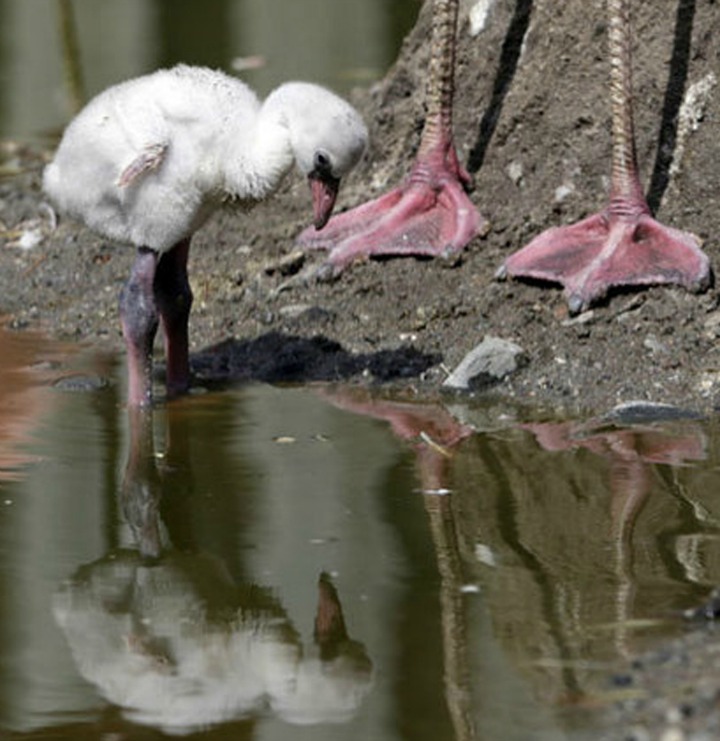
    Flamingo chicks grow quickly, their long spindly legs shooting up so fast that it's a trick to strengthen them enough to hold up the birds' gray fuzzy bodies. So parents (or keepers, if they are being hand-raised) take them for daily walks and swims to become strong. It is quite a sight to see a group of little Flamingo chicks on a walk, flapping their little wings and wobbling to and fro. These birds are strong though rare swimmers and powerful fliers, even though they're most often seen just wading. 

    Flam CU

    Flam 1

    Photo Credit: Lion Country Safari

    A chick's bill is small and straight, but will develop the distinct "break" curve after a few months. Flamingo chicks are born gray or white and take up to three years to reach their mature pink, orange, or red plumage; the color is caused by carotenoid pigments in their food, and a flamingo's diet includes shrimp, plankton, algae, and crustaceans.  
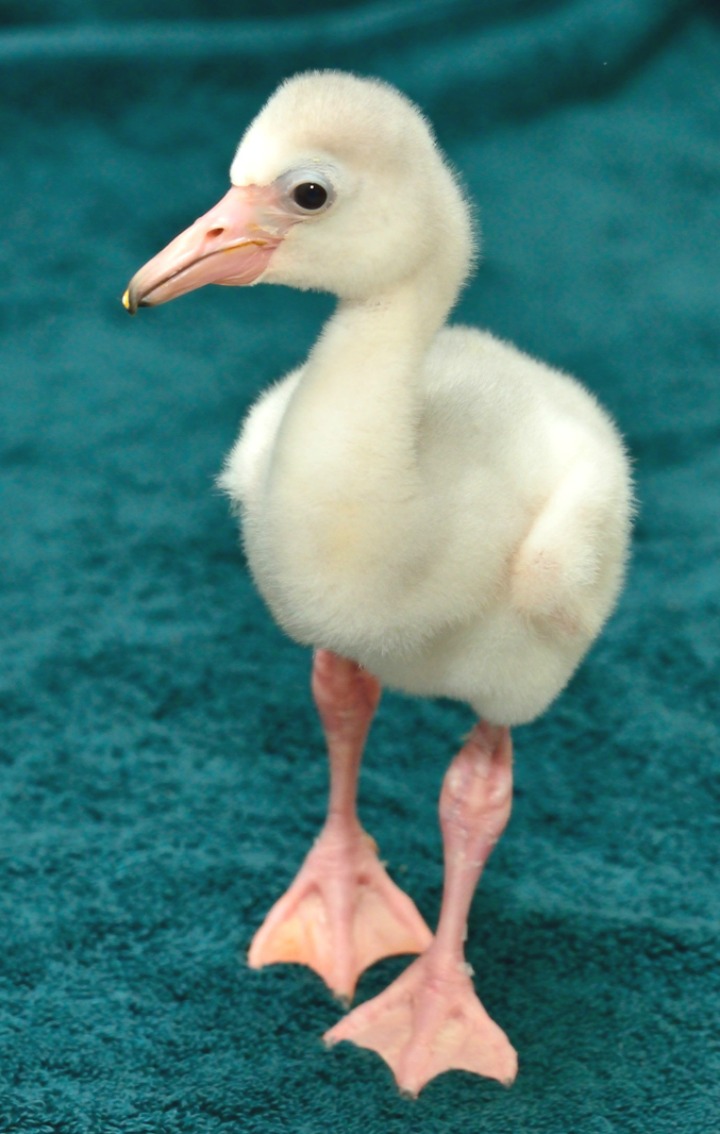
    Say hello to one of the wobbly hatchlings, seen in the video below:

  • ,

    Chil 2

    The Santa Barbara Zoo is flush with Chilean Flamingo chicks – thirteen of them to be exact. The past two months have been very successful breeding time for their Flamingo flock. Eight of the new chicks are now on exhibit for visitors to enjoy. The additional five are being hand-raised in the zoo's vet hospital, where they are fed special formula and are doing well. 

    Flamingo chicks have downy grey feathers for the first two years of their lives before they take on the light pink color of adults. Their spindly legs need to be strengthened enough to hold up their conparatively large bodies, so the chicks will be encouraged to do their exercise — daily walks and swims — as they grow.

    Chilean Flamingos do come from Chile but are also found in southern Peru, Bolivia, Uruguay, Paraguay, Argentina and southern Brazil They tend to live and nest in saltwater lakes and lagoons. This lovely bird is classed as Near Threatened.

    Chick cu

    Chil drink

    Chi lbottle

    Chil side face
    Photo Credit: Sarah Varsik

  • ,

    Flamingo1

    The Gladys Porter Zoo is tickled pink to introduce Paige,
    Chico, and Angela, three baby Chilean Flamingos that hatched earlier this
    month.  They are the first Chilean Flamingos to hatch at Gladys Porter Zoo in ten years.

    Paige emerged from her egg on September 2, 2012. Chico hatched
    on September 7, and Angela followed soon after on September 8.

    Flamingo2

    Flamingo3

    In early August, Jesse
    Olvera, Head Keeper in the Bird Department, traveled to Sea World in San Antonio to obtain the eight eggs that Sea
    World graciously donated to the zoo. The eggs were artificially incubated for
    28-30 days under the watchful eye of the Bird Department.

    Though the eggs arrived at the zoo together, the eggs were
    laid by different parents. Of the eight eggs, three hatched. 

    Flamingo eggs must be monitored closely due to their
    permeable shells. Humidity and temperature must be adjusted and checked
    regularly, and the eggs must be rotated every four hours to ensure a healthy
    hatching.

    Flamingo chicks have downy grey feathers.  It will take roughly two years before they take
    on the light pink color of adult Flamingos. 

    Photo Credits:  Gladys Porter Zoo

  • ,

    111

    On July 29 a Flamingo chick hatched at the Smithsonian’s National Zoo. Its sex has not yet been determined. The flock of 63 birds produces about 15 fertile eggs in a normal breeding season, however, the flock had irregular mating patterns this year. They produced only six eggs and did not construct nests that were sufficient to foster them. So this little chick is being raised by hand by Bird House keepers, who work closely with the Zoo's Department of Nutrition to ensure that the chick is growing at an appropriate rate. They feed it a formula designed to mimic the crop milk produced by flamingo parents and just recently added Flamingo pellets to its diet, which contains the carotenoid pigments that turn a flamingo's plumage pink. 

    In the next few months, the chick will join the rest of the flock in the outdoor Flamingo exhibit. Before it is introduced to the flock, the chick will stay in a holding pen where it can observe the adults until it is fully independent. Its feathers are fluffy and white now, but once it is on exhibit, visitors will recognize the chick by its smaller size and gray color. It will gain some pink feathers and its bill will be more pronounced and begin to show the trademark bend at around 6 months of age. By its first birthday, the chick will have a plumage of light pink feathers. The darker pink color will develop fully by two or three years of age.

    FL 1

    222

    444
    Photo Credit: Smithsonian National Zoo

  • ,

    AP Flamingo CREDIT Elise Amendola_1
    Stone Zoo in Stoneham, Massachusetts announces the hatching of seven Caribbean flamingo chicks.

    “It’s always fascinating for our visitors to watch the chicks being raised by their parents. We are expecting a few more eggs to hatch this summer, so guests will have the opportunity to observe these striking birds in various stages of development,” said Frederick Beall, Zoo New England General Curator, who added, “We hope to continue successfully breeding these birds to genetically diversify the colony while increasing our flock.” 

    Chick in water CREDIT Elise Amendola AP
    Stone Zoo has had a highly successful Caribbean flamingo breeding colony for many years. The first breeding occurred in 1994, and it has continued every year except one with a total of 104 hatches, including the new chicks. The flock at Stone Zoo now numbers more than 42 birds plus seven chicks, which range in age from a few days old to at least 43 years old.  The ideal breeding conditions must include easy access to water as well as a muddy area. Flamingos build their nests by mounding up piles of mud, which can measure up to two feet tall. A single egg is laid and is incubated by both parents. Both parents also rear the chick.

    Caribbean flamingo chicks - SZ June 2012

    Credit AP Elise Amendola Photo SZ Flamingo

    Zoo New England manages Franklin Park Zoo in Boston and Stone Zoo in Stoneham.  Both are accredited by the Association of Zoos and Aquariums (AZA). Zoo New England's mission is to inspire people to protect and sustain the natural world for future generations by creating fun and engaging experiences that integrate wildlife and conservation programs, research, and education.

    Photo Credits:  Elise Amendola


  • , ,

    Chick

    Every spring in South Africa, Johannesburg Zoo’s flock of flamingos gets busy with preparations for their new chicks. Flamingos start laying eggs around September & October, after carefully building raised nests from mud in their enclosure. Weeks before breeding season starts keepers provide clay-like substrate to the enclosure for the birds to build with. Initially the clay is kept wet once a week to ensure nest stay moist and keep their shape.

    Unfortunately, the hen sometimes makes the mistake of laying an egg on the grass or the egg may roll off the nest. For those eggs abandoned by the parents’ zookeepers collect and incubate them for 28 to 30 days in the hope that the chicks will hatch and survive. This is no easy task as the eggs need very specific conditions of 99.5 degrees (37.5 degrees celcius) and 75% humidity to grow.

    The first egg laid this season unfortunately rolled off of the nest and was collected by birdkeeper, Elaine Bratt. It was incubated from September 22, and to Elaine’s delight a little chick hatched on October 20! Named Nu, it is the first official flamingo chick of 2011 and is being cared for around the clock, just as its parents would do. Nu was joined by Kuba on November 8. The two live in the zoo’s bird rearing facility called “The Brooder Room”. Each has its own room with a heat lamp to keep the temperature constant. The chicks are fed every 2 to 3 hours a special diet of sardines, shrimp, boiled egg, maize meal, calcium and multi-vitamins.

    Feed

    333

    With adults

    Photo Credits: Photos 1-2 Lorna Fuller, Photos 3-4 Candice Segal/Joburg Zoo

    (more…)

  • ,

    Chick 5

    A Chilean Flamingo chick is being hand-reared by zoo keepers after the egg was abandoned by its parents. Paignton Zoo Environmental Park is known for its flock of some 50 Chilean Flamingos that live by the entrance to the Devon zoo. 

    Senior head bird keeper Peter Smallbones said, “The chick hatched on July 21, 2011. It is being kept warm in a brooder and fed every 3 hours. We lose eggs to seagulls and to clumsy-footed adult birds, so we take in abandoned eggs to make sure we have some youngsters.” In addition, there are currently two chicks with the flamingo flock on the island. 

    Staff are using a syringe to feed the chick on a mixture of children’s porridge and fish. The Chilean flamingo (Phoenicopterus chilensis) comes from Chile but is also found in southern Peru, Bolivia, Uruguay, Paraguay, Argentina and southern Brazil, and can be found in brackish or saltwater lakes and lagoons. This large bird is classed as Near Threatened.

    Chick 2

    Chick 6

    Chick 7
    Photo Credit: Paignton Zoo

  • , ,

    Flamingo-Chicks-2011#38---H.Misner,-Columbus-Zoo-and-Aquarium

    On July 13, three Flamingo chicks went on exhibit at Columbus Zoo. In recent years, the zoo has been increasingly successful in breeding Flamingos. Keepers have found that hand rearing chicks makes these typicaly easily spooked birds more manageable in their adulthood. Columbus Zoo lightens the load for Flamingo moms by positioning a wooden decoy egg in the nest after removing the real eggs for incubation. This ensures that the females won't continue to lay, since egg laying is a taxing operation.

    Flamingo-Chicks-2011#69---H.Misner,-Columbus-Zoo-and-Aquarium

    Flamingo-Chicks-2011#10---H.Misner,-Columbus-Zoo-and-Aquarium

    Flamingo-Chicks-2011#88---H.Misner,-Columbus-Zoo-and-Aquarium
    Photo credits: COurtesy of H. Misner and Columbus Zoo

    Unlike adult Flamingos, chicks hatch covered in a fluffy white down which will remain white or grey during the first two years of their lives. The Flamingo's trade mark pink plummage appears in the second or third year. This trio will be on display for an hour each day (from 1 p.m. to 2 p.m.) with the other 32 flamingos in the Zoo's flock. The rest of the time they'll be behind the scenes eating a special formula and getting plenty of sleep.