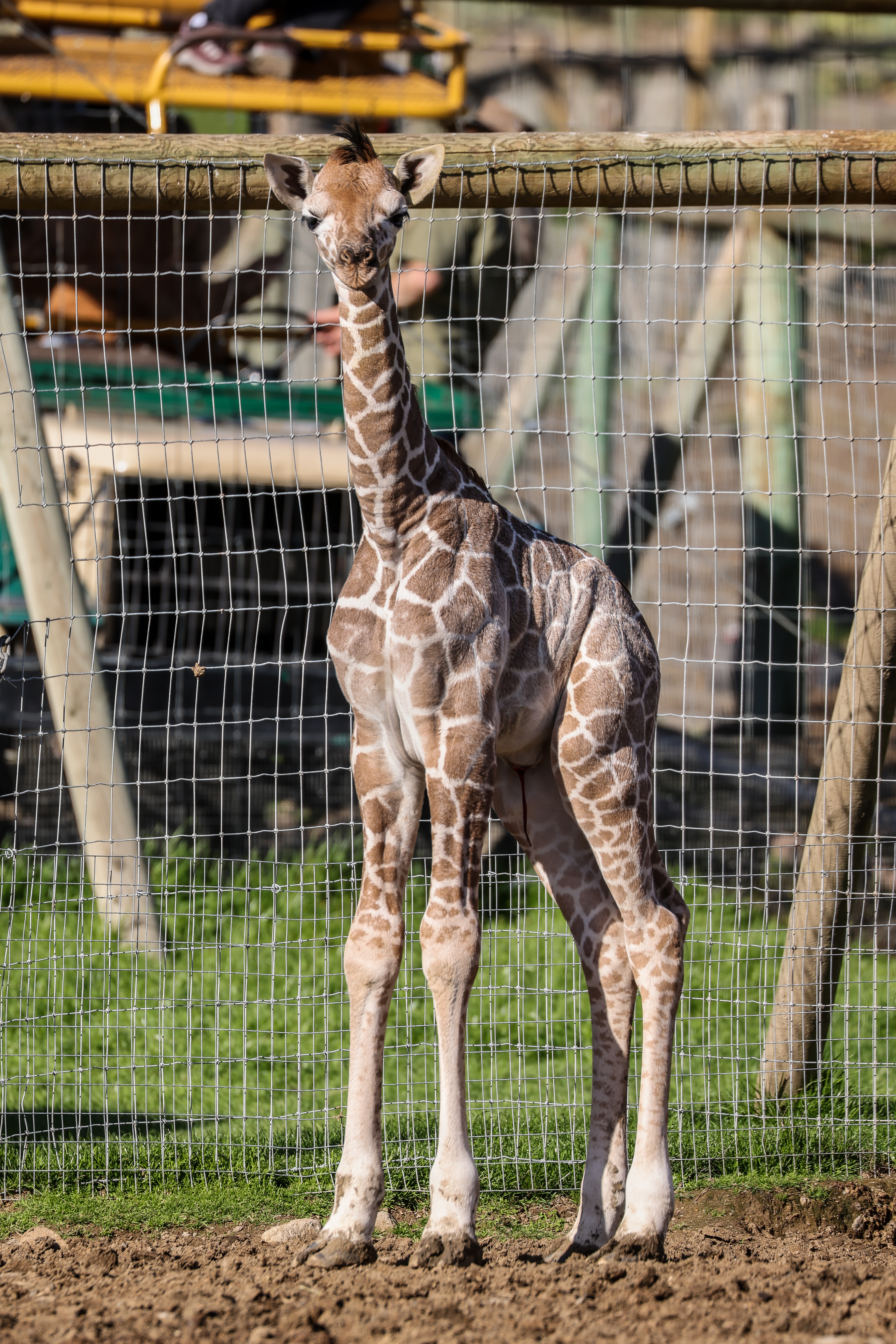
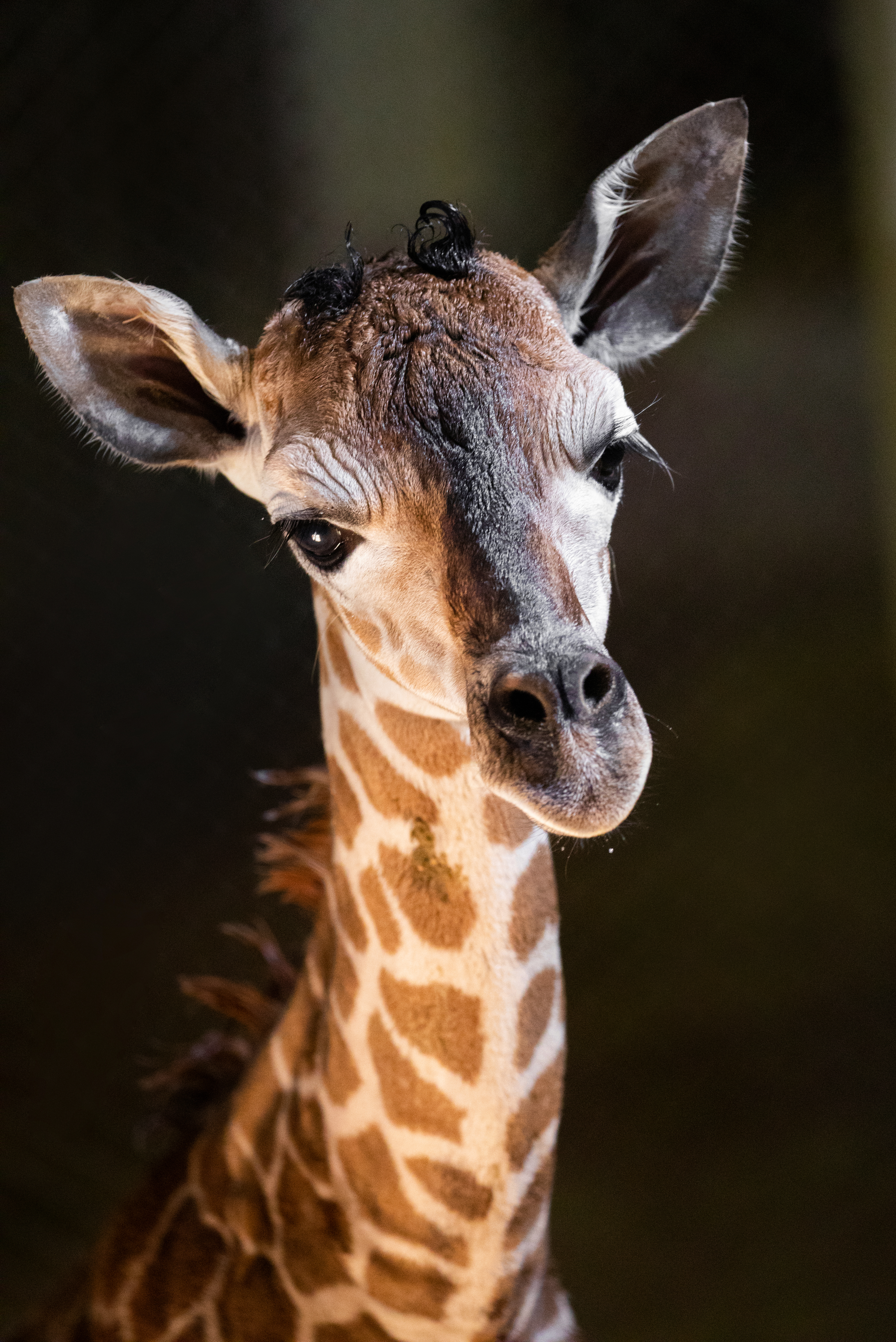
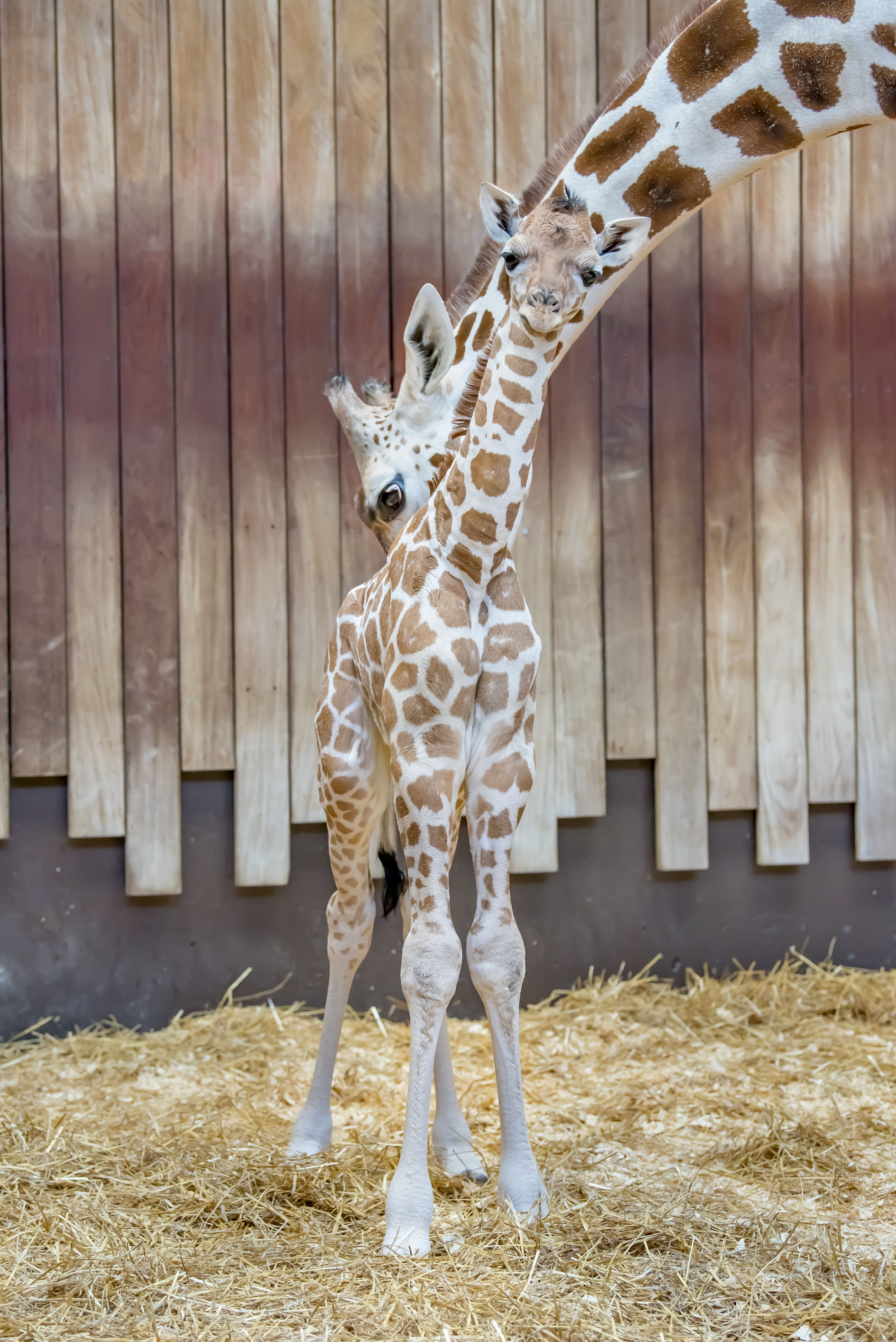
On February 13th, Safari West welcomed a brand new baby giraffe born there on the Sonoma Serengeti. This 6-foot newborn tips the scales at 130 pounds and is ready to meet his fans! There’s just one problem. He needs a name!
Always one of the most famous and recognizable of Africa’s mammals, the lovely giraffe has recently become a conservation issue as well. Although most people still don’t know it, giraffes have sadly found themselves on the Endangered Species List! More than ever before, we need to focus attention on the study and conservation of this unique species. The giraffes at Safari West have served as ambassadors for their species for decades and continue to inspire and educate tens of thousands of human visitors every year. Safari West looks forward to this newest arrival continuing the tradition with the next generation of conservationists.
Zoo Knoxville had two happy surprises for the holidays – the births of both an endangered mountain zebra and a baby giraffe! The zoo had just welcomed a silvered leaf langur infant on November 30th as well.
The Zebra foal was born December 23rd to parents Lydia and Die Toekoms, and is the first mountain zebra to be born in Knoxville. The baby is nursing and healthy. The foal’s gender is yet to be determined as zoo staff are giving Lydia and the baby time to bond.
Zoo Knoxville is one of only 18 zoos in the country who work with this species as part of the Hartmann’s Mountain Zebra Species Survival Plan, a collaboration of zoos accredited by The Association of Zoos and Aquariums to save them from extinction. Native to southwest Africa, mountain zebras are vulnerable to extinction due to habitat loss due to farming and livestock production. It is estimated that only 8,300 remain in the wild.
On the following day, Christmas Eve, Frances the giraffe gave birth to a healthy baby boy.
Frances and her new calf are being given time to bond in the barn with the zoo’s other female Lucille and father Jumbe. The team of caretakers will be monitoring the calf closely to make sure it is getting enough nourishment and gaining strength.
When staff is confident Frances and the calf are ready, they will begin giving them access to controlled space outside when temperatures are warm enough for the baby to be out safely. This is the second giraffe birth at Zoo Knoxville in 18 years. This is also the second offspring for Frances and Jumbe. The two were paired on the recommendation of the Giraffe Species Survival Plan, a collaboration of zoos accredited by The Association of Zoos and Aquariums working to save giraffes from extinction.
The population of wild giraffes has declined dramatically over the last few years, and now there are fewer than 100,000 giraffe left in Africa. They are threatened by habitat loss, competition with growing human populations and being hunted for bushmeat. With a recent 40% decrease in their populations, giraffe are now critically endangered. This calf will help ensure a healthy giraffe population for the future conservation of his species.
Knoxville’s Langur troop has a bright orange baby as its newest member! The infant was born on November 30 to parents Lucy and Walter, and is the second langur baby to be born in Knoxville since the zoo began working with the species in 2017.
The infant is healthy and nursing and being closely monitored to ensure it continues to thrive. Langur babies will keep their striking coloring for three to six months, then begin to transition to darker fur like the other members of their group. It has not been determined if the yet-to-be-named infant is a boy or a girl.
The zoo’s family of silvered leaf langurs, made up of males Walter and Opie, and females Teagan, Melody, and Lucy, will all help care for the infant, a social practice called allomothering. The baby will be on public view in the Langur Landing indoor viewing room in a few weeks.
Zoo Knoxville is part of the Silvered Leaf Langur Species Survival Plan, (SSP), which is a collaborative national conservation program in U.S. zoos accredited by by The Association of Zoos and Aquariums.
On 4 November, a giraffe was born at Basel Zoo, which had been waiting for the birth for several days. Everyone is delighted to see that the mother, Sophie, and Rohaya are both doing well.
The female calf was born to mother Sophie (9) in the antelope house in the late afternoon, at 4:34 p.m. Precisely one hour later Rohaya stood up on her long, wobbly legs for the first time. The baby’s father is Xamburu (11).
Sophie is an experienced mother. However, this birth at Basel Zoo required a bit of patience: almost three weeks passed between the first signs that Sophie was about to give birth and the actual arrival of the little one. At this point, things went quickly, and the little one slipped elegantly (as is usual for giraffes) from a height of two metres onto the bed of straw prepared by the zoo keeper.
The antelope house is currently being renovated, so visitors can only see the mother and child when they spend time outside. The house is scheduled to reopen in December. The giraffe group in the antelope house is now made up of five animals.
Endangered subspecies of giraffe
Basel Zoo has been keeping Kordofan giraffes since 2011. Unlike all other subspecies, Kordofan giraffes only have small, irregular spots on their inner legs. They are classified as critically endangered by the IUCN. There are only around 1,400 of these animals left in the wild, and their numbers are declining. Kordofan giraffes can be found in Chad, northern Cameroon, the Central African Republic and possibly also in western Sudan. Loss of habitat, wars and hunting have particularly affected their numbers, meaning that zoos play a very important role in maintaining genetically healthy populations.
Kordofan giraffes are rather rare in zoos: of a total of 394 zoos that record their data in the Zoological Information Management System (ZIMS), just 22 have this subspecies of giraffe. This means only 88 of the 2,029 giraffes kept by zoos are Kordofan giraffes. Every single new birth is vital in keeping zoo populations genetically healthy. Giraffes living in zoos provide an opportunity to show visitors that the creatures are increasingly rare in their natural habitat. There are only around 68,000 giraffes remaining in the whole of Africa.
INDIANAPOLIS — At 4:35am Nov. 8, the Indianapolis Zoo welcomed the birth of a male reticulated giraffe. The calf weighed 137 pounds and stood about 6 feet tall at birth. He is already growing and will be several feet taller before his first birthday.
The newborn is the first calf for 3-year-old mother Kita. Following a 14-month pregnancy, female giraffes give birth standing up. While their arrival into the world is somewhat abrupt, newborn giraffes are extremely resilient and are typically up on their feet in less than an hour. Zookeepers said the calf is curious, following close behind mom and nursing well. The other members of the herd have shown interest in interacting, even licking the calf through the stall fence.
Native to Sub-Saharan Africa, giraffes bear a beautiful coat of brown spots that helps provide camouflage on the arid plains. While every giraffe’s pattern is unique, the Zoo’s youngster currently takes after his father, 10-year-old Majani, with his lighter, caramel-colored patches.
The tallest mammal on land, giraffes are one of Africa’s most iconic species, yet they are still vulnerable to extinction. To support a healthy population of animals in human care, the Zoo maintains an active giraffe breeding program through the Association of Zoos and Aquariums’ Species Survival Plan.Like all of the Zoo’s animals, this newborn will be an ambassador and help to raise awareness for conservation of the species.
The Zoo’s giraffe herd, which is now up to five, will spend much of the winter inside its climate-controlled indoor facility. The new family is expected to make its debut in the spring, and at that time, guests will have an opportunity to meet members of the herd up close during public feeds.
Cleveland Metroparks Zoo today launched a naming opportunity for its male giraffe calf to help support giraffe conservation efforts in the wild.
To participate in the naming opportunity, guests can cast a vote online at clevelandzoosociety.org or by visiting the Welcome Plaza at Cleveland Metroparks Zoo to make a donation for one of the following names:
Kendi, meaning loved one Nuru, meaning light Zuva, meaning day or sun
"The pandemic has had wide-ranging impacts on our world, including on many of our conservation partners we support abroad that help protect vulnerable species like giraffe,” said Dr. Chris Kuhar, Executive Director of Cleveland Metroparks Zoo. “By helping us name our newest giraffe calf, you are also supporting our conservation partners in their efforts to protect giraffe populations in Africa."
Each of the names are unique to giraffes’ native regions in Africa, where their population has decreased by nearly 40% over the last 15 years. The current global giraffe population is estimated to be less than 80,000.
Cleveland Metroparks Zoo’s partnership with the Giraffe Conservation Foundation helps protect giraffes by addressing poaching and illegal snaring, translocating animals to secure endangered populations, and also conducting studies on population and disease. Each year the Zoo, in partnership with the Cleveland Zoological Society, provides more than $650,000 in direct support to global conservation efforts, which have been significantly impacted by the COVID-19 pandemic.
The naming opportunity will conclude at midnight on Thursday, November 5. All donations received will support conservation programs, including programs that protect giraffe.
The new giraffe calf was born on October 13 to mom, Jhasmin, and dad, Bo. The calf was born weighing approximately 150 pounds and standing nearly six feet tall.
For more information on Cleveland Metroparks Zoo and its conservation efforts visit FutureForWildlife.org.
Bailey, an 8-year-old reticulated giraffe at Cheyenne Mountain Zoo, welcomed her very first calf to the herd at 11:37 a.m. yesterday, September 28. Bailey and the female giraffe calf are doing well. Following Cheyenne Mountain Zoo tradition, the calf will be named after she is 30 days old.
“You couldn’t ask anything more of a first-time mom,” said Jason Bredahl, giraffe animal care manager at CMZoo. “Bailey is nonstop grooming her baby, paying attention and making sure the baby is in a good position to nurse. Mom is doing a great job.”
The little calf is doing well, too. She’s already winning the hearts of CMZoo staff and online fans.
“This is probably the smallest giraffe calf I’ve ever seen,” said Bredahl. “Bailey is small for a giraffe, too, so that’s not surprising. She’s super adorable. She’s strong and is nursing well, so we’re really excited to share her with everyone as soon as we can.”
At first, the calf had a hard time standing because she had positioned herself in a corner of the stall and she kept bumping into the walls before she could get her footing. After waiting to see if she could get up on her own, keepers and vet staff asked Bailey to move into another area so they could give the calf a hand. The team picked her up and moved her into the middle of the stall around 1:27 p.m. She took her first steps on her own after a quick medical assessment, then a nudge from mom, at 1:38 p.m. As long as keepers observe that baby and mom are doing well, they will continue to let Bailey take the lead on providing her care.
The weight and height of the calf are not known yet, although keepers and vet staff say she is one of the smallest giraffe calves they’ve ever seen. Newborn giraffe calves are typically five to six feet tall and weigh 150 to 200 pounds. Exact measurements haven’t been taken, but this calf appears to weigh about 100 pounds and is around five-and-a-half feet tall.
The calf is the seventeenth member of Cheyenne Mountain Zoo’s reticulated giraffe herd. The calf is the first offspring for mom, Bailey, and the sixth to be sired by dad, Khalid (pronounced cull-EED). Bailey moved to Cheyenne Mountain Zoo on a breeding recommendation in Sept. 2016. CMZoo’s breeding program began in 1954 and has welcomed more than 200 calves since its inception.
Thousands of worldwide viewers witnessed the calf’s birth on Cheyenne Mountain Zoo’s live camera feed, which will continue to stream live from the sand stall, where Bailey and the calf will continue to bond for the coming weeks. The live stream of the birth stall, and both outdoor giraffe yard camera feeds, are available at cmzoo.org/giraffecam. The Zoo will continue to provide updates on their social media channels.
The barn will remain closed to guests for at least another day, to give the new calf time to bond with mom. Other members of the CMZoo herd will be available for viewing and feeding in the outside yard from elevated platforms, where guests can get eye-to-eye with and feed lettuce to the herd, weather permitting.
Cheyenne Mountain Zoo is not only a leader in the training and health of giraffe in human care, but they are also making a huge difference in conservation of giraffe in the wild. Reticulated giraffe, the subspecies to which CMZoo’s herd belongs, are endangered. There are just over 11,000 mature reticulated giraffe individuals in the wild, and that population is decreasing. According to International Union for Conservation of Nature’s (IUCN) Red List of Threatened Species, the reticulated giraffe population has declined by 56% in the last thirty years.
In October and November 2019, CMZoo helped establish a new population of a critically endangered giraffe in Uganda. The Operation Twiga IV team successfully reintroduced 15 Nubian giraffe to Pian Upe Wildlife Reserve, where they haven't existed in nearly 25 years. CMZoo VP of Mission and Programs, Dr. Liza Dadone, assisted with research and anesthesia, and provided care for the giraffe during the translocation. Our contribution to this effort is possible thanks to ongoing support from CMZoo members, guests and donors. Operation Twiga IV is led by Uganda Wildlife Authority with support from Giraffe Conservation Foundation, Colorado State University Veterinary Teaching Hospital, Cheyenne Mountain Zoo and other partners from around the world. See a video about the Zoo’s latest field conservation effort, Operation Twiga IV, here.
Through Cheyenne Mountain Zoo’s Quarters for Conservation program, by which 75 cents of every Zoo admission is allocated to conservation, guests have helped CMZoo send more than $3 million to support important conservation efforts since 2008.
Keepers at Taronga Western Plains Zoo are delighted by the arrival of a female Giraffe calf born in the early hours of the morning on Wednesday 1 July 2020.
The calf has been named Layla by her keepers, meaning born overnight in Swahili. Layla is the fifth calf for experienced mother Asmara and was sired by Unami.
“Layla is doing very well so far, she is a very confident calf and is already following the herd around rather than sitting in a secluded area of the paddock like most newborn calves,” said Giraffe Keeper Jack Foley.
“Visitors over the school holiday period were very lucky as she was out on exhibit with the herd from one day old, so lots of people saw her in those first couple of weeks as she was finding her feet.”
“Giraffe calves are like any other newborn, active for a period of time and then resting. The best time to see Layla is in the mornings when she is generally more active,” said Jack.
Taronga Western Plains Zoo has a successful history breeding Giraffe and has become the region’s breeding powerhouse for the species. The Zoo often transfers Giraffe to other Zoos throughout Australia. Recently a mother and calf were transferred to Taronga Zoo, Sydney and three males were transferred to the African Savannah exhibit in Dubbo to join the bachelor herd.
The gestation period for a giraffe is 14 – 16 months. Giraffe numbers have been declining in the wild over the past decade with the global population falling up to 40 per cent in the last 30 years as a result of poaching for bush meat and habitat encroachment.
Taronga is active in supporting the plight of Giraffes in the wild, with a well-established partnership with Biliqo-Bulesa Conservancy, one of the largest community conservancies under the umbrella of the Northern Rangelands Trust (NRT). The conservancy has improved wildlife security in important animal populations including Giraffe, among other species, by creating a safer ground for their movement and improving rangeland health.
Taronga Western Plains Zoo now has 11 Giraffe in the main breeding herd and another seven Giraffe in the bachelor herd on the African Savannah.
The Milwaukee County Zoo proudly announced details of a Reticulated Giraffe birth on July 13. The new youngster marks the third giraffe calf born at the Zoo in the last three years.
The male was born to mom, Ziggy, and dad, Bahatika (also known as Baha). This is Ziggy and Baha’s third calf together; Tafari was born in 2015, and Kazi was born in 2017. This newest calf has been named Desmond.
Photo Credits: Milwaukee County Zoo
Zoo veterinarians completed Desmond’s first exam, and they recorded an initial weight of about 152 pounds and a height of approximately 5 feet 7 inches tall.
It was reported that the calf got his balance quickly after birth, seemed very strong, and was able to stand up within 55 minutes of birth. Ziggy was also said to be an attentive mother.
Ziggy is 9-years-old, and arrived at the Milwaukee County Zoo in 2013 from Disney’s Animal Kingdom. Bahatika is 14-years-old, and arrived at MCZ in 2006 from the Cheyenne Mountain Zoo in Colorado.
The Zoo currently houses seven giraffes: adults Bahatika, Marlee, Ziggy, Rahna; youngsters Kazi and Maya; and the newborn.
Giraffes are the tallest land animals, and are typically between 14-19 feet tall and weigh between 1,750-2,800 pounds. Giraffes use their long necks to reach leaves and buds in trees that other herbivores can’t reach.
Of the nine subspecies of giraffes, two are considered endangered: the Reticulated and the Masai.
In the wild, the Reticulated Giraffe population has dropped by 80 percent in the last decade and the Masai Giraffe population has dropped by nearly 50 percent in the last three decades. However, all giraffe populations are declining, with hunting and habitat loss as the major threats. Due to their current status, every giraffe birth is very important for the population.
Zoo Miami's newest baby Giraffe recently made her exhibit debut!
The female calf, which was born on July 22, walked out onto the exhibit with her mother and other members of the herd, curiously exploring her new surroundings. The newborn had been held inside a holding area with her mother to give them time to bond and to allow staff to slowly introduce her to the herd.
Photo Credits: Zoo Miami
Shortly after birth, she received a neonatal exam where, in addition to a general physical, she was weighed, had her blood collected and received a microchip for identification. She weighed in at 149 pounds and is the fourth baby born to Sabra, her nearly 9-year-old mother. The father is a 6-year-old named Titan. This is the 56th Giraffe born in the zoo's history!
Giraffe have a pregnancy of approximately 15 months, and the mother rarely, if ever, lies down while giving birth. The baby falls about 4-6 feet to the floor where it receives quite an abrupt introduction to the world! Newborns stand nearly 6 feet tall at birth.
The status of the Giraffe in the wild has recently been elevated from a “Least Concern” to “Vulnerable” by the International Union for the Conservation of Nature (IUCN) due to significant reductions in their populations over the last several years.
Baby Giraffe Hasani was born with rear leg abnormalities that prompted Woodland Park Zoo staff to fit him with custom-made shoes to improve his condition. A few weeks later, he upgraded to newer shoes and went outdoors for the first time.
Now, his legs have improved and he no longer needs corrective shoes. He still wears kinesiology tape to stimulate and stabilize his leg muscles.
Photo Credit: J. Laughlin/Woodland Park Zoo
Immediately after Hasani’s birth on May 2, the zoo’s animal health team noticed each rear foot was not in normal alignment. The condition, known as hyperextended fetlocks, is well documented in horses and has been reported to occur in Giraffes. One day after the Giraffe was born, the zoo’s animal health team applied casts on both rear legs to help stabilize his limbs.
The zoo’s veterinary team consulted with a Kentucky-based equine veterinarian who specializes in foot conditions. He visited the zoo to evaluate the calf, and crafted new custom shoes based on the zoo’s specifications and a modified design he has used to successfully treat numerous foals with the same condition.
After a few weeks, one of the shoes dropped off and Hasani appeared to be walking well without it so the staff did not intervene. Later that week, the veterinary staff removed the other shoe and cast material. “We’re pleased to report there is marked improvement in both rear limbs. Hasani’s walking well and continues to readily stand and lie down. He remains active like a calf his age should. We will continue to closely observe his gait, foot position, any limb and foot changes, energy and nursing,” says Dr. Tim Storms, associate veterinarian.
The baby Giraffe continues to wear kinesiology tape to help stimulate and support his leg muscles. “If his condition regresses, we’re prepared to outfit him with another pair of shoes but we’re optimistic we won’t have to. So far he’s showing remarkable progress,” adds Storms.
Hasani made his debut to zoo visitors a couple weeks ago. Since then, he has been introduced to Tufani, his aunt and Dave, his dad. Hasani remains curious and active, according to his care team.
Hasani's parents, Olivia and Dave, were paired under a breeding recommendation made by the Giraffe Species Survival Plan, a cooperative, conservation breeding program across accredited zoos to help ensure a healthy, self-sustaining population of Giraffes. Woodland Park Zoo participates in 111 Species Survival Plans, overseen by the Association of Zoos & Aquariums.
Giraffes are widespread across southern and eastern Africa, with smaller isolated populations in west and central Africa. New population surveys estimate an overall 40 percent decline in the Giraffe population; fewer than 100,000 exist today. Of the currently recognized subspecies of Giraffe, five have decreasing populations, while three are increasing and one is stable.