The Newest, Cutest Baby Animals from the World's Zoos & Aquariums

Category: Kangaroo & Wallaby

  • ,

    Wildlife Hospital_Red Kangaroo joey (1)

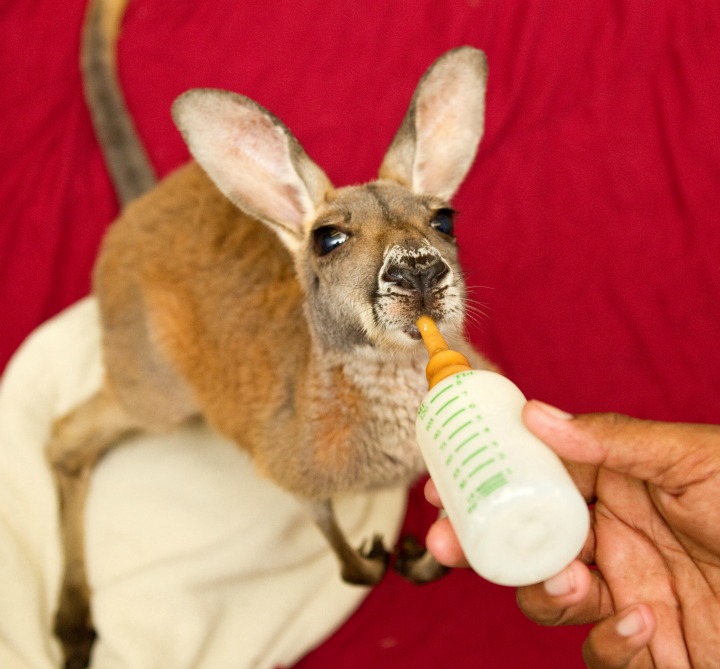
    Workers at the Taronga Western Plains Zoo in Australia are currently hand raising a Red Kangaroo joey after it was found orphaned in the wild. The little joey was brought to the zoo's Wildlife Hospital where veterinarians examined the youngster to ensure its health. It was then assigned a vet nurse who will act as a surrogate mother. This surrogate will help the joey thrive and grow for the next few months until it is ready to be released back into the wild.

    Wildlife Hospital_Red Kangaroo joey (2)

    Wildlife Hospital_Red Kangaroo joey (3)
    Photo Credit: Taronga Zoo

    The Red Kangaroo, endemic to Australia like all kangaroos, is the largest mammal found on the Australian continent. The species is very abundant across the majority of the country and is currently listed as a species of "least concern" by the IUCN.

    Related articles

    Taronga Zoo Sees Double with Birth of Two Critically Endangered Foals
    Meet Jarrah the Quokka Joey from Taronga Zoo
    Meerkat Pups Emerge From the Den at Taronga Zoo
    Tree Kangaroo Joey Pokes It's Head Out of Mother's Pouch
  • ,

    Joey 1

    Jarrah is a six-month-old Quokka joey being hand-raised at
    Taronga Zoo by Keeper Kristal. Kristal was delighted to become a surrogate mum after the youngster left
    its mother’s pouch too early. At this age, the joey is tiny and needs full time care. 

    For the next few months, wherever Kristal goes Jarrah will go too. By day Jarrah stays in a specially set-up nursery with
    a bag that mimics a pouch which the youngster can hop in and out of. While
    Kristal is doing office work, Jarrah likes to be extra close, curling up near
    Kristal’s chest. This makes little Jarrah feel extra secure.

    Joey nose

    Joey stand

    Joey 2

    Photo Credit: Taronga Zoo

    Read about Jarrah's nighttime care, and see more pictures, after the fold:


    (more…)

  • ,

    Kangaroo Joey-5

    Two Western Grey Kangaroos born at Brookfield Zoo have
    been spending time outside their mothers’ pouches exploring their outdoor
    habitat. The young Kangaroos, called joeys, were born on February 20 and March
    13 of last year to moms Daisy, 7½, and Sheila, 11.

    Kangaroo Joey-8

    Kangaroo Joey-1

    Kangaroo Joey-2
    Photo Credit: Jim Schulz/Chicago Zoological Society
     

    The 10- and 11-month-old joeys only recently began hopping
    around and exploring their surroundings. They spent the first several months of
    life tucked into their mothers’ pouches, where they nursed and grew.  They will continue to nurse until they are 18
    months old.  Of course by then, they’ll
    no longer be able to fit in the pouch.

    At birth, a joey is extremely underdeveloped and is about
    the size of a jellybean. During this early stage of development, a mother
    produces low-fat milk for her young, and as a joey gets older and ventures out
    of the pouch, the milk becomes high in fat. A truly amazing attribute of this
    species is that if a mother Kangaroo is nursing a newly born joey and a
    juvenile already out of the pouch, she has the ability to produce both low-fat
    milk and high-fat milk at the same time.

    Western Grey Kangaroos are one of 60 species of Kangaroos
    and Wallabies, all of which are native to Australia. 

  • ,

    Wallaby head 1

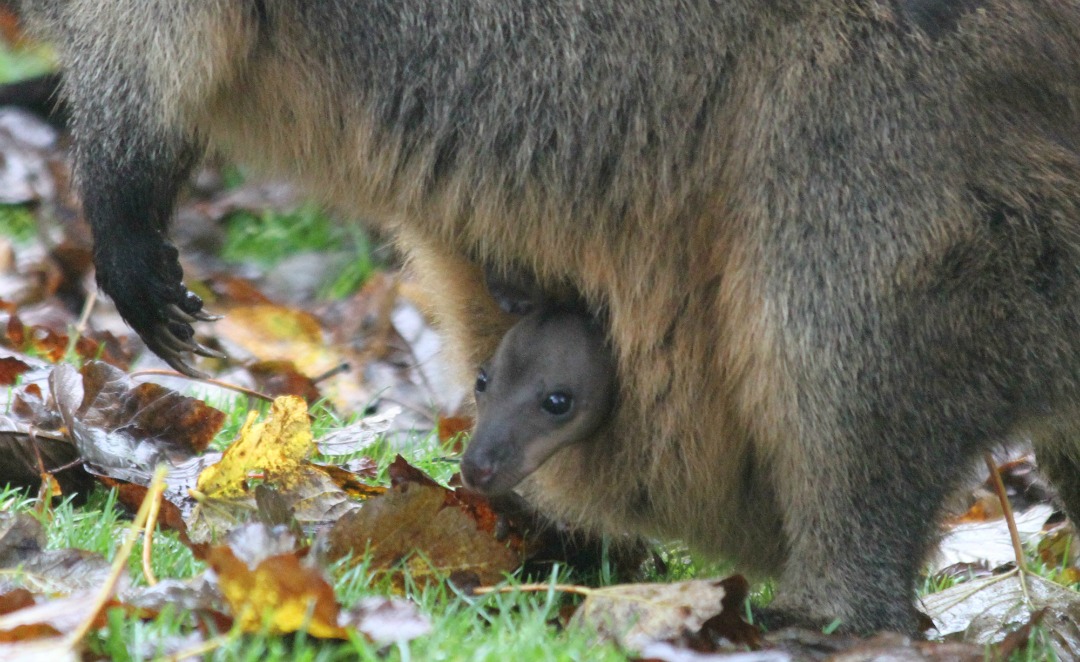
    New babies have Edinburgh Zoo jumping for joy, as the three bouncing bundles have
    been welcomed into the Swamp Wallaby enclosure. Whitson
    Woods, home to the Zoo’s group of Swamp Wallabies, is hopping with Wallaby
    joeys as a trio of new moms – Darri, Allora and Arinya – welcomed their
    newborns in July. At just under four months old, the Wallaby youngsters will
    remain securely snuggled in their moms pouch for a while to come, although a
    small head or foot can often be spotted peeking out!

    These
    marsupials have a very short gestation period of around 33 days, after which
    mom gives birth to a tiny, hairless, pink joey. The joey then moves into the
    pouch where it will develop fully over the next eight months. After
    that time, the joey will only return to the pouch if it senses danger.

    Members
    of the Kangaroo clan, Swamp Wallabies are natives to Eastern Australia.
    Wallabies may be slightly smaller than their relatives, but they have the same characteristic
    long tail which is similar in length to their body. Ideal for balancing, along with large feet and strong hind
    legs, their tails enable them to hop great distances — up
    to ten feet.

    Wallaby 2

    Wallaby 3


    Wallaby 4 meh
    Photo Credits: Katie Paton

    Lorna
    Hughes, hoof stock keeper at Edinburgh Zoo, said, “We’ve had great success when
    it comes to our Swamp Wallabies, and theses newest joeys are really exciting
    for us. We won’t be able to sex them and name them until they emerge fully.

    Hughes added, "It
    will be great in a few months’ time when these joeys take their first few hops
    out and about!”

  • ,

    337391_490809350932257_98326318_o

    Meet Peggy, Anzac, and Cupcake. Not only are all three Marsupials, but they were all orphaned when motor vehicle accidents claimed the lives of their mothers. It's difficult to know their exact ages, but Australia's Wild About Wildlife Rescue Center estimates that Peggy the Wombat and Anzac the Eastern Grey Kangaroo were 3 – 4 months old when they came into care. Cupcake the Swamp Wallaby was about 5 months of age. They are all fed a low lactose milk formula.

    277918_477478965598629_1169496270_o

    326218_490816807598178_1158815675_o

    414721_490808780932314_1192446347_o

    615627_490810387598820_2134151421_o

    193316_490808400932352_366603308_o
    Photo credit: Wild About Wildlife

    As you can tell from these images, the trio gets along splendidly, and Cupcake the Wallaby is particularly active these days. "When you are looking for her, you don't bother looking on the floor, you look up to see what piece of furniture she is about to launch herself from," reports Wild About Wildlife founder Alistair Brown. The rescue center's intention is to release them to the wild when they are old enough.

  • ,

    431003_475055882519363_526437264_n

    This little Tree Kangaroo Joey has been getting a glimpse of the world for a few weeks now, much to the delight of all at Beauval Zoo. Among the 4600 animals at the zoo, there are many species that
    are rare, threatened, or unique in France. Their Tree
    Kangaroos are one, and Mom Ruby can be seen on exhibit with the little reddish-brown head — and sometimes a pair of paws — of her look-alike baby sticking out of her pouch. 

    Tree Kangaroos are marsupials like koalas, but are very different from their terrestrial cousins. Kangaroo joeys are born roughly the size of a lima bean and crawl from the birth canal to the warmth and safety of their mother's pouch. There they lock on to a teat and spend an average of between six to eight months growing, until one day their little noses peek out into the world. It's thought this baby began that process in late January. He is the only joey of his kind born in 2012, giving hope to this species which is
    threatened in the wild.

    303577_475056022519349_38755930_n

    561671_475056032519348_1137242542_n

    549497_475055535852731_436701674_n
    Photo Credit: Zoo de Beauval 

  • ,

    Face

    The staff at the National Zoological Gardens of South Africa recently stepped in to assist a
    young Red Kangaroo joey that was rejected by its mother. Norvy, as the joey has affectionately been named, is the first
    baby for this mom and it’s believed that something must have startled her, causing her to
    scoop the joey out of her pouch. She wouldn't allow her joey back in, and the youngster was too uncoordinated, weak and young to climb back into the pouch on it's own.

    When the joey was was found abandoned in the Kangaroo enclosure, she was immediately
    rushed to the zoo’s veterinary hospital where her body temperature was stabilized. Under normal circumstances, Norvy would need to stay in the pouch for another 1-2 months before peeking out, so she now has her own home-made, heated pouch in which to cozily complete that time. Norvy is fed a special milk mixture from a bottle every two to three hours and is doing very well.

    Nurse top

    Nurse

    Normally, Kangaroos have a gestation period of 35 days where the underdeveloped joey crawls out of the birth canal, up the mom's stomach and into the pouch. There the joey attaches to one of the teats, which then swells in the joey’s mouth to prevent it from letting go of it. The joey will spend between five and six months in the pouch until it is old enough to venture out on its own. Once little Norvy is weaned and eating solids well, she will be introduced back into the family group through a safe step-by-step introduction program.

    Joey 1

    Photo Credit: National Zoological Gardens of South Africa

  • ,

    Nurse 2

    The newest Kangaroo joey at Busch Gardens in Tampa, Florida, was recently named Louis by his keepers. He currently weighs less than 10 pounds and spends most of his day in the pouch of his mother, Lulu. When he becomes confident enough to spend the majority of his day outside of the pouch, he will join the kangaroo mob at Walkabout Way. These babies are all currently being raised by their parents in private areas and they will soon be welcomed to guest viewing areas around the park.

    Kangaroo babies are "born" months before they look like this. After a gestation of only 30-35 days in a hairless, underdeveloped state and find their way into mom's pouch where they continue to grow and nurse for about 10 months before they begin to leave it's safety for short periods. They may hop out but return there until they are fully weaned – at about 13 months.  

    Nurse 1

    Joey profile

    Joey face

    Photo Credit:Busch Gardens

  • ,

    Hug

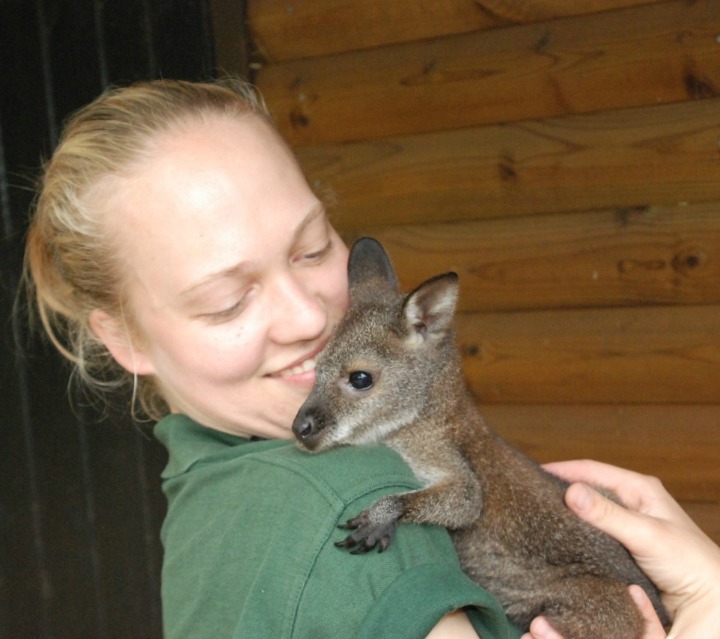
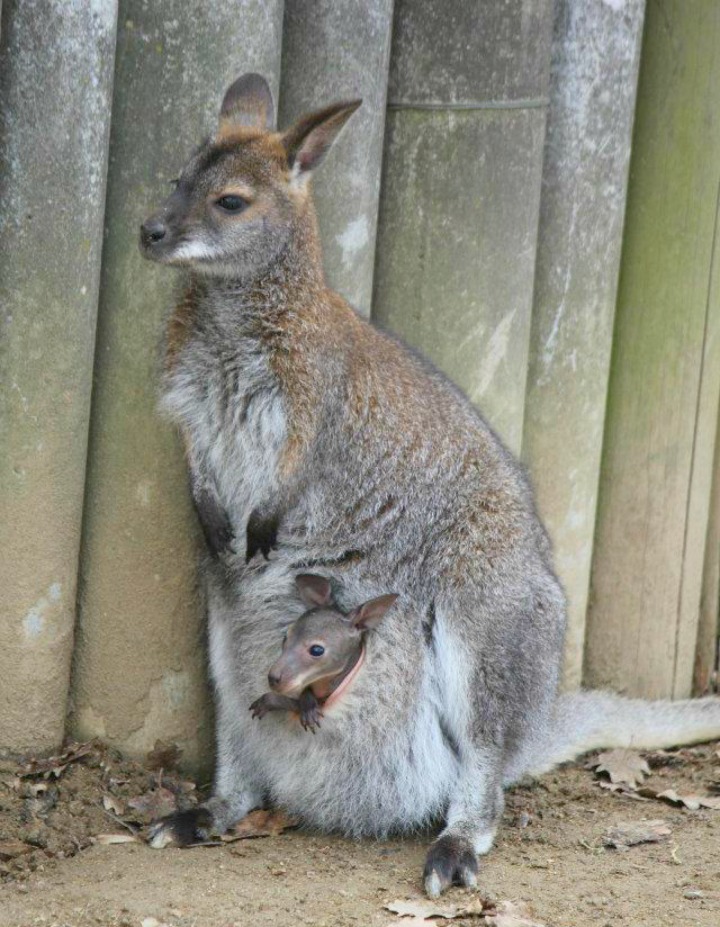
    Wilbur the Red-necked Wallaby has found happiness with a new family after his birth mother tragically passed away while he was still in the pouch. He has been ‘adopted’ by another female at Blackpool Zoo, which is an extremely rare occurrence among marsupials.

    Keepers came to work on June 16 to find Wilbur in the pouch of his mother, who had died during the night. They immediately removed him and the decision was taken to hand-rear him. Senior mammal keeper Sofie Fawzy took Wilbur home and fed him at three hour intervals for eleven days before the team decided to mix him with other members of the group for interaction.

    Another mother and baby were already in a separate area of the Wallaby Walkabout so the orphan was gradually introduced. Keepers were amazed to see that after just two days Wilbur was feeding from the female and getting on with well with the other joey. The situation was very closely monitored and keepers continued to weigh Wilbur to ensure he was gaining weight at a satisfactory speed. Wilbur and his new family will remain cordoned off from the rest of the group as they continue to bond, but should be out and about in the Wallaby Walkabout in the coming month.

    Nose

    Feed

    Mom
    Photo Credit: Blackpool Zoo

    Read more of the wallaby baby story after the jump:

    (more…)

  • ,

    Peek

    A little head peeked out from it's mother's pocket on an early spring day at ZOO Brno in the Czec Republic. This Kanagaroo Joey seemed ready for the camera and its close up as it inadvertantly struck several charming poses while snug in mom's pouch.

    Kangaroo babies are "born" months before they ever get to be this size and peek out of the pouch like this. As marsupials, they come into the world after a gestation period of only 30-35 days in a hairless, underdeveloped state and find their way into mom's pouch where they continue to grow and nurse for about 10 months before they begin to leave it's safety for short periods. They may hop out but return there until they are fully weaned – at about the 13 months.

    Roo hand

    Roo 1


    Mom 2

    Mom 1
    Photo Credit: Zoo Brno