The Newest, Cutest Baby Animals from the World's Zoos & Aquariums

Category: Zoo Brno

  • ,

    The Black-tailed antenna ray (Plesiotrygon nana) is an extremely sensitive species of small ray with a long, fibrous tail. Only five zoos in the whole world breed them and only the Czech Republic’s Brno Zoo can boast a recent breeding (the parents are from Zoo Basel in Switzerland). One pup was born about six months ago, but because this species has a relatively long critical period after birth, Brno can only report the success now. There are now two more new pups in the exhibit and officials already know that they are females.

    Plesiotrygon nana2

    (more…)

  • A young Common Brush-tailed Possum was filmed trying to get a bite of Mom's snack recently at Czech Republic's Zoo Brno. Turn your sound up and caption this video for extra credit!

  • ,

    This Tiny New Big Hairy Armadillo at Zoo BRNO in the Czech Republic pup joins the ranks of Czech film director director Václav Marhoul, English singer Phil Collins and Welsh actor Christian Bale in celebrating their birthdays on January 30!  Welcome to the world baby Armadillo!

    273768404_4987891964582515_4841407663647923392_n

    MORE PHOTOS BELOW THE FOLD!

    (more…)

  • ,

    Arctic fox pups have been born at Zoo Brno in the Czech Republic!

    Zoo Officials at have counted 11 pups so far.

    At the time of this video release it was not certain if there were more.

    It’s possible that with so many pups popping in and out of the den that some were counted twice!

    The zoo will know much more at a forthcoming medical examination so stay tuned!

  • , ,

    Cropped 26233817_1636575376380874_2723612215188826601_o

    Two Endangered Sri Lankan Leopard cubs at the Czech Republic’s Zoo Brno had their first veterinary checkup last week.

    Born in November 2017 to female Nayana, the cubs – one male and one female – were proclaimed healthy and strong by the veterinary team. Each weighs a little over four-and-a-half pounds.  

    26173533_1636575439714201_4204586484020348069_o
    26173533_1636575439714201_4204586484020348069_o
    26173533_1636575439714201_4204586484020348069_oPhoto Credit:  Zoo Brno

    The cubs have spent their first weeks of life tucked into the den with Nayana, where they nurse, sleep, and play with each other.  They are the first Ski Lankan Leopard cubs to be born at the zoo in 17 years.

    Sri Lankan Leopards are one of nine Leopard subspecies recognized by the International Union for Conservation of Nature (IUCN).  (Some taxonomists recognize only eight Leopard subspecies.) Even though Leopards are considered highly adaptable and live in mountains, forests, deserts, and grasslands in Africa, the Middle East, and Asia, all Leopard subspecies are in decline. Sri Lankan Leopards are listed as Endangered by the IUCN, with the primary threats coming from loss of habitat, loss of prey species, and poaching for body parts.


    Related articles

    Meet the New Rookie Chicago Cubs
    Ten Little Nutrias Nibble at Zoo Basel – ZooBorns
    Christmas Morning Surprise for Nashville Zoo – ZooBorns
    Baby Giraffe Joins the Tower at Zoo Wroclaw – ZooBorns
  • ,

    1_ZooBrnoArcticWolves

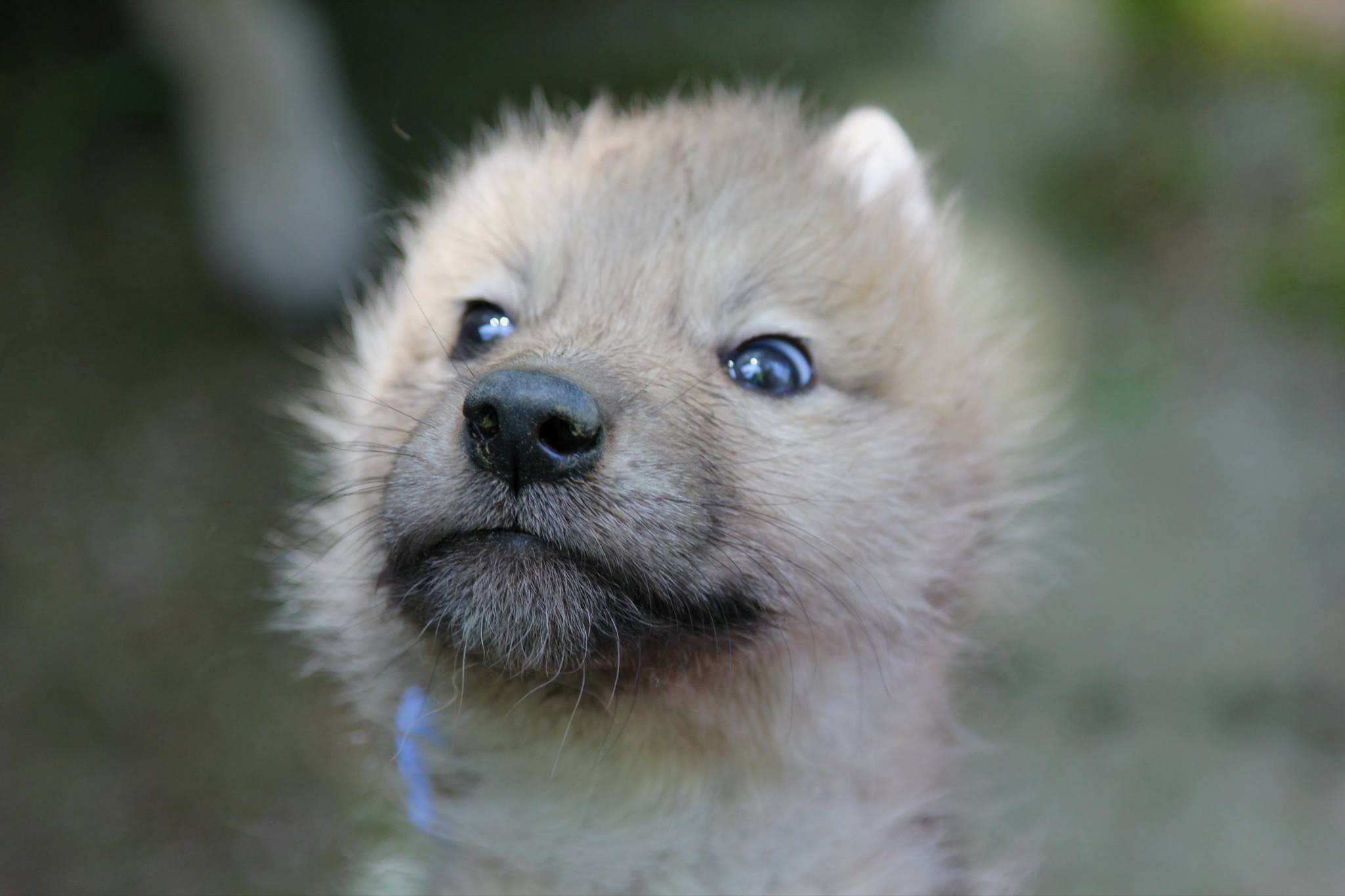
    Zoo Brno is home to five incredibly adorable Arctic Wolf pups. A male pup and four females were born just two-months-ago. The siblings can now be seen on-exhibit with their parents.

    2_ZooBrnoArcticWolves

    3_ZooBrnoArcticWolves

    4_Zoo Brno Arctic Wolf pupsPhoto Credits: Zoo Brno

    The Arctic Wolf (Canis lupus arctos), also known as the Melville Island wolf, is a subspecies of Gray Wolf native to the Canadian Arctic Archipelago, from Melville Island to Ellesmere Island.

    The Arctic Wolf’s medium-size distinguishes it from the Northwestern Wolf, which is smaller in comparison.

    They are carnivorous hunters, and by nature they help to control the populations of other animals in the region like the Musk Ox, Caribou and Arctic Hares.

    Unlike other species of Wolf, the Arctic Wolf rarely comes into contact with humans and is not threatened by hunting or persecution. However, industrial development is a threat as an increasing number of mines, roads, and pipelines encroach on its territory and interrupt its food supply.

    5_ZooBrnoArcticWolves

  • ,

    1_ZooBrnoPolarBearGirl_o

    It’s a girl! …The Polar Bear cub, born to mom Cora at Zoo Brno, had her first veterinarian exam, and staff confirmed the sex. The feisty female was born at the end of November 2015.

    The cub is now almost five months old, and the Zoo is ready to give her a name. Fans can offer suggestions, until April 10, via the Zoo’s facebook page: https://www.facebook.com/zoo.brno/

    The winning name will be announced, and the cub “Baptized”, on April 16!

    2_ZooBrnoPolarBearGirl_o

    3_ZooBrnoPolarBearGirl_o

    4_ZooBrnoPolarBearGirl_oPhoto Credits: Zoo Brno


    Zoo Brno keepers had a watchful eye on the new family, after the cub’s birth, via a nesting box cam. Staff had also been working on getting Cora accustomed to necessary health checks, which would enable a successful inspection of the cub.

    (ZooBorns shared news, photos, and video of the cub’s birth in early March: "Zoo Brno’s Polar Bear Cub Sticks Close to Mom".)

    (more…)

  • ,

    1_ZooBrnoPolarBearCubAndMomCora

    Visitors to Zoo Brno will soon be able to catch a glimpse of their new Polar Bear cub.

    The cub was born to mom Cora at the end of November 2015. Until now, the two have been safely tucked away in their nesting box. However, at three-months-old, the new cub is ready to start exploring the exhibit.

    Keepers have had a watchful eye on the new family via a nesting box cam. Staff have also been working on getting the pair accustomed to necessary health checks. "First contact went well. Cora was a little nervous, but this is important to gradually get them used to human presence and allow veterinary inspection of the baby, "says keeper, Jaroslav Jasinek.

    2_ZooBrnoPolarBearCubAndMomCora

    3_ZooBrnoPolarBearCubAndMomCoraPhoto Credits: Eduard Stuchlik


    Keepers currently do no know the sex of the new cub, but once they do, they will allow the public to assist in finding a name—thereby making the public, as a whole, the cub’s honorary ‘godparents’.

    Polar Bears are native to the circumpolar north, including the United States (Alaska), Canada, Russia, Norway and Denmark (Greenland). They are at the top of the Arctic food chain and primarily eat seals.

    Populations are declining due to the disappearance of sea ice, and experts estimate that only 20,000-25,000 Polar Bears are left in the wild. Some scientists believe if the warming trend continues, two-thirds of the Polar Bear population could disappear by the year 2050. They are currently classified as "Vulnerable" on the IUCN Red List.

  • ,

    1_11221981_927708450600907_4139699265522495075_o

    Three new, curious Meerkat pups recently emerged from their burrow, at Zoo Brno, in the Czech Republic.

    The trio was born about a month ago, and this was the first time mom allowed them to venture out of the den.

    2_11011715_927708467267572_5050065866095968274_o

    3_11794532_927708447267574_4350062682455508135_o

    4_11146319_927708453934240_2490181021340122698_oPhoto Credits: Zoo Brno

    The Meerkat (Suricata suricatta) is a small carnivoran belonging to the mongoose family. It is the only member of the genus Suricata. Meerkats are native to all parts of the Kalahari Desert in Botswana, much of the Namib Desert in Namibia and southwestern Angola, and South Africa.

    A group of Meerkats is called a “mob”, “gang”, or “clan”. A Meerkat clan often contains about 20 individuals, but some super-families have 50 or more members.

    The Meerkat is small, weighing on average about 1.1 to 5.5 lbs. (0.5 to 2.5 kg). Its body length reaches about 14 to 20 inches (35 to 50 cm). The Meerkat uses its tail to balance when standing and for signaling to others. Like cats, Meerkats have binocular vision, their eyes being on the front of their faces.

    At the end of each of the Meerkat’s ‘fingers’ is a claw used for digging burrows and searching for food. The claws are used in unison with their muscular hind legs to help climb trees. Meerkats have short parallel stripes across their backs, extending from the base of the tail to the shoulders. The pattern of stripes is unique to each Meerkat. The underside has no markings, but the belly has a patch that is only sparsely covered with hair and shows black skin underneath. This area is used to absorb heat while standing upright, usually early in the morning after cold desert nights.

    Meerkats are primarily insectivores but are known to eat lizards, snakes, scorpions, spiders, eggs, small mammals, plants, and fungi. They are immune to certain types of venom, including that of the scorpions of the Kalahari Desert. Meerkats forage, in a group, with a sentry on guard watching for predators. Baby Meerkats do not start foraging for food until they are about one-month old, and they are allowed to do so with another older member of the clan acting as a tutor.

    Meerkats become sexually mature at about two years of age and can have one to four pups in a litter. They are iteroparous and can reproduce any time of the year. The pups are allowed to leave their burrow at two to three weeks of age.

    The Meerkat is currently classified as “Least Concern” on the IUCN Red List of Threatened Species.

  • ,

    1_11699003_919117991459953_5853212468836498338_o

    On July 15, lucky visitors, to the African Village Exhibit at ZOO Brno, witnessed the birth of a Chapman’s Zebra!

    The foal was born, at the Czech zoo, to mom Arwen and dad, Elvis.

    2_11696273_919117988126620_6212390494441930601_o

    3_11143470_919118004793285_338292678757178078_o

    4_11033075_919117998126619_5975114748841858847_oPhoto Credits: Zoo Brno (Images 1 – 4); Marie Pilátová (Images 5 – 11)

    The Chapman’s Zebra is a subspecies of the Plains Zebra. Like their relatives, they are native to the savannah of northeast South Africa, north to Zimbabwe, west into Botswana, the Caprivi Strip in Namibia, and southern Angola.

    The Chapman's Zebra eats mainly grass and occasionally shrubs. They are currently at low risk status on the IUCN Red List, but like other animals, are still under threat because of habitat destruction and illegal poaching.

    Chapman's Zebra is distinguished by stripes on the lower halves of the legs, which break up into many irregular brown spots. The pastern is not completely black on the lower half. When foals are born they have brown stripes, and in some cases, adults do not develop the black coloration in their fur and keep their brown stripes. Males usually weigh 600–800 pounds and stand at 48–52" tall. Females approximately weigh 500–700 pounds and stand as tall as the males

    Like most members of the horse family, zebras, in general, are highly social. Their social structure, however, depends on the species. Like horses, zebras sleep standing up, and only sleep when neighbors are around to warn them of predators.

    Female zebras mature earlier than the males, and a mare may have her first foal by the age of three. Males are not able to breed until the age of five or six. Mares may give birth to one foal every twelve months. She nurses the foal for up to a year. Like horses, zebras are able to stand, walk and suckle shortly after they are born.

    Amazing pics of the birth, taken by Zoo Brno visitor Marie Pilátová, below the fold!

    (more…)