The Newest, Cutest Baby Animals from the World's Zoos & Aquariums

Category: Zoo Brno

  • ,

    11018657_854117824626637_5819711573834379319_o
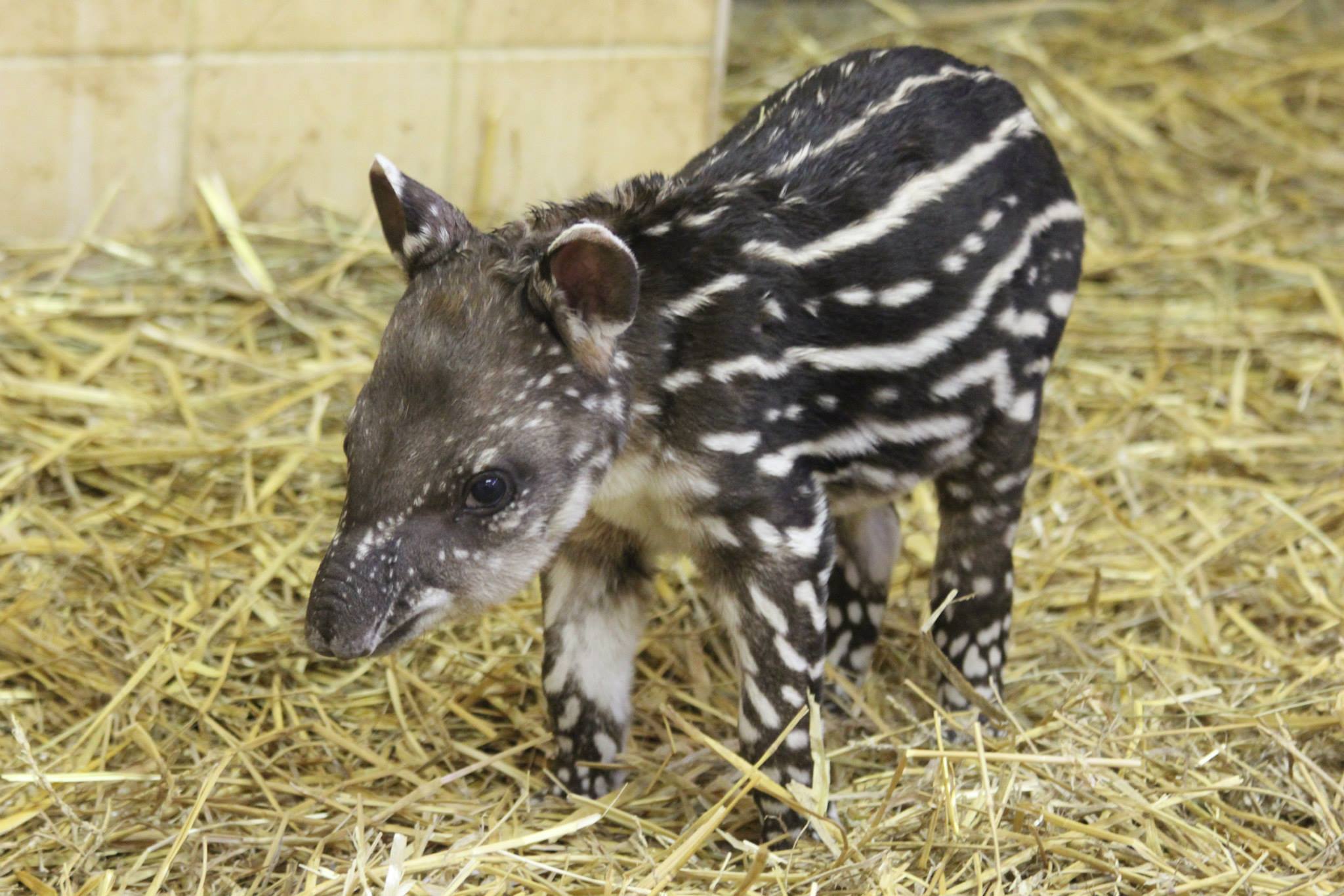
    A Tapir calf born on February 27 at the Czech Republic’s Zoo Brno made his media debut at the ripe old age of four days!

    10984550_854117977959955_8257358511108307751_o
    10995546_854117827959970_1002438799144254537_o
    10865951_854118047959948_2961697233514094174_oPhoto Credit:  Zoo Brno

    Known as Lowland or South American Tapirs, young calves of this species sport white stripes and spots, which offer excellent camouflage in the dappled shade of the forest.  As they grow, calves lose their spots and turn a solid grayish-brown color.

    Lowland tapirs rest in the forest during the day, and emerge at night to feed on leaves, bark, and fruits.  They are good swimmers, and will enter rivers to shed skin parasites or escape predators.

    Tapirs’ long, flexible snouts are their most unusual feature.  Called a proboscis, this snout is actually made up of the upper lip and nose.  The proboscis can grasp food and strip leaves from trees and small shrubs.

    In their native range, which covers large portions of eastern South America, Lowland Tapirs are listed as Vulnerable by the International Union for Conservation of Nature.  Tapirs are hunted for their hides and meat.  Loss of forest habitat also contributes to their decline.   

  • ,

    1421057_700541169984304_368019165559989762_o
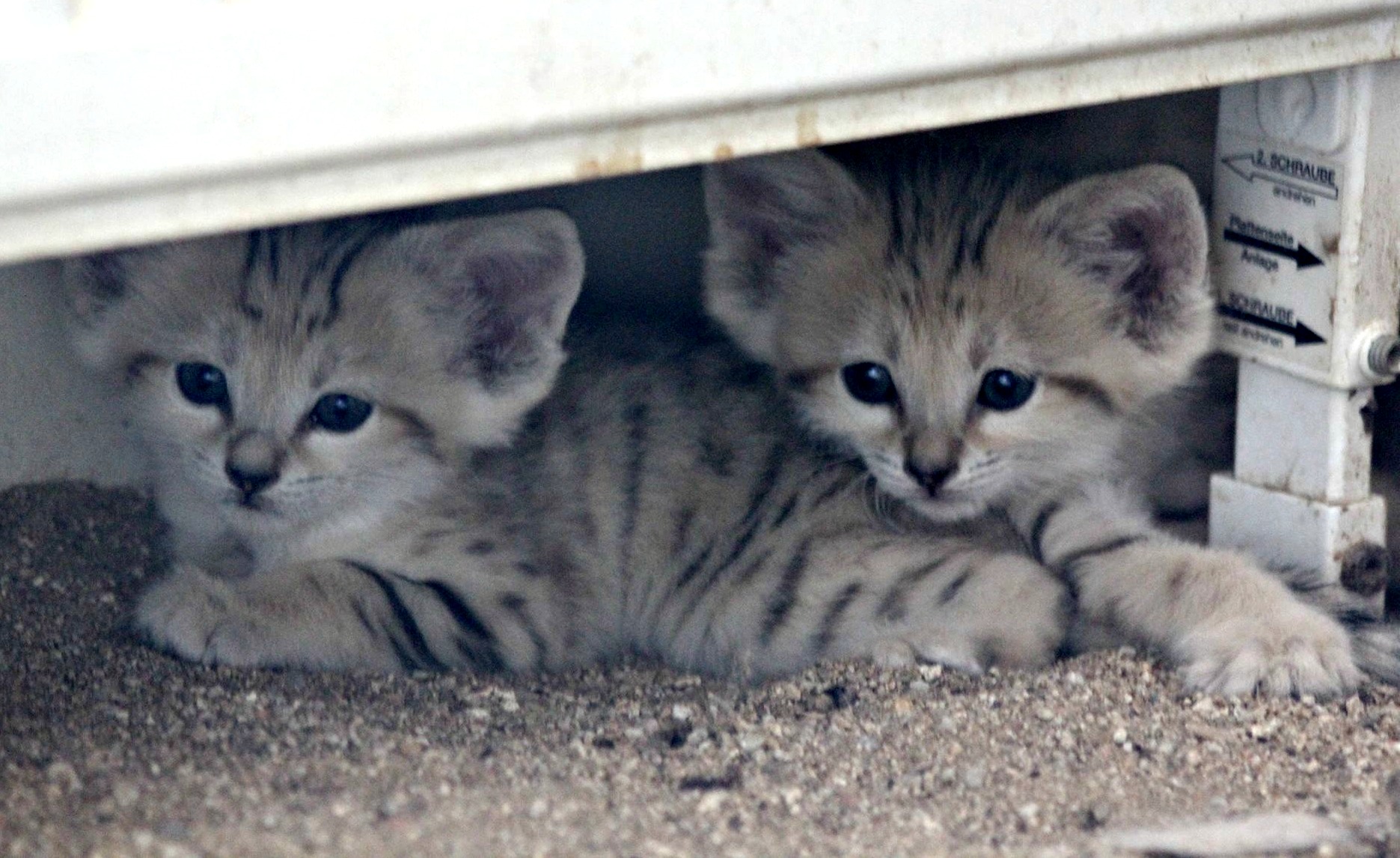
    A trio of Sand Cats was born in April at the Czech Republic’s Zoo Brno.  The genders of the kittens are not yet known. These petite cats weigh less than seven pounds (3.2 kg) as adults.

    10275349_700541159984305_5178219615188227307_o
    10256365_700541176650970_453199570361262445_o
    858694_700541166650971_2173688889268586653_oPhoto Credit:  Zoo Brno

    These cats are native to northern Africa and southwestern Asia.  They are the only wild cats living in true deserts, often far from water.  Thick fur protects their paws from the hot desert sand.  In extreme heat, they duck into burrows dug by foxes or porcupines, but they can also tolerate very cold temperatures. 

    Sand Cats hunt small rodents, primarily at night.  Their hearing is extremely well developed, allowing them to detect prey underground.  Studies have shown that Sand Cats travel three to six miles (5-10 km) each night in search of prey. 

    Though not currently threatened, Sand Cats live in fragile environments and are not legally protected within some countries.  They are bred in zoos as part of the European Endangered Species Programme.
  • ,

    68998_567419799963109_96593475_n

    A litter of Canadian Lynx triplets born in May at the Czech
    Republic’s Zoo Brno had a health
    checkup last week.  The three kittens –
    one male and two female – were proclaimed healthy by the zoo staff.

    1001878_568298236541932_1571239874_n

    993916_567419796629776_1624195930_n

    1016309_568298193208603_1804931528_n
    Photo Credit:  Zoo Brno

    Zoo staff gave the trio their vaccinations and implanted an
    identifying microchip in each youngster. 
    Catching the elusive kittens was a challenge, because they are so
    active!

    Canadian Lynx live in forested areas across all of Canada
    and Alaska.  Their large furry feet act
    like snowshoes to help them travel through deep drifts.  They feed primarily on Snowshoe Hares.  Though they are legally trapped for their
    fur, Canadian Lynx are listed as a species of Least Concern by the
    International Union for Conservation of Nature. Canadian Lynx are listed as
    Threatened by the U.S. Fish and Wildlife Service because they have been
    extirpated in many parts of their original Rocky Mountain range.

    See more photos of the triplets' exam below the fold.

    (more…)

  • ,

    Gir nose

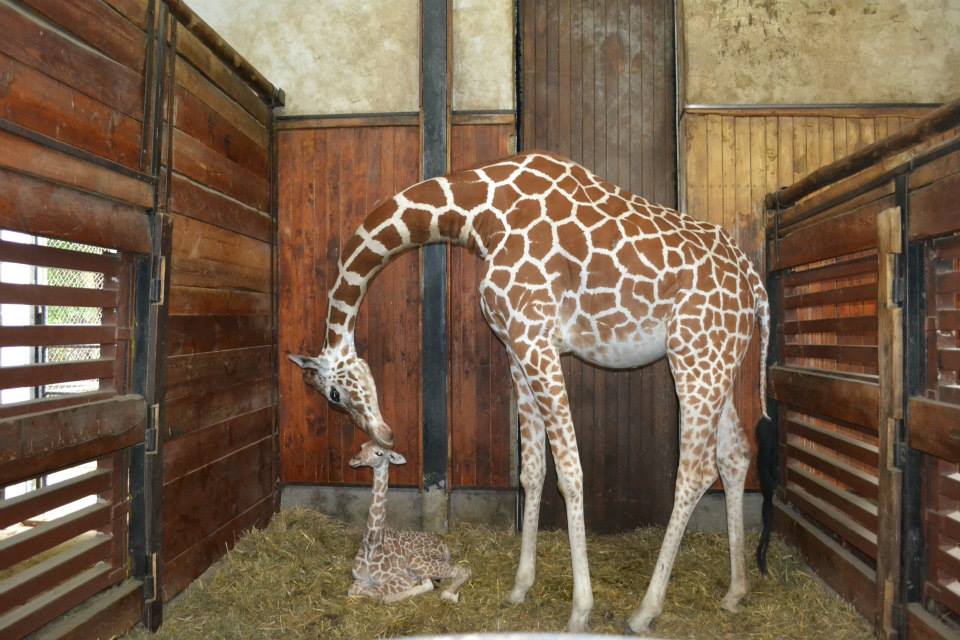
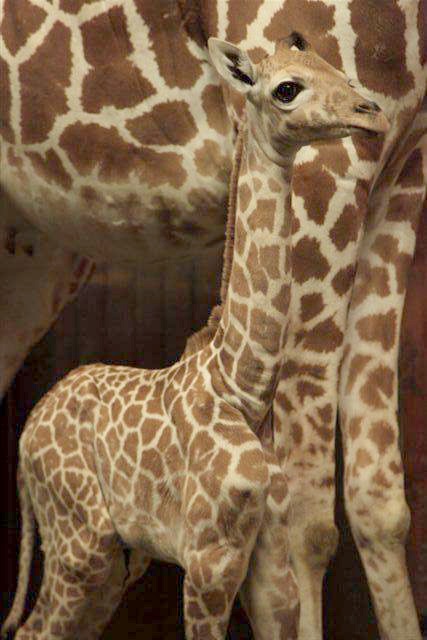
    This baby is a fighter! Born prematurely just over a week ago at Zoo Brno, this Reticulated Giraffe calf came into the world frail and weak. Though it began to suckle from its mother, it was not able to feed very well. It is vitally important that a calf get enough colostrum through the milk right away to develop its immune system. But under the constant supervision of its keepers and zoo veterinarians, the baby has gotten stronger, and the zoo can report the calf is slowly growing.

    So much so, that Mom Tosha and the baby stepped out into the yard to get a healthy dose of sunshine in rear garden within the Giraffe yard!

    Gir dark 1

    Gir dark 3

    Gir stand

    Photo Credit: ZooBrno

    The Giraffe is the tallest animal in the world. Males can average 19 feet (5.8 m) tall and weigh between 2,400 and 4,250 pounds (1,089-1,920 kg). Females measure up to 17 feet (5.2 m) tall and weigh between 1,540 and 2,600 pounds (698-1,179 kg). Much of the height is due to their long neck, which can be 8 feet (2.5 m) in length and can weigh almost 500 pounds – yet it's made up of only 7 bones, the same number as we have in our own. The little horns or cones on the top of their heads are used for sparring between males. Giraffe spots are as unique to each animal as our finger prints are to us. 

    See more pictures of the baby after the fold:

    (more…)

  • ,

    BrnoPolar1

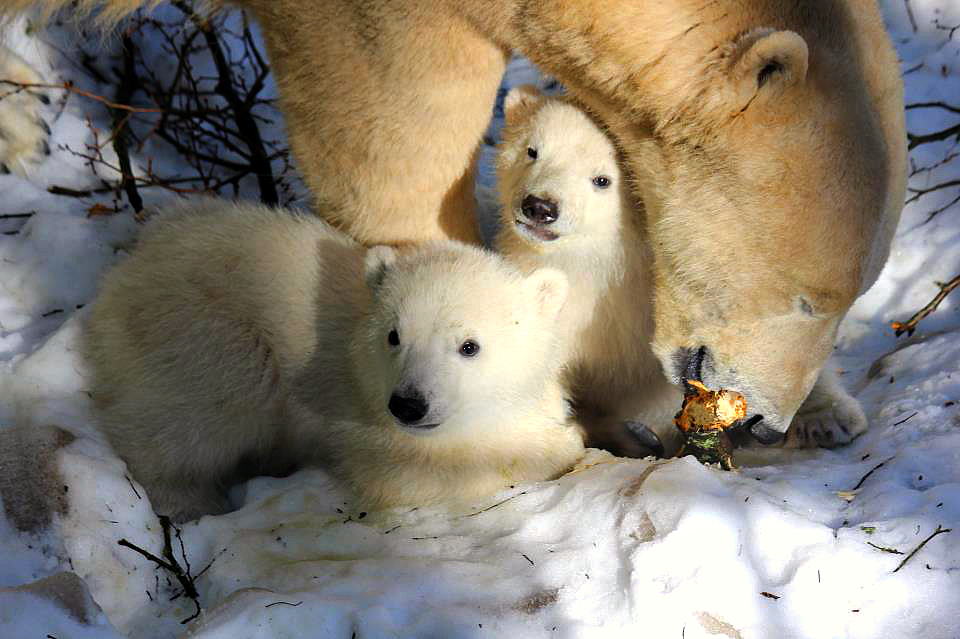
    We first reported on the Polar Bear cubs born at Zoo Brno HERE just last week. The duo have continued to grow and seem to still love harassing their mother Cora as much as ever. 

    Recently, the cubs received their first check up. During this routine examination the cubs were given their first round of vaccination as well as identification chips. In addition, veterinarians were able to use the opportunity to sex the cubs. It was determined that Cora had given birth to one male and one female cub. After their brief visit the cubs, who have still yet to receive names, were returned to their mother who was surely happy to be reunited with her offspring. 

    BrnoPolar2

    BrnoPolar3
    Photo credits: Zoo Brno

    See more photos after the fold!

    (more…)

  • ,

    BrnoPolar 2

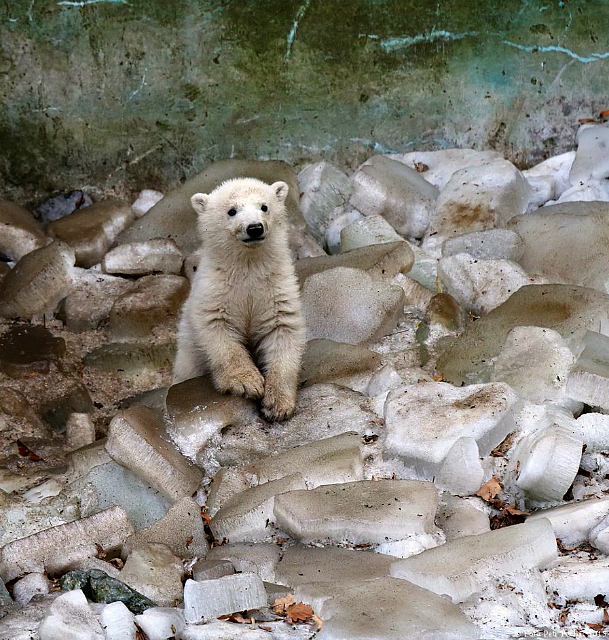
    Two young Polar Bear cubs have been winning over the crowds at Zoo Brno in the Czech Republic. Although they were born over four months ago on November 24th, the public have just recently been able to catch glimpses of this playful duo, as they have only been on display for the past two weeks. 

    The pair, a boy and a girl, were born to mother Cora. She has certainly had her paws full trying to keep a watch on the rambunctious siblings. They are very active and seem to have taken a liking to harassing their mother. They have not yet received names as the zoo is allowing the public to have a say in that decision through a poll on their website. Currently, the name "Nanuk" is in the lead for the little boy, and "Bella" is the lead for his sister. You can make your voice heard in the naming HERE.

    BrnoPolar2

    BrnoPolar4

    BrnoPolar3
    Photo credit: Zoo Brno

    See many more photos after the fold!

    (more…)

  • ,

    Tapir 5

    Celestýnka,
    a Brazilian Tapir born this fall at Zoo Brno in the Czech Republic, is getting
    plenty of exercise these days as he runs, jumps, and plays in his snowy outdoor
    enclosure.  The calf has grown
    considerably since he was featured on ZooBorns as a little newborn.

    Zoo
    Brno fans voted to name the chubby little calf, who was born to parents Cusco and Neny.  Celestýnka’s antics have made him a favorite
    with zoo visitors and staff, as well as a capybara that shares his enclosure (look for this large rodent in the photos).

    Tapir 3

    Tapir 6

    Tapir 1

    Xtapir 7
    Photo Credit:  Zoo Brno

    Brazilian Tapirs are native to the northern half of South America, where
    they roam the underbrush of rain forests in the region.  They are often found near waterways and are
    excellent swimmers.  Tapirs’ aquatic
    habits make them vulnerable to attacks by crocodiles and anacondas.  Jaguars and cougars prey on Tapirs sleeping
    on riverbanks. 

    Predators are not Tapirs’ only threats: Tapirs are listed as vulnerable to
    extinction due to large-scale habitat destruction and poaching for their meat
    and hide.

  • ,

    29791_447680845270339_964167064_n

    The big news at The Czech Republic's Zoo Brno is the arrival of a new born Brazilian Tapir. The calf's parents are named Cusco and Neny, and Zoo Brno has asked its fans what the baby's name should be. What do you think she should be named?

    Native to the lowland regions of northern and central South America, Brazilian Tapirs eat fruits, leaves, stems, sprouts, small branches, grasses, aquatic plants, tree bark, aquatic organisms, and cane, melon, cocoa, rice, and corn from plantations. They are considered vulnerable to extinction because of habitat destruction.

    298480_447680888603668_193241679_n

    292829_447680945270329_483679979_n

    2049_447680911936999_383156598_n
    Photo credit: Zoo Brno

  • ,

    Peek

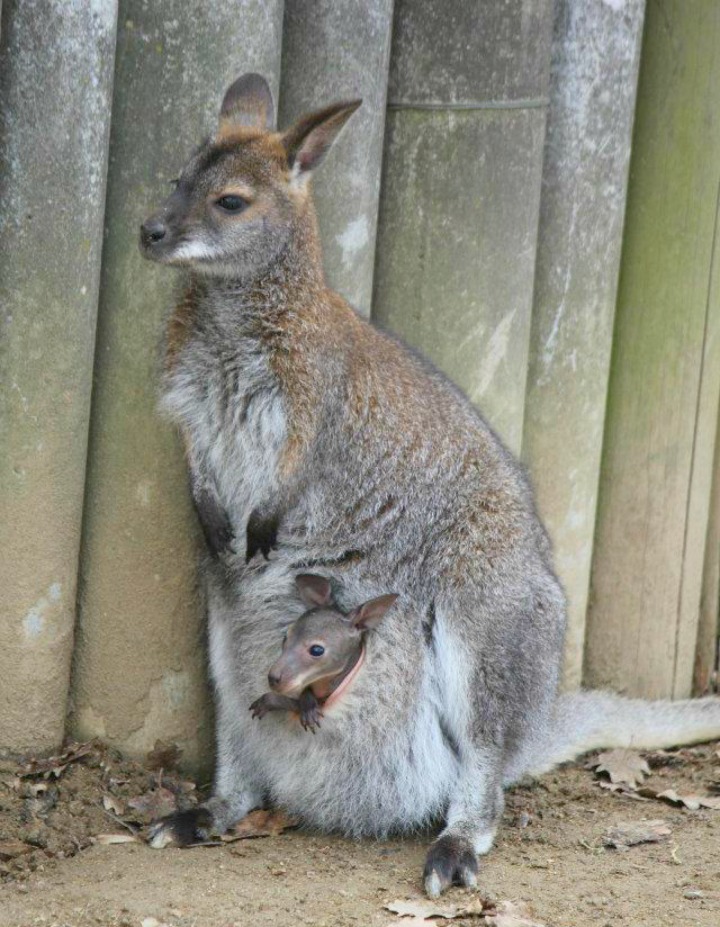
    A little head peeked out from it's mother's pocket on an early spring day at ZOO Brno in the Czec Republic. This Kanagaroo Joey seemed ready for the camera and its close up as it inadvertantly struck several charming poses while snug in mom's pouch.

    Kangaroo babies are "born" months before they ever get to be this size and peek out of the pouch like this. As marsupials, they come into the world after a gestation period of only 30-35 days in a hairless, underdeveloped state and find their way into mom's pouch where they continue to grow and nurse for about 10 months before they begin to leave it's safety for short periods. They may hop out but return there until they are fully weaned – at about the 13 months.

    Roo hand

    Roo 1


    Mom 2

    Mom 1
    Photo Credit: Zoo Brno

  • ,

    561225_374946135877144_139661239405636_997002_314728652_n

    On Thursday, two Kamchatka Brown Bear cubs made their first ever public appearance at Zoo Brno in the Czech Republic. The cubs received their shots, each was microchipped, and vets determined that the cubs are males. All this in a fifteen minute check up! Immediately after the check up and press debut, the cubs returned to their den where they'll remain until they are ready to roam their outdoor exhibit. The Kamchatka Brown Bear is a subspecies of the Brown Bear native to the Anadyrsky District, the Kamchatka Peninsula, Karaginskiy Island, the Kuril Islands, the coastal strip west of the Sea of Okhotsk southward to the Stanovoy Range and the Shantar Islands.

    577476_374950702543354_139661239405636_997004_1928155734_n

    466994_374670975904660_139661239405636_996279_1120038670_o

    462808_374640025907755_139661239405636_996235_58899432_o
    Photo credit: Zoo Brno / Martin Lukac