The Newest, Cutest Baby Animals from the World's Zoos & Aquariums

Category: Lemur

  • , ,

    E2

    Late last year, on November 29, The Duke Lemur Center welcomed, Elphaba, a baby Aye-aye. There have been 28 total Aye-aye births at the Lemur Center starting with the first in 1992. Elphaba weighed in at 586g just five days ago (pictured above at her exam). Little Elphaba is growing like a weed. Below are pictures of Elphaba back in late November at just three days old.

    According to the Duke Lemur Center's page about Aye-aye Lemurs:

    "Due to its bizarre appearance and unusual feeding habits, the Aye-aye is considered by many to be the strangest primate in the world. It is the world’s largest nocturnal primate. Unusual physical characteristics include incisors that are continually growing (unique among primates), extremely large ears, and a middle finger which is skeletal in appearance, and is used by the animal as a primary sensory organ."

    Ayeaye3

    Ayeaye1
    Photo credits: David Haring / Duke Lemur Center

    "Since a significant percentage of an aye-aye’s diet consists of insect larvae that dwell inside dead or living trees, the animals have evolved a specialized method for locating the larvae. As they walk along a branch, the animals continuously and rapidly tap it with their middle finger. Cupping their huge ears forward, the aye-aye listens intently to the echoing sounds coming from the tapped tree. When the sound indicates they are above an insect tunnel, the animals begin to tear off enormous chunks of the outer bark with their impressive teeth, until the insect tunnel is revealed. Then the aye-aye inserts its slender and highly flexible third finger into the hole, and when the prey is located, it is hooked with the tip of the finger and removed."

  • ,

    Nero_Hero

    The Maryland Zoo in Baltimore is pleased to announce the birth of a second male Coquerel’s Sifaka (CAHK-ker-rells she-FAHK) baby born on Saturday, November 12, 2011, almost nine months to the day that his older brother Otto was born.  “We observed changes in Anastasia which made us suspect she might be pregnant, but we were not sure if it was just wishful thinking on our parts so soon after Otto’s birth,” stated Mike McClure, general curator.  “We are very pleased to see that the baby is healthy, and to observe that the Sifaka family is bonding quite nicely in a quiet off exhibit area for now.”

    Nero_2

    Nero_3

     
    Photo and video credits: The Maryland Zoo

    More pics below the fold…

    (more…)

  • ,

    Lemur baby 1

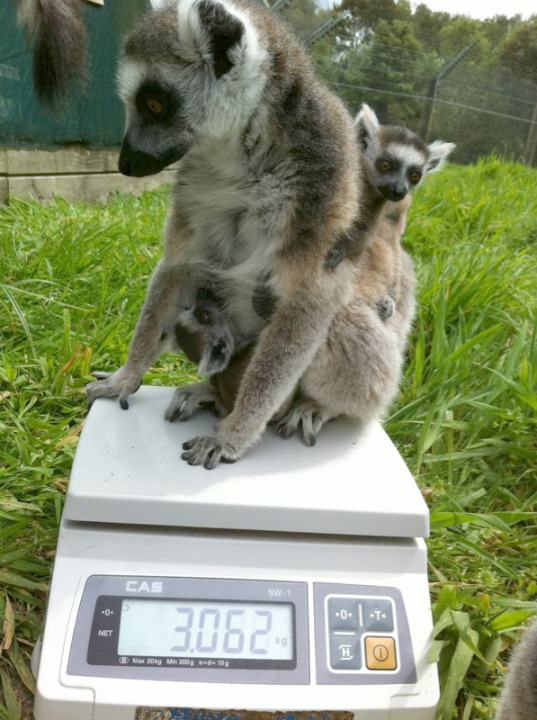
    These little Ring-Tailed Lemur twins are the newest residents at Hamilton Zoo in New Zealand. The babies were born on October 10 to parents Rachel and Bruce. It is not the first time the couple have welcomed twins after becoming parents to Julian and Josie on August 20, 2010.

    Hamilton Zoo Director Stephen Standley said the two new additions are creating quite a stir within the lemur group. “The twins are quite active and vocal, and the other ring-tailed lemurs are very interested in these new arrivals. Rachel is extremely attentive to the twins and make sure she keeps a close eye on what the pair gets up to,” he said.

    Lemurs are primates found only on the island of Madagascar in Africa, and some of the small, nearby islands. Lemurs use their hands and feet to move through the trees, but can't grip with their tails as other primates may. Ring-tails also spend time on the ground, which is unusual among lemur species, foraging for fruit, which makes up the bulk of their diet. They supplement that with flowers, leaves, tree bark, and sap. Ring-tailed lemurs are endangered, mostly because the forests they call home are quickly vanishing.

    Lemur babies 1

    Lemur babies 2

    Weigh
    Photo Credit: Hamilton Zoo

  • , ,

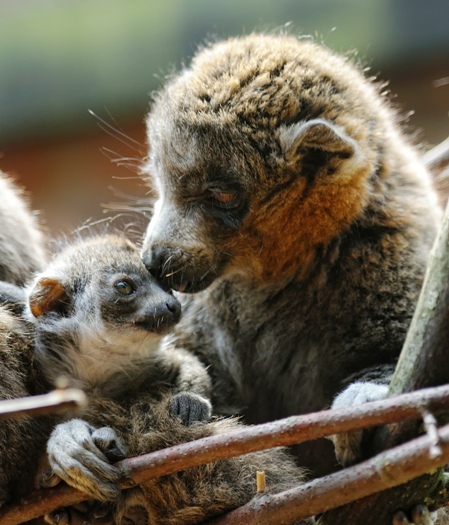
    Mongoose Lemur baby born Linton Zoo 13.05.11 shown at two months old (5)

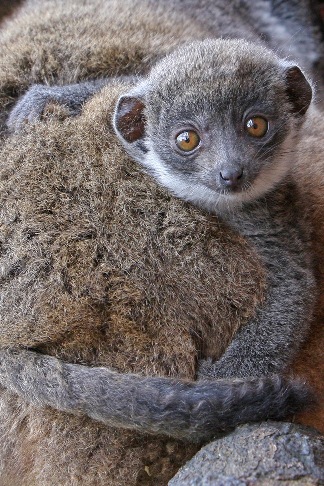
    Born May 13th at the UK's Linton Zoo, this rare baby Mongoose Lemur, named "Tia," has just begun to adventure about her exhibit. Both Mum "Maggie" aged 16, and 21 year old dad "Henry" are clearly pleased with the new arrival. "Megan" their five year old daughter is as excited as any sibling would be. She too is helping out with the daily care of her new sister and as well as having a boisterous new play mate, she is gaining lots of essential parental skills ready for when she too becomes a mum.
    Mongoose Lemur baby born Linton Zoo 13.05.11 shown at two months old (4)

    Mongoose Lemur baby born Linton Zoo 13.05.11 shown at two months old (1)

    Like all lemurs, Mongoose Lemurs are native to Madagascar. However unlike all but one other lemur species, Mongoose Lemurs can also be found outside of Madagascar on the Island of Comoros. 

    A special European breeding programmed aimed at saving this species from from extinction is managed at Linton Zoo. Careful co-ordination and constant monitoring of the European population with recommendations on various husbandry techniques and diets is beginning to pay off and Linton Zoo is very proud to successfully breed this wonderful lemur again. This baby is the first born in the captive population for over four years! 

    Mongoose Lemur baby born Linton Zoo 13.05.11 shown at two months old (2)

    More outstanding photos below the fold.

    (more…)

  • , ,

    Baby-Gentle-Lemur-(2)

    Marwell Wildlife is celebrating the birth of one of the most endangered species of Lemur in Madagascar. Wild Alaotran Gentle Lemurs (Hapalemur griseus alaotrensis) are only found inhabiting the reed beds around Lake Alaotra in Madagascar. Marwell Wildlife, which is part of the conservation breeding programme, currently has five Alaotran Gentle Lemurs. John Pullen, the charity’s curator of mammals, said: “The youngster seems to be doing very well and Lelafo is a great mum, who is very protective. We are uncertain of its sex at this stage because we keep our distance to make it as natural as possible for them. Once we know the baby’s sex the animal keepers will find it a suitable Madagascan name.”

    Cute-gentle-lemur

    Gentle-Leumr-Marwell-2

    Gentle-Leumr-Marwell
    Photo credits: Marwell Wildlife

    What follows is a video compilation featuring this Gentle Lemur as well as several other species born recetnly at Marwell including a Grevy’s Zebra, Capybaras, Saki Monkeys, Ring-Tailed Coatis, and a Scimitar Horned Oryx.


  • , ,

    2011_070_019

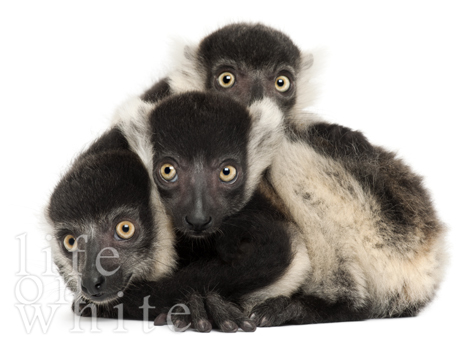
    Life On White, the crack photo team which brought us classic photo spreads like that of Marvin the Spider Monkey, is back with a brand new edition. In April, Erik and the L.O.W. team photographed three Black-and-white-ruffed Lemur babies.  The photos were taken when the triplets were just two months old. They are being successfully reared by their Mother at the Mulhouse Zoo in France.

    2011_070_059

    2011_070_110

    2011_070_029

    2011_070_041

    2011_070_065

  • ,

    Baby lemurs  ll09 web
     
    A new pair of baby ring-tail lemur twins were born at Durrell Wildlife Conservation Trust on March 28, 2011, to proud parents Muriel and Hannibal. The babies are usually with mum, clinging to her belly to start.Over the last few weeks they have begun climbing on her back so that they can take a good look at their surroundings. Dad Hannibal has been seen grooming the babies and sitting with his arm around Muriel. In just a short time the twins have grown quite a bit — and gotten very active!

    Baby Ringtails w mum

    Baby lemurs ll06 web

    Solo lemur clings ll05 web

    (more…)

  • ,

    2 on back CU

    Two fuzzy, bright-eyed ring-tailed lemurs were born on Saturday, May 14, 2011 at Bioparc Valencia in Spain. Within a few hours, early morning visitors to their habitat could see them clinging to their mother's belly. This is the third set of babies for their ten year old mom, who has been at Bioparc Valencia since 2007. Ring-tail lemur babies usually spend their first two weeks of life grasping their mother's abdomen before they switch to riding on her back. 

    Belly 2

    2 & 2

    Floor
    Photo credits: Bioparc Valencia

    (more…)

  • , ,

    Cleveland-red-ruffed-lemurs-6

    Cleveland Metroparks Zoo announces the birth of two Red-ruffed Lemurs, the second litter for mom Vari and her breeding partner Toros. The twin girls, named Carina and Cassiopeia, were born May 8 and are on exhibit with their mom in the Zoo’s Primate, Cat & Aquatics building. While the twins currently spend a lot of time in their nest box, they get braver every day and will soon venture out to explore the rest of their exhibit.

    Cleveland-red-ruffed-lemurs-5

    Cleveland-red-ruffed-lemurs-2

    Cleveland-red-ruffed-lemurs-1

    Cleveland-red-ruffed-lemurs-3

    Red-ruffed Lemurs (Varecia rubra) are a critically endangered species native to the island nation of Madagascar off the southeastern coast of Africa. They are active throughout the day, and are characterized by their loud, peculiar sounding vocalizations. Red-ruffed Lemurs in the wild face increasing habitat deforestation, in addition to hunting and commercial exportation. Cleveland Metroparks Zoo participates in the Association of Zoos & Aquariums’ Species Survival Plan for red-ruffed Lemurs as well as the SSPs for ring-tailed, mongoose, crowned and collared lemurs.  SSP programs identify population management goals and make recommendations to ensure the sustainability, health and genetic diversity of those populations.

    (more…)

  • , ,

    Maryland-Zoo-Lemur

    The Maryland Zoo in Baltimore is welcoming its newest arrival – a male Coquerel’s Sifaka (CAHK-ker-rells she-FAHK) baby born on Tuesday, February 15, 2011.  “This is a highly significant birth for the Sifaka population in North America,” stated Mike McClure, general curator.  “There are only eight accredited zoos that house the 50 Coquerel’s Sifaka in the U.S. and this tiny baby represents 2% of the total captive population in the country.”

    Maryland-Zoo-Lemur2
    Photo and video credits: Maryland Zoo

    The Maryland Zoo’s Sifaka pair, Anastasia, age 7 and Gratian, age 8 are the first time parents of baby Otto, which was born sometime between 9:00 am and 10:00 am on February 15.  His birth weight was 100 grams, which falls in the average birth weights range of 85-115 g. “For comparison’s sake, 100 grams is just about the weight of a deck of cards,” said Meredith Wagoner, mammal collection and conservation manager at the Zoo.  “Sifaka are born almost hairless and resemble tiny bald gremlins, however their white hair soon grows in and they begin to resemble their parents.”

    (more…)