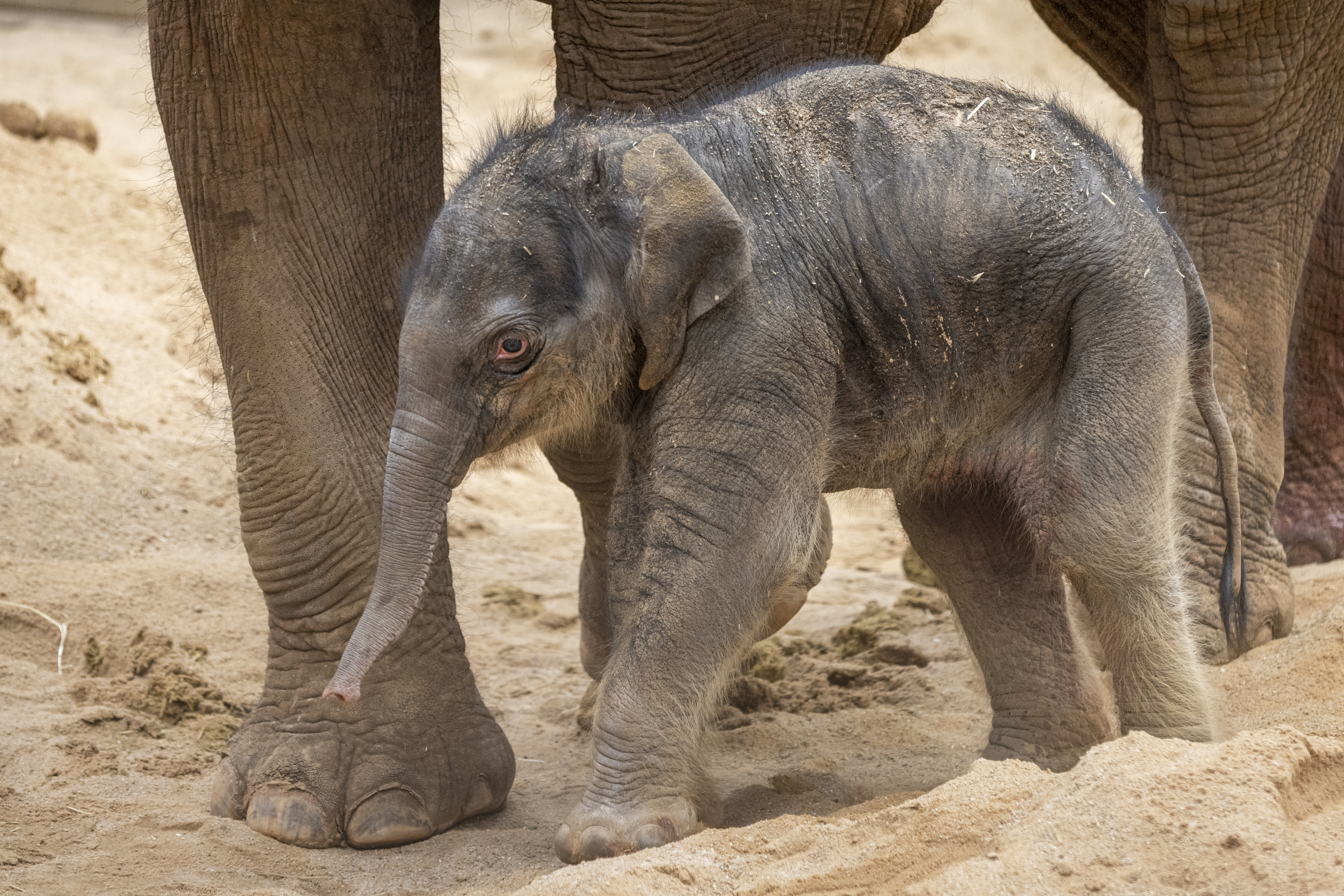
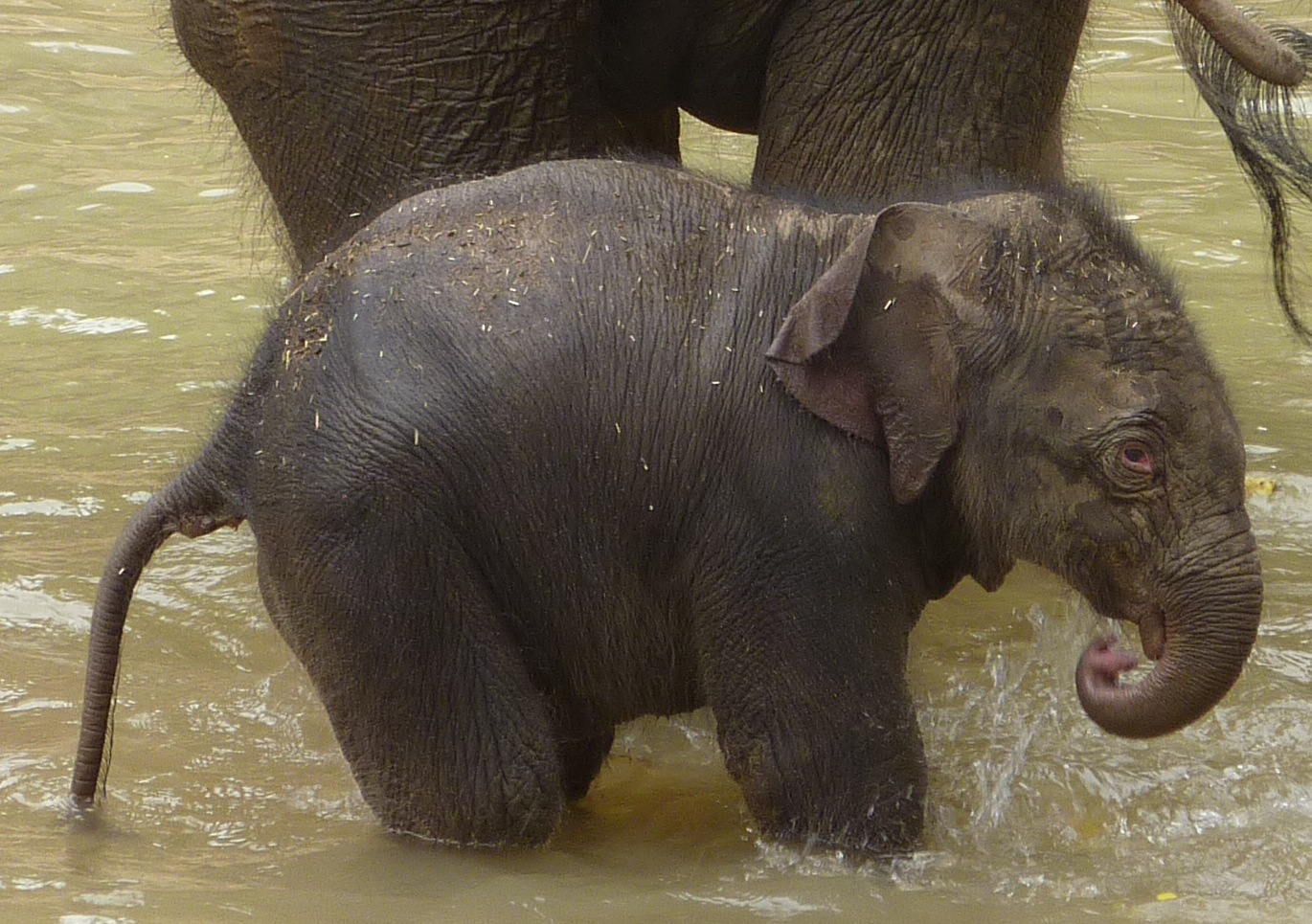
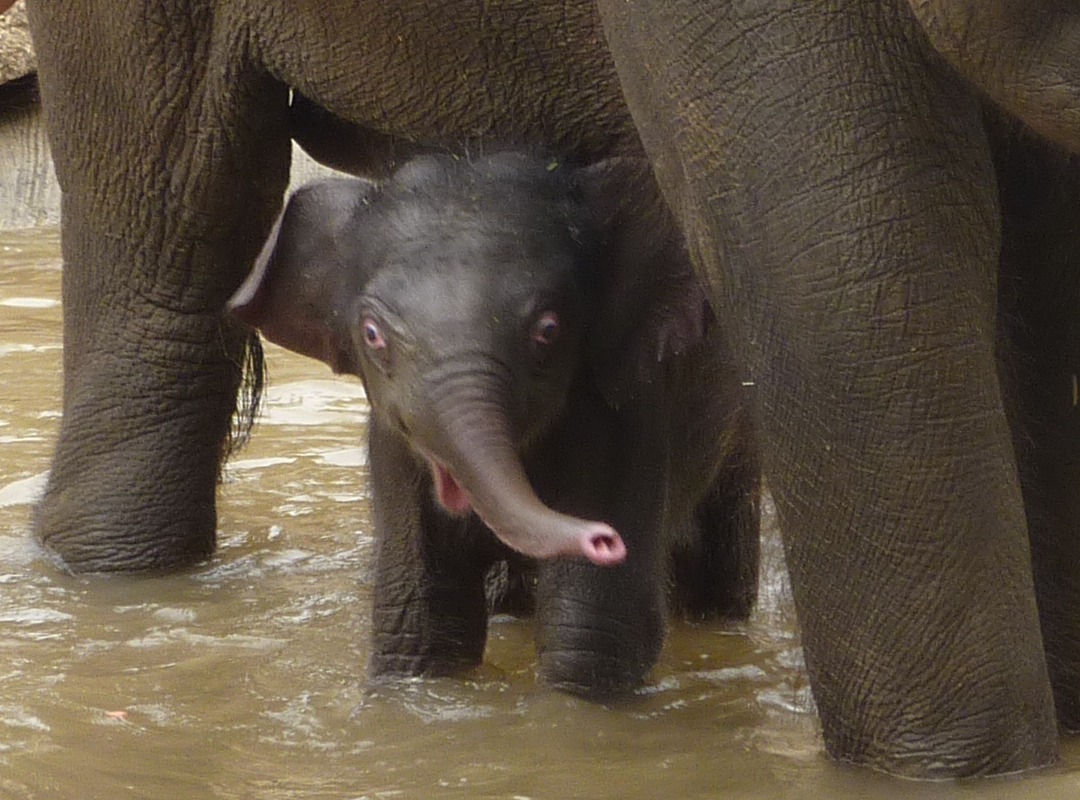
In the early hours of the morning of November 15th, Melbourne Zoo welcomed the exciting arrival of a healthy Asian Elephant calf, to superstar mum Dokoon and first time dad, Luk Chai. This birth represents a major success for the Asian Elephant Cooperative Conservation Program for the Endangered species, especially as wild populations continue to decline. Zoos Victoria is a zoo-based conservation organisation, fighting for a future rich in wildlife. Learn more about their work at zoo.org.au
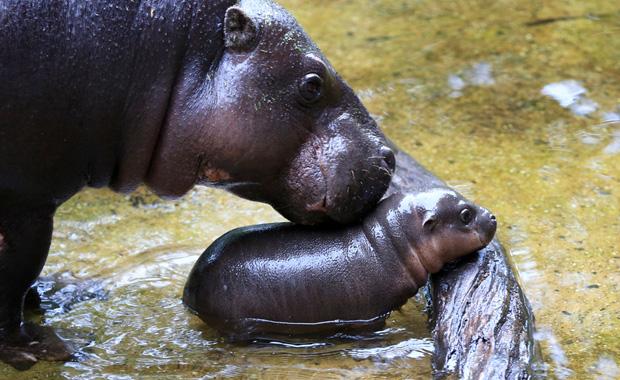
A baby Pygmy Hippopotamus born in early June at the Melbourne Zoo is learning how to swim under the watchful eye of his mother Petre.
Photo Credit: Mark Keenan
Keepers named the calf Obi, which means “heart” in a Nigerian language. You first met Obi here on ZooBorns last month.
Obi started out swimming in the nursery pool, which is shallow, but quickly graduated to the deep end of the exhibit’s main pool. Petre is a very attentive mother and makes sure that Obi never strays too far.
Weighing only about 11 pounds at birth, Obi has gained about a pound each day since he was born.
Pygmy Hippos are classified as Endangered in the wild by the International Union for Conservation of Nature. Because they live in dense rain forests in western Africa, not much is known about the wild population.
Melbourne Zoo is celebrating its first Pygmy Hippopotamus calf birth since 1981! Keepers have not had any direct contact with the calf so far, but, from their careful observations, they have been given the impression that the calf is male.
Photo Credits: Melbourne Zoo
The birth was announced last week, and video footage of mother and calf was released. The new baby is a first offspring for mother ‘Petre’ with new mate, ‘Felix’. Petre previously produced three calves at Taronga Zoo with another mate.
Thanks to recently installed CCTV cameras, keepers were able to observe the calf’s arrival on a screen in an office adjacent to the night den where Petre had been awaiting the birth.
Petre is showing herself to be a very good and attentive mother, and keepers have observed the calf suckling and feeding at varying intervals since birth.
Zoo Veterinarian, Dr. Sarah Frith, will soon attempt to weigh the calf and hopefully confirm the sex, if such can be done without causing distress to mother and baby.
The Pygmy Hippopotamus is native to the forests and swamps of West Africa, primarily Liberia, with small populations in Sierra Leone, Guinea, and Ivory Coast. They are herbivorous, feeding on ferns, broad-leaf plants, grasses and fruits.
The Pygmy Hippo is reclusive and nocturnal, and their rainforest habitat makes it very difficult for researchers to determine exact populations. However, it is known that loss of habitat and poaching are drastically affecting their numbers in the wild, making the regional and international breeding programs even more important to ensure the future of the species.
The Pygmy Hippopotamus is currently classified as “Endangered” on the IUCN Red List.
An Asian Elephant, named Dokkoon, has given birth to her second calf at Melbourne Zoo in Australia. Born on December 8, the calf is a male weighing in at an incredible 289 pounds (131 kg).
Dokkoon went into labor shortly after midnight and keepers were on hand to help the young calf to take his first steps within a few minutes of the birth. He suckled for the first time shortly after 7 a.m. and has been feeding with enthusiasm ever since.
Both mom and baby are doing well and beginning to bond. The calf is the zoo's fourth Asian Elephant birth and a baby brother for Mali, the zoo's first-ever elephant calf, born in 2010. In the coming days and weeks, the young calf will begin the process of being introduced to the rest of the herd.
Photo credits: Melbourne Zoo / Andrew Griffiths
Asian Elephants are an Endangered species, threatened by habitat loss caused by human expansion and conflict. Poaching for ivory is also a major concern. As a member of Zoos Victoria, Melbourne Zoo is a not-for-profit that engages in conservation programs, ranging from captive breeding of endangered species to research and promoting public awareness. You can adopt an animal (like this Elephant calf!) or make general donation to the zoo's conservation initiatives.
Melbourne Zoo's two month-old Asian Elephant calf received the name Sanook at a special naming celebration on March 14. The name, which means "fun-loving and cheerful" in Thai, was selected by zoo fans.
Sanook was born to mother Num-Oi early on January 17th after a 22 month pregnancy and 3 days of labor. The calf is the first for Num-Oi and the fourth for father Bong Su. Less than a week after his birth, Sanook was already splashing around in the paddock's shallow pool. Before receiving his official name, the keepers nick-named the calf "Dougie" after noticing that he liked to dig.
Minister for Environment and Climate Change Ryan Smith has congratulated Melbourne Zoo's staff on the success of their elephant breeding program. "We're thrilled with the safe arrival of the baby elephant at Melbourne Zoo," Mr. Smith said. The birth exemplifies the quality of Zoos Victoria's breeding programs aimed at fighting extinction.
Wow. How did something that big come out of that little pod/egg? See this critically endangered Lord Howe Island Stick Insect hatching right before your eyes. What’s more, it will grow to be about as big as the size of your hand.
This insect came close to not even existing. After a British trade ship crashed in the South Pacific in the early 20th century, its rats scurried off deck onto the island that these stick insects called home and promptly ate all the bugs and like creatures. Apparently one small group of Lord Howe Island Sticks survived on a small section of a nearby island until they were discovered by a couple of Australian scientists. It’s like the stuff of movies. You can read more about this fascinating story in an NPR article by Robert Krulwich.
This hatching process was filmed at the Melbourne Zoo in Australia. Press play and be fascinated.
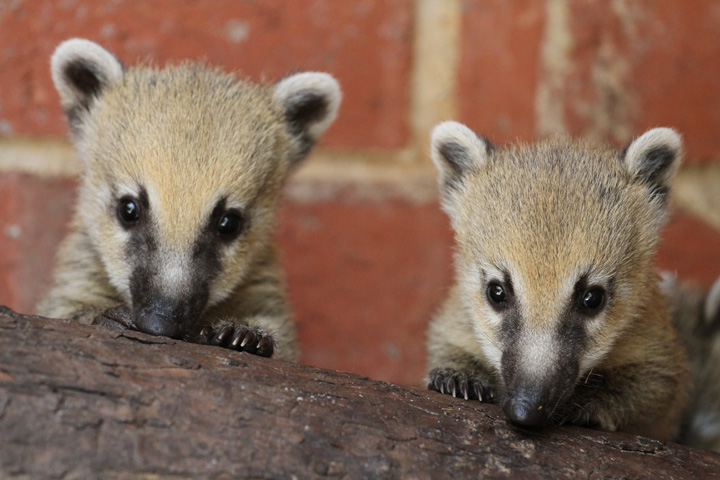
A recently-arrived group of Coatis has settled into Melbourne Zoo so well that they have produced three litters, with a total of 22 kittens. The kittens have been secluded in nest boxes for the first weeks of their lives. Now they are starting to eat solid food, and it’s time for a large-scale session with the Zoo’s Veterinarians, who need to protect the kittens against three potential diseases with the F3 vaccination.
There are four adult females and one male in the group, selected by the international breeding program to create a genetically diverse breeding group. Coatis belong to the larger Raccoon family, which includes 17 species, all native to the Americas. This species is native to Arizona, Mexico, Central America, Colombia, and Ecuador.
Photo credit: Meagan Thomas, Melbourne Zoo
They are very skilled climbers, known for descending trees head first. Their long tails are used as balancing rods to assist when they’re climbing. Coatis are omnivores, eating insects, fruits, other vegetation, and meat. In the wild, a new mother will typically keep her kittens isolated in her nest for 6 to 10 weeks before rejoining the band.
Photo credits: All by Trent Brownings but last (by zoo staff)
Estela the Spider Monkey is now on view in Melbourne Zoo's Primate Nursery with her grandmother Sonja. Estela was abandoned at birth by her mother Sunshine, so Primate Keepers stepped in to provide 24/7 care to pull the tiny newborn through since her birth on January 17th.
Primate Supervisor Jess McKelson explains "Because Sonja didn't feed Estela, the baby didn't get the crucial protection against infection that comes from the colostrum in mother's milk. So the baby has been very prone to infection, and we have needed to keep her under quarantine conditions at times. But we have still placed a major priority on getting her acquainted with her grandmother, Sonya, so she can learn the behaviours that are natural to a Spider Monkey."
On Monday, December 6th, Melbourne Zoo's Sumatran Orangutan Maimunah gave birth to a female baby. Keepers were on hand to observe the birth and remained on duty to watch over Maimunah and her baby. Zoo Director Kevin Tanner said, 'We would like to put this birth into a larger perspective: about 50 individuals of this endangered species die every week in South-east Asia due to the rapid expansion of palm oil plantations. ‘We hope the community will support our campaign calling for change to food labeling laws, so that when manufacturers use palm oil that will be shown on the label. ‘It's encouraging to know that our supermarket choices can make a difference to Orangutan survival in the wild. For how to help, please see Don't Palm Us Off.
Melbourne Zoo's Asian Elephant Kulab gave birth to a male calf at 10.30 am yesterday. He is the first-ever male calf to be born at Melbourne Zoo. He weighs 142.2kg (315lbs) which is very heavy for a new born elephant. He is built very much like his father (Bong Su), with long legs and a broad head. Everyone at Melbourne Zoo is very excited by this new addition to the family.