The Newest, Cutest Baby Animals from the World's Zoos & Aquariums

Category: Mogo Zoo

  • ,

    Red Panda Mogo Zoo 1

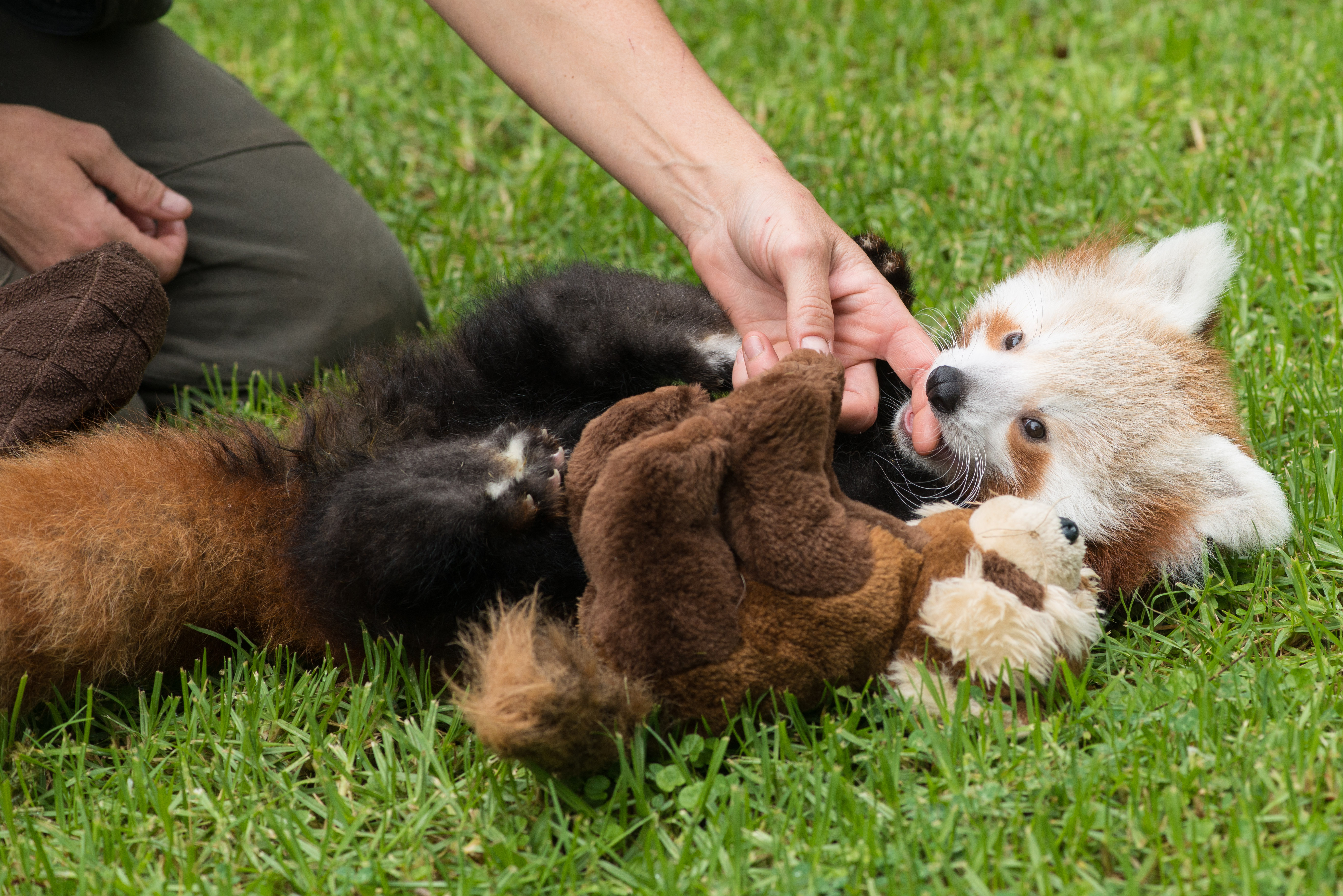
    Following an uncertain start to life, Chai, a Red Panda cub born at Mogo Zoo on the South Coast of New South Wales, will be making her first public debut. Born on December 3rd, the baby was  rejected by mom at just six days old. It was necessary for the Zoo’s veterinarian, Dr Sam Young, to intervene and hand-raise the cub. 

    Since then, Chai has been bottle-fed a special milk formula and has only recently been introduced to bamboo and fresh fig. The energetic youngster now weighs a healthy 2.8 kilograms and is proving a handful for Dr Young  and the Zoo’s keepers. Chai’s abundant energy is harnessed as she often wrestles her stuffed toys and balls, and on occasion has been known to cheekily bite her keepers. Dr Young commented, “It’s been a great pleasure and challenge caring for Chai and watching her develop and grow. We’ve become very fond of her mischievous nature and look forward to seeing her interact with the public for the first time”.

    The Red Panda is listed as a vulnerable species as its population has dwindled to fewer than 10,000 individuals, with a declining trend of greater than 10% over the next three future generations. Habitat destruction is the greatest threat faced by Red Pandas today, who, in the wild, are found in Bhutan, China, India, Myanmar and Nepal. In eastern Nepal, six land management practices are collectively threatening the survival of this species: demand for firewood; grazing; hunting; cash cropping; timber and the medicinal plant trade.

    Red Panda Mogo Zoo 4

    Red Panda Mogo Zoo 7

    Photo Credit: June Andersen, Mogo Zoo

    Learn more and see more Panda pictures after the jump:

    (more…)

  • ,

    Raff CU

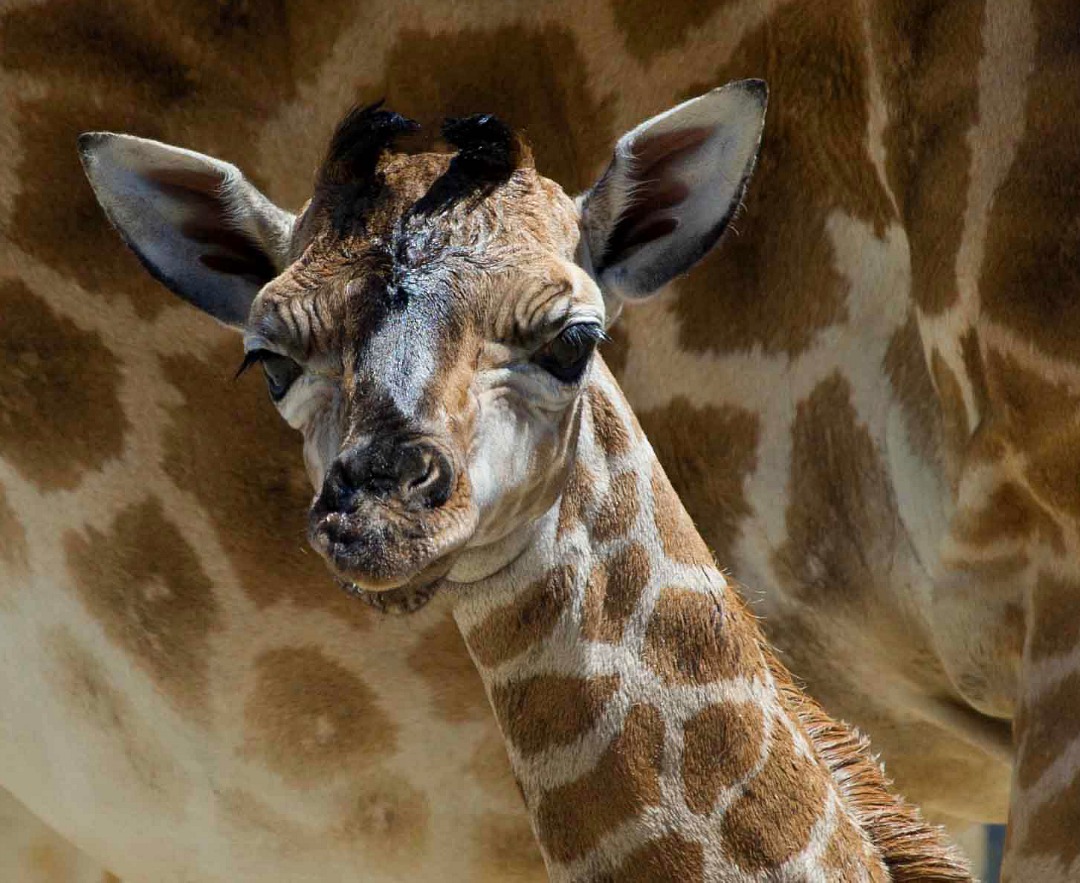
    In New South Wales on the afternoon of January 24, Mogo Zoo's visitors got to witness a rare sight: a baby Giraffe being born.

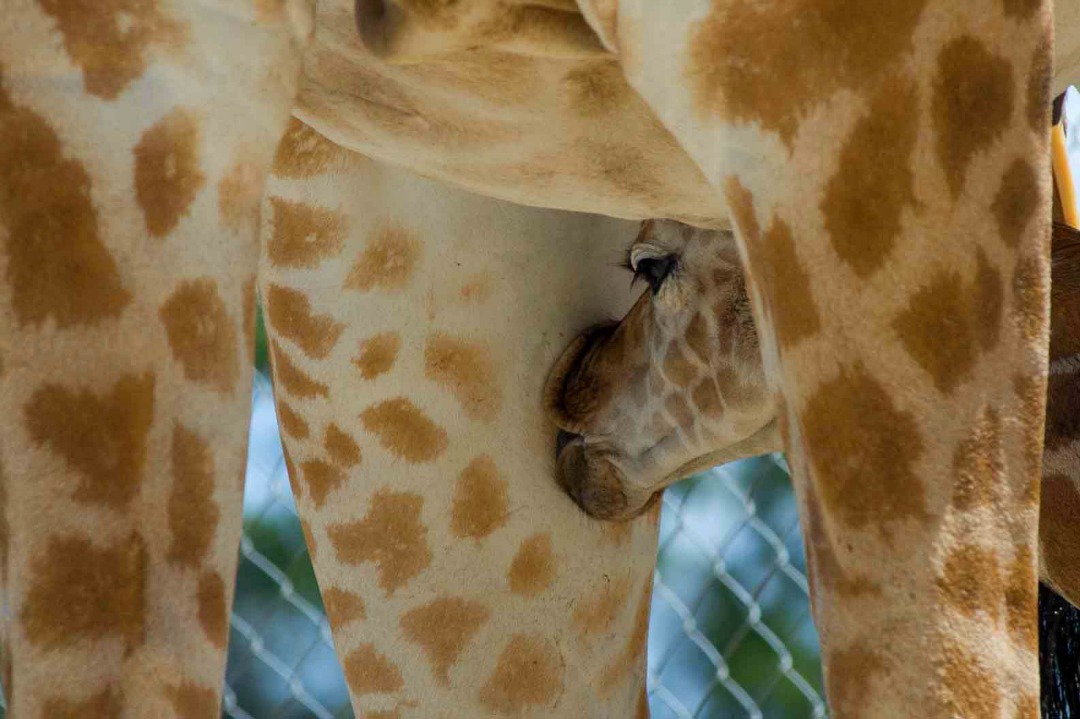
    Mom Shani, a Rothschild Giraffe, began the first stages of labor while on view in the habitat, surrounded by the rest of the herd, who clearly understood what was going on. Following a one and-a-half hour labor, as the visiting public looked on in awe and delight, a healthy female calf was born at 12:57 p.m.. She weighed in at 264.5 pounds (120 kg). Shani, now an experienced third-time mother, has bonded extremely well with her newborn, starting with a thorough cleaning of the newborn with her long tongue.

    Raff clean 2

    The calf made her first wobbly attempts to stand at 1:45 p.m. and was attempting to nurse by 2:00 p.m. Seeing that those milestones had been reached, the proud mother gently nosed her calf over to the adjoining savannah fence, where the remaining members of the herd were eagerly awaiting an introduction.

    Raff nudge

    Raff nurse

    Photo Credit: Mogo Zoo

    Of the nine subspecies of giraffes in Africa, the Rothschild’s Giraffe is classified as Endangered, with less than 670 individuals remaining in the wild. The populations are declining due to a number of factors, including habitat loss and fragmentation. Human population growth and illegal hunting also contribute to their dwindling numbers. Mogo Zoo already plays a major role in the Global Breeding Program for this Endangered sub-species. With the recent introduction of Tanzi, the zoo's newest breeding female from Melbourne Zoo, Mogo Zoo is confident that their participation and success in the Program will continue to grow.

    See more photos after the fold:

    (more…)

  • ,

    Lemur1

    Found only on the island of Madagascar, Black-and-White
    Ruffed Lemurs are critically endangered. 
    But twins born at the Mogo Zoo on October 6 offer a glimmer of hope for
    the species.

    The yet-to-be-named and sexed twins are being expertly cared
    for by their parents.  According to
    Animal Operations Manager Paul Whitehorn, “Tame’ and Itasi are being great
    parents, and the youngsters are becoming so active and a delight to watch.”  Though the twins are still nursing, they are
    already enjoying healthy fruits and veggies as part of their daily diet.

    Lemur2

    Lemur5

    Lemur3

    Lemur6

    Unfortunately, the future for wild Black-and-White Ruffed Lemurs is bleak.  Classified as
    Critically Endangered, these primates are threatened by habitat loss due to
    slash-and-burn agriculture, logging, and mining.  Additionally, they are hunted by poachers for
    their meat. 

    Black-and-White Ruffed Lemurs are the only diurnal primates
    to build nests.  Australia’s Mogo Zoo
    participates in the Species Management Program to ensure the genetic diversity
    of the captive population.

    Photo Credit:  Mogo Zoo

  • ,

    Lion1

    A pair of 2 ½-month-old Lion cubs made their first public
    appearance this week at Australia’s Mogo Zoo. 
    The cubs are the offspring of Snow, a female white Lion, and Mac, a male
    tawny Lion.

    The Lion cubs, one male and one female, were born on August
    9 have not yet been named.   Their mother Snow is one of several white
    lions imported to the Mogo Zoo in 2004.

    Lion2

    Lion3

    Lion4

    The cubs are beginning to feel much
    more relaxed the exhibit, though they still remain close to their mother.  The staff at Mogo Zoo reports that Snow is “an
    amazing mother and continues to care for, protect, and love her new cubs.”   

    Photo Credit:  Mogo Zoo

  • , , ,

    Meet Mogo Zoo’s newest little marmoset. Ebe was raised by keepers after his mother died just five days after his birth. Keepers initially thought Ebe’s odds of survival were low but hand raising by the Zoo’s head primate keeper paid off and Ebe is thriving. The world’s smallest monkey, pygmy marmosets like Ebe here, weigh only 20 grams as newborns – less than a human thumb.

    Baby marmoset mogo zoo 1 rs1

    Baby marmoset mogo zoo 2 rs

    Baby marmoset mogo zoo 3 rs/

    Photo credits and copyright: Mogo Zoo

  • , ,

    Growing only slightly bigger than a large goat, European Fallow Deer are beautiful creatures that retain their white spots into adulthood. Native to Southern Europe along the Mediterranean, these fawns were born in Dec. of 2008 at the Mogo Zoo in Australia. Pictures provided by PsiberTek Photography.

    European fallow deer fawn 1 rs2

    European fallow deer fawn 2 rs

    European fallow deer fawn 3 rs

    (more…)