The Newest, Cutest Baby Animals from the World's Zoos & Aquariums

Category: Montreal Biodome

  • ,

    1 lynx

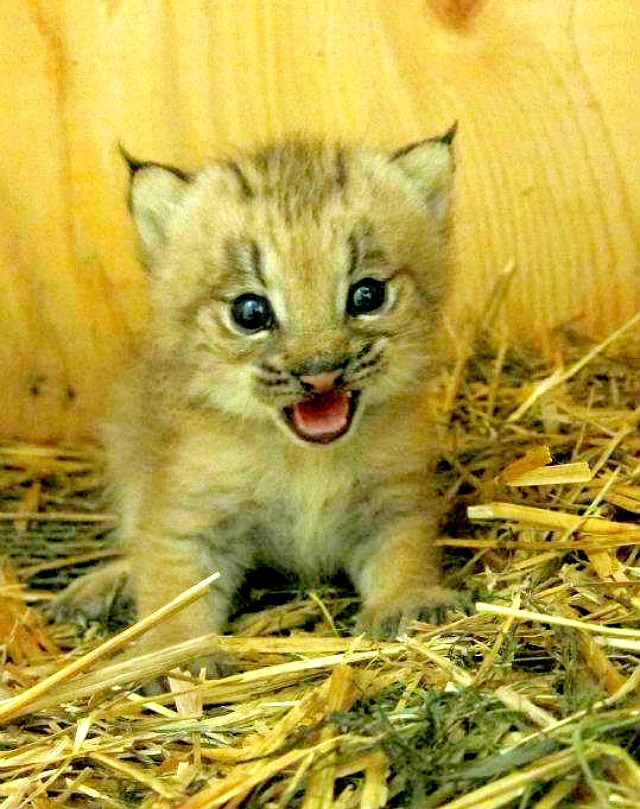
    On June 4, the Espace Pour La Vie (Space for Life) Biodôme in Montréal welcomed
    three Lynx kittens into the world. The kittens are developing normally
    with their mother’s attentive care. She diligently nurtures her little ones,
    nursing them, cleaning them and keeping them warm. Their first medical exam
    found that they are one male and two females, all growing healthy and fast. Ten
    weeks after the birth, the kittens and their mother transitioned to a new home:
    a Laurentian maple forest exhibit viewable by the public. Their arrival in the
    habitat signals a new phase in their development, during which they will hone
    their reflexes with their mother’s help. Visitors can see the Lynx kittens
    playing together, interacting with their mother and exploring their environment
    freely. The father will be kept separately in the nighttime quarters, as the
    female could perceive him as a threat to her offspring.

    Both adult Lynx are seven years old, and this
    is the third time the pair have reproduced at the Biodôme—a clear sign that they are healthy
    and happy in their habitat. In the summer of 2012, the female gave to litter of
    three, but only one kitten survived to adulthood. Caretakers at the Biodôme
    decided to supplement that kitten’s diet with bottle-feeding while allowing it
    to continue nursing from its mother. In January of 2013, the healthy adult
    offspring moved to another institution to be paired with another lynx for
    breeding. This year’s litter is growing even more quickly under the care of the
    more-experienced mother; this time, caretakers did not need to intervene with
    extra feedings. As the captive Lynx population’s growth rate is very low, the birth of new kittens increases its genetic diversity. This year's litter may eventually be moved to other institutions to form new breeding pairs. 

    2 lynx

    3 lynx


    4 lynx

    6 lynx
    Photo credits: Space for Life / Claude Lafond

    See and read more after the fold!

    (more…)

  • ,

    Lynx3

    Last week, a 10-week
    old Lynx cub made his debut at the Montréal
    Biodôme
    . Visitors will now get to see the cub play hide and seek, learn to climb trees, and leap from
    rock to rock … all under the watchful eye of his mother.

    In May, the animal keepers at the Biodôme suspected that the
    six-year-old female Lynx was pregnant, judging by her weight gain and her behavior. Since
    she was looking for a dark, safe place to give birth, a wooden shelter was built over
    her rest area. The Lynx cub was born during the night of May 26-27, in good health, while two
    other cubs died within just a few days. The surviving cub has done very well since then.
    He is still nursing, but has recently been developing a taste for small game. On July 26,
    during his general check-up, he received his first vaccination without any complaints. He
    weighs just over 5 pounds (2.3 kg).

    Over the next few months, the young Lynx will be alone with his
    mother in the Laurentian Maple Forest habitat. During this time the six-year-old father
    will be kept in night quarters. Just as in the wild, the female raises her cub
    alone, since males can be a threat to their offspring.

    Lynx1

    Lynx2

    Lynx have a low success rate when it comes to breeding in
    captivity. From 1999 to 2009, the average North American birth rate for Canada Lynx was 1.45
    cubs per year. The Biodôme,a member of the Association of Zoos and Aquariums (AZA) and the
    Canadian Association of Zoos and Aquariums (CAZA), is very proud of this important birth.

    Photo Credits: © Biodôme de Montréal
    (Claude Lafond)


  • ,

    Rawr 4

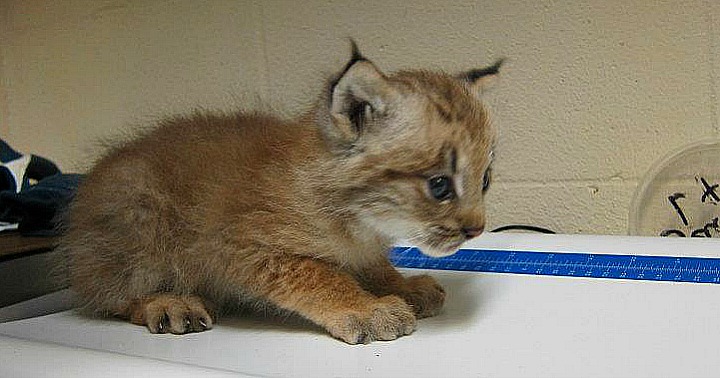
    On May 27 this little Lynx kitten was born at the Montreal Biodome. The baby is growing very quickly — just this week it opened its eyes and as of today it weighs 2.5 pounds (1.135 kg). Having recently started to pad around with it's relatively big paws, the kitten is showing great curiosity about its surroundings. Its mother is very protective and keeps a careful watch over her little one. In the wild, young stay with their mothers for about nine months before they go out on their own.

    Their rich, thick fur keep them warm in harsh winters and their large paws spread out to act as snowshoes. That fur causes them to be hunted for their pelts. Largely solitary animals inhabiting high-altitude forests in Europe, North America and Asia, small groups of Lynx have been known to travel and hunt together on the ground, in trees, or even by swimming to catch fish. These carnivores feed on a wide range of animals, hunting at night and steering clear of humans, so they are rarely seen. However, keepers expect this Lynx to take its place in the habitat in late July. 

    Side face

    Face

    Nap

    Side

    Photo Credit: Biodôme de Montréal