The Newest, Cutest Baby Animals from the World's Zoos & Aquariums

Category: Nashville Zoo

  • ,

    Hellbender young - January 2016

    On October 11, 2015, the Nashville Zoo was successful in hatching an Eastern Hellbender that was the result of an egg being artificially fertilized with cryopreserved sperm; an achievement that had only been successful once before in an internal fertilizing Tiger Salamander in 2014. Moreover, this Hellbender is the first externally fertilizing salamander to be produced utilizing cryopreserved sperm.

    “It’s a pretty big deal for the conservation of this species and all amphibians,” said Dale McGinnity, Ectotherm Curator. “This accomplishment means we can collect and preserve milt (seminal fluid containing sperm) from wild populations without removing Hellbenders from their environment. Cryopreserved sperm may remain viable for hundreds to thousands of years when kept at ultra-low temperatures with liquid nitrogen. ”

    Many of the world’s amphibian species are disappearing from the planet due to pollution, habitat loss, and emerging diseases. Hellbenders, along with their close cousins the Japanese and Chinese Giant Salamanders, are the largest amphibians in the world; they are evolutionarily distinct and have remained relatively unchanged since the age of the dinosaurs. All three species are now in decline and may be threatened with extinction unless conservation programs are developed.

    Hellbender tadpole 2015 - Sherri ReinschPhoto Credits: Nashville Zoo and Sherri Reinsch

    The St. Louis Zoo reproduced Ozark Hellbenders naturally in an artificial stream system for the first time in 2011. The following year, Nashville Zoo successfully hatched two Hellbenders using artificial fertilization. The latest accomplishment is one more step in developing assisted reproductive technology (ART) for captive Hellbenders.

    Once ART is fully developed, milt collected and cryopreserved from specimens may be used to fertilize eggs to create a genetically diverse group to boost isolated wild populations. In the future, cryopreserved sperm may be utilized to fertilize eggs to repopulate extinct populations. Nashville Zoo staff has already cryopreserved milt from 4 watersheds, which is believed to be the first gene bank developed for any salamander species.

    “We really could not have done this alone,” said McGinnity. “Our Zoo’s Amphibian Specialist, Sherri Reinsch, and our Veterinary staff made the project possible. This success would not have been possible without the collaboration other researchers including Dr. Robert Browne, an Australian cryobiologist; Dr. Vance Trudeau, a Canadian endocrinologist; Dr. Joe Greathouse; Dr. Michael Freake; Dr. Brian Miller; Dr. Dalen Agnew; Dr. Carla Carleton; and Dr. Sally Nofs. A special thanks goes to Bill Reeves, the Chief of Biodiversity for the Tennessee Wildlife Resources Agency for the State Wildlife Grant that helped to fund this work which also included statewide surveys, gene banking, disease testing, and genetic work for hellbenders in Tennessee.”

    (more…)

  • ,

    1_FullSizeRender

    A male Banded Palm Civet was born on September 1st at the Nashville Zoo. He is currently being raised, by his parents, in an off-exhibit holding area.

    Nashville Zoo is the only facility, accredited by the Association of Zoos and Aquariums, breeding this species. However, the zoo does not yet have plans to exhibit their Banded Palm Civets.

    2_IMG_7509Photo Credits: Nashville Zoo

    The Banded Palm Civet (Hemigalus derbyanus), also called a Banded Civet, is found in the Sundaic region and occurs in peninsular Myanmar, peninsular Malaysia, peninsular Thailand and in Indonesia on the islands of Sipura, Sumatra, and Borneo.

    The species if roughly the size of a domestic cat; it measures 41 to 51 cm and weighs 1 to 3 kg (2.2 to 6.6 lbs). Despite their cat-like appearance and behaviors, they are more closely related to other small carnivores including weasels and mongooses.

    Banded Palm Civets are generally solitary and have excellent hearing and vision. They prefer to come out under the cover of night to hunt and catch food. They are primarily ground dwelling and highly territorial. They are carnivorous and survive on a meat-based diet, supplemented by the occasional plant or fruit.

    The female Banded Palm Civet has a gestation period of about two months and usually gives birth to up to four young. The babies are weaned when strong enough to fend for themselves.

    The Banded Palm Civet is classified as “Vulnerable” on the IUCN Red List of Threatened Species due to an ongoing population decline. Threats include: overexploitation, decline in habitat quality, and habitat destruction and degradation.

  • ,

    Cub with keeper 2015 - Amiee Stubbs

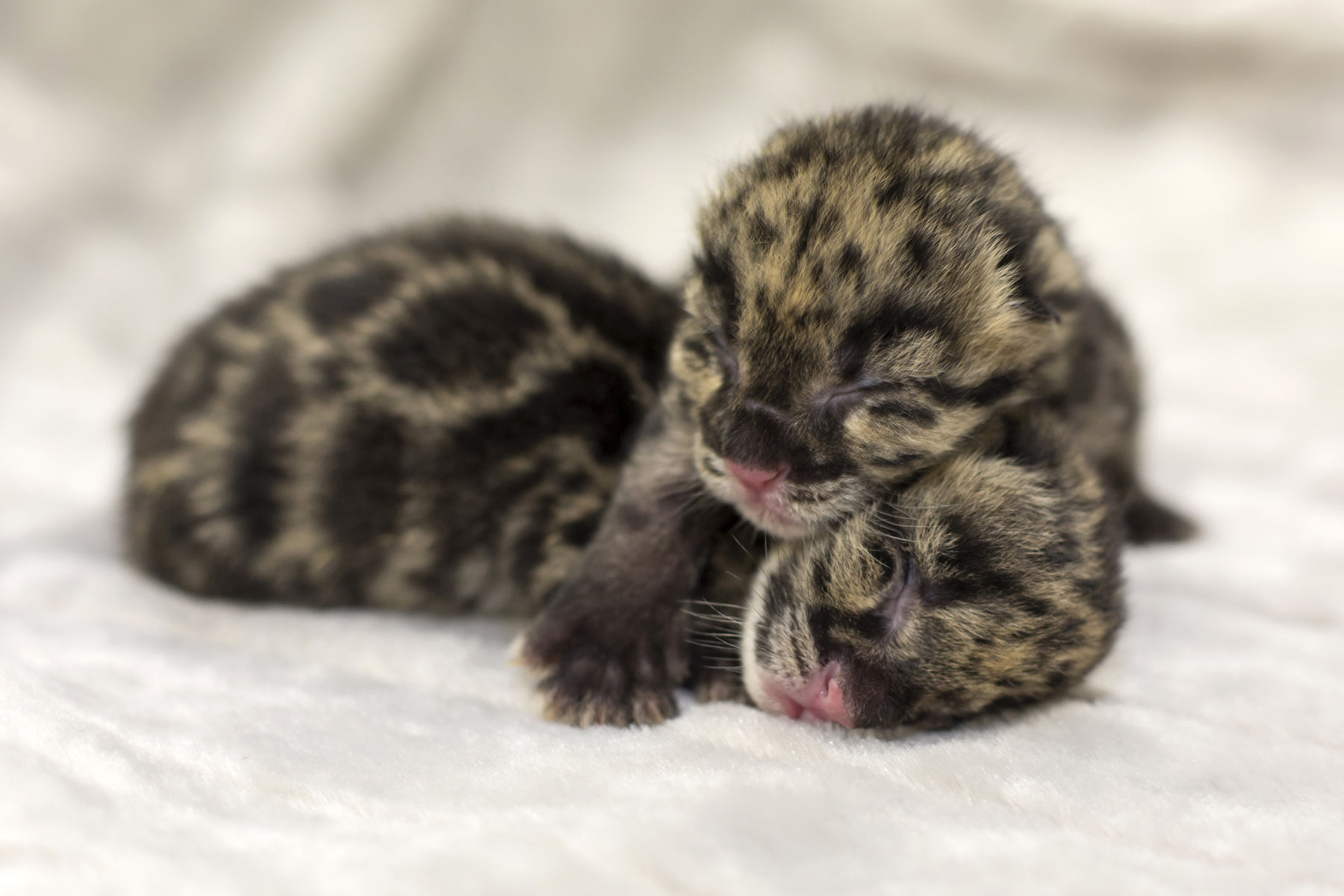
    Two Clouded Leopard cubs born at the Nashville Zoo will help build a sustainable population of these vulnerable cats.

    The cubs, both female, were born on March 13 and March 18 and are being hand raised together.

    Clouded Cubs March 2015 - Amiee Stubbs
    12_asp_6713

    Profile March 2015 - Amiee Stubbs
    Single cub March 2015 - Amiee Stubbs
    Photo Credit:  Amiee Stubbs

    “Nashville Zoo is on the forefront of Clouded Leopard care and conservation,” said Karen Rice, carnivore supervisor. “The birth of these two cubs aids in our conservation efforts and benefits the long-term plan to create a sustainable captive population.”
    Clouded Leopards are notoriously reclusive, which makes introducing the cats to potential mates a dangerous proposition.  In fact, male Clouded Leopards have been known to attack and kill potential female partners. To reduce these fatal attacks, Clouded Leopard cubs are hand raised and introduced to their future mates at a young age. Since 2009, 26 Clouded Leopards have been raised at the Nashville Zoo and have gone on to live and reproduce at zoos worldwide.

    Clouded Leopards are considered Vulnerable to extinction due to deforestation, poaching and the pet trade. As a founding member of the Thailand Clouded Leopard Consortium, Nashville Zoo works with organizations around the world to improve husbandry, breeding, and genetic diversity for this species. 

  • ,

    Alpaca Calf sm - Amiee Stubbs

    Nashville Zoo is excited to share news of the birth of an Alpaca!

    Alpaca Calf w adults sm - Kathleen Gregory

    IMG_0182 - Kathleen Gregory

    IMG_0347 - Kathleen GregoryPhoto Credits: Amiee Stubbs (Image 1); Kathleen Gregory (Images 2,3,4)

    Born December 13th, the male, named ‘Bandit’, is the first Alpaca to be born at the Zoo. The baby weighed in at 14 lbs. and stood about two feet tall. Bandit’s thick coat ensures he is all set for the cold weather, and he should be on exhibit throughout winter.

    Even before birth, it seems Bandit was well suited for his rebel-style moniker. “Based on the mother’s weight gain, we had predicted the baby would be born in spring, so his arrival on a December Saturday morning was quite a surprise,” said Kacie Cummings, Contact Area Supervisor. “We are thrilled that baby Bandit is healthy and on exhibit with the rest of our Alpacas.”

    With the addition of the baby, the Nashville Zoo is home to five Alpacas at Critter Encounters, their interactive area where guests can get up-close experiences with goats, camels, Galapagos tortoises and a variety of birds.

    Alpacas are domesticated animals native to South America and a part of the camelid family. They thrive in high elevations and their thick wool coat is used to keep them warm in their native mountainous environment.

  • , , , , , , , , , , , , , ,

    African Lion Cub_San Diego Zoo

    Pumpkins are everywhere, this time of year! They make great pies, Jack-O-Lanterns, and pretty awesome enrichment toys for zoo animals. Happy Halloween from ZooBorns!

    Charlie_Nashville Zoo

    Red Panda_Lincoln Children's Zoo

    Rainier_ZooAmerica

    Photo Credits: Tammy Spratt/San Diego Zoo Safari Park (Image 1: African Lion Cub); Amiee Stubbs Photography (Image 2: "Charlie" the Porcupine at Nashville Zoo); Lincoln Children's Zoo (Image 3: "Lincoln" the Red Panda); ZooAmerica (Image 4: "Rainier" the Mountain Lion); Zoo Vienna Schönbrunn (Image 5: Elephants); Sue Ogrocki (Images 6-Gorilla,7-Red River Hogs,10-Galapagos Tortoise at Oklahoma City Zoo and Botanical Gardens); Minnesota Zoo (Image 8: Lynx); The Living Desert Zoo and Gardens (Image 9: Meerkats)

    More great pumpkin pics below the fold!

    (more…)

  • ,

    12_asp_6053_-_amiee_stubbs

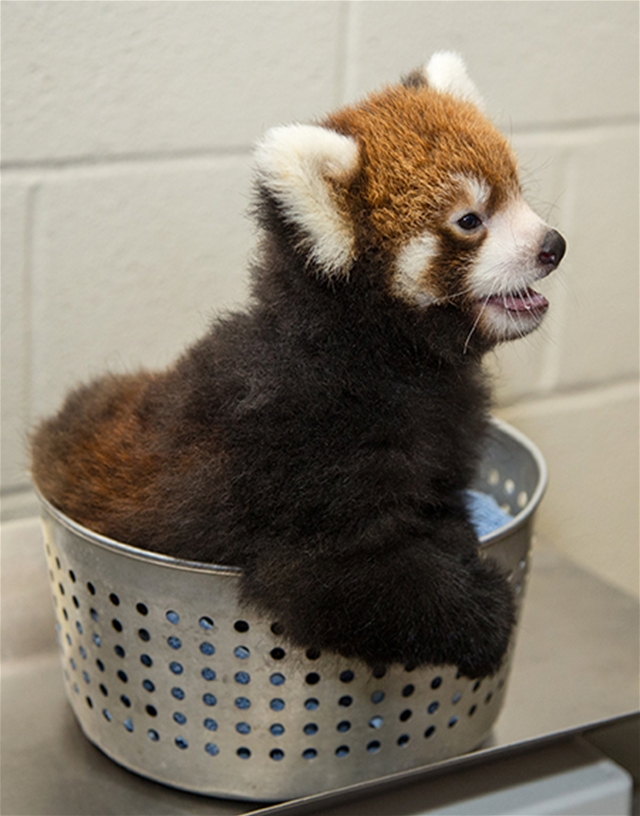
    The Nashville Zoo announced this week the birth of a female Red Panda cub on July 3.  The cub is doing well and bonding with her mother in their off-exhibit den. 

    12_asp_6035_-_amiee_stubbs

    7_asp_6058_-_amiee_stubbs
    Photo Credit: Amiee Stubbs

    Known for their teddy bear-like appearance and red fur, Red Pandas are native to the mountains of Central China, Nepal and northern Myanmar (Burma). They are considered vulnerable to extinction due to habitat destruction. In addition, slow rates of reproduction and high infant mortality rates make it very hard for this species to rebound from population declines.

    “Red Panda mothers are very prone to stress and easily agitated, which could cause them to reject or unintentionally harm the cubs,” said Karen Rice, carnivore supervisor. “Because of the high infant mortality rate, we took every precaution possible to ensure the baby was delivered and cared for safely.”  

    The zoo staff worked to make the expectant mother comfortable by providing space for “denning” several months prior to her expected delivery date.

    “We anticipated a late June/early July birth so we denned up our female in May. She was confined in the building that she is used to and provided with a choice of nest boxes and most importantly – air conditioning!” Rice said.

    Animal care staff monitored the female for signs of stress and added video cameras to the nest boxes. These precautions allowed staff to observe the cub’s arrival, nursing, and other important milestones with disturbing mother and cub.

    “After our female gave birth we made the decision to continue our hands-off approach since all was going so well. At one month of age, we did our first neonate exam and determined the cub to be female, in good health and weighing just under two pounds. The cub and mom both did well and were happily reunited right after.”

    The Zoo’s two Red Panda adults are a part of AZA’s Species Survival Program, which manages the breeding of a species in order to maintain a healthy and self-sustaining captive population that is both genetically diverse and demographically stable. If the cub continues to thrive, the zoo will debut the cub this fall.  At about a year old, she will most likely leave Nashville Zoo to be paired with a mate for breeding. 

    If all continues to progress, the Zoo hopes to debut the cub this fall.  

  • ,

    1 giraffe

    Nashville Zoo in Tennessee has announced the birth of a female Masai giraffe. The calf was born in the early morning hours of December 13, weighing 180 pounds (81.65 kg) and standing 6 feet 5 inches (1.96 m) tall. She and mom Margarita are doing well in the zoo’s Giraffe barn. 

    “We’ve been tracking Margarita’s pregnancy for about a year and estimated her due date to be in early December,” said Kate Cortelyou, lead Giraffe keeper. “I arrived at the Giraffe barn around 7:30 a.m. [on Dec. 13] to find a dry, healthy, standing baby Giraffe, which is the perfect way to find them. We are so thrilled about the latest addition to our herd.”

    3 giraffe

    4 giraffe

    2 giraffe

    5 giraffe
    Photo credit: Nashville Zoo / Amiee Stubbs

    This is nine-year-old Margarita’s third calf. Her first was born in 2010, and the second, a female named Camilla, was born in 2012 and recently left Nashville to join her permanent herd at the Columbus Zoo. With the addition of the calf, Nashville Zoo is home to two subspecies: three Masai Giraffe and one Reticulated Giraffe. Zoo officials will carefully monitor the baby’s development inside the Giraffe barn for the next two months. After that, keepers will make a decision on her public debut depending on climatic conditions. 

    Masai Giraffe are one of nine different sub-species and are known for their oak-leaf shaped spot pattern. They are native to the savannas of Kenya and Tanzania.

  • ,

    Anteater Pup - Heather Robertson

    Gabana the baby Giant Anteater is part of an exciting baby boom at the Nashville Zoo:  He is the fifth Giant Anteater to be born at the zoo in the last 13 months.

    IMG_0882 - Heather Robertson

    IMG_0922 - Heather Robertson

    IMG_0906 - Heather Robertson
    Photo Credit: Margarita WocCoburn

    Nashville Zoo has been involved in Giant Anteater conservation for 15 years and has the largest collection of Anteaters in the country.  Gabana, who was born on November 16, is the first birth for mother Dolce, who was born at Nashville Zoo in 2011. Both mother and baby are doing well and living together in the off-exhibit Giant Anteater barn.

    Giant Anteaters are solitary animals from the tropical forests of Central and South America. The International Union for Conservation of Nature lists Giant Anteaters as Vulnerable, although they are Extirpated (locally Extinct) in parts of Belize, Costa Rica, Guatemala and Uruguay.  


    Related articles

    Keepers Step In To Raise Maryland Zoo's First-ever Lion Cubs
    Anteater Pup Holds On Tight at Marwell Wildlife
    Margay Kitten Blends in with Mom at Bioparque M'Bopicuá
  • ,

    Anteater Pup - Amiee Stubbs

    Nashville
    Zoo
    is happy to announce the birth of a male Giant Anteater on July 17. For the
    Zoo, the newest addition is the fourth pup born in the past 10 months. Both
    mother and baby are doing well and living together in the off-exhibit Giant
    Anteater barn.

    “We now have 15 Giant Anteaters at
    Nashville Zoo which is the largest collection in North America,” says Rick
    Schwartz, Zoo President. “While they are not currently on public display, we do
    hope to change than in the future. In the meantime, we will continue to learn
    more about this little known and threatened species both in captivity and in
    the wild.”

    Anteater Pup w Mother - Amiee Stubbs

    Edit_ASP_8676
    Photo credits: Amiee Stubbs

    Giant
    Anteaters are solitary animals from the tropical forests of Central and South
    America. The International Union for Conservation of Nature (IUCN) lists the
    Giant Anteater as vulnerable due to habitat loss and hunting. Giant Anteaters
    are considered extinct in areas of Belize, Costa Rica, Guatemala and
    Uruguay.

  • ,

    Cloud pile Amiee Stubbs

    Just six weeks after the birth of a trio of Clouded Leopard cubs reported HERE on ZooBorns, the Nashville Zoo proudly announced that another two cubs were born on April 30! The babies are doing well and are being hand raised by the Zoo’s animal care staff. 

    “Since 2009, 20 Leopards have been born at Nashville Zoo, and in the last year alone, Nashville Zoo welcomed the births of more Clouded Leopards than at all the world’s zoos combined,” said Rick Schwartz, Nashville Zoo President. “We are proud to be on the forefront of Clouded Leopard conservation.”

    Due to deforestation, pet trade and poaching, Clouded Leopards are considered endangered in their native range of Southeast Asia and China, and recently listed as extinct in Taiwan. For the past 11 years, Nashville Zoo has been a member of the Thailand Clouded Leopard Consortium, a multi-faceted clouded leopard conservation program with the National Zoo, Point Defiance Zoo, Clouded Leopard Species Survival Program and Zoological Park Organization in Thailand. 

    Cloud solo Aimee Stubbs

    Cloud pose AmieeStubbs

    Cloud 4AmieeStubbs_0947
    Photo Credit: Amiee Stubbs

    The breeding parents to these recent cubs are Lom Choy and Luk. Introducing Clouded Leopards to potential mates is difficult due to the cat’s reclusive disposition. Males are often aggressive and have been known to attack and kill potential female partners. To reduce fatal attacks, cubs are hand-raised and introduced to mates at a young age.