The Newest, Cutest Baby Animals from the World's Zoos & Aquariums

Category: Nashville Zoo

  • , ,

    Lynx Cub 13 - Amiee Stubbs

    Nashville Zoo is pleased to announce the birth of a Eurasian Lynx.
    The female cub was born to the Zoo’s on-exhibit pair on Saturday, May 4.

    “We suspected
    that our Lynx might be pregnant due to a slight weight gain but never had
    confirmation,” said Connie Philipp, mammal curator. “The cub arrived on its
    estimated due date based on the data the keepers collected, and she’s now being
    hand-raised by our animal care staff. She will eventually join an educational
    outreach program at another zoo.”

    Lynx cub feeding - Amiee Stubbs

    AmieeStubbs_0994

    AmieeStubbs_1018

    Amiee Stubbs_8600
    Photo credits: Amiee Stubbs Photography

    Nashville
    Zoo is home to three Eurasian Lynx, a male and female on exhibit, and a male,
    known as Blitz, that is a part of our “Wildlife on Wheels” program. The
    Eurasian Lynx exhibit was generously sponsored by David and Kathryn Brown.

    Eurasian Lynx are the largest of the lynx species and are
    native to Central Asian, European and Siberian forests. While not listed as
    endangered, Eurasian Lynx are rarely seen in some parts of its home range.

    Related articles

    Nothing Says "It's Springtime" Like The Birth of Clouded Leopard Cubs
    Update! Little Clouded Leopards Now Big Enough to Play
    Critically Endangered Tiger Cub Born at Point Defiance
    Peek-a-Boo, Little Porcupette!
  • ,

    Leop 1

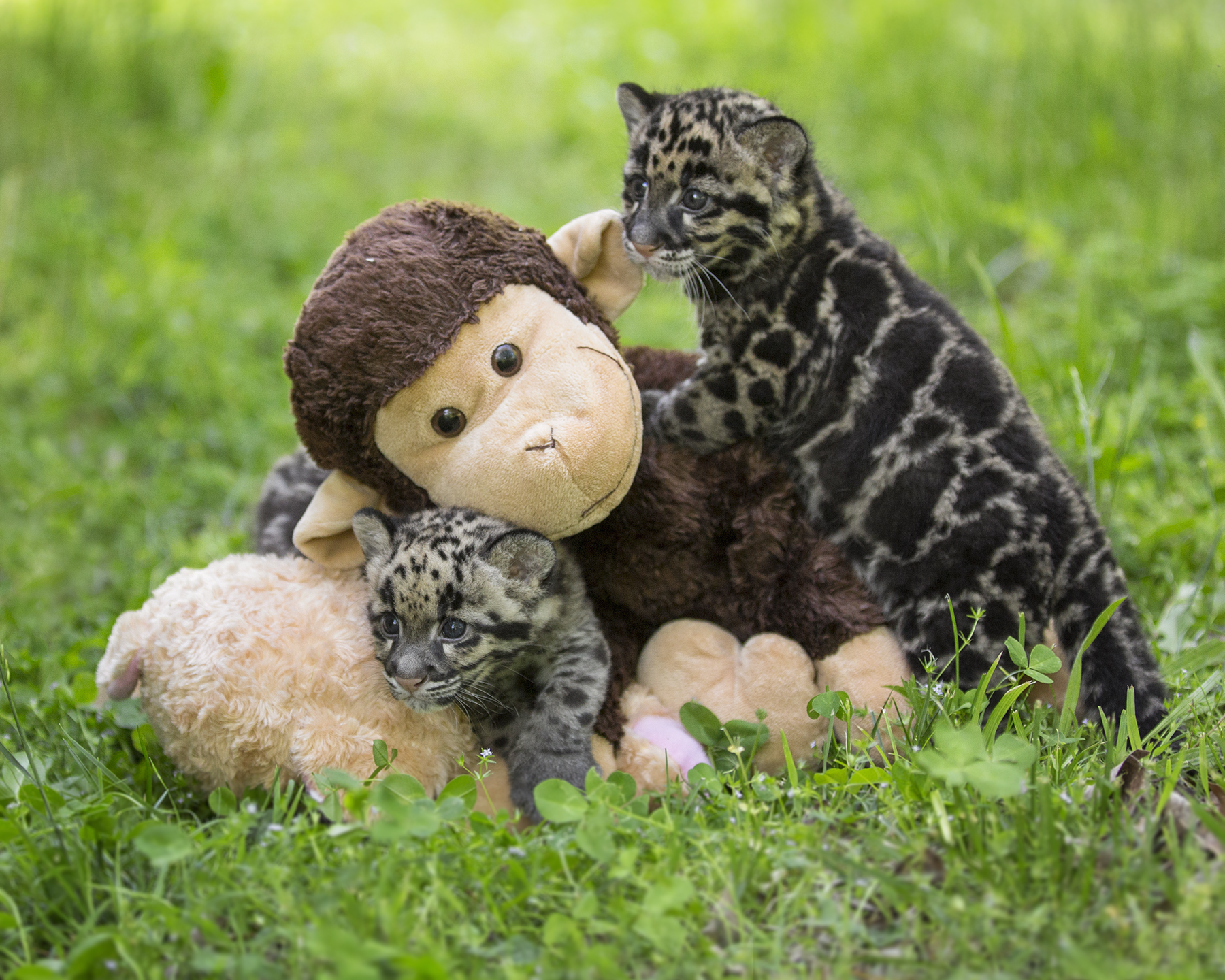
    Who's that peeking out from those stuffed animals? That's Nashville Zoo's Clouded Leopard cubs outside for the first time, playing in the sun and feeling the grass. They were born on March 26, which, if you missed it, you can read about HERE on ZooBorns. This past Sunday, Mother's Day, the zoo asked the public to donate new and gently used stuffed animals for the cubs to use for snuggling and cuddling. And they got right to it, as you can see!

    Clouded Leopards are considered endangered because of deforestation, poaching and the pet trade. Nashville Zoo is a member of the Thailand Clouded Leopard Consortium, an ongoing collaboration with the National ZooPoint Defiance Zoo, Clouded Leopard Species Survival Program and Zoological Park Organization of Thailand (ZPO) to develop a multi-faceted clouded leopard conservation program that includes a viable self-sustaining captive population. 

    Leop 2

    Leop 3
    Photo Credit: Amiee Stubbs Photography

  • , , , ,

    Clouded Leopard Cubs 2013 - Amiee Stubbs

    Nashville Zoo is pleased to announce the births of two litters of Clouded Leopard cubs. On March 26, Jing Jai gave birth to one female cub and Baylie gave birth to one male and one female. All three are doing well and are being hand-raised by the Zoo’s animal care staff.

    “Nashville Zoo is a leader in Clouded Leopard conservation, with 18 Clouded Leopards born at our off-exhibit breeding facility since 2009,” said Karen Rice, carnivore supervisor at Nashville Zoo. “These cubs will remain a part of the Association of Zoos and Aquariums (AZA) Clouded Leopard population as breeding cats, education or exhibit animals. Whatever role they play, they will contribute to the ongoing conservation effort.” 

    ASP_8690

    ASP_8658

    ASP_8651
    Photo credits: Amiee Stubbs


    Clouded Leopards are considered endangered because of deforestation, poaching and the pet trade. Nashville Zoo is a member of the Thailand Clouded Leopard Consortium, an ongoing collaboration with the National Zoo, Point Defiance Zoo, Clouded Leopard Species Survival Program and Zoological Park Organization of Thailand (ZPO) to develop a multi-faceted clouded leopard conservation program that includes a viable self-sustaining captive population. 

    See more pictures and learn more below the fold…

    (more…)

  • ,

    Tapir calf - Amiee Stubbs

    By January 12, Nashville Zoo Animal Care Staff had waited over 13 months for the arrival of the Zoo's second Baird's Tapir in two years. Soon after the calf's delivery it became clear that something was wrong.

    The baby’s embryonic sac did not break, so he could not breathe and began to rapidly lose vitality. Zoo staff made the decision to intervene and moved mother Houston out of the stall. They then freed the baby from the sac, verified he still had a heart rate, and immediately cleared his airways and performed mouth-to-nose resuscitation until he was fully breathing on his own. Thanks to their heroic efforts and quick action, the calf is doing well.

    Calf with Mother - Amiee Stubbs

    AmieeStubbs_NZAG_Tapir-0811

    AmieeStubbs_NZAG_Tapir-0751

    Photo credits: Amiee Stubbs / Nashville Zoo

    This is the second birth for mom Houston and her mate Romeo, who came to Nashville Zoo from Central America in 2008 to introduce a new genetic line into the United States Tapir population. Veteran ZooBorns readers may recall the 2010 birth of Noah, the pair's first-born.

    “This birth is significant because it helps sustain a genetically diverse population of Tapirs in the United States,” said Lanny Brown, hoofstock supervisor at Nashville Zoo. “Tapirs have a gestation period of more than 13 months, so we have been looking forward to this baby for a long time.”

    Read more and see the rest of the calf's baby pictures below the fold.

    (more…)

  • ,

    Hellbender-young-w-ruler---Amiee-Stubbs

    Nashville Zoo is pleased to announce the captive breeding of Eastern Hellbenders for the first time as well as the first controlled breeding of any Hellbenders using biotechnology. The two Hellbenders were successfully hatched from eggs produced and artificially fertilized from the Zoo’s long-term captive animals.

    “The successful hatching of the two Hellbenders is a result of a long-term collaborative project with a group of international researchers dedicated to saving this species,” said Dale McGinnity, ectotherm curator at Nashville Zoo. “This is an important first step and is in line with the Zoo’s commitment to the conservation and propagation of rare species.”

     An adult Ozark Hellbender, one of the world's largest Salamanders…

    Hellbender-US-FISH-and-Wildlife

    One of Nashville Zoo's adult Hellbenders…

    Hellbender-adult-w-ruler---Amiee-Stubbs

    Learn more about Nashville Zoo's Hellbender breeding efforts in the video below.

    The two offspring were produced from a group of four Hellbenders living in an off-exhibit facility at the Zoo. 

    “It has taken five years to develop assisted reproductive technologies for captive hellbenders,” said McGinnity. “We hope that with further refinement over the next few years, this species can be reliably reproduced using these techniques. This technology may then be used with a gene bank of cryopreserved sperm for Eastern hellbenders housed at the Nashville Zoo, to produce genetically diverse and fit offspring to suit various conservation needs.”

    Hellbender-young---Amiee-StubbsSo small… for now… Photo credit: 1 & 4; Aimee Stubbs / Nashville Zoo, 2; U.S. Fish & Wildlife, 3; Christian Sperka / Nashville Zoo.

    (more…)

  • ,

    Anteater1

    The largest Giant Anteater
    group in the United States, located at the Nashville Zoo, just got a little bigger
    with the birth of a male baby on September 19. The pup brings the total
    number of Giant Anteaters at the zoo to 12.

    Once
    found throughout the northern two-thirds of South America and much of Central
    America, Giant Anteaters are believed to be extinct in portions of Belize,
    Costa Rica, Guatemala and Uruguay.  They
    remain Vulnerable to extinction in the rest of their range.  “Nashville Zoo is a leader in conservation
    efforts to save Giant Anteaters from extinction,” said Connie Philipp, mammal
    curator at the Zoo.

    Anteater3

    Anteater2

    This is the third birth
    for mother Emilia, a wild-caught Anteater from Paraguay. Baby Anteaters
    typically cling to their mothers’ backs for several months, gradually becoming
    more independent.

    Giant Anteaters' unique tubular
    rostrums and 24-inch-long tongues are specially designed for slurping
    up ants and termites.  Insect nests are
    torn open with sturdy, curved claws and up to 300,000 insects are gobbled up in a
    single day!

    Photo Credit: 
    Aimee Stubbs

  • ,

    Nashville Zoo_Masai #3DB28B

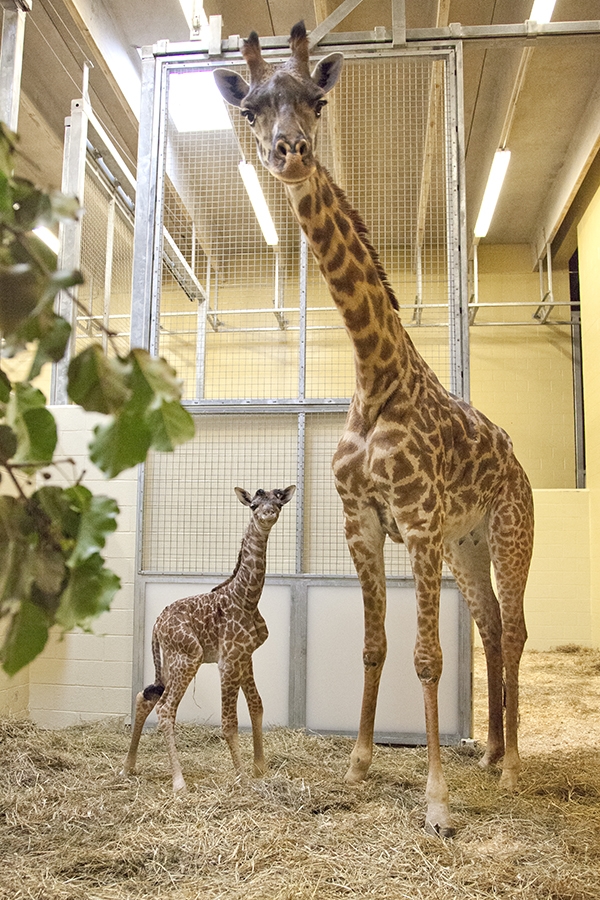
    Nashville Zoo is now home to a brand new baby Masai Giraffe. Born on Sunday, June 10, the calf is mother Margarita's second baby.

    “We’ve been watching Margarita very closely in anticipation of this event,” said Mammal Curator Connie Philipp. “This is her second calf, and she is showing us some great maternal skills. We look forward to showing the new calf to our guests soon.”

    Nashville Zoo_Masai #3DB2DB

    Nashville Zoo_Masai #3DAEDD

    Nashville Zoo_Masai #3DB38B

    Nashville Zoo_Masai #3DB313

    Nashville Zoo_Masai #3DB20A
    Photo credits: Amiee Stubbs / Taken at Nashville Zoo 


    Masai Giraffe are native to the savannas of Kenya and Tanzania in Africa and are known for their oak-leaf shaped spot pattern.

    (more…)

  • , , ,

    Cub in grass - Amiee Stubbs
    Photo credit: Amiee Stubbs

    Back in March, we brought you news of Nashville Zoo's back-to-back litters of Clouded Leopard cubs. Now three and four months old, we check back in on the curious felines as they explore their exhibit. As demonstrated in the video below, Clouded Leopards are among the best feline tree climbers and have been observed walking down trees head first among other feats of arboreal acrobatics. 

  • , ,

    Clouded-cubs-2012---Christian-Sperka

    Nashville Zoo is proud to announce the births of two litters of Clouded Leopards. On Feb. 13, Lom Choy and her mate Luk welcomed two cubs, one male and one female. On March 11, Jing Jai and her mate Arun also welcomed a male and female pair. Both sets of parents are housed off-exhibit, and the cubs are being hand-reared together. In the coming weeks, a female Clouded Leopard cub born March 8 at the National Zoo in Washington, D.C. will arrive to join Nashville’s four. The zoo plans to place all five on public exhibit this summer. A specific date will be announced soon. 

    “Nashville Zoo is one of only three zoos in the United States that is currently breeding these dynamic cats,” said Karen Rice, mammal curator at the Zoo. “These cubs will greatly contribute to the Clouded Leopard population and breeding efforts at Association of Zoos and Aquariums (AZA) institutions across the country.” 


    Photo and video credits: Christian Sperka / Nahville Zoo

    Clouded Leopards are considered endangered because of deforestation, poaching and the pet trade. Nashville Zoo is a member of the Thailand Clouded Leopard Consortium, an ongoing collaboration with the National Zoo, Point Defiance Zoo, Clouded Leopard Species Survival Program, Zoological Park Organization of Thailand (ZPO) and HKS Design and Consultants International to develop a multi-faceted Clouded Leopard conservation program that includes a viable self-sustaining captive population. 

    Introducing clouded leopards to potential mates is difficult due to the cat’s reclusive disposition. Male Clouded Leopards are often aggressive and have been known to attack and kill potential female partners. To reduce fatal attacks, cubs are hand-raised and introduced to mates at a young age. Since 2009, 11 cubs have been born at Nashville Zoo’s off-exhibit facility.

  • ,

    Mochilo - CU

    Nashville Zoo is pleased to announce the birth of two giant anteaters! The first, a male named Mochilo (above), was born on April 25 to mom Tiana. On May 6, mom Consuela gave birth to a female named Dulce, pictured below. Both babies are doing well and living with their mothers at the Zoo’s off-exhibit anteater breeding facility.

    Dulce web

    The babies will ride on their mom's back for up to a year, intermittently spending some time on the ground as they grow. This is for several reasons – one is protection from predators. They camoflague themselves by lining their shoulder stripe up with the mother's. It's also a way to keep up with their mother, who can cover a lot of ground moving from one termite mound to another, consuming up to 30,000 termites in a day. Though they nurse for about 12 months, they begin to supplement their diets with what she eats.

    Tiana with Mochilo -stripe

    On back 7160_Mochilo web

    Photo Credit: Amiee Stubbs

    Nashville Zoo, in Nashville Tennessee, has been involved in giant anteater conservation for 13 years and has the largest collection of anteaters in the country. The off-exhibit breeding facility is the only one of its kind in the United States. Giant anteaters are solitary animals from the tropical forests of Central and South America. The International Union for Conservation of Nature (IUCN) lists the giant anteater as vulnerable, although it is considered extinct in areas of Belize,Costa Rica, Guatemala and Uruguay.