The Newest, Cutest Baby Animals from the World's Zoos & Aquariums

Category: Oregon Zoo

  • ,

    1 otter

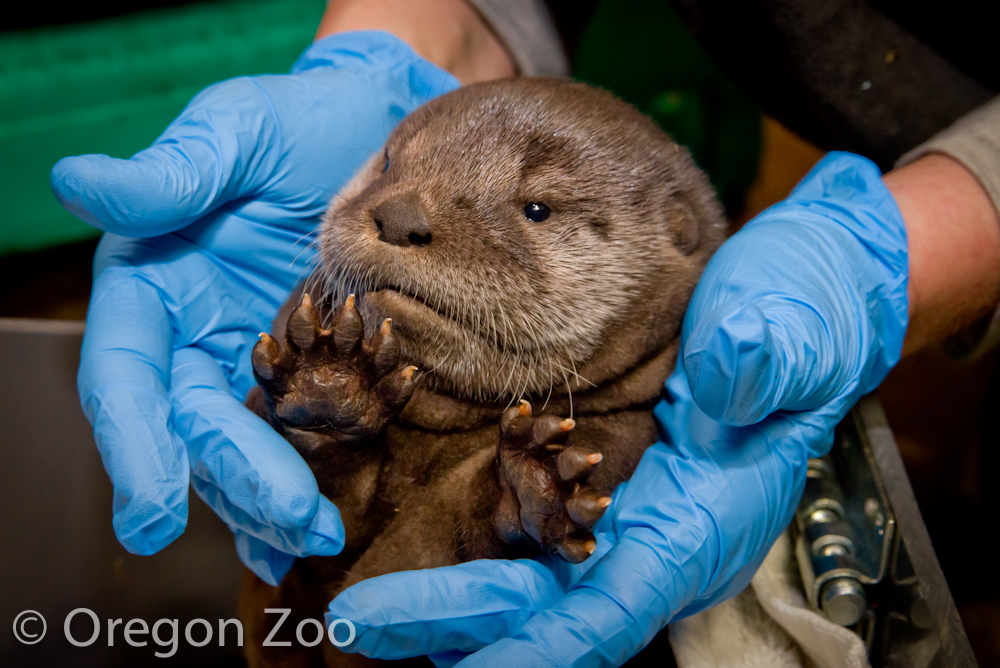
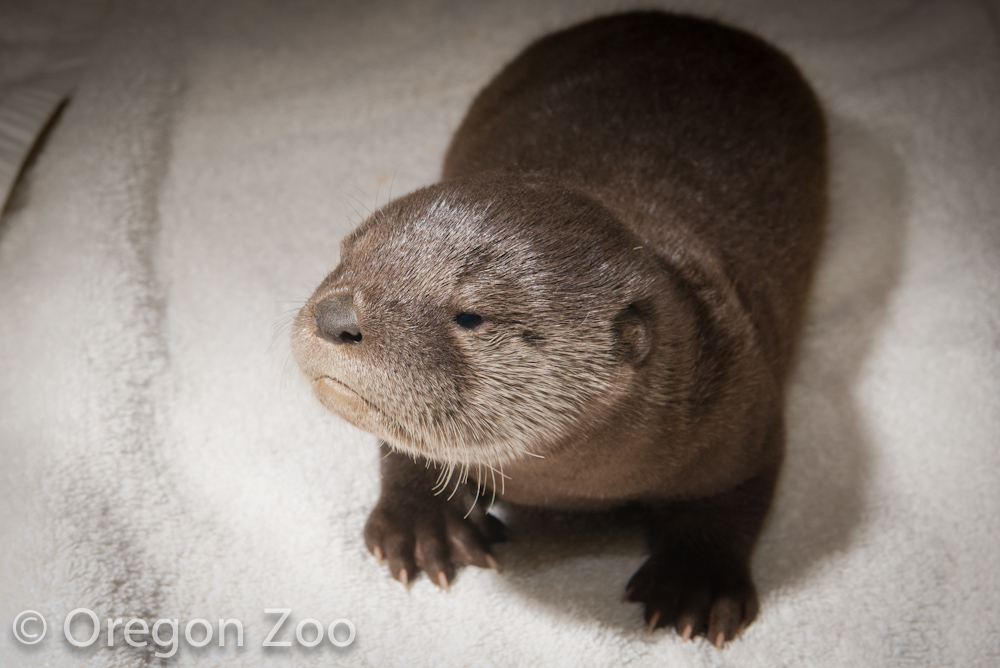
    Tilly, a North American River Otter at the Oregon Zoo, gave birth to a pup on November 8 —her second this year. The new arrival weighed just shy of 5 ounces (28.3 g) at birth and has nearly tripled that thanks to mom’s naturally high-fat milk.

    “We’re pretty sure this pup’s a male,” said Julie Christie, the zoo’s senior North America keeper. “But Tilly is very protective, so we can’t be positive until our vets conduct a more thorough exam.”

    Tilly and her pup are currently in a private maternity den, and it will be another month or two before visitors can see them in their Cascade Stream and Pond habitat. Young River Otters usually open their eyes after three to six weeks, and begin walking at about five weeks.

    “Young River Otters are very dependent on their moms, and Tilly has been very nurturing,” said Christie. “She did a great job with her first pup, Mo, earlier this year. She raised him up from this tiny, helpless creature into the sleek, agile, full-grown otter he is today. We’re confident Tilly will be a great mom to her new pup as well.”

    2 otter

    3 otterPhoto credits: Oregon Zoo

    Surprisingly, swimming does not come naturally to River Otters; pups must be taught to swim by their moms. Earlier this year, this video of Tilly teaching Mo to swim drew more than half a million views on the zoo’s YouTube channel.


    Take a peek behind the scenes as the newborn pup is weighed:


    Keepers have yet to decide on a name for the new pup, though it is likely he will be named after a local river or waterway. (Mo is short for Molalla, after the Molalla River.)

    North American River Otters typically give birth from late winter to spring, but Tilly seems to be on her own schedule, keepers say. The breeding season for River Otters is December through April, and actual gestation only lasts a couple of months. Unlike their European cousins however, North American River Otters usually delay implantation so that the time between conception and birth can stretch to as much as a year. That hasn’t been the case with Tilly. 

    Christie said it is also unusual — though not unheard of — for an otter to give birth to a single pup, as Tilly has now done twice. Litters usually consist of two or three pups, though the range is anywhere from one to six. Family groups typically consist of an adult female otter and her pups, with males moving away once they reach adulthood.

    Since both Tilly and the pup’s father, B.C., were born in the wild, they and their offspring are considered genetically important for the breeding otter population in North American zoos. Both parents are rescued animals who had a rough start to life.

    Tilly, named after the Tillamook River, was found orphaned near Johnson Creek in 2009. She was about four months old, had been wounded by an animal attack and was seriously malnourished. Once her health had stabilized, Tilly came to the Oregon Zoo in a transfer facilitated by the Oregon Department of Fish and Wildlife, which oversees the species’ protection. 

    The pup’s father, B.C. (short for Buttercup), was found orphaned near Star City, Ark., also in 2009. He was initially taken in by the Little Rock Zoo, but transferred to Oregon the following year as a companion for Tilly. The two otters hit it off quickly and have been playful visitor favorites ever since.

    Now that the threat from fur trappers has declined, North American River Otters are once again relatively abundant in healthy river systems of the Pacific Northwest and the lakes and tributaries that feed them. Good populations exist in suitable habitat in northeast and southeast Oregon, but they are scarce in heavily settled areas, especially if waterways are compromised. Because of habitat destruction and water pollution, River Otters are considered rare outside the Pacific Northwest.

    Metro, the regional government that manages the Oregon Zoo, has preserved and restored more than 90 miles of river and stream banks in the region through its voter-supported natural area programs. By protecting water quality and habitat, these programs are helping to provide the healthy ecosystems needed for otters, fish and other wildlife to thrive. River Otters are frequently observed in Metro region waterways.

  • ,

    1 cougar

    A trio of Cougar cubs quietly moved in behind the scenes at the Oregon Zoo’s veterinary medical center. The three cubs were found orphaned in southwest Oregon in late October and stayed at the zoo temporarily while they awaited flights out of town to new, permanent homes in New York and Kansas. 

    Oregon Zoo keeper Michelle Schireman described the seven week-old Cougar siblings, all female, as “incredibly cute, but definitely not cuddly.”

    “They are tiny and feisty,” Schireman said. “They’re only 8 pounds [2.26 kg] right now— about the size of small house cats— but with feet the size of hockey pucks. They still have blue eyes and fuzzy spotted coats, which they will eventually grow out of.” 

    Two of the cubs arrived October 29, and the Oregon Department of Fish and Wildlife (ODFW) found and delivered the third a couple of days later.

    2 cougar

    3 cougar

    4 cougarPhoto credits: Michael Durham / Oregon Zoo

    “They’re nervous of course,” Schireman said. “But they’re starting to calm down. When we brought the third cub in, the first two were huddled in back of their crate, growling. Within 20 minutes, the third cub slinked out of her crate and joined her sisters, and then they all settled down together.”

    Once they learned of the orphaned cubs, ODFW officials quickly contacted Schireman, who serves as the Association of Zoos and Aquariums’ (AZA) species coordinator for Cougars.

    “I’m usually the first person wildlife departments call when orphaned cubs are found,” Schireman said. “Without a mother, young Cougars lack the skills and resources they need to survive on their own in the wild.”

    Two of the cubs will be moving to the Lee Richardson Zoo in Garden City, Kansas, which recently opened a $1 million Cat Canyon habitat housing Bobcats, Jaguars and Cougars — including a 12 year-old male named Payton, who will be housed in an adjacent area, separate from the young pair.

    The third cub will go to the New York State Zoo at Thompson Park, joining Ninja, a 2 year-old male placed there by Schireman in 2011. Ninja’s name was suggested by a New York kindergarten class “because he jumps like a ninja.”

    “He’s been waiting for a buddy to get pouncy with,” Schireman said. “Both zoos have a history of excellent care for Cougars, and they have spaces all ready for these cubs.”

    As an AZA species coordinator, Schireman has found homes for close to 85 Cougar cubs in zoos around the country. Most of the Cougars currently living in U.S. zoos are orphans placed by Schireman. In 2011, the National Association of Zoo Keepers recognized Schireman with a Certificate of Merit in Conservation for “outstanding work developing an orphaned animal placement program that gives assistance to state wildlife agencies and zoological institutions in placing orphaned pumas."

    Cougars — also known as Mountain Lions, Pumas and, in Florida, Panthers — live mostly in the western United States and Canada. They weigh from 75 to 150 pounds (34 to 68 kg) and have a carnivorous diet both in the wild and at the zoo. Females are either pregnant or raising cubs for the majority of their lives. After three months of gestation, two to three cubs are usually born in a litter and live with their mother for up to two years. With the exception of the Florida panthers, Cougars are not listed as Endangered, but they do face many challenges in other parts of the country due to human encroachment and habitat destruction.

  • ,

    1 lion

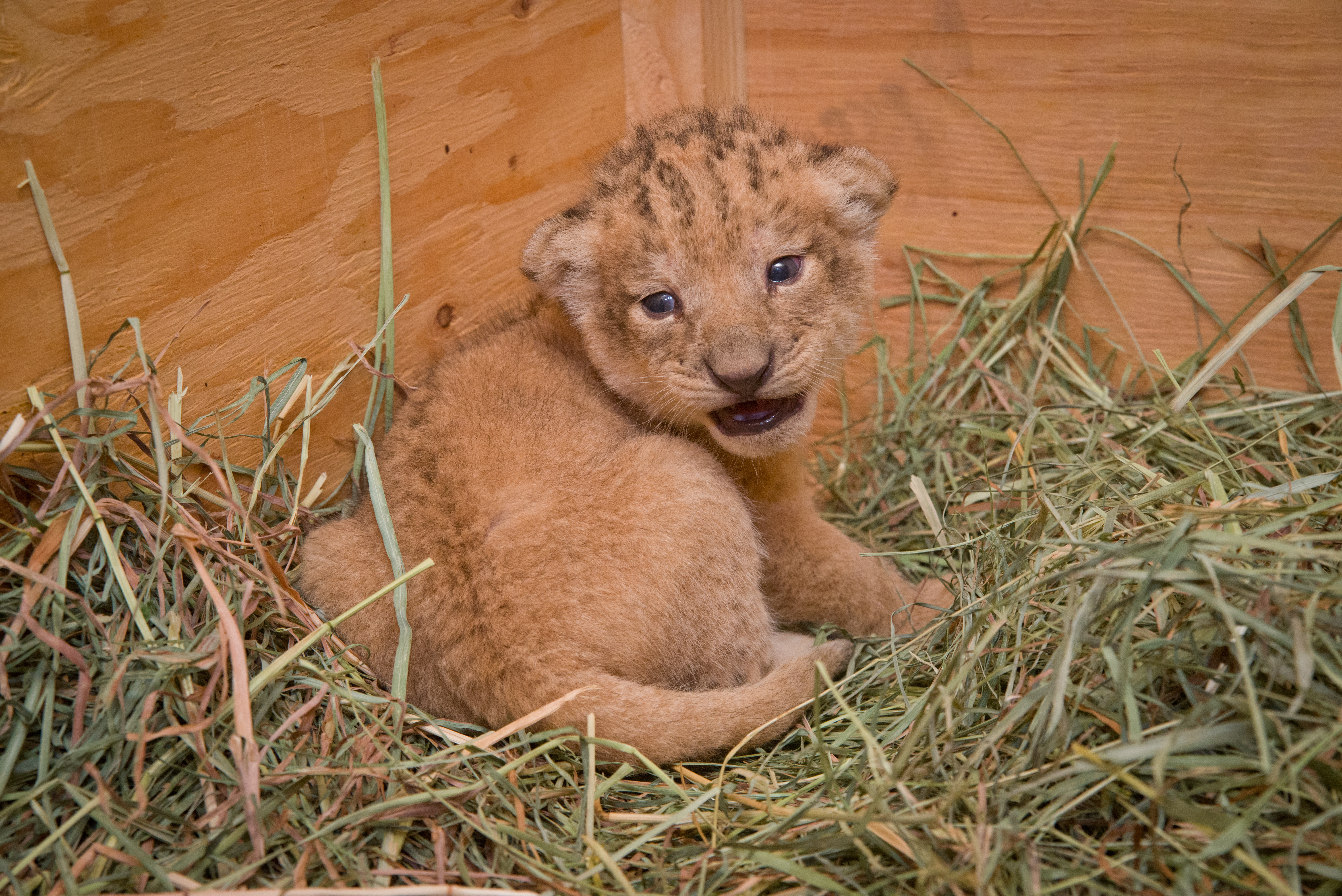
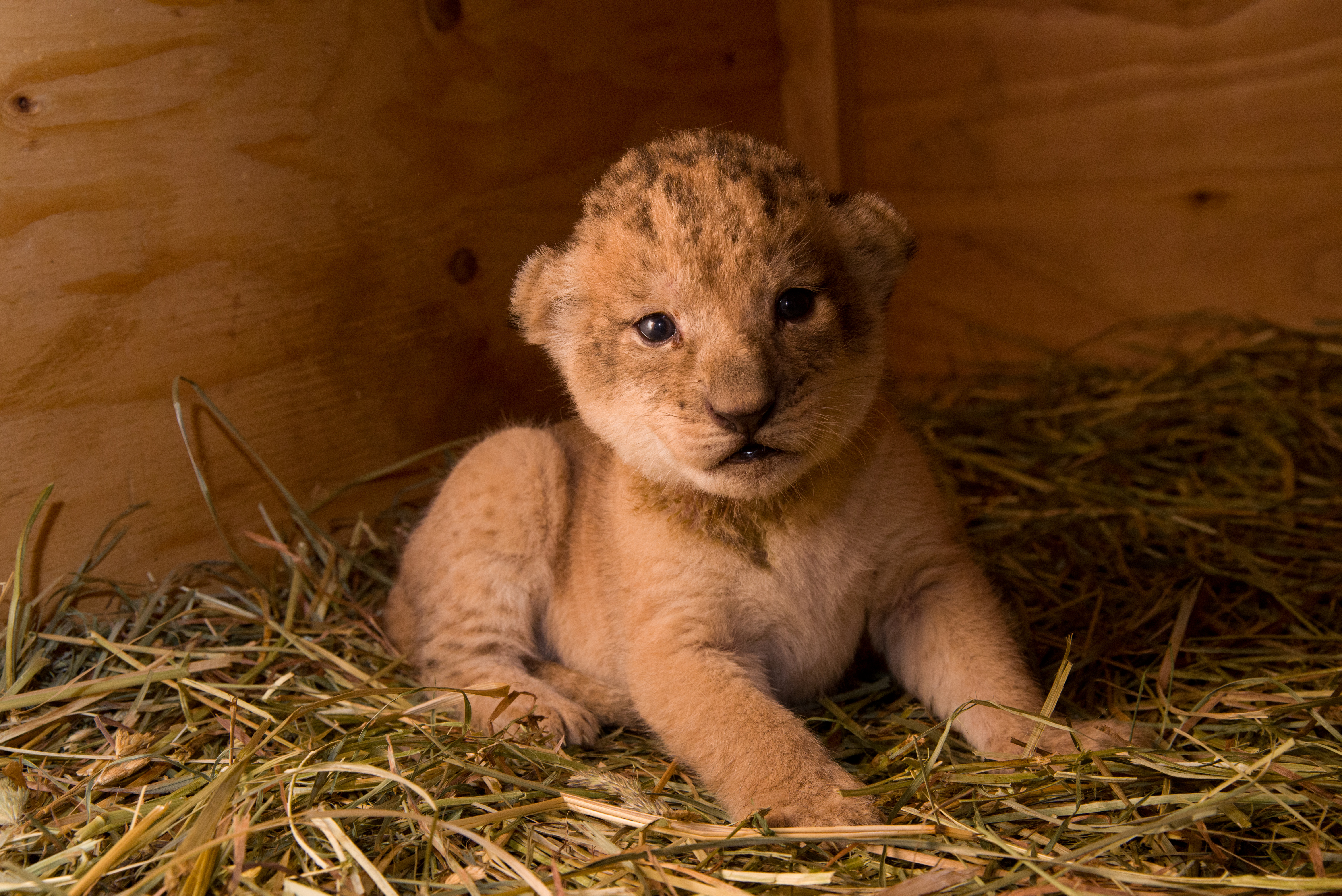
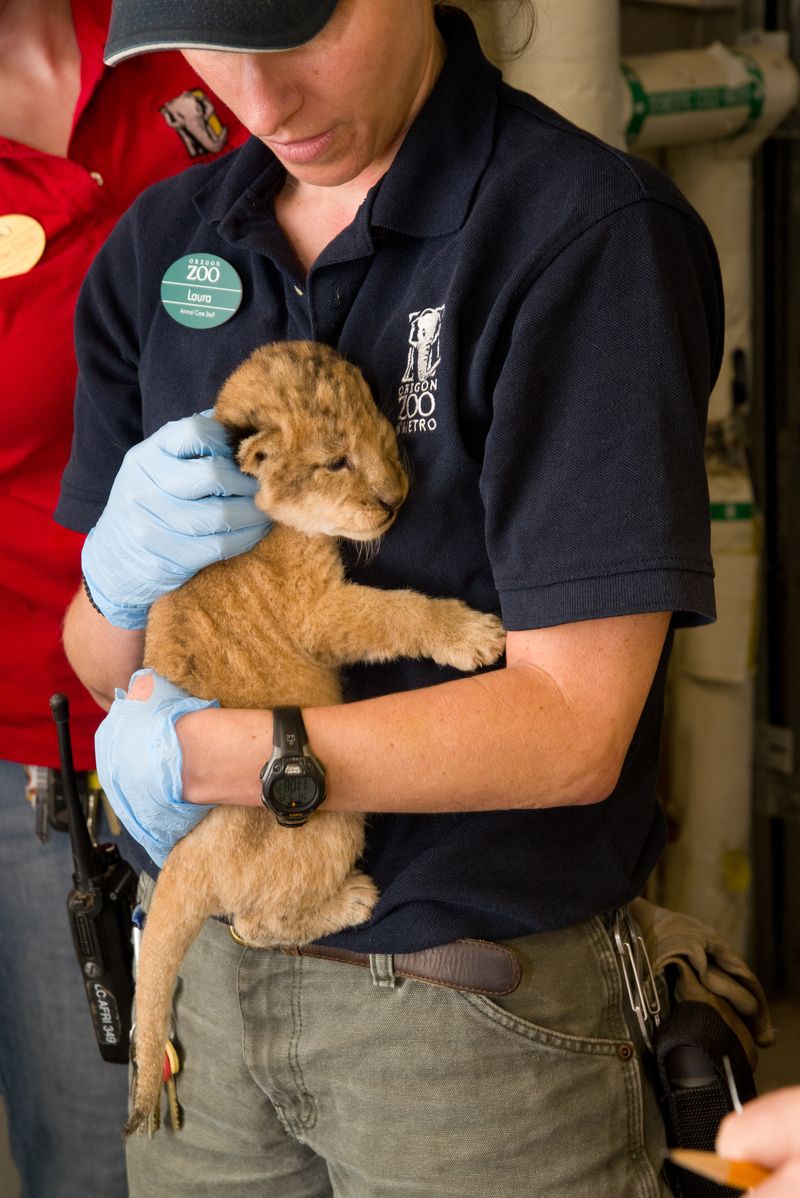
    Oregon Zoo's lions cubs are growing up strong. The three females are now one month old, healthy and playful. The littlest cub, who had some health issues and received some supplemental bottle-feeding, is still the smallest of the trio, but she is doing much better.

    See our original story about the cubs here.
     
    Want to vote for your favorite potential names? The lions' keepers have picked out their favorites, and want to know yours. 

    2 lion


    Lion

    3 lion
    Photo credits: Michael Durham / Oregon Zoo

    See more photos after the fold.

    (more…)

  • ,

    1 lion

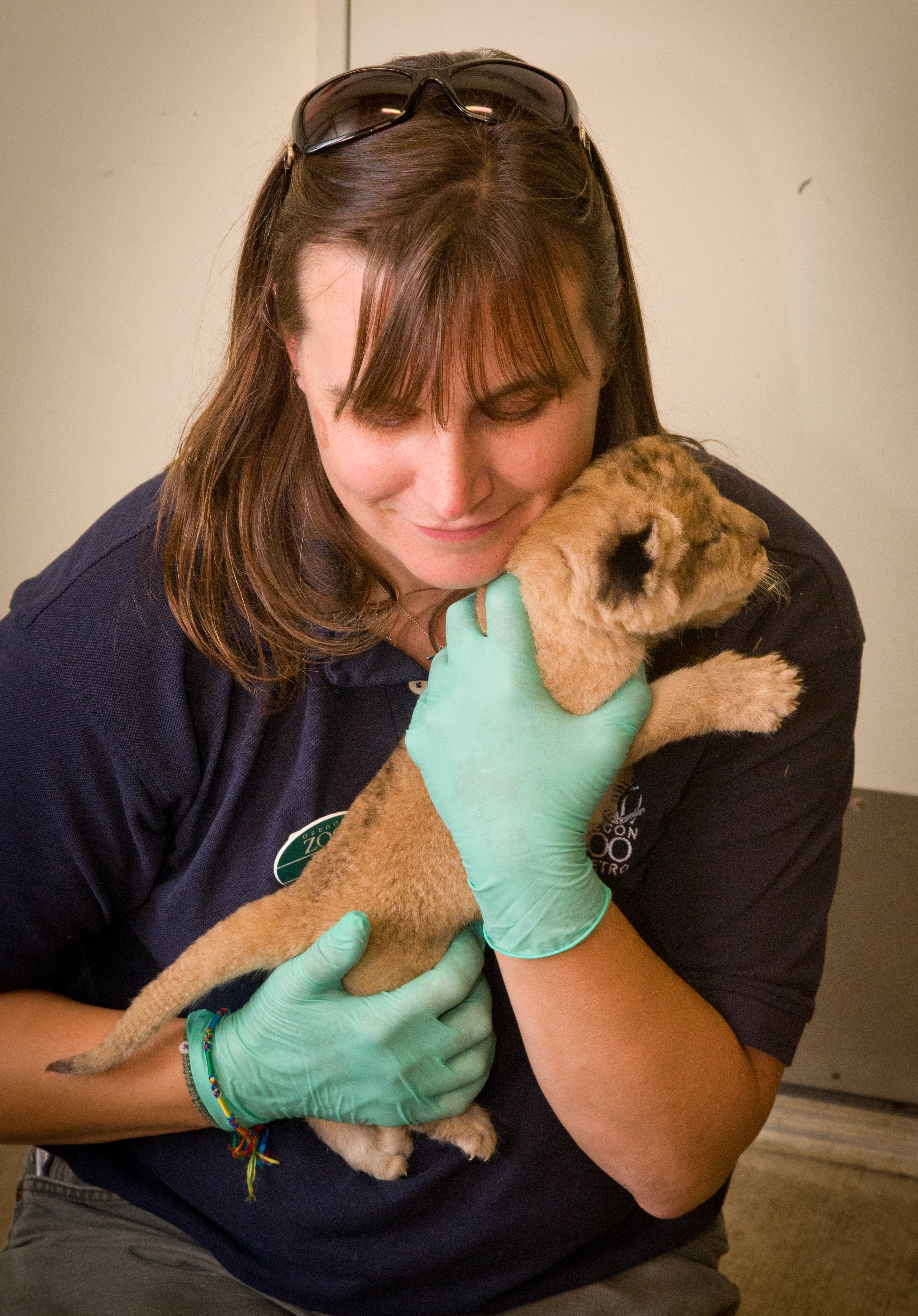
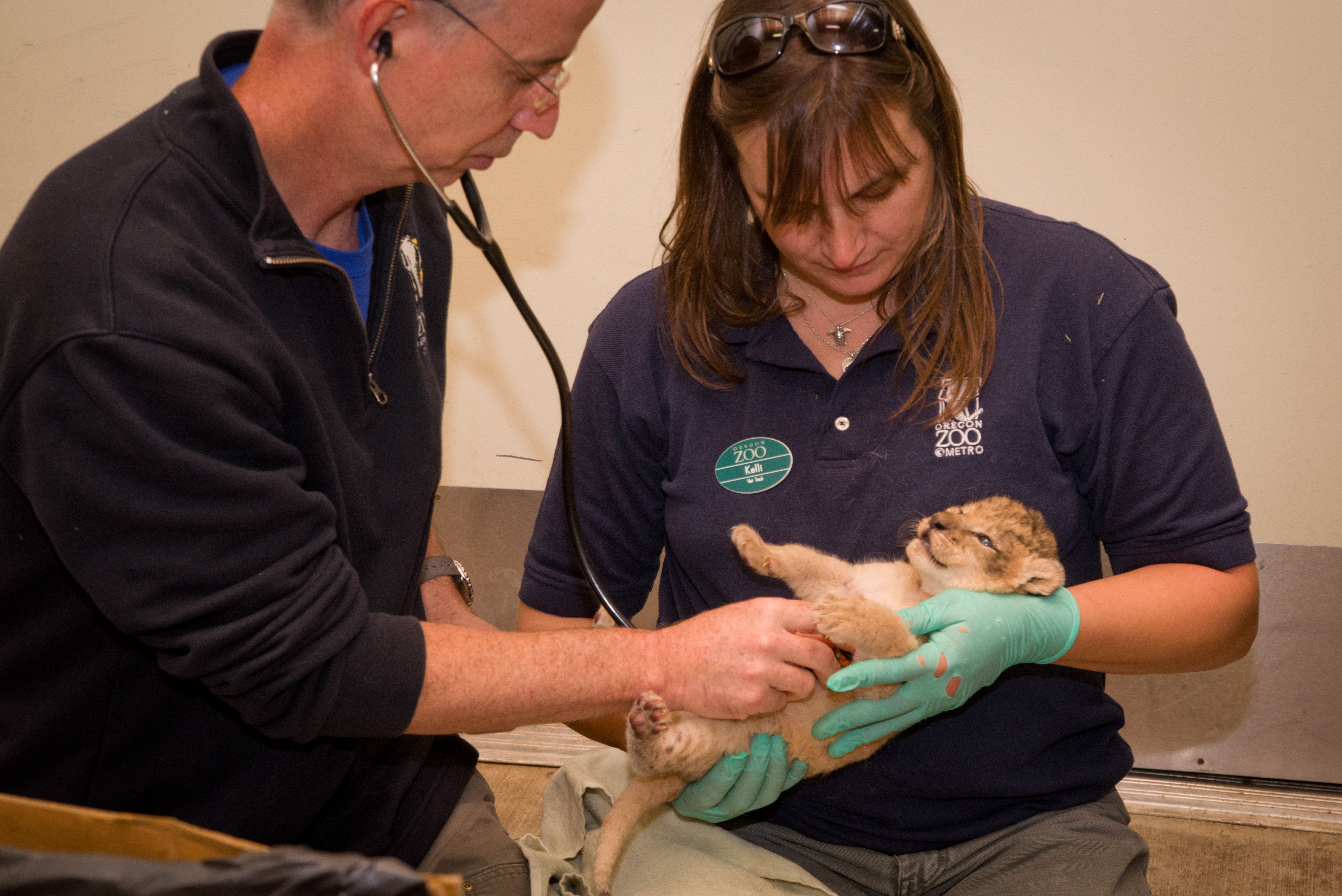
    Neka, a 6-year-old African Lion at the Oregon Zoo, gave birth to three healthy cubs on September 7 between about 8:30 and 10:30 p.m. The litter represents the first offspring for Neka and Zawadi Mungu, the cubs' 5-year-old father. Veterinarians and animal-care staff conducted their first examination of the 12-day-old cubs on Septmeber 19, and answered a question that's been on a lot of people's minds: all three cubs are girls! The neonatal checkup took place a day earlier than planned after keepers, who had been monitoring the young lions via surveillance camera, noticed one of the cubs wasn't interacting with the other two.

    "We had planned on doing our first exam tomorrow," said curator Jennifer Davis, who oversees the zoo's Africa and primate areas. "But this morning, keepers noticed one cub seemed lethargic and wasn't active with the other two. We reviewed our surveillance tapes, and saw that she hadn't nursed at any of the overnight feedings, so we decided to move the exam to today."

    2 lion

    3 lion

    4 lion

    5 lion

    6 lionPhoto credits: Oregon Zoo / Michael Durham

    See a video of the birth:


    Sneak a peek at their first checkup:


    Davis said animal-care staffers first separated Neka from the cubs by offering a treat.

    "We gave her a nice hearty bone to enjoy while we conducted the exam," Davis said. "Neka did great and didn't seem upset at all that we were in there with her babies — it really shows the great relationship and trust she has with her care team."

    With mom thus occupied, the zoo's animal-care staff entered the private maternity den and conducted a complete physical exam on all three cubs, confirming that all are female, with weights ranging from about 2½ to 4½ pounds.

    "The one we are concerned about was dehydrated and had low body temperature and blood-sugar levels," Davis said. "We warmed her up and gave her some supplemental food and fluids. The other two appear to be robust and healthy. They've been nursing regularly, and they're moving around a lot and vocalizing. One is definitely larger and more 'outspoken' than the others — we've nicknamed her Feisty."

    See and read more after the fold!

    (more…)

  • ,

    Ele 1

    Lily, the baby Asian Elephant  had a blast in the water with 18-year-old mom Rose-Tu. Now six months old, Lily was born on November 30 at the Oregon Zoo, which ZooBorns covered HERE.  Many people are surprised to find that elephants love the water and are natural swimmers. Though their bodies are large, they are quite bouyant, using all four legs to paddle while their trunk acts as a snorkel. These animals are strong and hence can swim long distances. 

    The Oregon Zoo is recognized worldwide for its successful breeding program for Asian Elephants, which has now spanned 50 years. Lily’s grandmother, Me-Tu, was the second Elephant born at the zoo, and her great-grandmother, Rosy, was the first Elephant to live in Oregon.

    Ele 2

    Ele 3

    Ele 4
    Photo Credit: Michael Durham/Oregon Zoo

  • ,

    Condorhatch

    A
    critically endangered California Condor chick hatched at the Oregon Zoo on
    April 11, but not without a little help.

    Zookeepers
    and veterinarians performed an emergency “assisted hatch,” helping the little
    bird out of its egg and into the world. The chick had become stuck in the wrong
    position for hatching, unable to move inside its shell, and would not have
    survived much longer without the intervention.

    547655_10151347394161109_272261624_n

    12348_10151347394156109_787132856_n

    555844_10151347394376109_1636107443_n
    Photo Credits:  Michael Durham for Oregon Zoo

    “We
    only do this as a last resort,” said Kelli Walker, the zoo’s lead Condor
    keeper. “It’s kind of the Condor equivalent to an emergency C-section. There
    are so few of these birds in the world that each new chick is incredibly
    important to the recovery of the species.”

    The
    egg, laid on February 14, had been placed in an incubator to keep it safe until the
    hatch, while the Condor parents, Malibu and Maluk, sat on a dummy egg. Usually,
    Walker waits for the chick to begin rotating in its shell, then returns the egg
    to its nest to hatch beneath the parents. This egg, though, proved unusual.

    On
    April 7, monitoring the egg through a process called candling — using a bright
    light source behind the egg to show details through the shell — Walker could
    see that the chick was getting ready to hatch. At this point, keepers can
    usually see a “pip,” or mark, inside the shell, where the chick has begun
    chiseling its way out, but no internal pip was visible.  

    The
    next day, Walker saw that the chick was turned 180 degrees from normal hatching
    position. Because it was able to breathe and was still getting nutrition from the
    egg, Walker waited to see if it would rotate properly, but two days later there
    was still no change. The chick was stuck. 

    Growing
    concerned, Walker contacted zoo veterinarian Mitch Finnegan. Realizing that the
    chick would be unable to hatch alone, the two gently removed a portion of the
    shell and the chick popped its head out.

    After
    a health checkup and a night spent in ICU, the chick was placed in the shell of
    a nonfertile egg Walker had saved from the previous year, and swapped for the
    dummy egg in the parents’ nest box.

    “The
    chick was extremely mad and vocal, which is good,” Walker said. “I think Maluk
    must have heard it vocalizing, because he came into the nest area right away
    and started brooding. The chick seems to be doing well and is very active.”

    Read more below the fold:

    (more…)

  • ,

    Mo 1_swim_lessons-157 copy

    Mo, a North American River Otter born at the Oregon Zoo in late January, took his first dip last week, but not without a lot of help from mom, Tilly. She initiated the swimming lesson by nudging Mo to the water's edge and then plunging in with a firm grip on the scruff of her pup's neck, just as otter moms do in the wild. Even though Tilly is a first-time mom, she has been doing all the right things for her pup, according to keepers.

    "A lot of people don't realize it, but swimming doesn't come naturally to River Otter pups," said keeper Becca Van Beek. "They have to be taught to swim by their moms, and so far Tilly's been an amazing teacher. It might look kind of scary to a casual observer," Van Beek continued. "She'll grab Mo by the scruff of the neck and dunk him in the water. But that's a very natural behavior. Baby Otters are extremely buoyant, so Mo has built-in water wings! It's exactly what we've been hoping to see."

    Now that the threat from fur trappers has declined, North American River Otters are once again relatively abundant in healthy river systems of the Pacific Northwest and the lakes and tributaries that feed them. Good populations exist in suitable habitat in northeast and southeast Oregon, but they are scarce in heavily settled areas, especially if waterways are compromised. Because of habitat destruction and water pollution, River Otters are considered rare outside the Pacific Northwest.

    MoSwimLessons1 copy

    Mo_swim_lessons-118 copy
    Photo Credit: Oregon Zoo/Shervin Hess

    Upon baby-proofing the exhibit, zookeepers gave Tilly and Mo outdoor access during the mornings.  The best time for zoo visitors to catch them is between 9:30 a.m. and noon, though the Otters don't always decide to venture out.

    Mo, named for the Molalla River, is the first River Otter to be born at the Oregon Zoo. He weighed around 4 ounces at birth, but has been growing fast and now is approaching 5 pounds. Adult River Otters usually weigh 11 to 30 pounds. You can read more about Little Mo, see more pictures and another video of the pup from a past post  HERE on ZooBorns.com.

    Read more after the fold:

    (more…)

  • ,

    31513-112

    After several weeks of consideration, keepers at the Oregon Zoo have settled on a name for the new baby River Otter. The pup will be called Molalla, or Mo for short, named after the Oregon river.

    “A lot of North American zoo animals get their names from nations or cultures associated with their native habitats,” said Julie Christie, senior keeper for the zoo’s North America area. “For the River Otters, we like to choose names based on local waterways.”

    31513-123

    31513-138-Edit
    Photo credits: Michael Durham / Oregon Zoo 

    Mo’s mother, Tilly — named after the Tillamook River — gave birth to the pup Jan. 28. The first River Otter to be born at the Oregon Zoo, Mo weighed just over 4 ounces at birth but has been enjoying mom’s naturally high-fat milk and growing fast. He now weighs more than 2 and 1/2 pounds.

    Tilly and her baby have occupied a private, off-exhibit maternity den since the birth, but keepers say zoo visitors have shown a lot of interest in the new arrival even though they can’t see him yet.

    See and learn more below the fold…

    31513-105

    31513-117

    Otterjpg-4f48044777496b61

    31513-106

    “A lot of people wrote in to offer congratulations and make suggestions for his name,” Christie said. “Several people liked the name Willy, short for Willamette. And one visitor suggested naming him Pudding, after a tributary of the Molalla. We thought that was pretty cute.”

    River Otters are very dependent on their mothers when they’re born. It’s usually three to five weeks before young otters open their eyes, and about five weeks before they first walk. Surprisingly, swimming does not come naturally to otters — pups must be taught to swim by their mom.

    Christie said Tilly is continuing to do all the right things as a new mom, and the animal-care staff has been as hands-off as possible; they have only quickly examined Mo when Tilly is taking a short break from mom duty.

    “We give her access to the exhibit during the day,” Christie said. “But Tilly’s been very attentive and doesn’t spend too long away from Mo. We’re pretty sure the pup’s a male, but we can’t be positive until our vets conduct a more thorough exam. Either way, we think Molalla will be a good name. There are plenty of females named Mo too.”

    Keepers are working to “baby proof” the Cascade Stream and Pond section of the zoo’s Great Northwest exhibit and make sure it’s safe for the young otter. If all goes well, zoo visitors will be able to see Tilly and Mo there in a few weeks. Until then, otter fans are encouraged to follow the zoo on Facebook and Twitter for updates.

    Since both Tilly and the pup’s father, B.C., were born in the wild, they are considered genetically important for the breeding otter population in North American zoos. Both parents are rescue animals who had a rough start to life.

    Tilly was found orphaned near Johnson Creek in 2009. She was about 4 months old, had been wounded by an animal attack and was seriously malnourished. Once her health had stabilized, Tilly came to the Oregon Zoo in a transfer facilitated by the Oregon Department of Fish and Wildlife, which oversees the species’ protection.

    The pup’s father, B.C., was found orphaned near Star City, Ark., also in 2009. He was initially taken in by the Little Rock Zoo, but transferred here the following year as a companion for Tilly. The two otters hit it off quickly and have been playful visitor favorites ever since. (B.C. arrived at the Oregon Zoo with the name Buttercup; when he was little, keepers thought he was female.)

    Now that the threat from fur trappers has declined, North American River Otters are once again relatively abundant in healthy river systems of the Pacific Northwest and the lakes and tributaries that feed them. Good populations exist in suitable habitat in northeast and southeast Oregon, but they are scarce in heavily settled areas, especially if waterways are compromised. Because of habitat destruction and water pollution, River Otters are considered rare outside the Pacific Northwest.

    Metro, the regional government that manages the Oregon Zoo, has preserved and restored more than 90 miles of river and stream banks in the region through its voter-supported natural area programs. By protecting water quality and habitat, these programs are helping to provide the healthy ecosystems needed for otters, fish and other wildlife to thrive. River Otters are frequently observed in Metro region waterways.

    Committed to conservation, the zoo is currently working to save endangered California Condors, Oregon Silverspot and Taylor’s Checkerspot Butterflies, Western Pond Turtles and Oregon Spotted Frogs. Other projects include studies on Asian Elephants, Polar Bears, Orangutans and Giant Pandas. Celebrating 125 years of community support, the zoo relies in part on donations through the Oregon Zoo Foundation to undertake these and many other animal welfare, education and sustainability programs.

    Related articles

    Update! Oregon Zoo's Baby Elephant is Two Months Old!
    Three's Company When It Comes to Otter Pups
    Haku the White River Otter Takes a Stroll
    Orphaned Cougar Cubs Find a Home
  • ,

    859127_10151241219101109_1197620839_o

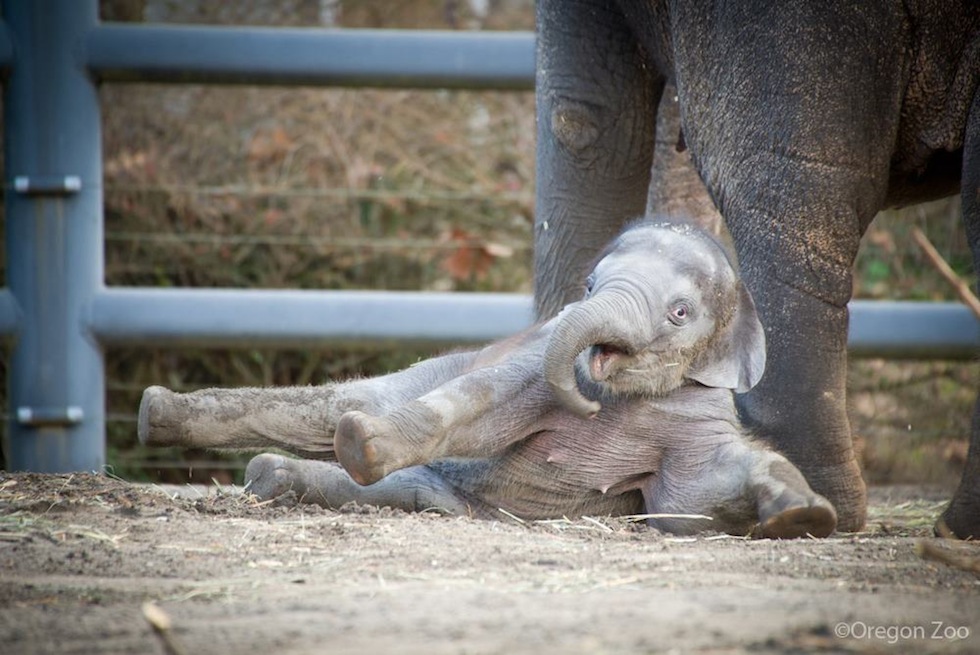
    Lily, the now two-month-old Asian Elephant at Oregon Zoo, is full of energy! And she expends it daily, running around her habitat and rolling in the dirt and hay, all joy in action. She was born on November 30, which you can read about HERE, and our follow-up HERE, when she turned one month old, on ZooBorns.

    The Oregon Zoo is recognized worldwide for its successful
    breeding program for Asian Elephants, which has now spanned 50 years. Lily's
    grandmother, Me-Tu, was the second Elephant born at the zoo , and her great-grandmother, Rosy, was the first Elephant to live
    in Oregon.


    24634_10151240764586109_91735538_n

    Photo Credit: Oregon Zoo

    See how playful Lily has become on the video below:

  • , ,

    12813OC-106

    A pair of young Cougar cubs found orphaned and starving near
    Missoula, Montana briefly took up residence at the Oregon Zoo before being
    transferred to a new, permanent home at Tennessee's Chattanooga Zoo.

    Oregon Zoo keeper Michelle Schireman described the
    5-month-old siblings, one male and one female, as "intensely cute, but far
    from cuddly."

    "The cubs are about as large as medium-sized dogs, with
    paws as big as bread plates," Schireman said. "Without a mother,
    young Cougars lack the skills and resources needed to survive on their own.  They started eating right away the first
    night they were here."

    12813OC-119

    12813OC-125

    Photo Credits:  Oregon Zoo

    Montana wildlife officials said the pair had been seen
    around the Missoula area over a period of several weeks, occasionally
    attempting to raid poultry yards and with no mother in sight. They were
    eventually captured inside a chicken coop by local residents, who took them to
    Montana's Fish, Wildlife and Parks (FWP) service.

    Montana FWP officials quickly contacted Schireman, who
    serves as the Association of Zoos and Aquariums' population manager for Cougars, and she worked to find them a home at the Chattanooga Zoo.

    Wildlife officials don't know what happened to the cubs'
    mother, but the two were emaciated when they were first rescued, Schireman
    said. After two weeks at FWP, with good veterinary care and a steady food
    supply, they filled out quite a bit. The male cub now weighs 37 pounds and the
    female weighs 32.

    Staff at the Chattanooga Zoo were excited to greet the
    newcomers.  "They have long history
    of excellent care and had a space all ready for these cubs," Schireman
    said.

    Cougars — also known as mountain lions, pumas and (in
    Florida) panthers — live mostly in the western United States and Canada. They
    weigh from 75 to 150 pounds and have a carnivorous diet both in the wild and at
    the zoo. Females are either pregnant or raising cubs for the majority of their
    lives. After three months of gestation, two to three cubs are usually born in a
    litter and live with their mother for up to two years.

    With the exception of the Florida panthers, cougars are not
    listed as endangered, but they do face many challenges in other parts of the
    country due to human encroachment and habitat destruction.