The Newest, Cutest Baby Animals from the World's Zoos & Aquariums

Category: Prague Zoo

  • ,

    Zoo Prauge Parrot 1
    Photo credit: Thomas Adamec / Zoo Prague

    Just four days ago, a Scarlet-cheeked Fig Parrot, also known as an Edwards' Fig Parrot, hatched at the Prague Zoo. Although they are rare to find in captivity and births are even rarer, these colorful parrots are doing well in the wild and are listed as "Least Concern" by the IUCN.

    The Scarlet-cheeked Fig Parrot is native to a restricted range in northeastern New Guinea where they are commonly found. They are medium sized birds when full grown measuring around seven inches in height. They are predominately green with colorful plumage around their neck and chest. As their name would suggest, these parrots feed primarily on figs as well as other fruits found in their range.

    Related articles

    Baby Springhares Hop Into Zoo Berlin
    UPDATE! Prague Zoo's Baby Elephant Learning to Use Trunk
  • ,

    _TTT1434

    Early on the morning of March 27, a Przewalski’s Horse was born
    at the Czech Republic’s Zoo Praha, the 219th member of this endangered species
    to be born at the zoo.   Przewalski’s Horses were once extinct in the
    wild and have since been reintroduced to their native central Asian habitat thanks
    to efforts of zoos and reserves around the world.

    The colt, a male, was born to mother Jessica and father
    Len.  Despite chilly temperatures, the
    colt is nursing successfully and finding his way around the zoo’s enclosure.

    _TTT1274

    _TTT1412

    _TTT1392

    _TTT1437
    Photo Credits:  Tomáš
    Adamec, Zoo Praha

    Przewalski’s Horses, a subspecies of wild Horse, are thought
    to be the only remaining true wild Horses in the world.  After the last wild herds in Mongolia were
    wiped out in the 1960s, Zoo Praha and other European zoos held the only members of this species. 
    At one point, only 12 Przewalski's Horses were left in the entire world. 

    Breeding programs in zoos and reserves successfully bred the
    few remaining horses, with individuals being exchanged among facilities to maintain
    as much genetic diversity as possible.  In
    1992, 16 Przewalski’s Horses were released in the wild in Mongolia.  Additional releases in the decades since have
    increased the wild population, but they are still classified
    as Endangered by the International Union for Conservation of Nature.

    Related articles

    Taronga Zoo Sees Double with Birth of Two Critically Endangered Foals
    Rare Rothschild's Giraffe Born at Chester Zoo
    Baby Elephant Birth the First in Prague Zoo's History!
    San Francisco Zoo Announces Healthy Baby Tiger is a Girl
  • ,

    Ele dance

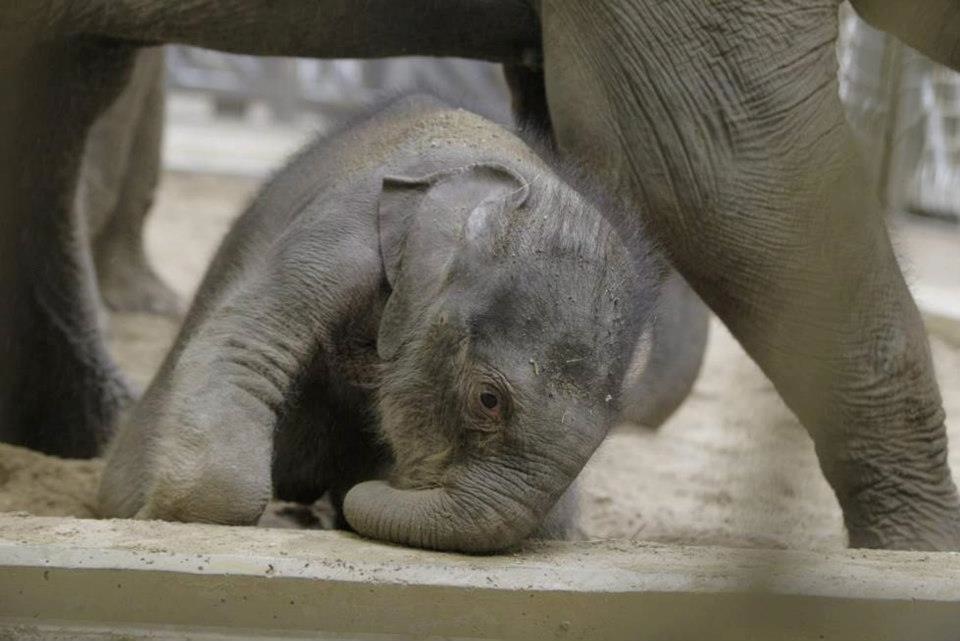
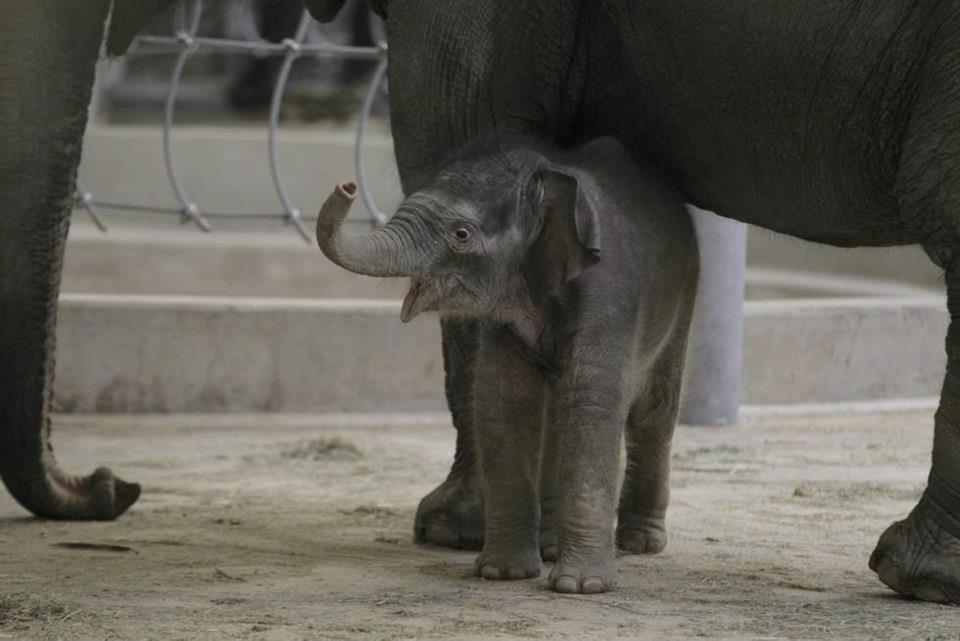
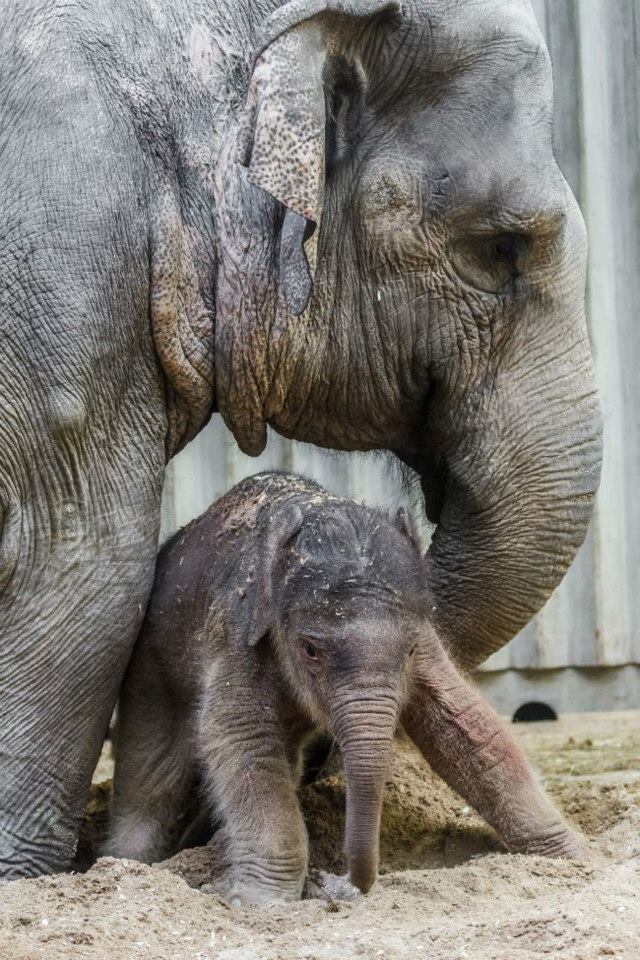
    On February 11, Prague Zoo in the Czech Republic welcomed an Indian Elephant calf, which we originally covered a few weeks back. Now 23 days old, the calf continues to grow stronger and more independant under the watchful eye of mom, Donna.

    While the calf builds relationships with the others in the herd and explores her habitat (sometimes on still-awkward legs), Donna is always close-by to provide help and encouragement with a little nudge from her trunk. Speaking of trunks, the baby has begun learning to use her own, following the lead of Mom and others. The calf is realizing it can be used to put things in her mouth, to communicate, and to act as a brace if she's unsteady or clamboring up from the ground. She gets exhausted running around with big sister Tonya; afterward she nurses and promptly curls up for a nap.

    Ele brace


    Ele eat

    Ele trunk

    Ele walk

    Photo Credit: Tomas Adamec, Prague Zoo

    Video of the birth and the calf's first days of life

  • ,

    Ele mom

    This baby Indian Elephant came into the world at 1:20 p.m. on February 11, at Prague Zoo in the Czech Republic. Very shortly after, the baby succeeded in getting to its feet. The next step was to nurse.  This is cause for extra celebration, as it is the first elephant born at the Zoo in their 82-year history. 

    The birth follows on the heels of the growth of the Indian Elephant herd, when two female elephants arrived from Sri Lanka to join the male and three other females living at the zoo. This new calf's mom, Donna, was one of those females, and herself had arrived from Rotterdam, already pregnant! Jaroslav Simek, Prague Zoo's Deputy Director, said that this birth was very special as it is a great help in expanding the genetic base of European breeding of Indian elephants. 

    The herd now lives in the newly completed large mammal pavillion and habitat created especially for them, which will open to the public on March 30. Zoo guests will then be able to see the baby for the first time.

    Ele feet

    Ele solo
    Photo Credit: Miroslav Bobek, Zoo Praha

  • ,

    Gorilla 6

    The Prague Zoo
    received a very special Christmas present this year:  Western Lowland Gorilla Kijivu delivered a
    healthy baby boy on December 22, just a few months after another of her
    offspring died in a freak accident.

    The baby’s delivery
    went smoothly with no problems, according to Prague Zoo staff.  Kijivu is an experienced mother, and this is
    her fourth baby with the zoo’s male Gorilla, Richard. 

    In July, Kijivu’s
    second offspring, 5-year-old male Tatu, accidentally hanged himself with a
    climbing rope in the Gorilla enclosure. 
    This devastating event was called one of the worst tragedies in Prague
    Zoo’s history, and makes the new infant’s arrival even more significant for the
    zoo staff and the captive Gorilla population. 

    Gorilla 4

    Gorilla 5

    Gorilla 1

    Gorilla 7

    Western Lowland
    Gorillas are the most widespread of all Gorilla subspecies, inhabiting the
    dense rain forests of western and central Africa.  In some parts of their range, the population
    is decreasing by 5% each year as Gorillas are captured as pets or killed for
    bushmeat.  As timber and mining companies
    encroach on the area, valuable Gorilla habitat is destroyed.  The deadly Ebola virus is estimated to have
    killed up to one-third of wild Gorillas. 

    Photo credit  Tomáš Adamec, Prague Zoo

  • ,

    Tayra 3.jpg

    These two little female Tayras were born on August 8 at the Prague Zoo and are being successfully raised by their parents. Tayra babies are very rare. There are only three zoos in Europe who can actually breed this species. These babies are the second in the CZ; in 2011 the Prague Zoo bred them for the very first time in the history of Czech zoos. 

    Two to four babies are the norm in a litter. These girls should grow to be about 24 inches (60 cm) long, plus an 18 inch (45 cm) tail. Most Tayras have either dark brown or black fur with a lighter patch on its chest. The fur on its head changes to brown or gray as it ages. Tayras grow to weigh an average of 11 pounds (5 kgms).

    The Tayra is an omnivorous animal, from the weasel family. The species as a whole is listed as Least Concern by the IUCN, but the northernmost subspecies, Eira barbara senex, is listed as Vulnerable. They live in the tropical forests of Central America, South America and on the island of Trinidad. Wild Tayra populations are slowly shrinking, especially in Mexico, due to habitat destruction for agricultural purposes. 

    Tayra-2.jpg

    Tayra-1.jpg

    Photo Credit: Prague Zoo

    Tayras travel both alone and in groups during both the day and the night. They are expert climbers, and can leap from treetop to treetop when pursued; they can also run fast and swim well. Tayras eat mainly rodents, but also consume carrion, other small mammals, reptiles, birds and fruits. They live in hollow trees, burrows in the ground, or terrestrial nests made of tall grass. Tayras are opportunistic eaters, hunting rodents and invertebrates, and climbing trees to get eggs and honey. In Central Brazil they are called "Papa Mel" (honey eater). They are attracted to fruit and can be found raiding orchards.

  • ,

    Tapir3

    The Czech Republic’s Prague Zoo celebrated the birth of a
    Malayan Tapir on November 6.  Born to
    mother Ivana, the male baby is only the second Tapir ever born in the history of the
    zoo.

    The baby’s birth lasted only 30 minutes, and the calf was immediately
    “alive and kicking,” according to staff reports.  For now, the calf prefers to stay close to
    Ivana in the zoo’s exhibit.

    Tapir2

    Tapir1

    Tapir4

    All Malayan Tapir calves are born with a dappled brown and
    white coat, which offers excellent camouflage in its native southeast Asian
    rain forest.  By the time the baby is
    about six months old, it will develop the solid black and white coloration of
    the adults. 

    Malayan Tapirs are endangered.  Once found throughout the Malay peninsula and
    the Indonesian island of Sumatra, their range has been drastically fragmented in recent years due to deforestation,
    damming of rivers, and illegal trade. 

    Photo Credit:  Prague Zoo

  • , ,

    561392_10150932770967581_425478360_n

    Prague Zoo has a new litter of Bat-eared foxes. The first weeks of their lives involve snuggling close to mom within a safe underground burrow, but the quintuplets are now venturing out into their exhibit. The adult foxes in the zoo's Bat-eared Fox family must patiently endure love bites and playful attacks from their young during these first weeks.

    388075_10150932771247581_725539342_n

    315362_10150932770877581_944275700_n

    255219_10150932771097581_1765241998_n

    551156_10150932771047581_1021556299_n

    578938_10150932771162581_495252159_n
    Photo credit: Tomáš Adamec, Prague Zoo

  • ,

    _TTT1335

    It was a very busy weekend at Prague Zoo. Two Giraffes were born within 12 hours of each other! Three-time mother Diana delivered her 4th calf on Friday evening and nine-time mother Kleopatra gave birth to her 10th. Kleopatra is the oldest female Giraffe at Prague Zoo. These two babies are the 73rd and 74th Rothschild Giraffes ever  born at Prague Zoo. They are 3rd and 4th born this year. Rothschild Giraffes are an endangered subspecies of Giraffe, particularly at risk of hybridization with other subspecies. While difficult to "spot", one feature that distinguishes this subspecies from other giraffe subspecies is a 5th horn that sticks up out of the center of its forehead.

    Kleopatras-baby-1

    Kleopatras-baby-5

    Photo credit: Tomáš Adamec, Zoo Praha

    Jump below the fold to see all the pictures!

    (more…)

  • , ,

    Nose pose

    Prague's Zoo Praha has two new baby reindeer, a boy and a girl. The male was born on Friday the 13th and the female came along about three days later. They went out in the zoo's large paddock for visitors to see for the first time on April 20. The mothers can be seen with their babies following closely behind them.  The father of both is Mirda, who himself was born in Prague Zoo.

    Their large, broad hooves spread apart to form a nearly circular print and help them navigate the soft ground that covers much of the tundra in which they live in the wild. They also aid in digging for food under the snow. 

    Reindeer are a species of deer found in the far northern areas of arctic Europe, Asia, and North America extending onto the tundra above the tree-line. They are called Caribou in America. Domesticated for thousands of years, they were mainly used as beasts of burden and farmed for milk, meat and their hides, reindeer have been the economic basis of the Lapp culture. Today they are raised in many areas of the world outside of their native arctic.

    Bleat

    Face.1

    W:mom

    Jump.1
    Photo Credit: Tomáš Adamec, Zoo Praha