The Newest, Cutest Baby Animals from the World's Zoos & Aquariums

Category: Zoo am Meer Bremerhaven

  • ,

    1_12957461_1018519554850164_3776300842874013772_o

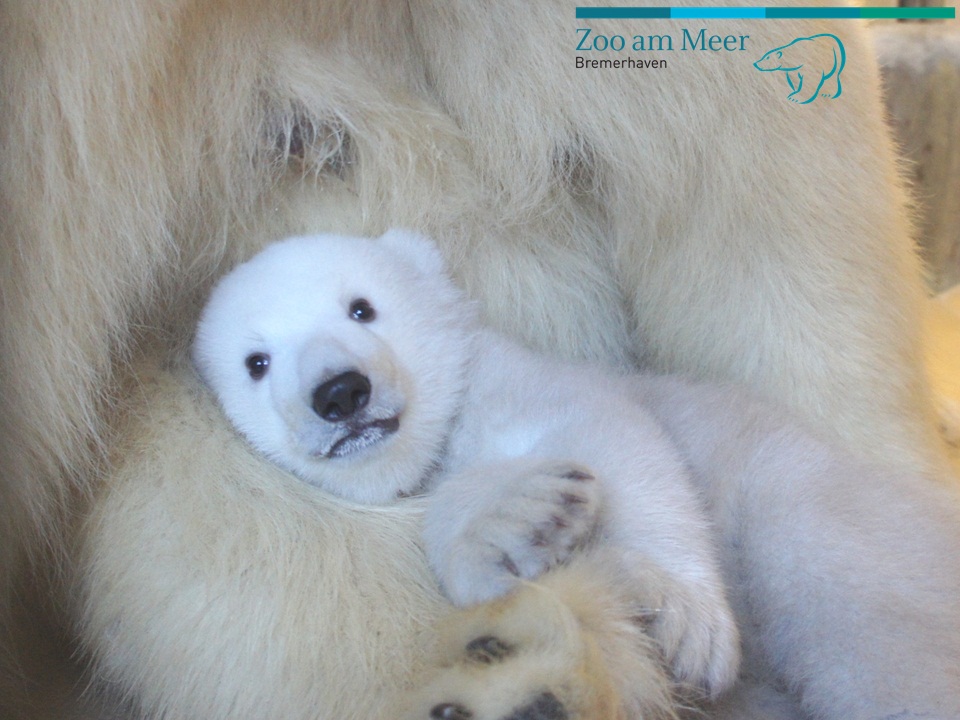
    Lili the Polar Bear cub was born December 11, 2015 at Zoo am Meer Bremerhaven, Germany. Mom, Valeska (age 11), father, Lloyd (age 15), and the whole Zoo have been very happy about this second healthy little bear in two years.

    (Lili´s sister Lale was born on December 16, 2013 and lives now in the Wildlife Adventure Zoo in Emmen, Netherlands.)

    2_12923266_1018519458183507_1768471127195975358_n

    3_12973214_1018519528183500_6650829423545056985_o

    4_12901248_1018519488183504_79784850217026468_oPhoto Credits: Zoo am Meer Bremerhaven


    The new cub and her mother have been on-exhibit for a little more than a month. In the mornings, Lili plays extensively with Mom, and the two recently began swim lessons.

    Recently, Lili impressed Keepers with her sudden preference for water sports. Mama took a dive into the water, and Lili went automatically afterwards.

    Lessons continued for several weeks, and in the late afternoon of May 10, Keepers excitedly reported: “Lili swims!”

    Now the young bear joyfully falls into the water…and doesn’t want to get out! Another step in the development of the small female Polar Bear is done.

    Polar Bears are native to the circumpolar north, including the United States (Alaska), Canada, Russia, Norway and Denmark (Greenland). They are at the top of the Arctic food chain and primarily eat seals.

    Populations are declining due to the disappearance of sea ice, and experts estimate that only 20,000-25,000 Polar Bears are left in the wild. Some scientists believe if the warming trend continues, two-thirds of the Polar Bear population could disappear by the year 2050. They are currently classified as "Vulnerable" on the IUCN Red List.

    5_13131273_1038006326234820_5933082141333099715_o

    6_13161718_1038006249568161_1114447794979797107_o


  • ,

    Folie2How fast can a veterinary team perform a physical exam on a baby Polar Bear?  At Germany’s Zoo am Meer, it took only four minutes for the staff to examine, vaccinate, determine gender, and weigh a cub and return the baby to her anxious mother.

    Folie7
    Folie1

    Folie3Photo Credit:  Zoo Am Meer

    The female cub was born on December 16 to first-time mom Valeska, age 9, and father Lloyd, age 13.  Since then, the cub has remained in the den with Valeska, who has proven to be an excellent mother to her cub. 

    Zoo staff members describe the cub as playful and energetic.  At her exam, the cub weighed 18 pounds (8.5 kg), and has a lot of growing to do – adult female Polar Bears weigh 400-700 pounds (180-370 kg).  She’ll remain behind the scenes with Valeska until late in April or May.  At that time, she’ll learn how to swim and explore the outdoors.

    Polar Bear populations are imperiled by climate change.  Polar Bears require sea ice as a place to stand while searching for passing seals to hunt.  Many Polar Bears are malnourished because their hunting season – which occurs in winter when the sea is filled with ice – becomes shorter every year, preventing them from building fat reserves to survive through the summer, when hunting is not possible.

    See more photos of the cub below.

    (more…)

  • ,

    Sq 3-jpg

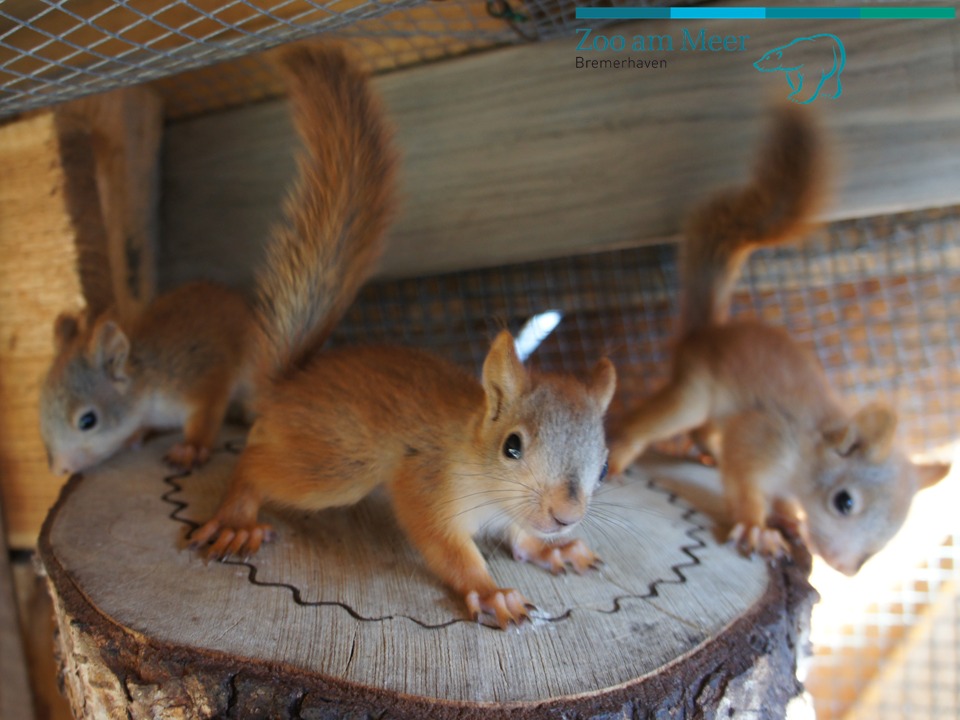
    Germany's Zoo am Meer Bremerhaven announced the arrival of its first Siberian Red Squirrel offspring. The five healthy youngsters were born seven weeks ago and are now old enough to begin exploring their habitat. This Siberian subspecies (Sciurus vulgaris exalbidus) is rarely kept in European zoos, so getting a chance to see these rambunctious and playful little red babies is a treat for zoo visitors.

    Red Squirrels of all kinds are found across most of Europe, into northern Asia and Siberia. In the last 60 years, there has been a dramatic decline of the native Red Squirrel due to loss of habitat, disease, and, in particular, competition from its larger cousin, the American Grey Squirrel (Sciurus carolinensis). The Grey Squirrel debarks mature native trees, which results in the trees dying. They can also eat and digest the fruit and flowering parts of plants while they are still green in the spring, whereas the Red Squirrel cannot, thus going hungry in the late summer and autumn with no stock left on the trees or plants to ripen. Also, the Grey Squirrel carries the Squirrel Pox Virus without being affected by it, but the virus can be passed onto Red Squirrels with devastating results. So these zoo-born babies are very important to preserving the species.

    Sq cu-jpg

    Sq hole-BMP
    Photo Credit: Joachim Schoene / Archive Zoo am Meer


    (more…)

  • ,

    Zoo am Meer Bremerhaven Germany Northern Gannet 2013-3

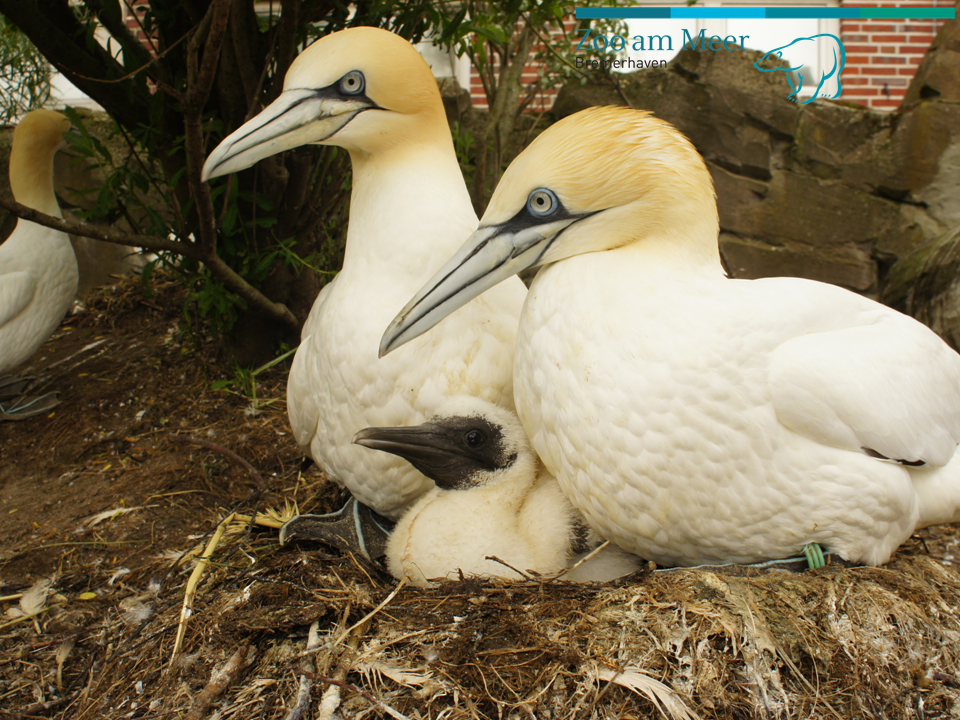
    Three healthy Northern Gannet chicks hatched at Zoo am Meer Bremerhaven on the Northern coast of Germany,
    on May 21 and on June 5
    and 18. In the early 1980s, Zoo am Meer
    was the first zoo to
    successfully breed Northern Gannets in captivity. Up
    until today, Bremerhaven has remained one of very
    few European zoos to have successful hatchings of Northern Gannet chicks almost
    every year.


    Zoo am Meer Bremerhaven Germany Northern Gannet 2013-1

    Zoo am Meer Bremerhaven Germany Northern Gannet 2013-2

    Zoo am Meer Bremerhaven Germany Northern Gannet 2013-4
    Photo credits: Joachim Schoene / Zoo Am Meer Bremerhaven

    According
    to the International Union for Conservation of Nature’s (IUCN) Red List of Threatened
    Species, the bird is listed as a species of Least Concern. Found along both sides of the Atlantic
    Ocean, Northern Gannets are a common bird with an uncommon ability: with an
    adult wingspan measuring nearly six feet (175 cm), these marine birds catch
    shoaling fish by nose-diving from heights of up to 130 feet (40 m). In the
    wild they are colonial, making nests of grasses and seaweed on coastal ledges
    and hilltops. Colonies breed in northern France, the United Kingdom, Ireland, Iceland, Norway, and the eastern tip of Quebec. Pairs
    produce a single egg in the month of May, which is brooded with the feet for
    about 45 days. After five years, young Northern Gannets develop the elegant
    white and black plumage of mature adults.