The Newest, Cutest Baby Animals from the World's Zoos & Aquariums

Category: Cat

  • , ,

    _MG_3108-Lion cub-w-logoThe Dallas Zoo is thrilled to announce the birth of the first African Lion in more than 40 years.

    The female cub, named Bahati Moja, was born on March 17.  Bahati Moja means “lucky one” in Swahili, a fitting name for a cub born on St. Patrick’s Day and who has overcome considerable odds to enter the world.

    17499094_10154530579696819_7253979983777615540_n
    _MG_0669-w-logo
    _MG_3118-Lion cub w-logo
    Photo Credit: Dallas Zoo

    Bahati Moja’s mother, Lina, had previously delivered stillborn cubs. The zoo’s veterinary team assisted Lina to ensure a successful outcome, and Bahati Moja is now called a “miracle baby” by the zoo staff.

    As a result of the professionalism and dedication of the keepers and veterinary staff, Bahati Moja is developing right on schedule as she bonds with Lina in the den.  Keepers report that the little cub is nursing, gaining weight, and getting feisty.  Mom and cub will remain behind the scenes for a few months before venturing into the Lion habitat.

    African Lions (and their counterparts, Asiatic Lions) once dwelled across most of Africa, the Middle East, and the Indian subcontinent.  Today, Asiatic Lions have nearly vanished from the wild, and African Lions’, once numbering in the hundreds of thousands, have dwindled to as few as 20,000 individuals.  African Lions are listed as Vulnerable by the International Union for Conservation of Nature.


    Related articles

    Cheetah Cubs Test Mom's Patience
    Golden Jackal Pups Emerge at NaturZoo Rheine
    Lion Cubs Show Their Playful Side
  • , ,

    32004780734_620b074269_z

    Three Malayan tiger cubs born February 3 at the Cincinnati Zoo & Botanical Garden are gaining weight, opening their eyes and getting feisty! 

    You first met the cubs on ZooBorns when the zoo announced that the trio would be cared for by zoo keepers because their mother did not care for them. Thanks to the staff’s dedication and hard work, the cubs are thriving.

    32032833734_f002e1781c_z
    32724030031_3838d749a2_zPhoto Credits:  Kathy Newton, Cassandre Crawford, DJJAM Photo, Mark Desmond

    “They’re fed by nursery staff six times a day and have already graduated from two to three ounces per feeding,” said Mike Dulaney, curator of mammals at the Cincinnati Zoo and vice coordinator of the Malayan Tiger SSP. “Before they open their eyes, they usually just eat and sleep.  Now that they can see where they’re going, they will start to become more active.”

    One of the cubs, referred to as #1 until the cubs’ genders are known and names are given, is receiving special care from a local chiropractor to help it keep up with the others.  Soon after the cubs arrived in the Nursery, caregivers noticed that #1 was having trouble holding its head up.

    “It was obvious to me that something wasn’t right.  The cub’s neck appeared to be stuck at an odd angle,” said Dawn Strasser, a 35-year veteran in the Zoo’s Nursery. “Massaging the neck muscles helped with the stiffness, but the cub was increasingly lethargic and not suckling well.”

    Strasser reached out to Dr. Mark Sperbeck, a chiropractor who works on humans and animals of all sizes (from 3-pound Tiger cub to 1,000-pound Horse) and asked him to make a house call.  Three adjustments later, it’s difficult to see a difference between #1 and its litter mates. The neck and spine are back in place and the cub is eating well.  It’s actually a little larger than the other two.

    According to Dr. Sperbeck, the cub’s top cervical bone (C1) was out of alignment. Since 95% of the body’s nerve impulses travel through this vertebra, he explained, it’s key to proper body function. “After the first adjustment, the cub slept for almost 24 hours and woke with improved mobility, strength and suckling ability,” said Strasser.

    This is the first time that the zoo has called in a chiropractor, but it has a long history of collaborating with experts from outside the zoo, including dentists, imaging technicians, medical specialists.  

    Malayan Tigers are Endangered with fewer than 500 left in the world. Major reasons for the population decline include habitat destruction, fragmentation and poaching.

    More photos of the Tiger cubs below the fold!

    (more…)

  • , ,

    _RST726920151016
    A litter of four male African Lion cubs born at Taronga Western Plains Zoo on November 19 is out of the den and playing outside. 

    The yet-to-be-named cubs are doing very well under the watchful eye of their mother Maya and are developing on schedule.  This is the second litter of cubs for Maya and her mate Lazarus.  Their last litter was born in February 2015. 

    _RST726520151016
    _RST727720151016
    Photo Credit:  Rick Stevens

    Though the family has been secluded in their den for the last two months, keepers monitored them via a video camera link.  By staying hands-off, keepers gave Maya and her babies time to bond.  Because Maya is an experienced mother, keepers had confidence in her ability to care for four cubs. 

    The cubs recently had their first health check and received their first vaccinations.  All four had a clean bill of health.  At birth, each cub weighed about three pounds; they now weigh about 18 pounds each. 

    The cubs have just started sampling solid foods and exploring outside their den behind the scenes. 

    African Lions are classified as Vulnerable in the wild with populations decreasing due to human-animal conflict, depleted prey base, and habitat loss.

    (more…)

  • , ,

    Cheetazesling 1
    A Cheetah mom at Burgers’ Zoo in the Netherlands has her paws full with a litter of six frisky cubs.

    Born September 14, the cubs have spent the last few months behind the scenes in their den, just as they would in the wild.  They recently explored outdoors for the first time.

    Cheetazesling 4
    Cheeta-zesling5Photo Credit:  Burgers' Zoo

    This is the second litter of six cubs for the mother.  The coordinator of the European breeding program for Cheetahs notes that only about 5% of Cheetah litters contain six cubs – most have three to four cubs at a time.

    The cubs are still nursing but have started to eat meat.  They sport the typical gray “mantle” seen in young cubs, which may offer camouflage.  The mantle is shed as the cubs grow older.

    Cheetahs are the world’s fastest land mammal, able to reach speeds of 70 mph for short intervals.  But due to poaching for wildlife trafficking, loss of habitat, and human interference, Cheetah numbers have fallen drastically in the past decades, with fewer than 8,000 remaining in Africa.  These cats are classified as Vulnerable by the International Union for Conservation of Nature, and as a Species of Priority in efforts to curb wildlife trafficking in northeastern Africa.

    Zoo breeding programs like that at Burgers' Zoo are key to protecting Cheetahs for future generations.

    (more…)

  • , ,

    IMG_2825
    A trio of endangered eight-month-old Snow Leopard cubs at the Tulsa Zoo got early Christmas presents from their keepers – including a life-sized cardboard Christmas tree.  In a matter of minutes, the curious cubs felled the tree, then went on to explore giant candy canes, garlands, and more. 

    IMG_2829
    IMG_2750
    IMG_2766
    IMG_2760Photo Credit:  Ruth Holland/Tulsa Zoo

    All of these items are enrichment for the cats.  Enrichment provides novel smells, textures, tastes, or play items to stimulate animals physically and mentally.  

    Born May 3, the cubs’ birth was recommended by the Snow Leopard Species Survival Plan of the Association of Zoos and Aquariums, which manages rare species to maintain high genetic diversity. Sherab, their mother, takes excellent care of her cubs.

    Named Kavi, Amir, and Zahra, the cubs have experienced some health challenges since birth.  All three were born with congenital abnormalities in their eyelids, which resulted in incomplete eyelid formation.  These abnormalities left their eyes more vulnerable to trauma or other damage. Eyelid abnormalities affect domestic and exotic felines, including Snow Leopards. To correct these abnormalities, the zoo enlisted the help of a veterinary ophthalmologist who performed corrective surgeries to give the cubs more functional eyelids. The surgeries were a success, so each cub now has properly functioning eyelids. To ensure their safety and wellbeing, Kavi, Amir and Zahra remained behind-the-scenes with mom, Sherab, for their first few months as they received constant care and monitoring.

    Native to Central Asia’s mountainous areas from Afghanistan to Kazakstan and Russia to northern India and China, Snow Leopards are listed as endangered due to poaching and habitat loss.

    Related articles
    Meet the New Rookie Chicago Cubs
    Lynx Kittens Play All Day
    Little Giants Come Out Of Their Shells
  • , ,

    Amur Leopard Cub-1
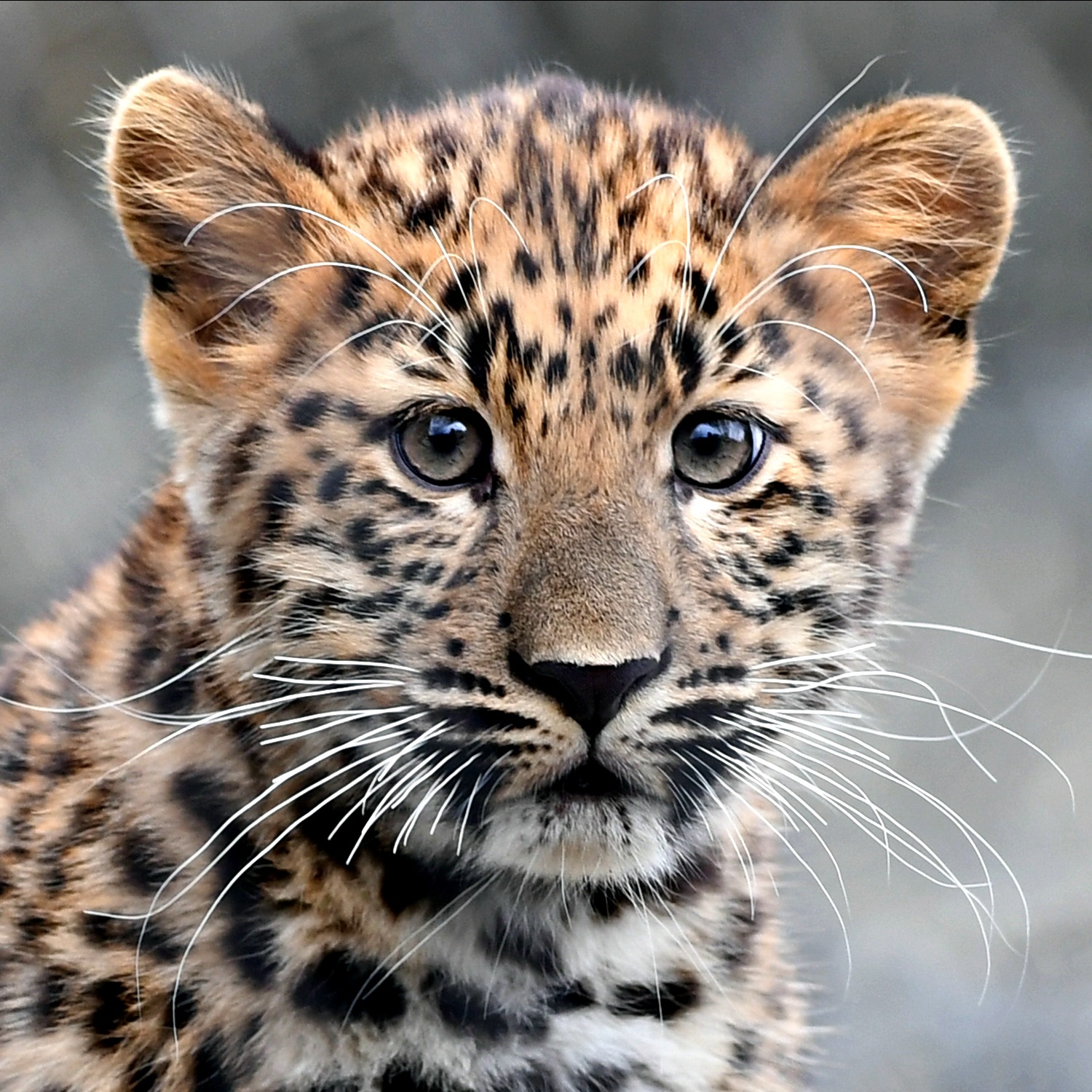
    A 4-month-old Amur Leopard cub at the Brookfield Zoo doesn’t know that he’s one of only 300 of these big cats alive today.  He just wants to play!

    The 20-pound male cub, named Temur (pronounced Tee-moor), has been bonding behind the scenes with his mother, Lisa, since his birth on July 22.  He made his public debut at the zoo in November.

    Amur Leopards are Critically Endangered, with fewer than 70 animals left in the Russian Far East.  Approximately 200 Amur Leopards live in zoos around the world. 

    Amur Leopard Cub-2
    Amur Leopard Cub-3Photo Credit:  Brookfield Zoo
    With such a small group of animals, managers are careful to maintain genetic diversity in the population. By pairing unrelated animals for breeding and moving individuals among zoos, they have maintained 89 percent genetic diversity in the group.  For example, Lisa, the mother, was born at the Saint Louis Zoo and the sire, Kasha, came from Le Parc Des Felins in France. 

    The biggest threats to these solitary animals are poaching; retribution hunting; habitat loss from fires, logging, and human settlement; and a decline in their prey. Temur’s birth marks a crucial addition to the population and will help raise awareness about the importance of conservation and the threats this species faces in the wild.

    With keen hearing, vision, and smell, Amur Leopards hunt at night in Russia’s dense forests. Amur leopards are the northernmost subspecies of leopard in the world and are often mistaken for snow leopards.

    (more…)

  • , ,

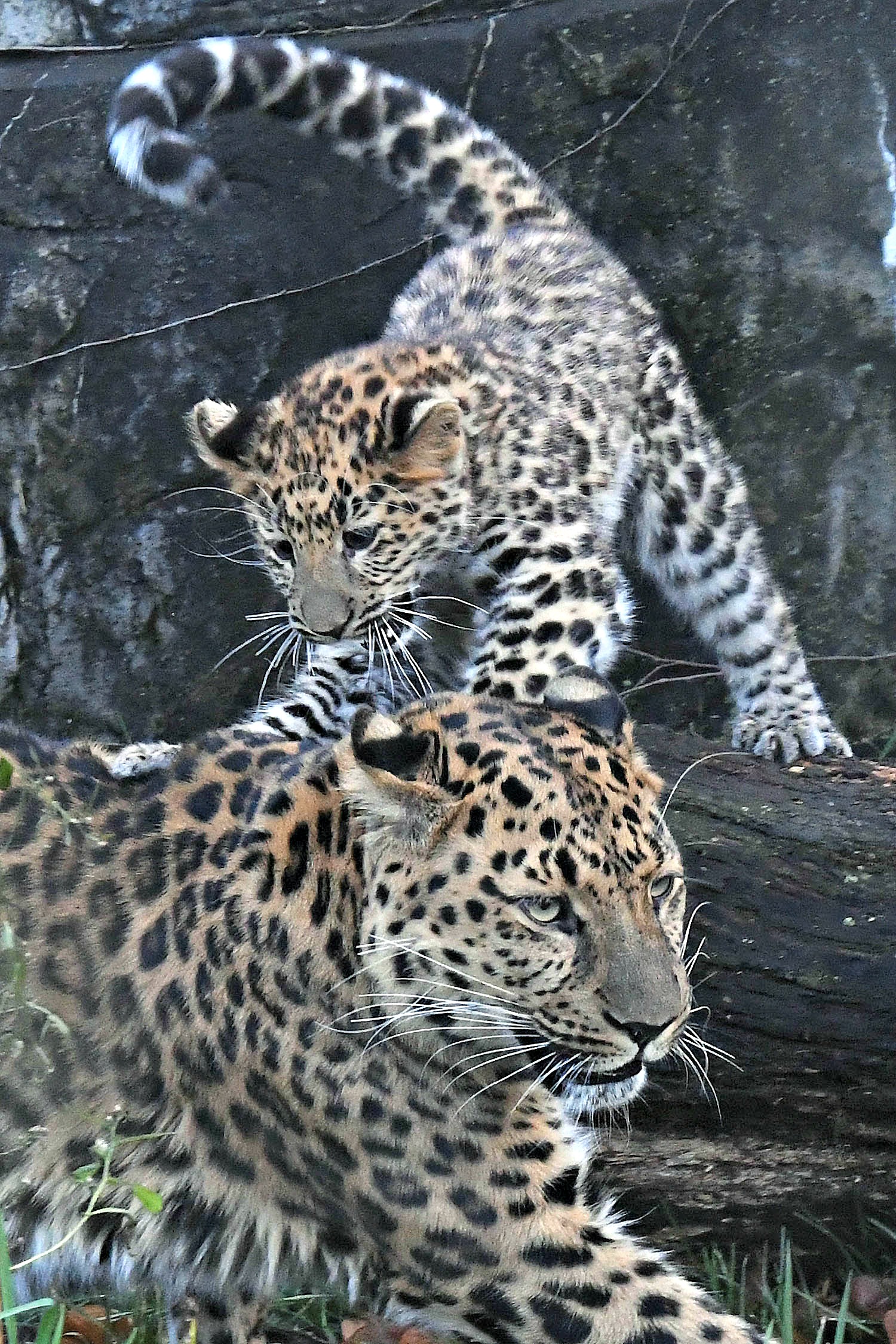
    Babette_AGBabette the baby Jaguar met her first pumpkin this week – and the event was caught on camera by Tulsa Zoo staff.

    Babette has been practicing her big-cat skills (as seen in this recent ZooBorns post) and she put those formidable talents to use attacking two large pumpkins delivered by zoo keepers.   The mighty little Jaguar bit, pounced, swatted and successfully subdued the large orange vegetables.

    Babette_ag2
    Babette_ag4
    Babette_ag3Photo Credit:  Aaron Goodwin
    Video Credit:  Beth Wegner
    Why did zoo keepers give pumpkins to the Jaguars, which eat only meat?  The pumpkins served as enrichment for the cats.  Zoos provide novel items like new foods, scents, boxes, and “toys” as enrichment to stimulate animals physically and mentally. 

    As a cub, Babette is naturally curious and energetic.  She has become a fan favorite since her birth was announced in September when she was about six weeks old.  Born June 29 to female Ixchel, Babette was named after her father Bebeto, who died of age-related complications in April. 

    Babette will play an important role in the future of her species by someday breeding with an unrelated male as part of the Species Survival Plan managed by the Association of Zoos and Aquariums.  Jaguars are listed as Near Threatened by the International Union for Conservation of Nature due to the loss of rain forest habitat in Mexico, Central America, and South America. 

    Related articles
    Beautiful Babette Developing Big-Cat Skills
    Meet Little Blue Eyes
    Feeding Time for Red Panda Cubs – ZooBorns
  • , ,

    Cotswold Wildlife Park's Lion cubs DSC_0156 (2) photo credit Natasha Jefferies
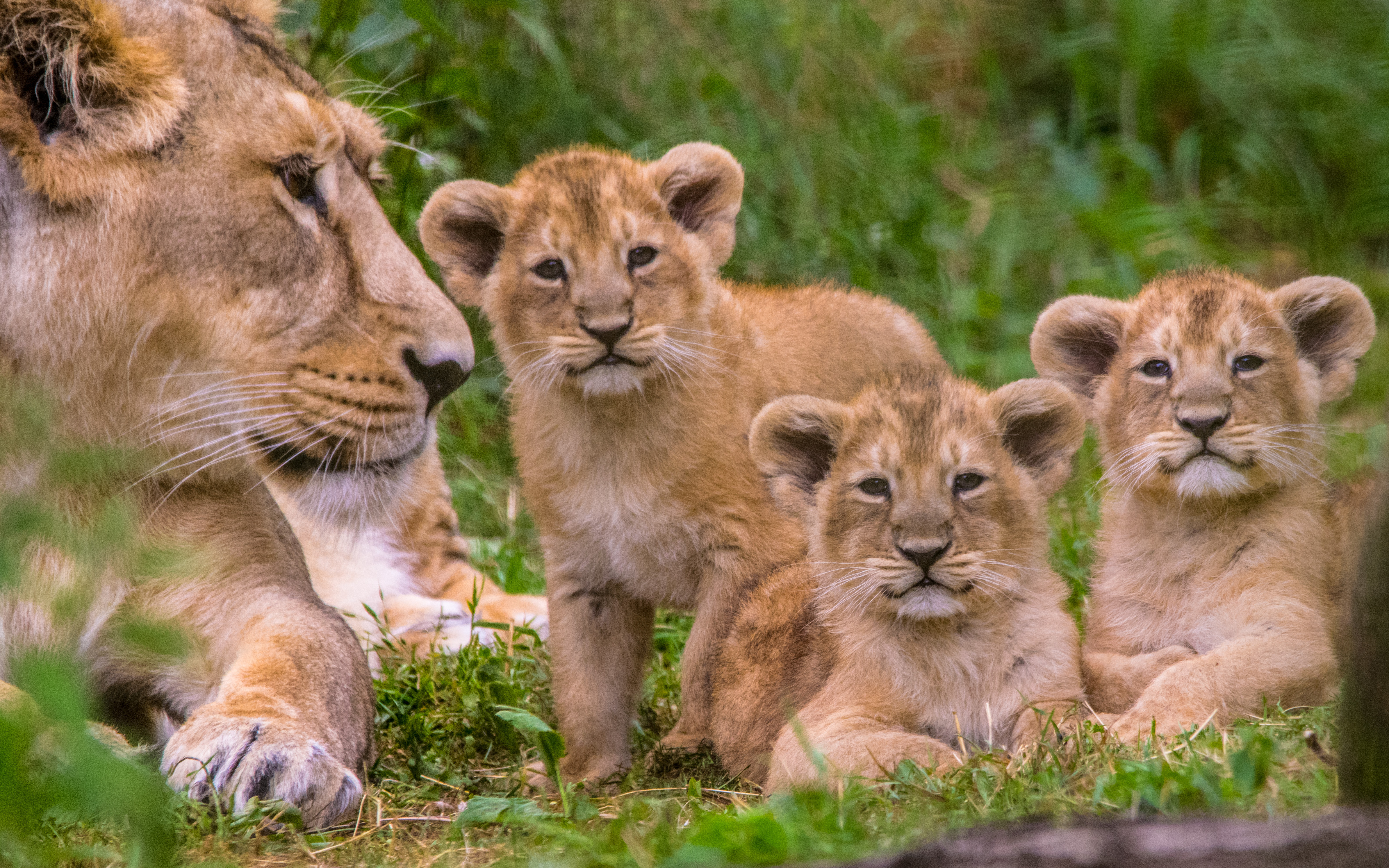
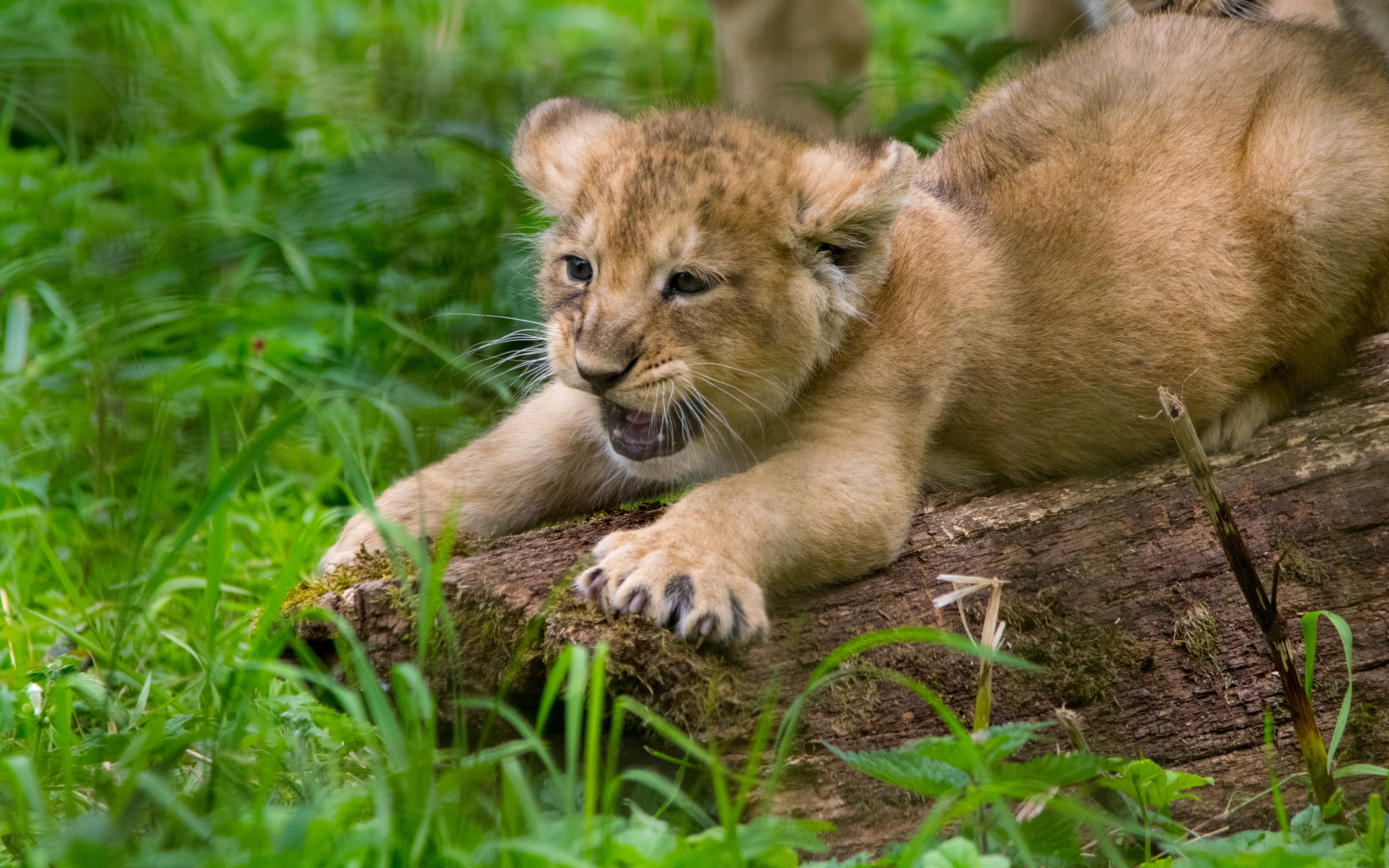
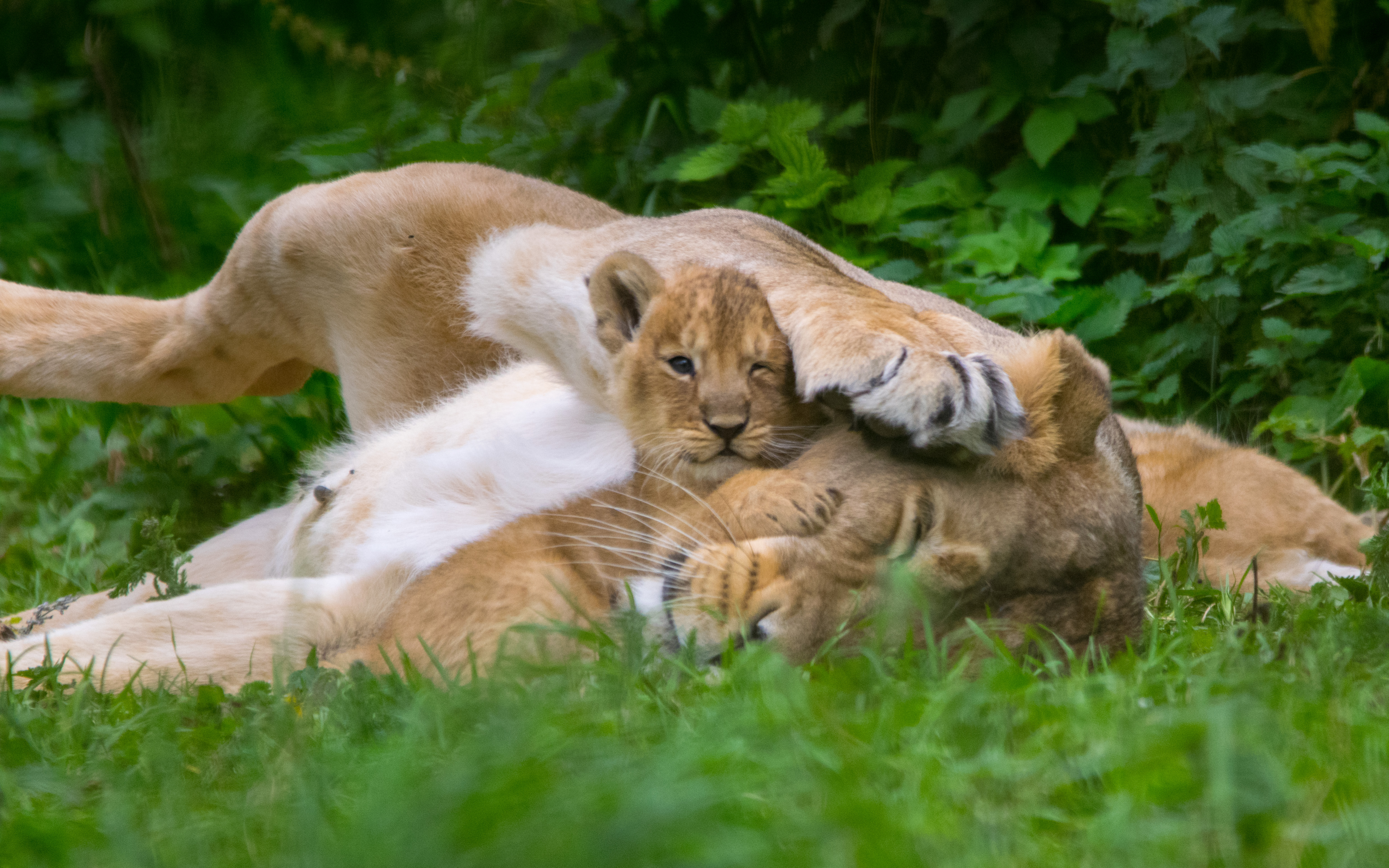
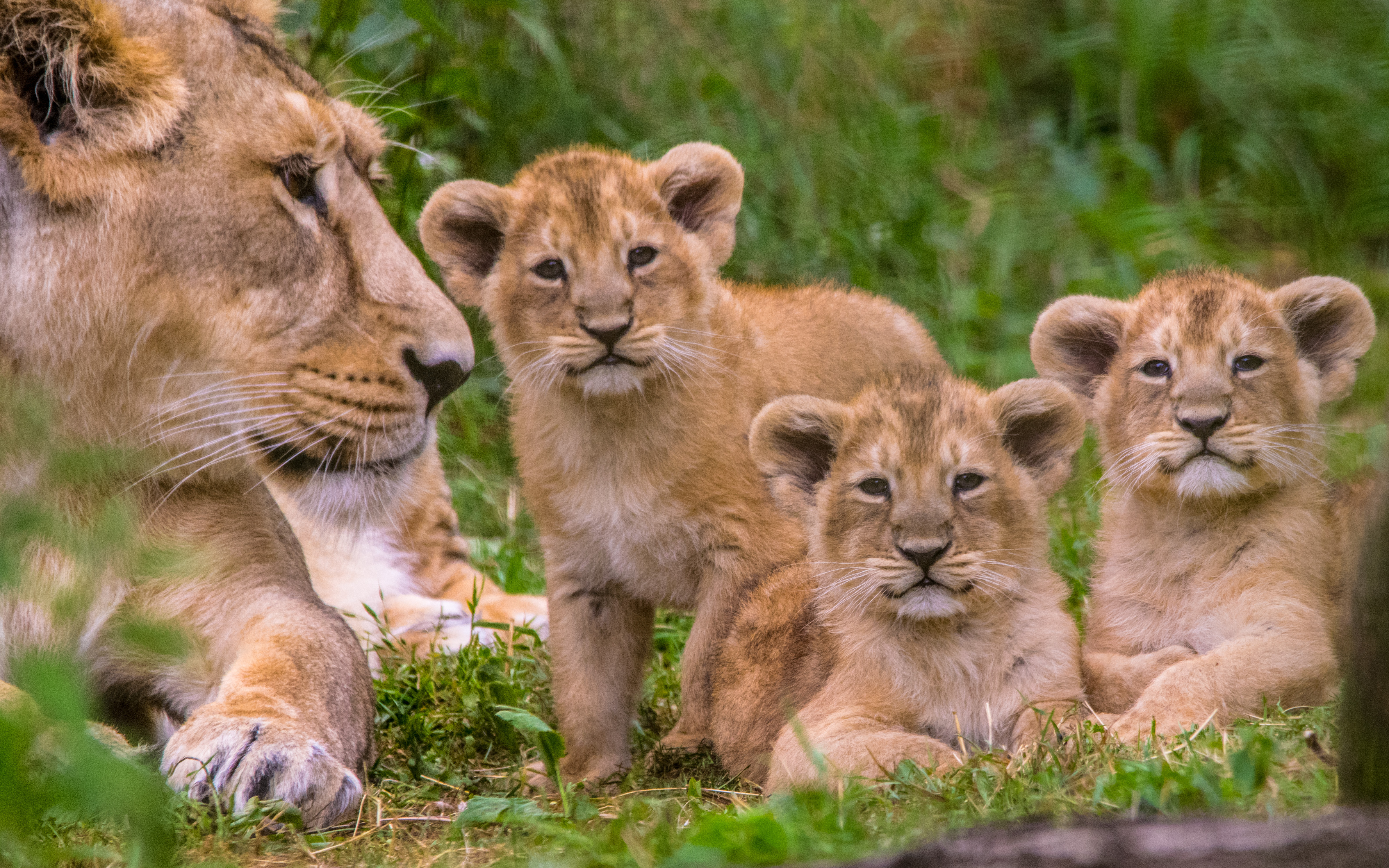
    It’s three times the fun when Asiatic Lion cub triplets Kali, Sita, and Sonika come out to play at Cotswold Wildlife Park

    Born May 25, the three female cubs have spent the last two months in the birthing den with their mother, Kanha.  Lionesses rear their babies in seclusion and often reject them if they are disturbed, so the staff monitored the cubs via closed circuit TV.

    Cotswold Wildlife Park's Lion cub DSC_0156 (15) photo credit Natasha Jefferies
    Cotswold Wildlife Park's Lion cubs DSC_0156 (11) photo credit Natasha Jefferies
    Photo Credit:  Natasha Jeffries
     
    This is the first litter of Lion triplets born at Cotswold since the park opened in 1970. 

    According to the staff, Kanha and Rana are proving to be excellent first-time parents and all three boisterous youngsters are healthy and developing into confident cubs.

    Dad Rana met the cubs in the Lions’ outdoor enclosure last week, but for the last two months, he lived next door and took a great interest in the youngsters. 

    Asiatic Lions are one of the world’s rarest big cat species. Wild population numbers have declined drastically over the last century, almost to the point of extinction. Once found throughout much of southwestern Asia, they are now only found in India’s Gir Forest with the 2015 census putting the entire wild population at 523 animals. 

    Though they live in a protected area, conservationists worry that a disease epidemic could wipe out the entire Asiatic Lion population.  Breeding programs in zoos are extremely important to the future of this subspecies.  Asiatic Lions are classified as Endangered by the International Union for Conservation of Nature.

    See more photos of the cubs below.

    (more…)

  • , ,

    16_07_12 13 DSC_2020_CreditAlexRiddell
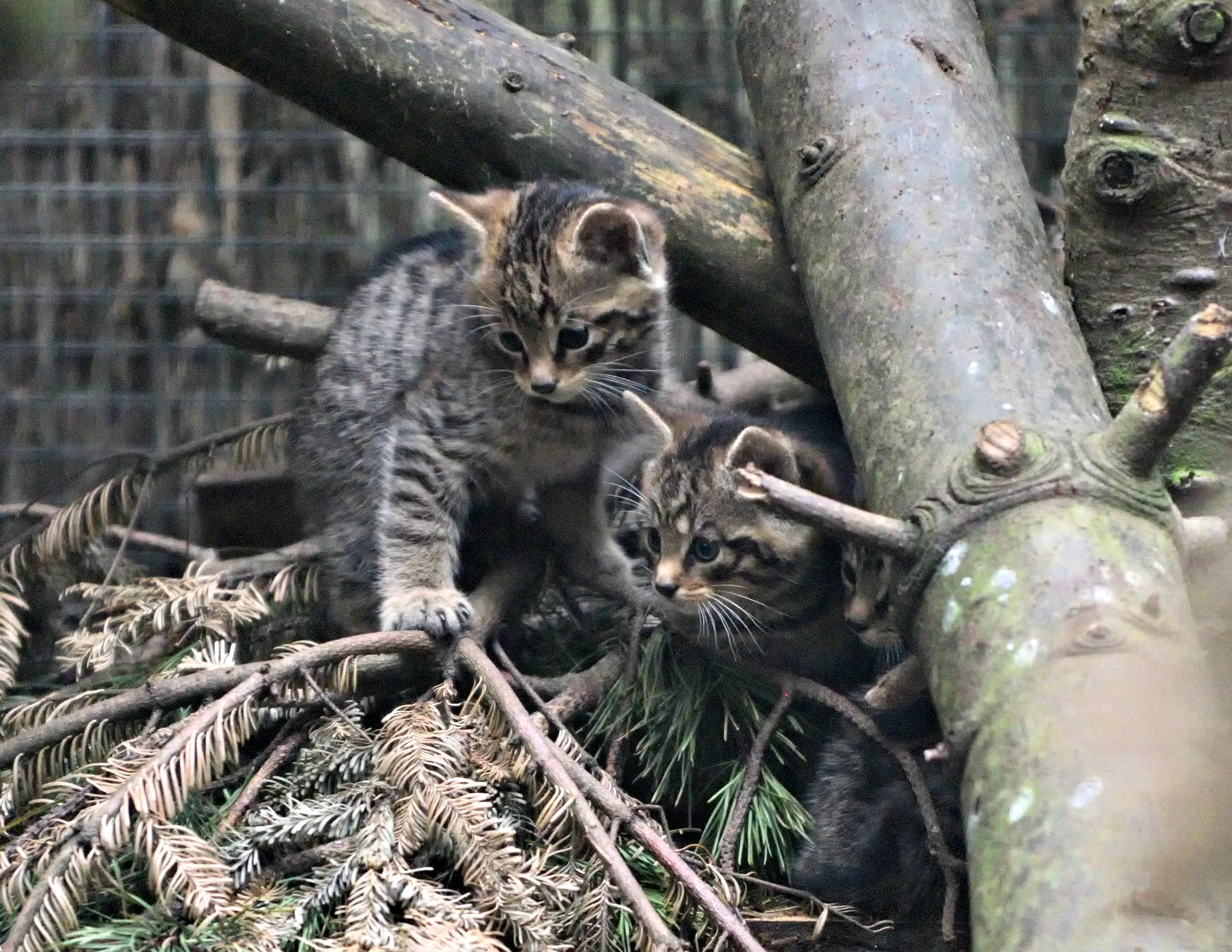
    Two litters of rare Scottish Wildcats born at Highland Wildlife Park could play a huge role in the conservation of this species, which is considered by some to be Europe’s rarest mammal.

    The kittens’ birth is part of a conservation program and could result in the species’ eventual reintroduction to some protected areas of Scotland.

    16_07_12 14 DSC_2023_CreditAlexRidell
    Wildcat kitten_Credit_JanMorse
    16_07_12 20 DSC_2054_CreditAlexRidellPhoto Credits:  RZSS/Alex Riddell (1, 2, 4), RZSS/Jan Morse (3)

    For several months, the kittens have been tucked safely in their dens with their mothers, but they have begun venturing outdoors recently.  The playfulness that zoo guests observe between the mothers and their babies is actually an important part of developing the kittens’ survival skills.

    Also known as the Highland Tiger, this rare native species is facing the threat of extinction due to hybridization with domestic and feral Cats, habitat loss, and accidental persecution.   The species is Critically Endangered in Scotland and is the only wild Cat native to Scotland.

    The zoo is partnering with other Scottish conservation organizations to develop an action plan for preserving the species.  The captive breeding program managed by the zoo provides an increasingly important safety net as the wild population of this Wildcat continues to decline.

    Although some similarities with Domestic Cats exist, the two species are not to be confused. The Scottish Wildcat is an isolated sub-population of the European Wildcat, which is found in continental Europe. Wildcats prefer to live alone but will come together for breeding, normally giving birth to two or three kittens, which the mother will protect fiercely.

    With their big, bushy, black-ringed tail and tenacious behavior, Scottish Wildcats play a large role in Scottish lore, and were often used in clan crests.

  • , ,

    12246829_992682080754095_8025270281412609151_n

    Zoo Miami is excited to announce the birth of a critically endangered Sumatran Tiger!

    The single male cub was born on Saturday, November 14th and has been in seclusion with his mother since that time. Because this is the first birth for the 4 year old female named “Leeloo,” extra precautions are being taken to isolate and protect mother and cub in hopes that a strong bond can be established. During the next several weeks, it will remain isolated with its mother in a secluded den with little or no contact from staff. This is the first Sumatran tiger born at Zoo Miami and only the fourth born in the United States in 2015. There are only 70 Sumatran Tigers living in U.S. zoos.

    12279006_992682084087428_3065418479860768028_n

    12239669_992682077420762_642401272829484920_n

    Photo credit: Ivy Brower

    Related articles

    Mom Has Her Paws Full With Tiger Triplets
    Clean-up Time for Tiger Triplets
    Rare Tiger Cubs Venture Out of Den