The Newest, Cutest Baby Animals from the World's Zoos & Aquariums

Category: Cat

  • , ,

    36708230432_549a124d73_o

    A tiny male Bengal Tiger cub that was being smuggled into the United States is receiving care at the San Diego Zoo Safari Park. The young Tiger was confiscated by U.S. Customs and Border Patrol officers, who discovered the cub while inspecting a vehicle entering the U.S. from Mexico on August 23.

    BorderTiger_002_Med-1024x683
    36739400281_dff0fdaec8_oPhoto Credit: San Diego Safari Park


    Once the cub was safely at the Safari Park, veterinary staff performed a thorough health exam and determined that he was in good health. “His heart and lungs sound good, his blood work looked great and, since he took a bottle from us, it’s a good sign he’ll continue to thrive,” said Dr. Jim Oosterhuis, principal veterinarian.

    “I estimate the cub to be between 5 and 6 weeks old, and he weighs in at a little over 6 pounds,” Dr. Oosterhuis said. “He has teeth coming in, so he’ll be teething in the next week or two—so, animal care staff will have a little chore getting him through that.”

    The cub is being cared for in the Safari Park’s nursery, and once his location became known, hundreds of eager fans gathered outside the nursery window hoping to see the tiny Tiger. He is now viewable most of the day, except when he is taking a ‘catnap,’ according to his keepers. The cub receives a bottle six times a day with a special formula made for exotic carnivores and is thriving under the watchful eyes of his care team. He is steadily gaining weight and now weighs more than seven pounds. His teeth are coming in and he’s chewing on everything in sight—stuffed toys, blankets, even his paws.

    Guests watching the cub through the nursery window might see keepers using a wet cotton ball to give the cub a bath. This procedure mimics how wild mother Tigers bathe their cubs after feedings.

    See more photos of the Tiger cub below.

    (more…)

  • , ,

    Csm_Schneeleopard_Kitai1_76e2141a21
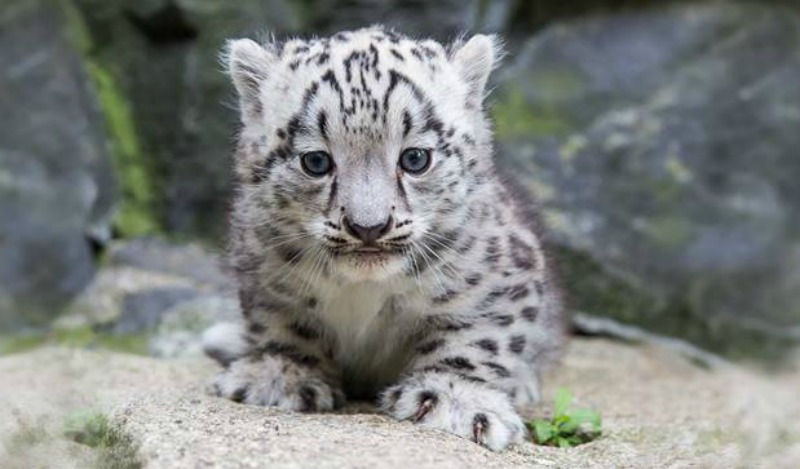
    A blue-eyed bundle of fluff arrived at Tierpark Berlin on June 13: Kitai the Snow Leopard cub!

    Kitai was born to parents Maya and Bataar, both six years old. This is their third litter together.

    Csm_Schneeleopard_Kitai4_e0598c23ca
    20526225_10155408276985149_2119039406350702236_nPhoto Credit: Berlin Zoo

    The now two-month-old cub recently had a health check, at which he received vaccinations and an ID chip. The vaccinations are the same as all housecats receive for protection against distemper and other feline diseases.

    Kitai’s name was chosen from among more than 1,000 suggestions made by zoo fans. The word “Kitai” or “Catai” is a variation of  “Cathay,” which is what China was called during the times of Marco Polo. Snow Leopards are found in the mountains of Central Asia. The largest population resides in China.

    At eight weeks old, Kitai weighed about eight pounds. As an adult, he may weigh 100-150 pounds. For now, Kitai spends nearly all his time with Maya in their den, but last week the staff opened the door into the main exhibit to give mother and son the chance to explore outdoors. It is completely up to Kitai and Maya to decide if and when they go outside.

    Snow Leopards are among the most endangered of all big Cats. Recent data from the International Union for Conservation of Nature (IUCN) states that there are between 4,000-6,500 mature Snow Leopards spread across 12 Asian nations. A Global Snow Leopard Forum has been established to address the threats facing Snow Leopards, which include depletion of prey, illegal trade, and conflict with people.

    Zoo Berlin is active in protecting Snow Leopards, and a total of 13 cubs have been born there in the last 20 years.

    See more photos of Kitai below.

    (more…)

  • , ,

    IMG_9666
    On July 1, Colchester Zoo welcomed a baby Serval named Nala. The kitten currently lives behind the scenes, where she is under the expert care of zoo keepers.

    Like most kittens, Nala is playful, as you can see in the video below. During play, she exhibits the amazing skill that Servals are known for: leaping into the air to pounce on top of their prey.

    IMG_9642
    IMG_9662Photo Credit: Colchester Zoo

    Servals live in much of Africa south of the Sahara Desert. Weighing 20-40 pounds as adults, these medium-sized Cats have the longest legs relative to body size of any feline. Their super-sized ears help them locate prey. Because Servals favor habitats with tall brush, long legs give them an advantage when tracking small mammals, birds, frogs, and reptiles through the grass. Once prey is within reach, Servals can leap more than six feet upward and ten feet forward to forcefully pounce on prey with their forepaws. A quick bite to the prey animal’s head or neck delivers the fatal blow.

    Much of Africa’s Serval population lives on protected land and hunting of Servals is prohibited in many, but not all, countries. Though Servals are currently listed as a Species of Least Concern by the International Union for Conservation of Nature (IUCN) Red List, continued degradation of habitats, especially wetlands and grasslands, could pose a threat in the future.

    See more photos of Nala below.

    (more…)

  • , ,

    20264760_1423188667765059_1308839482542153502_n

    Five Cheetah cubs born May 15 at Prague Zoo are growing up fast!  We introduced you to these fluffy quintuplets on ZooBorns back in June and the cubs are now thriving under the care of their six-year-old mother, Savannah.

    The cubs are still behind the scenes at the zoo, but should move into their exhibit yard later this summer.

    20247663_1423188741098385_4213753078386525593_o
    20232675_1423188691098390_1091851188130376037_o
    20258107_1423188651098394_7399272975281577839_n (1)
    20294273_1423188637765062_9021034933225721409_n (1)Photo Credit: Prague Zoo

    Cheetah cubs remain with their mother for one to one-and-a-half years, and they are weaned at three to six months. The cubs spend a lot of time napping and playing. Play helps the cubs develop agility, as well as hone their chase and attack behaviors.  

    Every cub born under human care is important to the future of Cheetahs as a species. They are listed as Vulnerable to Extinction on the International Union for Conservation of Nature (IUCN) Red List. Fewer than 7,000 Cheetahs remain in eastern and southern Africa. Threats include conflict with humans, shrinking wild areas as farms and cities expand, and illegal trafficking in body parts. 

    As a population, Cheetahs have very low genetic diversity, a possible cause of their low reproductive rates. Current conservation measures include cooperative programs across all countries in which wild Cheetahs are found.


    Related articles

    Record 51 Tasmanian Devils Born at Devil Ark – ZooBorns
    Tree Kangaroo Joey Boosts Endangered Species – ZooBorns
    Two Rhinos Born Days Apart at Chester Zoo – ZooBorns
  • , ,

    19732312_1494362457289945_8260157228210158814_n

    Five fluffy Cheetah cubs made their public debut this week at Australia’s Monarto Zoo.

    Born in March to mother Kesho, the cubs immediately began exploring their new environment after bonding with Kesho in a private den for about three months.

    One of the cubs is a male, and the other four are females. They each weigh about 15 pounds and are described as “very adventurous.”

    19437405_1486272208098970_8089627607465356222_nPhoto Credit:  Adrian Mann (1); Monarto Zoo (2)

    The prospect of adding four potential breeding females to the Cheetah population is thrilling for the Monarto Zoo staff. Cheetahs are listed as Vulnerable to Extinction by the International Union for Conservation of Nature (IUCN) Red List.

    Only about 6,700 Cheetahs remain in the wild, primarily in eastern and southwestern Africa, half of what it was 35 years ago.  As their habitats are fragmented into smaller pieces by the expansion of farms, grazing lands, and cities, the Cats have less space to roam and less prey to eat. Cheetahs are also killed by ranchers who fear that the cats are killing their livestock.

    Breeding programs, like those at Monarto Zoo and other zoos around the world, offer hope for the future. Animals are carefully matched based on their “pedigree” or genetic background, with the goal of maintaining a high level of genetic diversity in Cheetahs under human care.


    Related articles

    Giraffe Calf Takes Baby Steps Toward a Healthy Future – ZooBorns
    Rare Rhino Calf Born with Help from Science
    The Power of Fluff: Twin Red Pandas Born at Zoo Boise
  • , ,

    19149142_1381893261894600_7326992161959513130_n

    The Czech Republic’s Prague Zoo welcomed a litter of five Cheetah cubs on May 15.

    Mother Savannah, age 6, is caring for her quintuplets behind the scenes. The litter includes three male and two female cubs. The family is expected to move into their viewing habitat later this summer.

    19105523_1381893265227933_745605688340024665_n
    19105903_1381893258561267_7479086653613996661_n
    19059119_10154393842407581_6141597325846852336_nPhoto Credit: Prague Zoo

    Well known as the world’s fastest land animals, Cheetahs are skilled hunters. Their bodies are built for efficient sprinting. Reaching speeds of up to 70 mph, Cheetahs can run down even the fastest of prey. However, they maintain these high speeds for only a minute or two, then give up the chase. Cheetahs are successful in about half of their hunts.

    Depending on where they live, Cheetahs target small Gazelles or the young of larger Antelope species when hunting. Prey is taken down with a swat of the dewclaw or a bite to the neck.

    Cheetahs are in steep decline in the wild. Found only in Africa and a small part of Iran, fewer than 7,000 wild Cheetahs remain.  As farms and cities expand, Cheetahs’ home ranges are reduced. Due to a genetic bottleneck in the population during the Ice Age, all Cheetahs exhibit genetic similarity. This can lead to reproductive problems and low birth rates, especially when Cheetahs are under human care. Some zoos have found success breeding these Cats by keeping them in large groups, rather than individual pairs.

    Currently, Cheetahs are classified as Vulnerable by the International Union for Conservation of Nature, but conservationists have called for reclassifying Cheetahs as Endangered. Most of the African countries where Cheetahs live have created action plans for protecting these majestic Cats.


    Related articles

    Pygmy Hippo Calf Gets in the Swim
    Rare Litter of Cheetahs Born at Allwetterzoo Münster
    Lion Cubs Show Their Playful Side
  • , ,

    Leopard5

    For the first time in the Toronto Zoo’s history, two Clouded Leopard cubs were born on the afternoon of Saturday, May 13 to mom Pavarti and dad Mingma.

    Pavarti is a first-time mother and she initially showed maternal instincts. However, Pavarti started spending less time with her cubs and was not observed nursing or mothering them. Wildlife Care staff monitored the new family by camera throughout the night and the cubs were checked by a veterinarian on Sunday. Fluids were given to the cubs to help them through the critical first 24 hours.

    Leopard 4
    Leopard3
    Photo Credit: Toronto Zoo

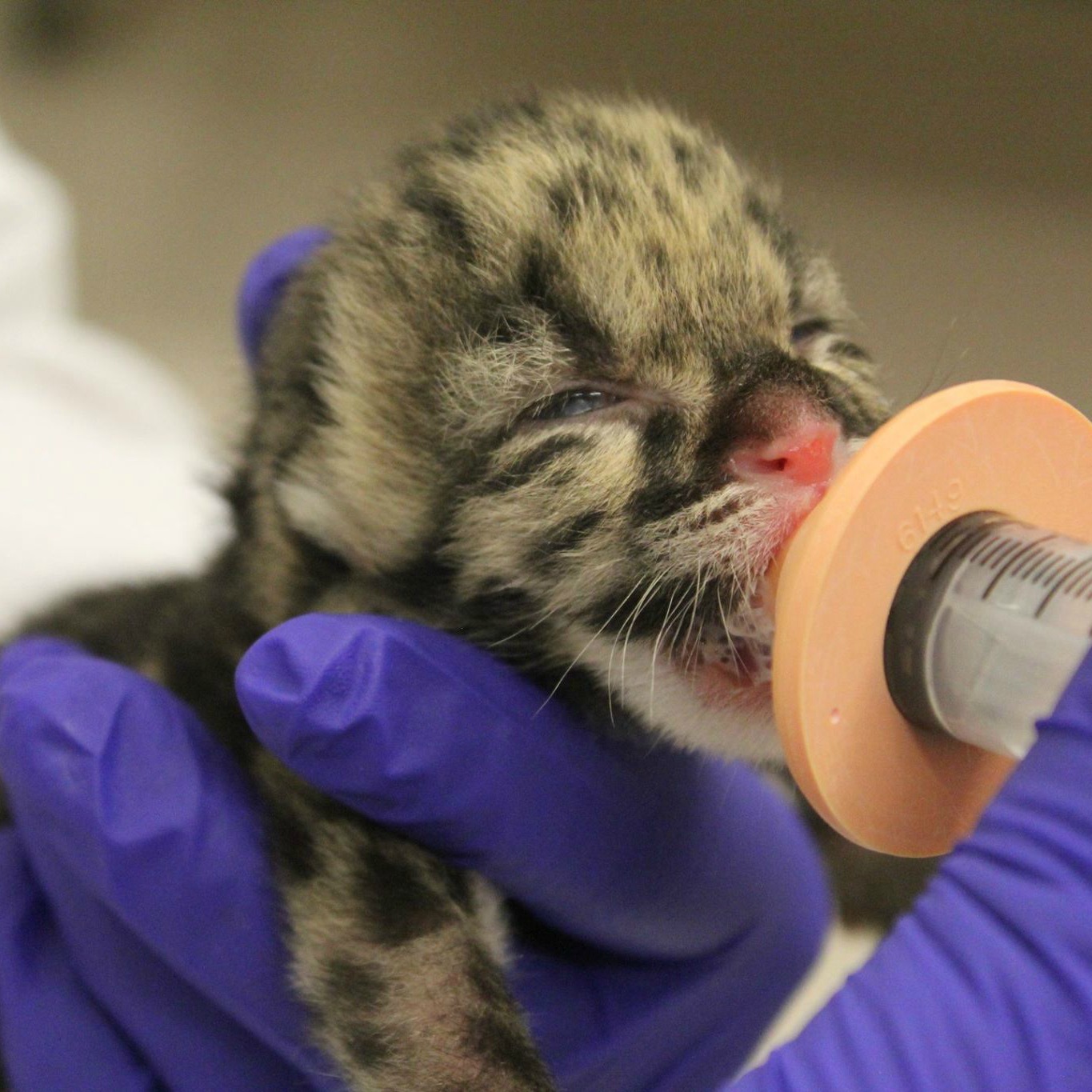
    Wildlife Care staff and the vet continued to monitor the tiny cubs and on Monday morning, they decided to move the cubs to the intensive care unit (ICU) in the zoo’s new state-of-art Wildlife Health Centre. After receiving neonatal care, the cubs’ health stabilized.

    Fortunately, when they discovered Pavarti was pregnant the zoo developed a Clouded Leopard hand-rearing protocol just in case Pavarti failed to care for her cubs. The protocol is based on best practices shared by other zoos with experience hand-rearing these cats.

    The two cubs are thriving under their keepers’ care.  They have gone from weighing around six ounces each at birth to nearly 14 ounces each at about three weeks of age. The two cubs have fully opened their eyes, have discovered their ‘meow,’ and are even starting to walk. 

    (more…)

  • , ,

    Cheetah cubs on exhibit April 2017 SM (17)

    Three Cheetah cubs made their public debut last week at Taronga Western Plains Zoo.  Born on October 20, the cubs, one male and two females, have been growing and developing well behind the scenes under the watchful eye of mother, Kyan. 

    Cheetah cubs on exhibit April 2017 SM (9)
    Cheetah cubs on exhibit April 2017 SM (13)Photo Credit: Taronga Western Plains Zoo

    “The cubs are just over five months old now and are thriving. They are all developing quite distinct personalities and growing in confidence every day,” said zoo keeper Jordan Michelmore. 

    Keepers have named the three Cheetah cubs.  The male has been named Obi, which means “heart” in Nigerian.  The females have been named Nyasa, which means “water” in Malawi and Zahara, which translates to “flower” in Swahili. 

    “It has been a real pleasure watching them grow so far. Obi is very shy whilst Nyasa, the smallest of the trio, is actually the bravest and usually is the first to try new things. Zahara is also quite confident,” said Jordan.  “Kyan is becoming a little more relaxed now that the cubs are getting older. She is still quite protective and always keeps a watchful eye on them.”

    Read more info and see additional photos of the cubs below.

    (more…)

  • , ,

    Cheetah-cubs_hope-2017-sbi
    The arrival of spring brought a cheetah cub boom to the Smithsonian Conservation Biology Institute (SCBI) in Front Royal, Virginia, where two large litters were born over the course of a single week. Three-year-old Happy gave birth to five healthy cubs on March 23. Seven-year-old Miti gave birth to seven cubs March 28.  Two of Miti’s cubs were visibly smaller and less active at the time of birth and died, which is common in litters this large. Both mothers are reportedly doing well and proving to be attentive to the 10 surviving healthy cubs, which have all been successfully nursing. Each litter includes two male and three female cubs.

    Cheetah-cubs_miti-2017-sbi
    Photo Credit: Smithsonian Conservation Biology Institute

    “The average litter size is three, so this time we’ve got an incredible pile of cubs,” said Adrienne Crosier, SCBI cheetah biologist and manager of the Association of Zoos and Aquariums’ Cheetah Species Survival Plan (SSP), which matches cheetahs across the population for breeding. “In just one week, we increased the number of cheetahs at SCBI by 50 percent. Each and every cub plays a significant role in improving the health of the population of cheetahs in human care and represents hope for the species overall.”

    Both Miti and Happy bred in December and were matched with male cats that fit their temperaments and would help ensure genetic diversity within the population. Miti was matched with 6-year-old Nick, who is a first-time father and was the very first cub born at SCBI in 2010. This is Miti’s third litter, though she lost one litter in 2015 due to health complications. Happy bred with 10-year-old Alberto. While this is Happy’s first litter, it is Alberto’s fifth.

    The two litters are also significant because they mark the second generation of cheetahs born at SCBI, extending the branches of the breeding facility’s cheetah family tree and making grandparents of two older cheetahs that were recently retired together, Amani and Barafu. These will likely be the last litters for both Alberto and Miti, who are now genetically well represented in the population. Forty-six cubs have been born at SCBI since the facility started breeding cheetahs in 2010.

    Read more about the breeding program below.

    (more…)

  • , , , ,

    Dr. Maragartia Woc Colburn17308893_10154867782410622_4061136911310938951_n
    A Clouded Leopard Cub that made history when it was born on March 1 now has a name and has opened his eyes.  The cub was named Niron, which means eternal and everlasting in Thai.

    Niron was conceived through artificial insemination using frozen/thawed sperm, the first time this technique was successfully used in Clouded Leopards.  The project is a collaboration of the Smithsonian’s National Zoo and the Nashville Zoo, where the cub was born.  The procedure is explained in the cub’s birth announcement on ZooBorns.

    By KElsey White 17308778_10154867777160622_2879354020982727430_n
    By Kelsey White 17425015_10154867777155622_3016096271694483694_n
    Dr. Maragartia Woc Colburn17426228_10154867782260622_8801842816958139571_nPhoto Credits:  Kelsey White (2,3), Dr. Margarita Woc Colburn (1,4,5,6,7,8) 

    All Clouded Leopard cubs are reared by hand at the Nashville Zoo, a technique that prevents predation by the parents, enables cubs to be paired at an early age, and allows the normally nervous species to become acclimated to human interaction. 

    Clouded Leopards are one of the rarest and most secretive of the world’s Cat species, and little is known about them.  They inhabit remote areas of southern China and other parts of Southeast Asia.  Clouded Leopards are listed as Vulnerable to Extinction by the International Union for Conservation of Nature, with fewer than 10,000 adults remaining in the wild.

    See more photos below.

    (more…)