Christmas gifts aren't just for people – the animals at ZSL London Zoo got their paws on Christmas presents this year, too!
Six-month-old Sumatran Tiger cubs Achilles and Karis woke up to a pile of pretty presents to rip open, while the Meerkat mob merrily munched on pinecone ornaments stuffed with veggies, hanging from a Christmas tree.
Photo Credit: ZSL London Zoo
Zoological Manager Mark Habben said, “We love a bit of festive cheer at ZSL London Zoo, and like to find fun ways for the animals to join in the festivities."
“We’ve come up with a variety of activities to encourage them to use their natural skills, like foraging or sniffing out their next meal: our Tiger cubs loved using their newly learnt hunting prowess to rip open their presents, while our Meerkats searched for their treats under the tree – just like kids all over the country on Christmas day.”
Taronga Zoo welcomed its largest litter of Meerkats ever, with keepers monitoring the progress of six playful pups.
The pups were born on November 7, but have just begun to venture outside their nest box to explore their habitat. This is the third litter for experienced parents Nairobi and Maputo. Previous litters had only two pups each.
Photo Credits: Paul Fahy (1,2,3,5,6,7,8,9), Courtney Mahoney (4,10,11,12)
Keeper Courtney Mahony said the size of this litter came as a complete surprise.
“We knew that Nairobi was bigger than she was during her previous pregnancies, but we definitely weren’t expecting six pups! Meerkats usually give birth to 3-4 pups, so mum certainly has her paws full this time,” said Courtney.
Courtney said Nairobi appeared to be relaxed and confident caring for the largest litter of pups in Taronga’s history.
“She’s an incredible mother and seems to be taking it all in her stride. She’s so attentive to the pups and she’s getting lots of babysitting help from dad and her eldest daughter, Serati,” said Courtney.
Keepers will confirm the sex of the pups when they have their first veterinary examination next month, but they suspect there are three males and three females. They have begun to do hands on health checks and weigh the pups regularly to ensure they are healthy and comfortable in their presence.
The yet-to-be-named pups have started to sample solid foods, such as mealworms, wood roaches, fruit and vegetables.
“They are growing a bit slower than our two previous litters, but they’re still hitting all the right milestones and starting to show their own little personalities. The biggest pup is a boy and he’s definitely the most adventurous of the six. He’s the first out of the nest box each morning and the first one to explore new things,” said Courtney.
Native to southern Africa’s arid plains, Meerkats live in extended family groups called mobs. With sharp claws, they dig for insects, spiders, centipedes, and other small animals, which are crushed with sharp teeth. As social animals, Meerkats have a wide range of vocalizations to convey alarm, fear, and contentment. The International Union for Conservation of Nature states that there are no major threats to the species.
The “cute meter” hit an all-time high the morning of April 18, as the Meerkat mob at the San Diego Zoo showed off four new additions to the family. Mom Debbie gave birth to four adorable baby Meerkats, and the pups have left their den to explore the interesting world above ground.
Photo Credits: San Diego Zoo
Animal care staff became excited when they realized Debbie was pregnant with a new litter, and they began to diligently monitor her weight to estimate when the pups would arrive.
In March, Zoo staff noticed Debbie was spending her time underground, indicating it was time to give birth. Normally, Meerkat moms keep their newborns secluded underground for up to a week before allowing them to meet with the rest of the family; however, Debbie surprised everyone by introducing the babies after only three days!
The four youngsters are now regularly out of their den playing, eating and exploring their habitat. Animal Care staff explains that in Meerkat society, everyone has a job, whether it’s being a sentry or babysitting. Now that the pups are old enough, every member of the family (under the direction of Debbie, of course) will provide the babies with important survival training, including the most important Meerkat behavior: digging.
Zoo staff says that, for Meerkats raising new pups, it takes a village—or, in this case, a mob. “The rest of the family, made up of older siblings, is also very involved with raising the pups,” says Liz Johnson, keeper. “They are great babysitters and are constantly checking on them. The pups are very vocal, and their siblings are quick to respond if they call out.”
Although their name may cause some confusion, Meerkats are not cats. The Meerkat, or Suricate (Suricata suricatta), is a small carnivoran belonging to the mongoose family. They are native to all parts of the Namib Desert in Namibia and southwestern Angola, and in South Africa.
Gestation for Meerkats is about eleven weeks. In the wild, Meerkats give birth in underground burrows to help keep the newborns safe from predators. To shield the pups from dust in their subterranean homes, they are born with their eyes and ears closed. Meerkat babies are also nearly hairless at birth, though a light coat of silver and brown fur begins to fill in after just a few days.
The babies nurse for about nine weeks, and they grow very quickly. Though they weigh only about an ounce at birth, by six months old, the pups are about the same size as the adults.
These desert-dwellers are highly social critters and live in groups, called mobs, which can include dozens of individuals from multiple families.
Meerkats have scent pouches below their tails and will rub these pouches on rocks and plants to mark their territory. The dark patches around their eyes act to cut down on sun glare and help them see far into the distance.
Meerkats have four toes on each feet and very long, non-retractable claws to help them dig. They can also close their ears to keep dirt out while digging.
As a species they have an interesting feeding approach as they will always maintain visual and vocal contact whilst foraging, with one of the group standing on its hind legs and acting as sentry on the lookout for predators. They feed mostly on invertebrates and plant matter.
They are currently classified as “Least Concern” on the IUCN Red List of Threatened Species. In the wild, they are present in several large and well-managed protected areas. However, population densities can fluctuate due to predation and rainfall variations.
Wild populations are currently stable. However, over the past couple of decades, movies and television shows have brought Meerkats a lot of attention, with many people wondering if they can keep a Meerkat as a pet. Although they may look cute, Meerkats, like all wild animals, do NOT make good pets, and they are illegal to own without the proper permits and licenses!
San Diego Zoo guests can see mom Debbie, her four adorable pups and the other 12 members of the mob play, nap and eat in their habitat.
*Bringing species back from the brink of extinction is the goal of San Diego Zoo Global. As a leader in conservation, the work of San Diego Zoo Global includes on-site wildlife conservation efforts (representing both plants and animals) at the San Diego Zoo, San Diego Zoo Safari Park, and San Diego Zoo Institute for Conservation Research, as well as international field programs on six continents. The work of these entities is inspiring children through the San Diego Zoo Kids network, reaching out through the Internet and in children’s hospitals nationwide. The work of San Diego Zoo Global is made possible by the San Diego Zoo Global Wildlife Conservancy and is supported in part by the Foundation of San Diego Zoo Global.
Three Meerkat pups recently made their first public appearances at Chester Zoo. Born on January 28, the terrific trio had been kept out of sight by their mum, and the rest of the Meerkat mob, until they were ready to emerge from their underground burrow.
For the time being, it is unclear whether the pups are male or female. However, the three are scheduled to undergo their first health check-up soon, and then all will be revealed!
Photo Credits: Chester Zoo
The Meerkat, or Suricate (Suricata suricatta), is a small carnivoran belonging to the mongoose family. They are native to all parts of the Namib Desert in Namibia and southwestern Angola, and in South Africa.
Gestation for Meerkats is about eleven weeks. In the wild, Meerkats give birth in underground burrows to help keep the newborns safe from predators. To shield the pups from dust in their subterranean homes, they are born with their eyes and ears closed. Meerkat babies are also nearly hairless at birth, though a light coat of silver and brown fur begins to fill in after just a few days.
The babies nurse for about nine weeks, and they grow very quickly. Though they weigh only about an ounce at birth, by six months old, the pups are about the same size as the adults.
The two-month-old Meerkat pups at Taronga Zoo were recently given names to reflect their African heritage. Meet ‘Lwazi’ and his sister ‘Serati’! The playful siblings were born January 7 to first-time mom, Nairobi, and dad, Maputo.
The Zoo has been celebrating this birth of its first Meerkat pups in nearly seven years. Check out our earlier article that introduced the pair: "Meerkat Pups Go Exploring at Taronga Zoo"
Photo Credits: Rick Stevens
“They may be young, but they’re already showing signs of their own little personalities. Our male is the bigger of the two and he’s more adventurous and inquisitive, while the female is quieter and prefers to stay close to mum,” said Keeper, Courtney Mahony.
“This is all new for them and they learn by observing their mum and dad, so we’re very lucky that Nairobi and Maputo are proving to be fantastic and attentive first-time parents. Nairobi is letting the pups suckle and grooming them at the right times and Maputo protects them, huddles over them and curls up with them at night.”
Gestation for Meerkats is about eleven weeks. In the wild, Meerkats give birth in underground burrows to help keep the newborns safe from predators. To shield the pups from dust in their subterranean homes, they are born with their eyes and ears closed. Meerkat babies are also nearly hairless at birth, though a light coat of silver and brown fur begins to fill in after just a few days.
These desert-dwellers are highly social critters and live in groups, called mobs, which can include dozens of individuals from multiple families.
The babies nurse for about nine weeks, and they grow very quickly. Though they weigh only about an ounce at birth, by six months old, the pups are about the same size as the adults.
The Meerkat, or Suricate (Suricata suricatta), is a small carnivoran belonging to the mongoose family. They are native to all parts of the Namib Desert in Namibia and southwestern Angola, and in South Africa.
They are currently classified as “Least Concern” on the IUCN Red List of Threatened Species. In the wild, they are present in several large and well-managed protected areas. However, population densities can fluctuate due to predation and rainfall variations.
Two Meerkat pups born January 7 at Australia’s Taronga Zoo are already practicing the skills they’ll need as adults.
Photo Credit: Paul Fahy
The pups, which are the first to be born at Taronga Zoo in nearly seven years, have just started venturing out of their nest box. At less than one month old, they’re already eating solid food like mealworms and insect larvae. The pups are also practicing to be sentries by standing on their hind legs. Meerkats take turns standing as sentries to protect their social group from predators and other threats.
Keepers think that the pups are a male and a female, but the genders will be confirmed later this month when they have their first vaccinations and veterinary exam. Keepers perform quick health checks and weigh-ins regularly to ensure that the pups are healthy and comfortable in the presence of keepers.
As with all Meerkat young, the yet-to-be named pups are developing very quickly. Despite only weighing less than an ounce at birth, they now weigh more than a quarter of a pound.
Meerkats are native to southern Africa, where they inhabit arid locales such as the Kalahari and Namib Deserts. Living in clans of about 20 individuals, Meerkats construct large networks of underground burrows. Aside from acting as sentries, they exhibit other social behaviors such as babysitting and protecting young of other group members. Meerkats are not under significant threat and are classified as Least Concern by the International Union for Conservation of Nature.
The Indianapolis Zoo welcomed two tiny Meerkat pups on October 13. They are the first ever born at the Zoo! This is also the first litter for mom Rue. The births bring the number of Meerkats in the Indy Zoo’s ‘mob’ up to seven.
Photo Credits: Alea Kuczynski / Indianapolis Zoo
Gestation for Meerkats is about eleven weeks. In the wild, Meerkats give birth in underground burrows to help keep the newborns safe from predators. To shield the pups from dust in their subterranean homes, they are born with their eyes and ears closed. The Zoo's newcomers opened their eyes for the first time at eleven-days-old. Meerkat babies are also nearly hairless at birth, though a light coat of silver and brown fur begins to fill in after just a few days.
These desert-dwellers are highly social critters and live in groups, called mobs, which can include dozens of individuals from multiple families. Within the Zoo's mob, all of the Meerkats have been taking turns caring for the new pups, including the males.
The babies will continue to nurse for about nine weeks, and they grow very quickly. Though they weigh only about an ounce at birth, by six months old, the pups will be about the same size as the adults.
Three Slender-tailed Meerkat kits are out of the den at Australia’s Perth Zoo! Born in September to mom Tilly, the kits have recently opened their eyes and started exploring their habitat.
Tilly is an experienced mother – this is her third litter in the past 12 months.
Meerkat kits grow quickly, and the kits will soon start to eat insects, meat, and vegetables like the adults. In just a few months, they will be the same size as their parents.
Native to southern Africa, Meerkats are extremely social. Living in groups of up to 30 individuals, they forage, hunt, and care for their young as a group. Like many social animals, they have a wide vocal repertoire to communicate alarm, danger, and contentment. One Meerkat is often on sentry duty, standing erect at the burrow entrance on watch for predators and threats.
Meerkats are plentiful in the wild and not under significant threat.
Three new, curious Meerkat pups recently emerged from their burrow, at Zoo Brno, in the Czech Republic.
The trio was born about a month ago, and this was the first time mom allowed them to venture out of the den.
Photo Credits: Zoo Brno
The Meerkat (Suricata suricatta) is a small carnivoran belonging to the mongoose family. It is the only member of the genus Suricata. Meerkats are native to all parts of the Kalahari Desert in Botswana, much of the Namib Desert in Namibia and southwestern Angola, and South Africa.
A group of Meerkats is called a “mob”, “gang”, or “clan”. A Meerkat clan often contains about 20 individuals, but some super-families have 50 or more members.
The Meerkat is small, weighing on average about 1.1 to 5.5 lbs. (0.5 to 2.5 kg). Its body length reaches about 14 to 20 inches (35 to 50 cm). The Meerkat uses its tail to balance when standing and for signaling to others. Like cats, Meerkats have binocular vision, their eyes being on the front of their faces.
At the end of each of the Meerkat’s ‘fingers’ is a claw used for digging burrows and searching for food. The claws are used in unison with their muscular hind legs to help climb trees. Meerkats have short parallel stripes across their backs, extending from the base of the tail to the shoulders. The pattern of stripes is unique to each Meerkat. The underside has no markings, but the belly has a patch that is only sparsely covered with hair and shows black skin underneath. This area is used to absorb heat while standing upright, usually early in the morning after cold desert nights.
Meerkats are primarily insectivores but are known to eat lizards, snakes, scorpions, spiders, eggs, small mammals, plants, and fungi. They are immune to certain types of venom, including that of the scorpions of the Kalahari Desert. Meerkats forage, in a group, with a sentry on guard watching for predators. Baby Meerkats do not start foraging for food until they are about one-month old, and they are allowed to do so with another older member of the clan acting as a tutor.
Meerkats become sexually mature at about two years of age and can have one to four pups in a litter. They are iteroparous and can reproduce any time of the year. The pups are allowed to leave their burrow at two to three weeks of age.
The Meerkat exhibit at the Edinburgh Zoo is abuzz with the pitter patter of tiny feet – five babies were born on May 8.
Photo Credit: Edinburgh Zoo
The babies were born to Queenie, who is also the mother of three pups born earlier this year. The pups spent their first few weeks in the nest box with Queenie, but are now beginning to explore their surroundings.
Meerkats live in groups of 3-50 animals called mobs. They are cooperative breeders, which means all adults within the group share the responsibility of raising the pups. Keepers have yet to name and determine the gender of the little Meerkats.
Native to the arid grasslands of southern Africa, Meerkats feed on small lizards, frogs, small birds, millipedes, beetles, grasshoppers, and any type of insect they can find. Groups emerge at dawn to forage, and one Meerkat assumes the role of sentry. This individual stands atop a rock or other high place and keeps watch for predators. The mob is alerted of danger by a repertoire of alarm calls, depending on the severity of the threat.
In the wild, Meerkats are not considered under threat.


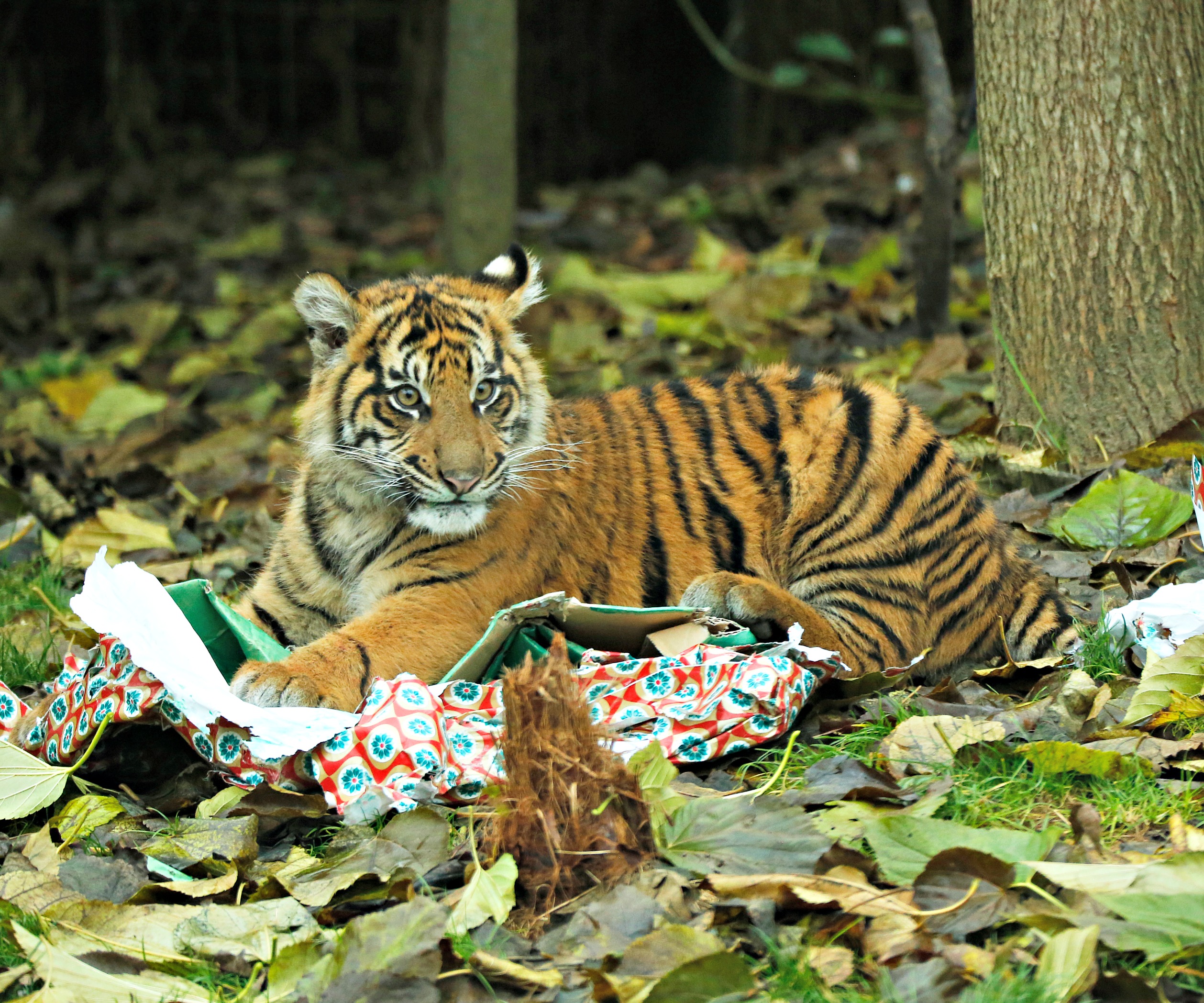
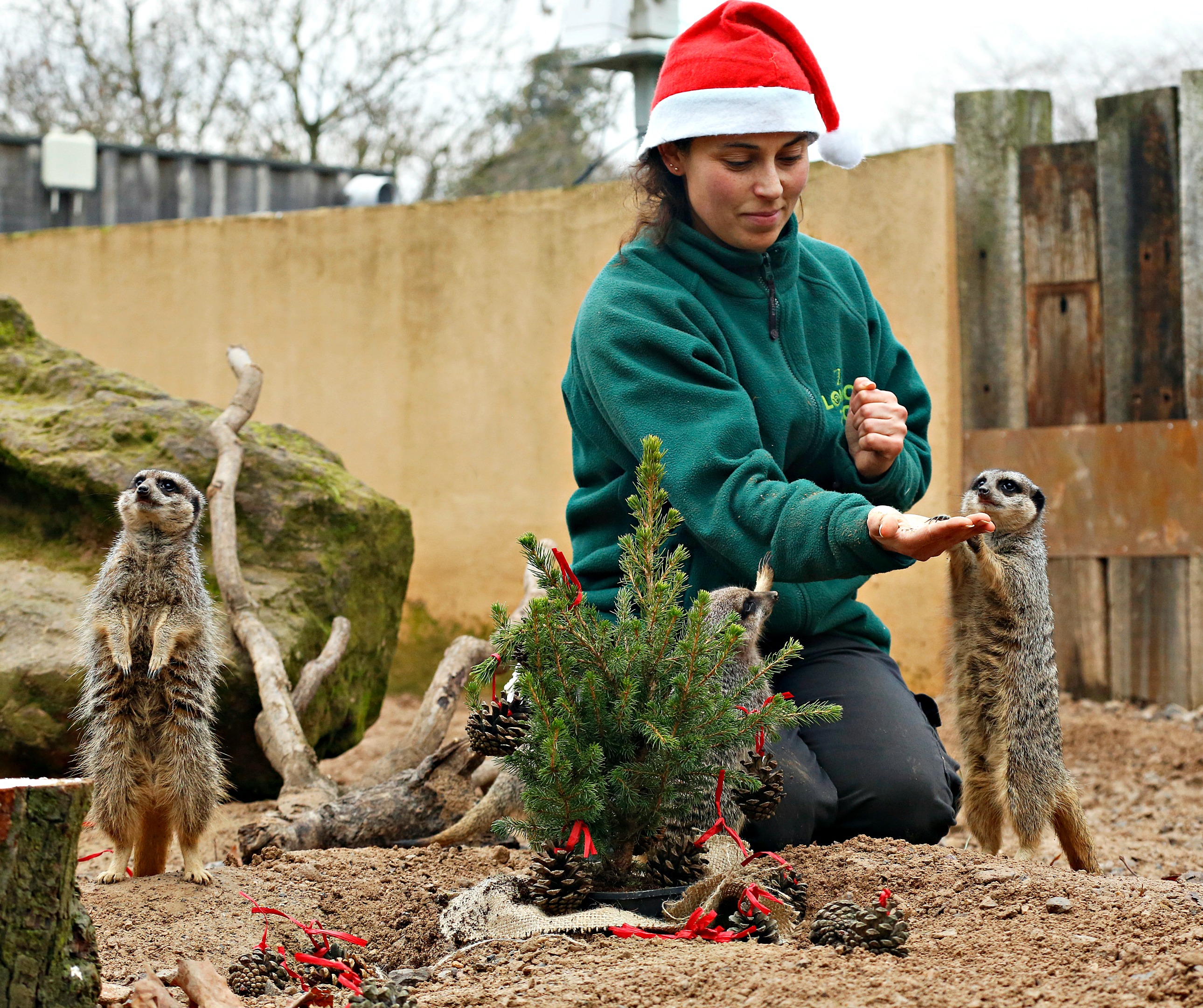 Photo Credit: ZSL London Zoo


