The Newest, Cutest Baby Animals from the World's Zoos & Aquariums

Category: Pueblo Zoo

  • ,

    1_DSC01480

    The Pueblo Zoo recently announced the arrival of three “precocious, bundles of joy”. African Lioness, Mashavu, gave birth to the two females and one male on October 25. The trio was sired by Taz Jahari (father of Pueblo Zoo’s ‘Mumford’).

    The cubs have been under the watch and care of their mother. At their first checkup, in November, the male and two females weighed 9.5 lbs., 9.3 lbs., and 7.9 pounds, respectively.

    2_DSC01484
    2_DSC01484
    2_DSC01484Photo Credits: Ashley Bowen

    The Zoo is excited to be able to share video and photos of the cubs as they grow and will be posting regular updates to Facebook, Instagram, and Twitter. Once they are vaccinated and ready to brave the outdoors, the cubs will be given access (weather permitting) to the outdoor Lion enclosure in late December.

    (more…)

  • ,

    1_PuebloZooRiverOtterPup

    The Pueblo Zoo is excited to share news of the birth of two North American River Otters. The pups were born to mom Freyja on March 8.

    This is the second litter for Freyja, and the newest arrivals will stay with their mom, in the nest box, for at least eight weeks.

    Freyja will have her hands full for the next few months. The pups will need to master their swimming skills before they can be visible to the public in the Zoo’s Otter Exhibit.

    2_PuebloZooRiverOtterPupPhoto Credits: Pueblo Zoo

    The North American River Otter (Lontra canadensis) is native to much of Canada and the United States (except for portions of the Southwest), and in Mexico– in the Rio Grande and Colorado River delta areas.

    They can thrive in any water habitat—as long as the habitat provides adequate food: ponds, marshes, lakes, rivers, estuaries and marshes (cold, warm or even high elevation).

    They have thick, protective fur to help them keep warm while swimming in cold waters. They have short legs, webbed feet for faster swimming, and a long, narrow body and flattened head for streamlined movement in the water. A long, strong tail helps propels them through the water.

    The River Otter can stay underwater for as much as eight minutes. They have long whiskers, which they use to detect prey in dark or cloudy water and clawed feet for grasping onto slippery prey. They are very flexible and can make sharp, sudden turns that help them catch fish. Their fur is dark brown over much of the body, and lighter brown on the belly and face. On land they can run at speeds of up to 15 miles per hour.

    Their diet consists of a variety of aquatic wildlife: fish, crayfish, crabs, frogs, birds’ eggs, birds and other reptiles such as turtles. They have also been known to eat aquatic plants and to prey on other small mammals, such as muskrats or rabbits. They are known to have a very high metabolism and need to eat frequently.

    In the wild, River Otters breed in late winter or early spring and generally give birth to one to three pups. The young are blind and helpless when born and first learn to swim after about two months. River Otters generally live alone or in small social groups.

    The North American River Otter is currently classified as “Least Concern” on the IUCN Red List of Threatened Species. However, habitat degradation and pollution are major threats to their conservation. They are said to be highly sensitive to pollution, and the species is often used as a bio indicator because of its position at the top of the food chain in aquatic ecosystems.

    Related articles

    You Otter See What's New At The Detroit Zoo
    Rosamond Gifford Zoo 'Feeling Cheesy' about Otter Duo
  • ,

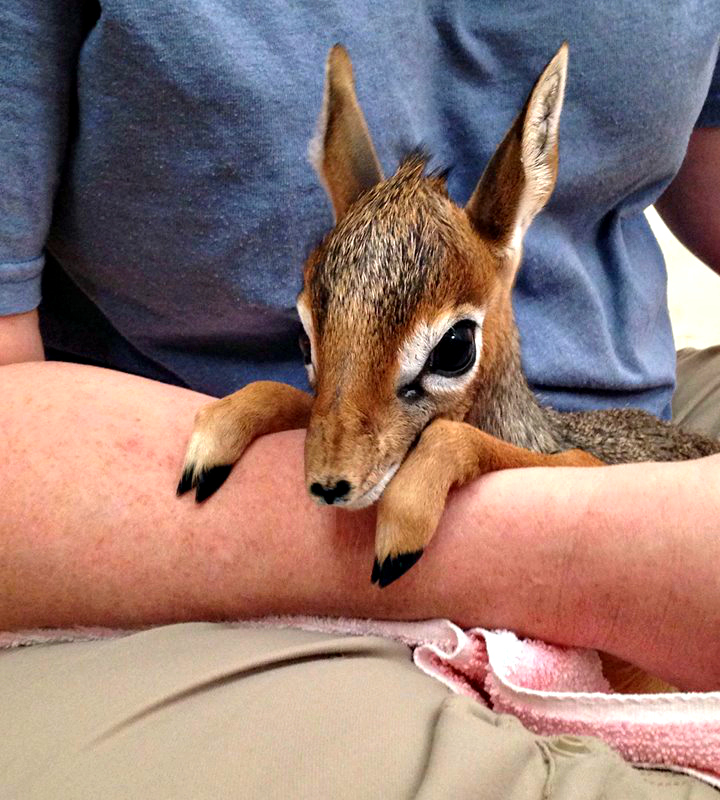
    10648408_10152351559991744_4913354173236862633_oWhen a Kirk’s Dik Dik was born in mid-October at thePueblo Zoo, keepers were thrilled.  But when his mother did not feed the male calf, keepers stepped in to provide daily care.

    10690250_10152351559446744_3569425790868843053_n
    10514713_10152351559651744_2872708272233848045_n
    10551448_10152351577321744_6479658761501502240_o
    10353028_10152351577776744_950627115638831967_n
    Photo Credit:  Pueblo Zoo

    Though they look like miniature deer, Dik Diks are small antelope that stand just over a foot high at the shoulder.  Found on eastern Africa’s savannahs, Dik Diks may appear small and vulnerable.  But their excellent eyesight and ability to run up to 26 miles per hour enable them to escape predatory lions, hyenas, and wild dogs. 

    In addition, Dik Diks run in zig-zags as they escape, further confounding their pursuers.  As they flee, females emit an alarm call that sounds like “dik dik,” hence their name.

    Dik Diks are widespread in Kenya and Tanzania, and populations are considered stable.

  • ,

    1621925_10151908597661744_9721716_n

    Three North American River Otter pups were born Monday, March 3, 2014 at the Pueblo Zoo. Keepers were able to get close enough on March 6 to weigh and sex the pups. The zoo confirms there are two females and one male! Judging by their healthy initial weights, the pups seem to be nursing well – 145g (boy), 135g (girl), 155g (big girl!). 

    1922419_10151908597816744_102141490_n

    1901288_10151908598346744_276627707_n

    988785_10151908598276744_388425624_n

    1185053_10151908597976744_345712566_n

    1978697_10151908597806744_1379004906_n

    The pups are currently off exhibit and zookeepers and staff are giving the new family their space. It may be several weeks to more than a month before they are ready to make a public appearance. Their first official wellness exam was Monday. Stay tuned for more updates!

    Related articles

    Otter Pup Trio Makes a Splash at Oakland Zoo
    Pueblo Zoo Welcomes Porcupette Twins
    Potter Park Zoo's River Otter Pup Raised With Orphans as SiblingTrio
    River Otter Delivers Her Second Pup at Oregon Zoo
  • ,

    Maned worlf 1

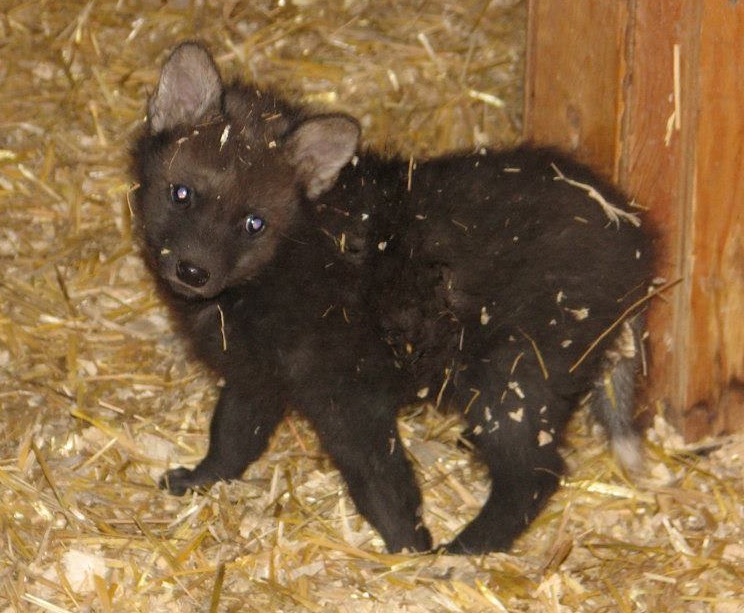
    Three Maned Wolf puppies were born at Pueblo Zoo in Colorado. The new arrivals were born on February 23rd to first-time parents Cayenne (the female) and Meek (the male). The puppies were delivered in the same den where their grandfather, Cayenne’s father, was born.

    Born in the wild or in captivity, survival rate is low for Maned Wolf puppies, and the first few weeks are critical. However, the Pueblo Zoo Staff are cautiously optimistic about the survival of these puppies.

    Maned wolf 2

    Maned wolf 3
    Photo credits: Pueblo Zoo

    Native to central South America, Maned Wolves are ranked by the IUCN as near threatened, due to habitat loss and degradation. Maned Wolves are the only known living member of their genus, making them very unique canines. The are named for the dark mane of hair along the neck and shoulders that can be raised in agression or fear. Standing nearly a meter tall, adult Maned Wolves look similar to Red Foxes, but are easily identified by their exceptionally long and thin legs. Instead of ranging in packs, Maned Wolves are solitary, or may live in monogamous pairs. They eat fruits as well as small animals. 

    The species is managed across the country though the Association of Zoos and Aquariums (AZA) Species Survival Plan. The Species Survival Plan ensures that there is genetic diversity among animals in AZA accredited institutions to ensure the best possible pairings for breeding. In the US, there are ninety-two wolves known to the SSP, and overall, there are only fourteen breeding pairs of maned wolves in AZA institutions. The Pueblo Zoo puppies are the only surviving Maned Wolf pups born so far this season. 

    See more photos after the fold.

    (more…)

  • ,

    Sloth1-14161_10151088689391744_1376557201_n

    On October 24, the Pueblo Zoo welcomed a baby Hoffman’s Two-Toed Sloth.

    For the first few weeks of life, the baby, whose gender is not yet known, will remain off-exhibit with its mother, Chewie. Pueblo Zoo officials are seeking help to name the baby via the zoo’s Facebook page. The staff’s favorite name? They’d like to continue the “Star Wars” theme started with the mother’s name and call the baby Han.

    Sloth2 18230_10151088689781744_1161097476_n

    Sloth3 -197097_10151088689181744_1761573007_n

    Because they subsist on leaves, which provide little energy, Sloths conserve their resources by moving slowly. Their shaggy, algae-covered fur blends expertly with the treetops, making them nearly impossible to see unless they move – which is not often, although sloths will descend to the ground to relocate to a new tree or to defecate, which occurs about once a week. Sloths digest their food very slowly, so slow that up to two-thirds of their body weight may come from leaves in their digestive tract.

    Hoffman’s Two-Toed Sloths are found in two separate areas of South America: southern Central America, extending into Colombia and Ecuador, and a separate population in the Andes Mountains of Peru, Brazil, and Bolivia. In both areas, they live an arboreal life in the rain forest canopy. Although forest destruction is likely affecting Sloth populations, not enough is known about this species in the wild to evaluate its status.

    Photo Credit: Pueblo Zoo